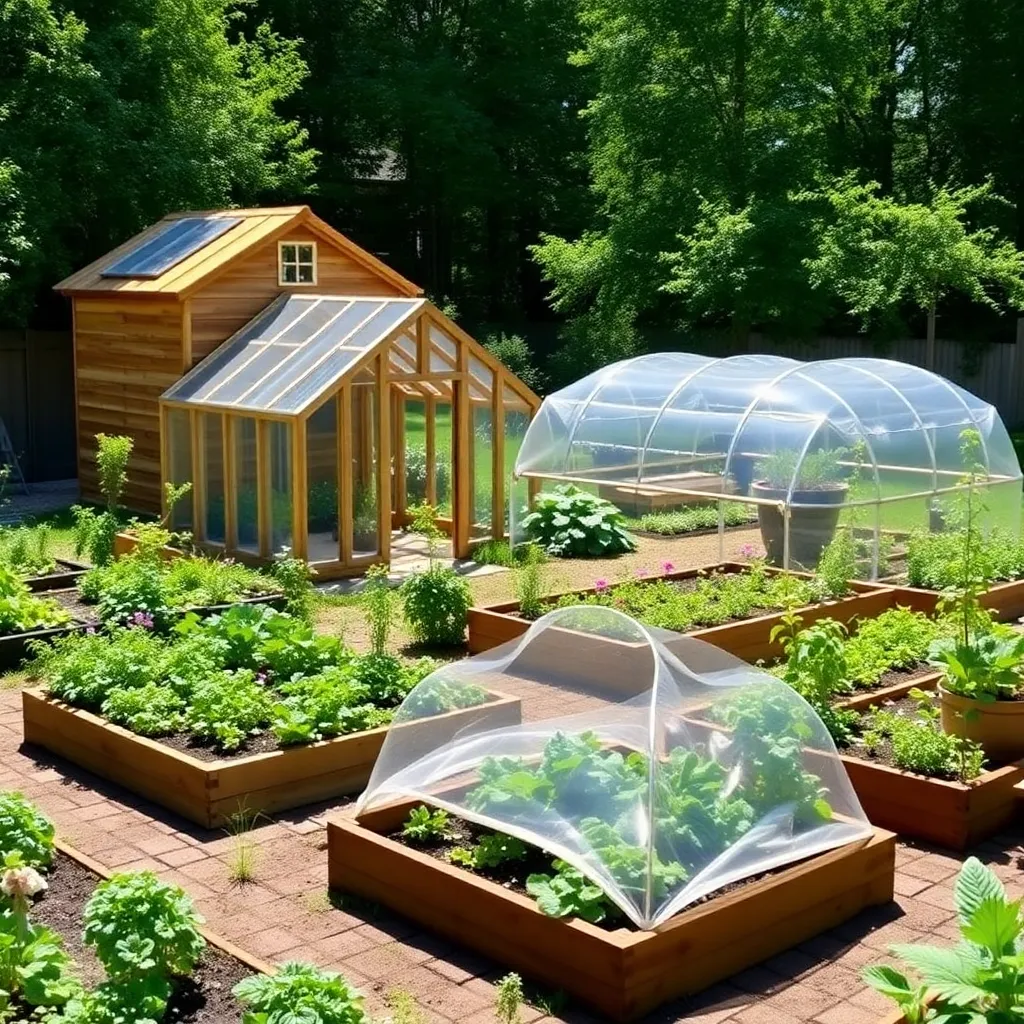
Building your own greenhouse is one of the highest-return projects in the backyard. You get a year-round growing season, full control over the environment, and a structure you can size to match your garden without paying retail markup for something built from thin stamped aluminum.
These six greenhouse plans cover every scale and situation — from a simple lean-to against your garage wall to a gothic-arch hoop house you can actually walk into. Each design uses common lumber or readily available materials, requires basic carpentry skills, and rewards you with a structure that will outlast anything from a big-box kit.
Want 16,000+ step-by-step woodworking plans?
Ted’s Woodworking has plans for every skill level — from simple shelves to full bedroom sets. Each plan includes a cut list, material list, and detailed diagrams. Browse Ted’s plans →
Lean-To Greenhouse Plans
The most space-efficient greenhouse you can build. A lean-to greenhouse attaches directly to an existing wall — your house, garage, or shed — and borrows that thermal mass for free heat storage. You only need to frame three walls and a single-pitch roof. Most builders fit one into a 6×10-foot footprint and gain enough space for a full growing bench plus a narrow aisle.
PVC Pipe Greenhouse Plans
Budget-friendly and fast to build, a PVC pipe greenhouse uses bent irrigation pipe for hoops and poly sheeting for the skin. A 10×16-foot structure costs under $200 in materials and can be assembled in a weekend with two people and no power tools beyond a drill. The lightweight frame is easy to disassemble and store at season’s end or move if you rearrange the garden.
Small Greenhouse Plans
When space is tight, a small greenhouse — typically 6×8 feet or 4×8 feet — delivers everything a full-size structure does in a fraction of the footprint. These plans use 2×4 cedar framing with twin-wall polycarbonate panels. The compact size means lower material cost, faster build time, and easier temperature management on cold nights.
Gothic Arch Greenhouse Plans
The gothic arch greenhouse uses laminated bent ribs to create a pointed arch profile that sheds snow loads efficiently and maximizes interior headroom at the center. The curved shape is stronger per pound of material than a rectangular frame. These plans show how to laminate 1/4-inch strips over a simple form to create ribs you assemble on-site.
Cold Frame Greenhouse Plans
A cold frame is the simplest season extender you can build — four walls and a hinged lid, set on the ground over a garden bed. It needs no foundation, no electricity, and no venting system. Plans here cover a standard 4×6-foot cold frame in cedar with a recycled storm window lid, plus a taller 18-inch deep version that can protect full-size transplants.
Attached Greenhouse Plans
Larger and more permanent than a lean-to, an attached greenhouse shares a full gable wall with the main structure and uses standard stud framing throughout. These plans cover a 10×14-foot footprint with a 9-foot peak, twin-wall polycarbonate glazing, a ridge vent, and a concrete block stem wall that keeps the floor frost-free. Ideal for gardeners who want a true four-season growing space.
Choosing the Right Greenhouse Design
Match the plan to your situation before you buy a single board:
| Design | Footprint | Best For | Approx. Cost |
|---|---|---|---|
| Lean-To | 6×10 ft | Limited space, existing wall | $300–$600 |
| PVC Hoop | 10×16 ft | Budget build, seasonal use | $150–$250 |
| Small Shed-Style | 6×8 ft | Year-round, limited yard | $400–$800 |
| Gothic Arch | 12×20 ft | Large gardens, snow country | $600–$1,200 |
| Cold Frame | 4×6 ft | Seed starting, spring extension | $50–$150 |
| Attached | 10×14 ft | Maximum growing space | $800–$2,000 |
Want 16,000+ step-by-step woodworking plans?
Ted’s Woodworking has plans for every skill level — from simple shelves to full bedroom sets. Each plan includes a cut list, material list, and detailed diagrams. Browse Ted’s plans →
Greenhouse Plans FAQ
What is the best material for a DIY greenhouse?
Cedar is the best wood choice — naturally rot-resistant and stable through seasonal moisture swings. For glazing, twin-wall polycarbonate (6mm or 8mm) outperforms glass on insulation value and is far less expensive to replace if damaged. PVC pipe works well for seasonal hoop structures but degrades in UV over several years.
How much does it cost to build a small greenhouse?
A 6×8-foot shed-style greenhouse in cedar with polycarbonate panels typically costs $400–$700 in materials depending on local lumber prices. A PVC hoop version of the same footprint runs $150–$250. A cold frame costs as little as $50 if you use a salvaged window for the lid.
Do I need a permit to build a greenhouse?
Most jurisdictions exempt structures under a certain size (commonly 120–200 square feet) from permit requirements, but rules vary widely. Check with your local building department before starting. Attached structures that connect to the house foundation often require a permit regardless of size.
What orientation should a greenhouse face?
South-facing is ideal in the Northern Hemisphere — maximizes winter sun exposure through the longest face of the structure. East-facing is a good second choice. Avoid north-facing where possible, and avoid siting the greenhouse under deciduous trees that will shade it in spring and summer.
How do I heat a small greenhouse in winter?
Passive solar is the cheapest option — thermal mass (water barrels, concrete blocks) inside the greenhouse absorbs daytime heat and releases it at night. For active heat, a small electric space heater or a propane unit on a thermostat is sufficient for a 6×8-foot structure down to about 25°F outside. Add a minimum-maximum thermometer so you can track overnight lows.
What is the easiest greenhouse to build?
A cold frame is the simplest — just four boards and a hinged lid, no foundation needed. Among walk-in structures, the PVC hoop house is easiest: the only cutting tools you need are a hacksaw and a utility knife, the hoops slip into ground stakes, and the poly sheeting clips on with wiggle wire.

“DIY woodworking enthusiast who started with zero experience and a YouTube tutorial.
I build simple, practical projects for my home and share free plans
so other beginners can skip the guesswork.If I can build it, you can too.”