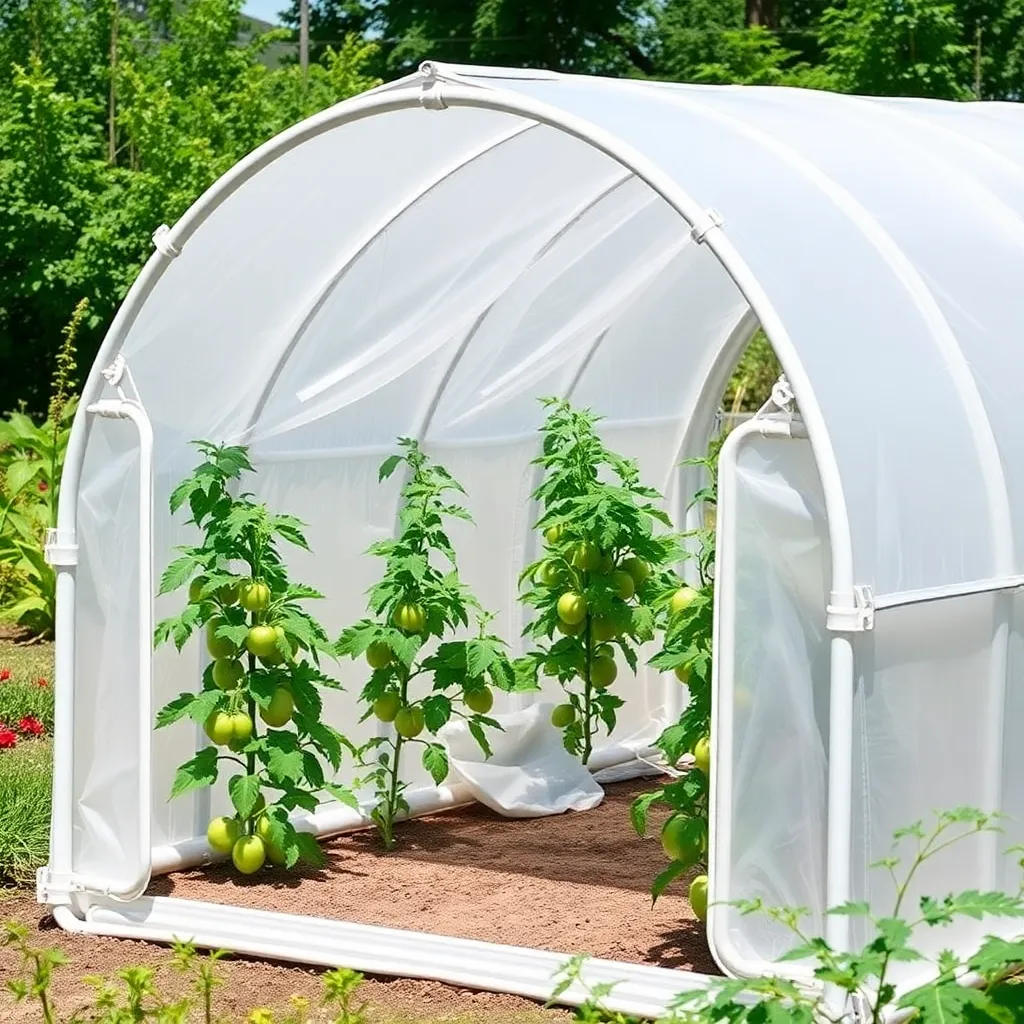
A PVC hoop house is the fastest, cheapest greenhouse you can build. The entire 10×16-foot structure in these plans — frame, cover, and door — costs under $200 in materials and goes up in a single weekend with two people and a drill. When the growing season ends, you can pull the hoops, fold the poly cover, and stack everything in a corner of the garage until spring.
The design uses 1-inch Schedule 40 PVC pipe bent over rebar ground stakes to form a series of arched hoops. Polyethylene greenhouse film (4-mil or 6-mil) covers the hoops and is secured with wiggle wire or snap clamps. The end walls are squared up with PVC connectors and braced with diagonal cross pieces.
Want 16,000+ step-by-step woodworking plans?
Ted’s Woodworking has plans for every skill level — from simple shelves to full bedroom sets. Each plan includes a cut list, material list, and detailed diagrams. Browse Ted’s plans →
Step 1: Lay Out the Footprint and Drive Rebar Stakes
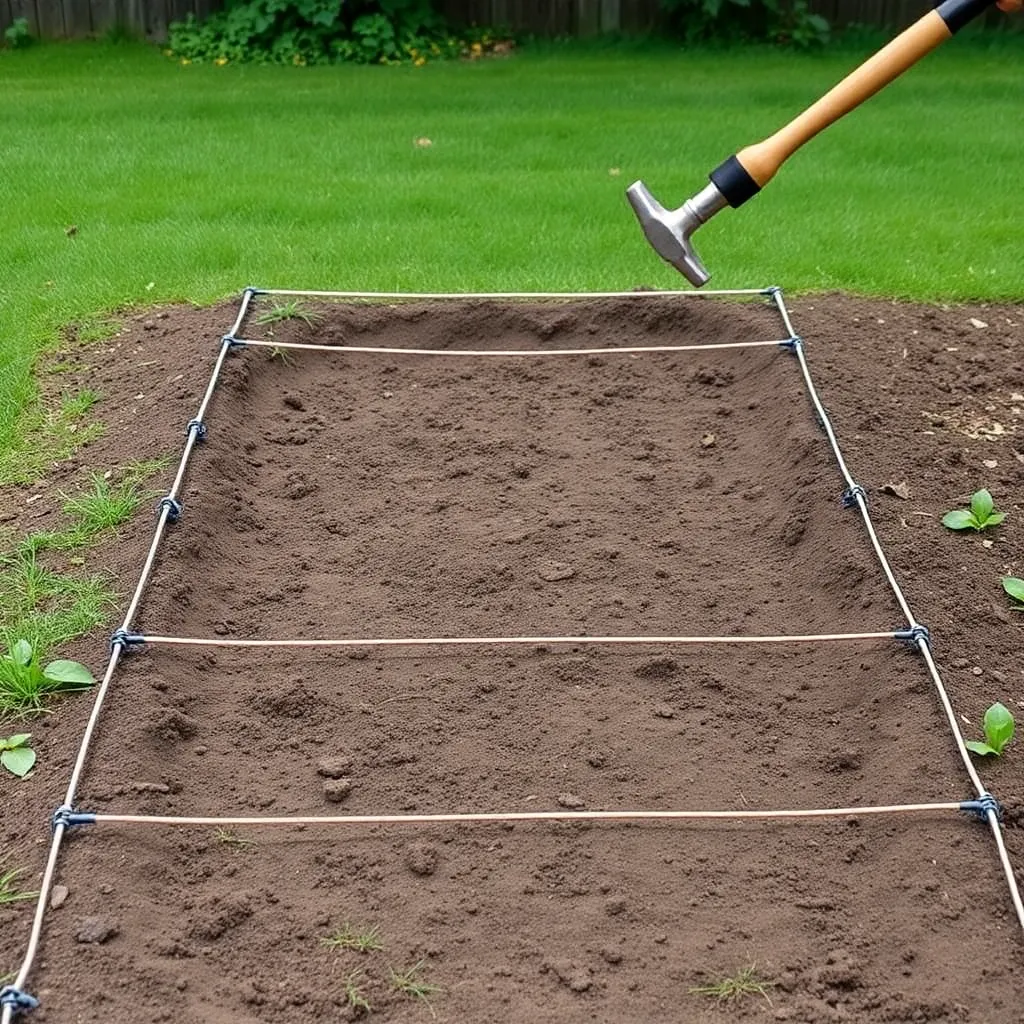
Mark the 10×16-foot footprint with stakes and string, squaring the corners (diagonal measurements must be equal). Drive 2-foot lengths of 1/2-inch rebar into the ground at 4-foot intervals along both long sides — 5 stakes per side, 10 total. Leave 12 inches of rebar above grade. These are the anchor points for your hoops.
Space the rows 10 feet apart (the width of the structure). The hoops span from one side to the other, bending over the rebar stakes. At 10 feet wide, 10-foot lengths of 1-inch Schedule 40 PVC pipe create a hoop approximately 6.5 feet tall at the center — enough headroom to walk comfortably under.
Step 2: Cut and Bend the PVC Hoops
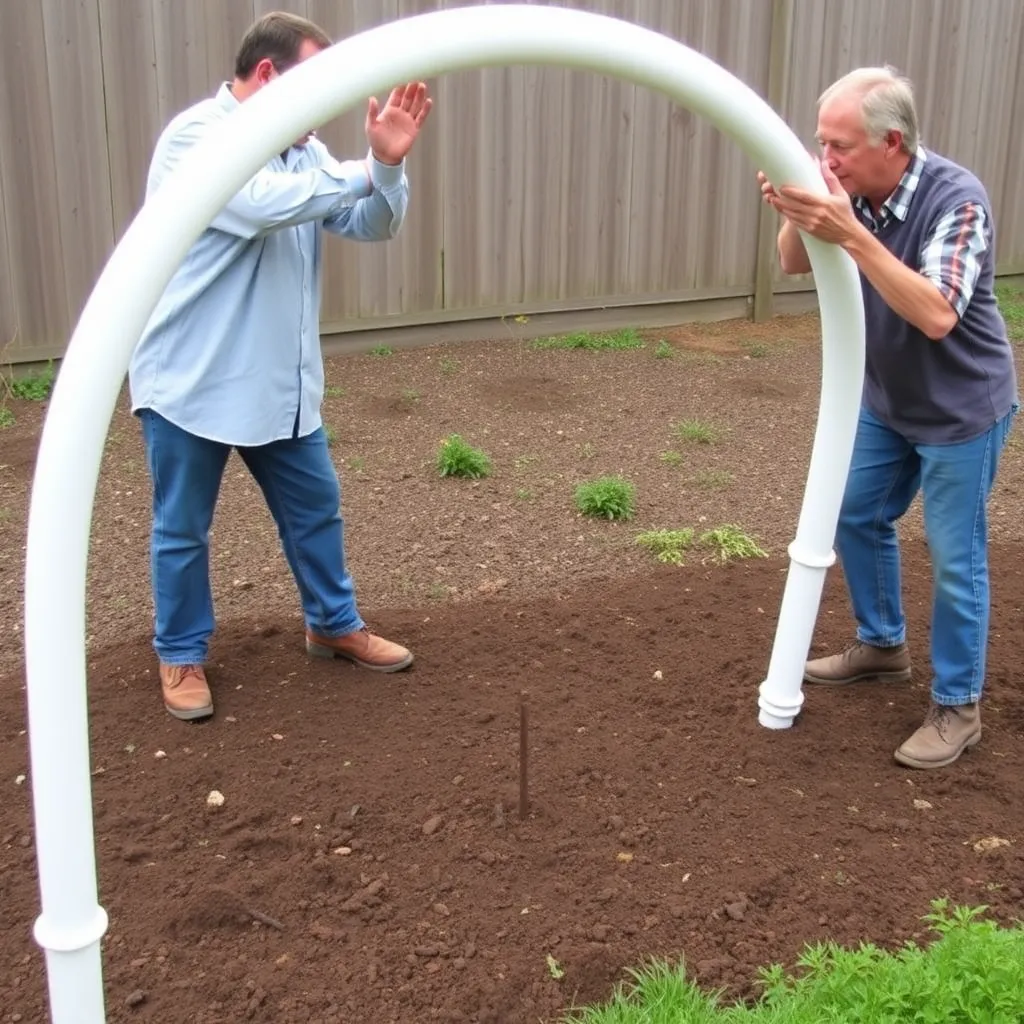
Cut 10-foot lengths of 1-inch Schedule 40 PVC (4 per hoop, or use single 10-foot sticks for a tighter arch). Slip one end of a 10-foot stick over a rebar stake on one side, bend the pipe in a smooth arc over the top, and slip the other end over the matching rebar stake on the opposite side. The pipe will hold the arch naturally — no heat or special tools needed.
Install hoops at each pair of stakes: 5 hoops total for a 16-foot-long structure, positioned at 0, 4, 8, 12, and 16 feet. Once all hoops are in place, run a horizontal ridgepole of PVC along the top of all the arches, connecting each hoop at its crown with a tee connector glued in place. This ridgepole ties the structure together and prevents the hoops from racking.
Step 3: Build the End Wall Frames
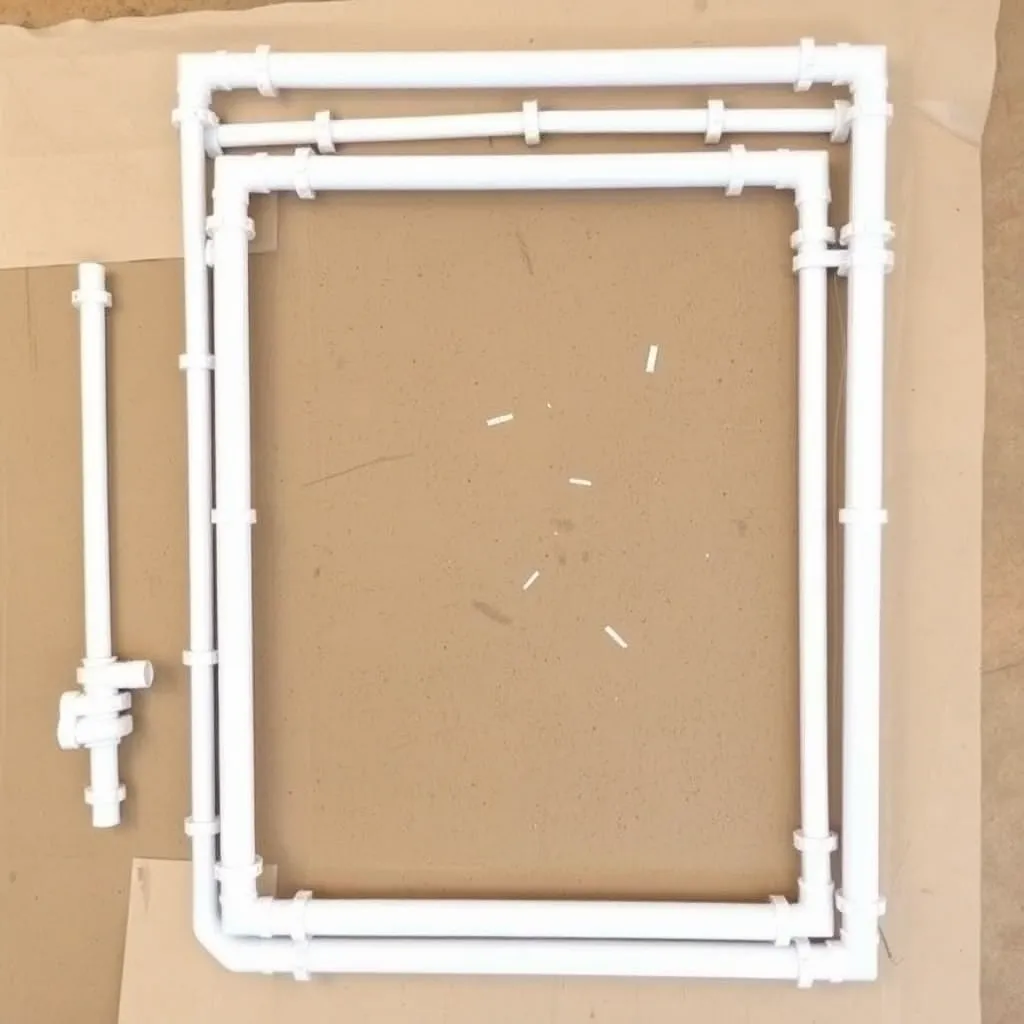
Each end wall is a rectangular frame with a door opening. Use 1-inch PVC pipe and tee, elbow, and cross connectors (no glue needed for seasonal structures — friction-fit holds adequately). Frame the perimeter of each 10-foot-wide end wall, add a door opening (nominally 32×72 inches), and brace each end wall with a diagonal from the top corner to the lower opposite corner.
Drive rebar stakes at the four corners of each end wall and slip the end wall frame sections over them to anchor the walls to the ground. Connect the end walls to the first and last hoops with short horizontal connector pieces to lock everything in position.
Step 4: Install the Polyethylene Film Cover
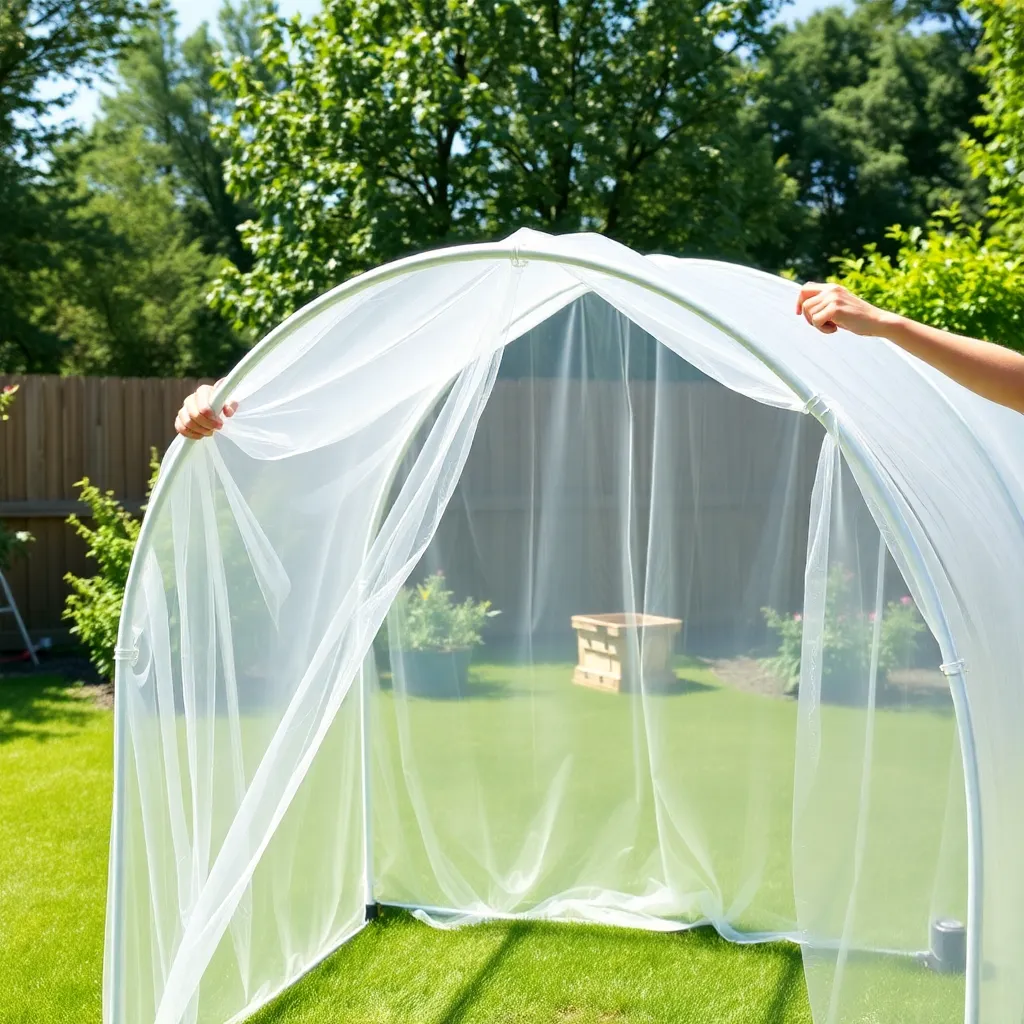
Use 4-mil or 6-mil greenhouse polyethylene — not standard construction poly, which degrades in UV within a season. Cut the film to length: you need about 36 feet to cover the 16-foot length with enough overhang to bury or stake the edges. Roll the film over the hoops starting from one end, pulling it snug and even.
Secure the film to each hoop using snap clamps (also called lock clamps) or wiggle wire channels screwed to a 1×4 baseboard running along the ground on each side. Bury the bottom edge of the poly in a shallow trench and backfill, or stake it to the ground with landscape staples every 2 feet. This basal seal is important — wind will billow under unsecured poly and tear it loose.
Step 5: Cover the End Walls and Add a Door
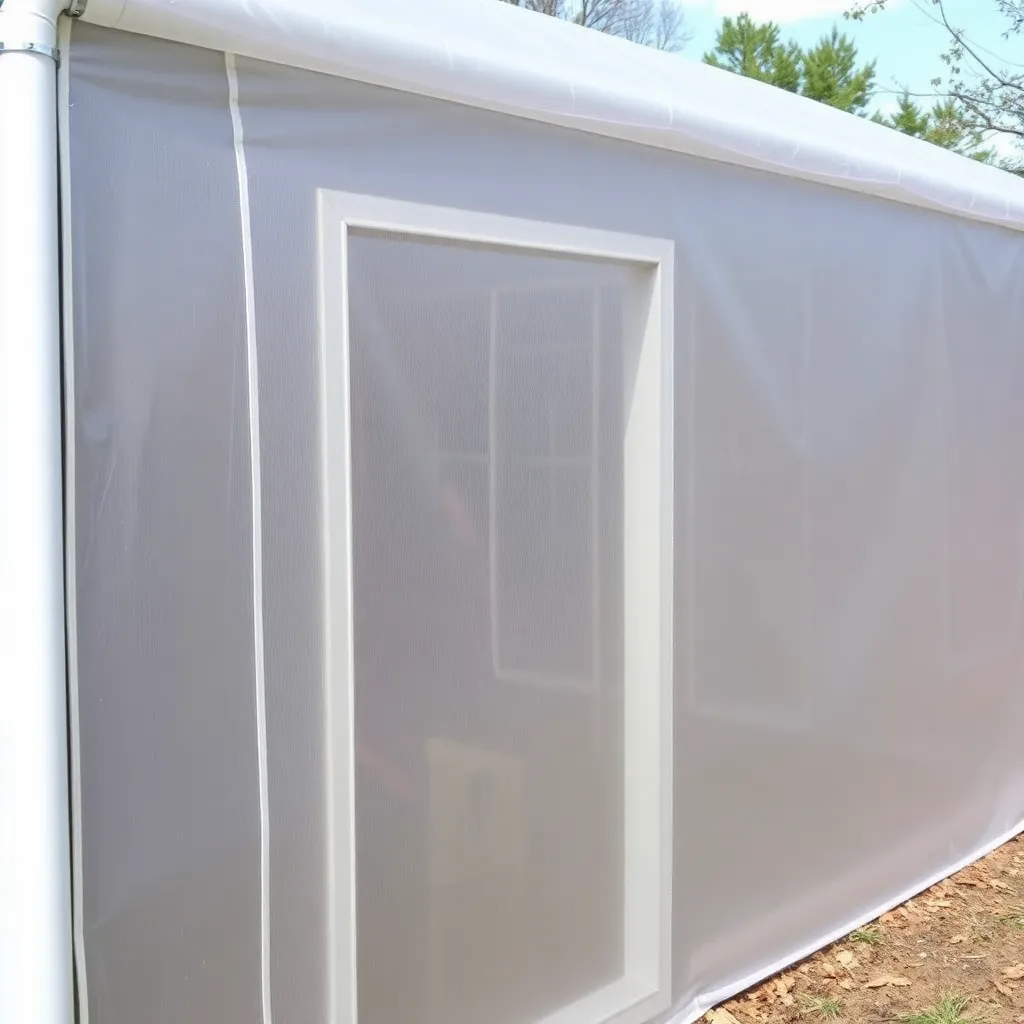
Cut end wall poly pieces to fit each triangular gable. Staple or clamp them to the end wall frame. For the door opening, cut the film and fold it back, securing it temporarily with a clamp while you build the door.
The simplest door for a PVC hoop house is a piece of the same poly film cut larger than the door opening, with a horizontal PVC pipe sewn into a pocket at the bottom for weight. It hangs from a horizontal PVC piece across the top of the opening and can be rolled up and tied in warm weather. For a more rigid door, build a simple rectangle of PVC to match the opening, cover it with poly, and hang it with zip ties threaded through holes in the frame.
Step 6: Add Ventilation and Anchor Against Wind
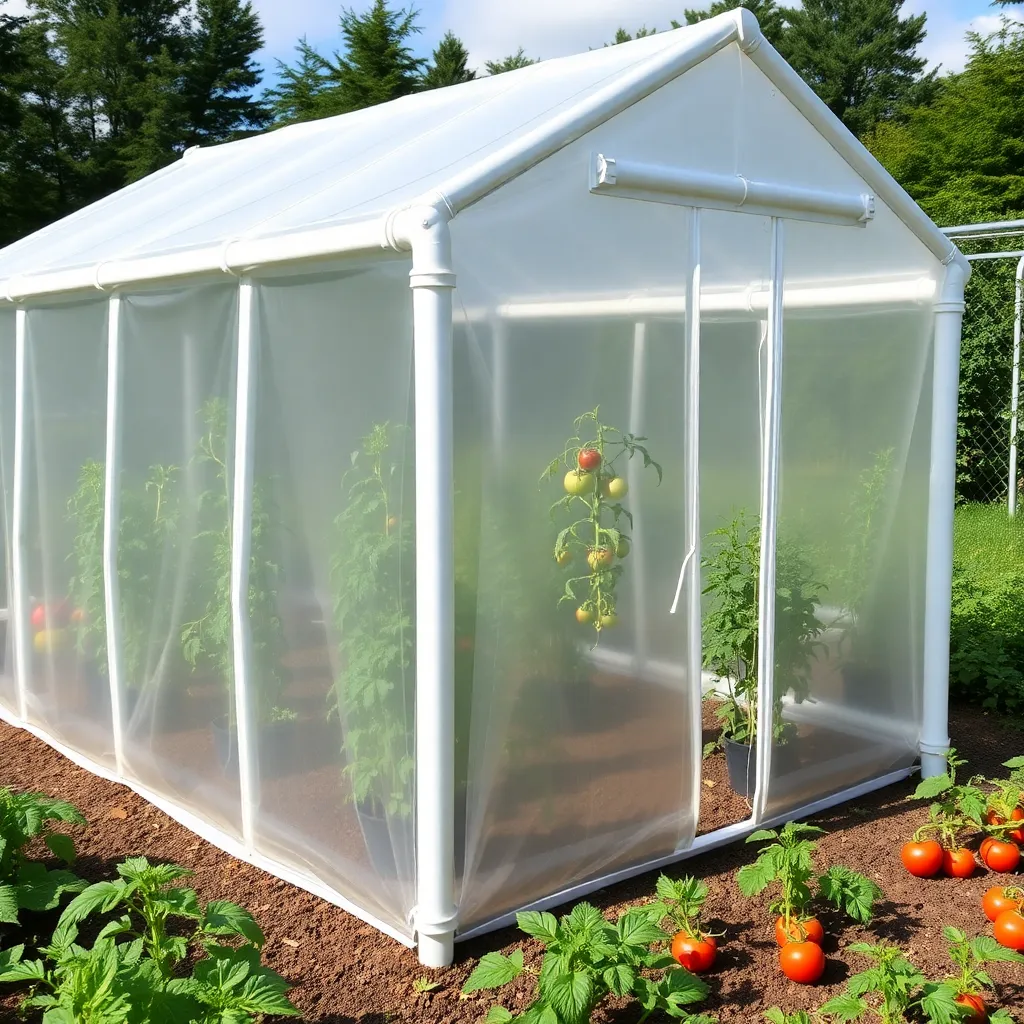
Roll-up sides are the standard ventilation method for hoop houses: unclip or unstake the bottom edge of the poly along one or both long sides and roll it up to a comfortable height, holding the roll with clamps. This creates a natural chimney effect through the open ends and roll-up sides.
For wind anchoring, run a rope over the top of the entire structure from one side to the other every 8 feet, staking the rope ends into the ground. In exposed locations, fill empty gallon jugs with water and hang them inside the structure from the ridgepole as ballast. A 10×16 poly greenhouse acts like a sail in high winds — the ground anchors matter more than you expect.
Want 16,000+ step-by-step woodworking plans?
Ted’s Woodworking has plans for every skill level — from simple shelves to full bedroom sets. Each plan includes a cut list, material list, and detailed diagrams. Browse Ted’s plans →
PVC Pipe Greenhouse Plans FAQ
How long does a PVC hoop house last?
The PVC pipe frame lasts indefinitely if stored out of UV when not in use. The polyethylene cover degrades in sun — 4-mil poly typically lasts 1–2 seasons, 6-mil infrared-blocking greenhouse film lasts 3–5 years. Plan on replacing the cover every few seasons; the frame stays.
What size PVC pipe is best for a greenhouse hoop house?
1-inch Schedule 40 PVC is the standard choice for a 10-foot-wide structure — stiff enough to hold its shape but flexible enough to bend without fittings. For wider spans (12–14 feet), use 1-1/4-inch pipe. Avoid thin-wall (Schedule 80 is fine, Schedule 20 is too flexible for greenhouse use).
Can I heat a PVC hoop house?
Yes, but it takes more energy than a solid-wall greenhouse because poly film has very low insulating value. A single layer of 6-mil poly provides roughly R-1. For frost protection down to 25°F, a small propane heater works. For colder climates, add a second layer of poly inside the hoops with a 2-inch air gap (double-poly system) — this roughly doubles the insulating value.
How do I keep the poly from flapping in the wind?
Securing the poly tightly is the key. Bury the bottom edge or stake it every 2 feet. Add horizontal support strings across the top of the hoops spaced 3–4 feet apart (batten strings) to prevent the cover from billowing between hoops. In high-wind areas, rope tie-downs over the structure every 8 feet are essential.
Do I need a permit for a PVC greenhouse?
Most jurisdictions exempt temporary or seasonal structures without permanent foundations from permit requirements. A PVC hoop house on rebar stakes with no concrete footings typically qualifies as temporary. Always confirm with your local building department before building.

“DIY woodworking enthusiast who started with zero experience and a YouTube tutorial.
I build simple, practical projects for my home and share free plans
so other beginners can skip the guesswork.If I can build it, you can too.”