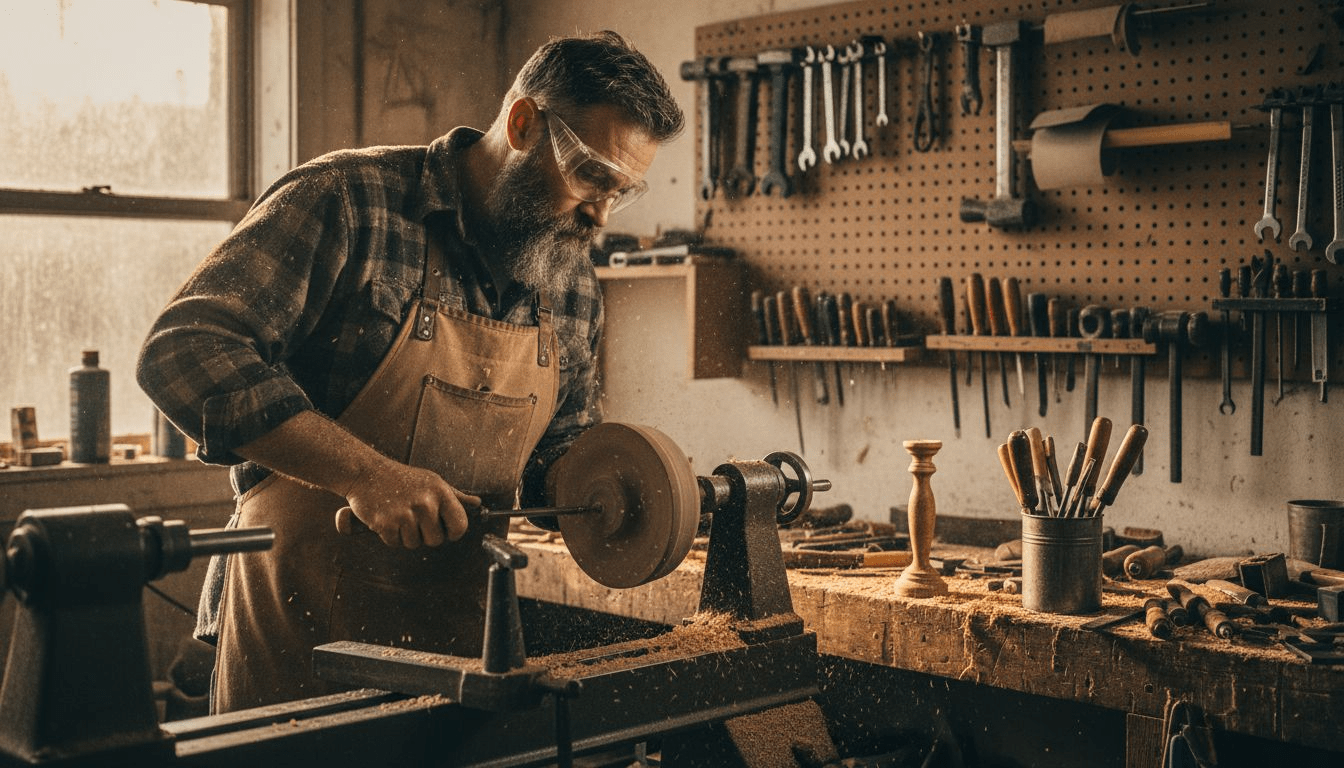
Turning a block of wood into a beautiful bowl or a handmade ornament is more approachable than many people realize. For beginner woodworkers and DIY enthusiasts, wood turning offers a hands-on path to creating unique home décor with lasting craftsmanship. By mastering basic lathe skills and understanding the importance of wood grain and tool selection, you can unlock the creative possibilities of this ancient woodworking tradition. Whether crafting practical items or artistic accents, each project helps you build skills while adding a personal touch to your living space.
Table of Contents
- Defining Wood Turning And Its Creative Scope
- Types Of Wood Lathes And Turning Techniques
- Essential Tools And Materials For Beginners
- Wood Turning Safety Practices And Common Hazards
- Practical Wood Turning Projects For DIY Decor
Key Takeaways
| Point | Details |
|---|---|
| Understanding Wood Turning Techniques | Familiarize yourself with various techniques such as Spindle, Faceplate, and Segmented Turning to enhance your creative options. |
| Invest in Quality Tools | Prioritize essential turning tools and safety equipment to ensure an effective and safe crafting experience. |
| Practice Safety Protocols | Always wear protective gear and maintain a clean workspace to minimize potential hazards during wood turning. |
| Explore DIY Projects | Start with beginner-friendly projects to develop your skills while creating personalized home décor pieces. |
Defining Wood Turning And Its Creative Scope
Wood turning is a fascinating woodworking craft that transforms raw wooden blocks into functional and artistic objects through a specialized rotation technique. Unlike traditional woodworking methods, this craft enables creators to shape symmetrical pieces with remarkable precision and creative expression.
At its core, wood turning involves rotating wooden objects on a lathe while using hand-held tools to sculpt and refine the material. This technique allows woodworkers to create an incredible range of items, from practical kitchen utensils to intricate decorative sculptures. The process fundamentally relies on understanding wood’s unique grain patterns, material properties, and the turner’s skill in manipulating tools.
The creative scope of wood turning is remarkably diverse and includes multiple specialized techniques:
- Spindle Turning: Creating long, cylindrical objects like table legs, baseball bats, and chair spindles
- Faceplate Turning: Crafting wide, circular objects such as bowls, platters, and decorative plates
- Segmented Turning: Constructing complex pieces by assembling multiple wood segments in intricate patterns
- Ornamental Turning: Producing highly detailed, precision-based decorative items with complex geometric designs
Ancient woodworking techniques have evolved from portable manual lathes to sophisticated modern equipment, expanding the possibilities for wood turning artisans. Contemporary wood turners can now create everything from small ornamental pieces to large architectural elements, making this craft both a traditional skill and a cutting-edge artistic medium.
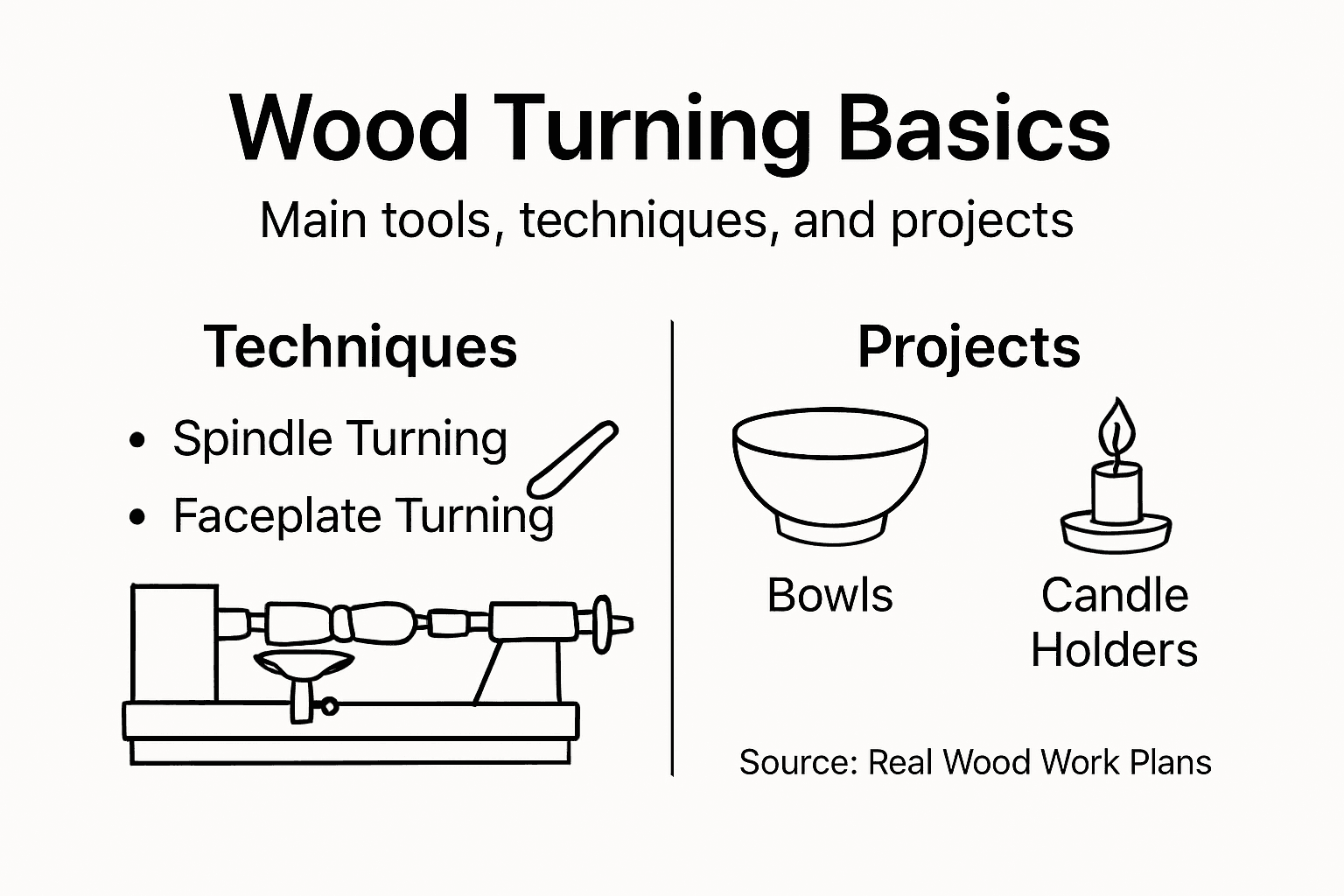
Here’s a summary of major wood turning techniques and their most common uses:
| Technique | Typical Result | Skill Level |
|---|---|---|
| Spindle Turning | Cylindrical legs or bats | Beginner friendly |
| Faceplate Turning | Bowls and platters | Beginner to intermediate |
| Segmented Turning | Patterned decorative items | Advanced |
| Ornamental Turning | Precision geometric designs | Advanced |
Pro tip: Start with soft, forgiving woods like pine when learning wood turning to build confidence and develop fundamental skills without excessive material waste.
Types Of Wood Lathes And Turning Techniques
Wood lathes represent the essential foundation of woodturning, with each type offering unique capabilities and challenges for crafting wooden objects. These remarkable machines have evolved dramatically from their primitive origins, transforming the way artisans shape and create wooden pieces.
Wood lathes vary primarily by their mode of operation, ranging from traditional manual designs to sophisticated modern electric models. The two primary categories include:
-
Reciprocating Lathes: – Utilize bow or spring mechanisms – Rotate wood back and forth manually – Require significant turner skill and precision
-
Continuous Revolution Lathes: – Powered by treadles, water, steam, or electricity – Enable smoother, more consistent cutting – Support more complex turning techniques
Modern woodturning techniques have expanded dramatically beyond traditional methods, introducing innovative approaches that push creative boundaries. Contemporary turners can now utilize advanced multi-axis techniques, allowing for more complex and artistic wooden forms that were previously impossible.
The primary turning techniques reflect the diverse possibilities of woodworking craftsmanship:
- Spindle Turning: Creating long, thin objects like chair legs and baseball bats
- Bowl Turning: Producing hollow, rounded vessels and decorative containers
- Multi-Axis Turning: Generating complex, asymmetrical artistic shapes
- Hollowing: Crafting intricate internal cavities in wooden pieces
Selecting the right lathe and technique depends entirely on understanding your specific project requirements and wood characteristics.
Pro tip: Invest time in learning multiple lathe types and techniques, as versatility is key to becoming a skilled woodturner.
Essential Tools And Materials For Beginners
Wood turning demands a strategic approach to selecting tools and materials, especially for newcomers eager to explore this intricate craft. Understanding the essential equipment can transform a novice’s initial experience from frustrating to fulfilling.
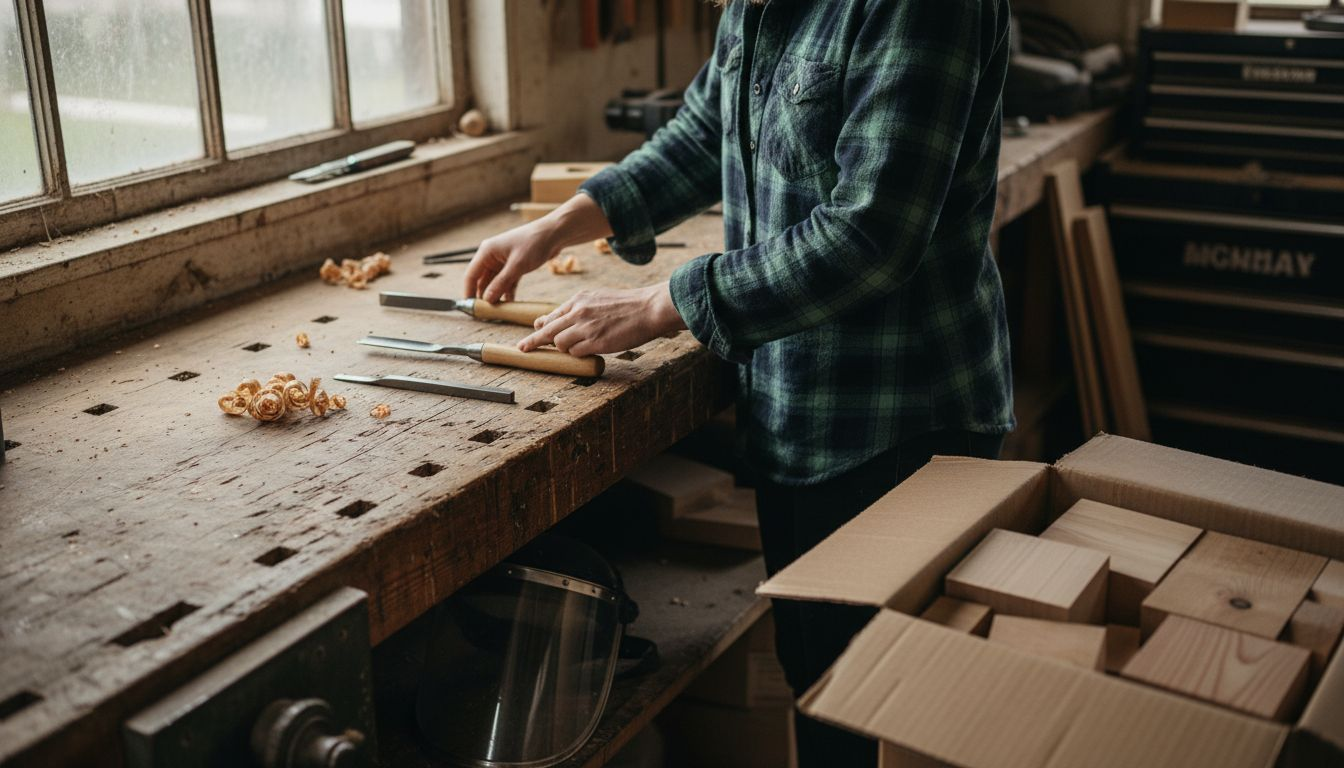
Woodturning requires specific tools and safety equipment for successful projects. Beginners should invest in a core set of fundamental tools and protective gear:
Primary Turning Tools:
- Spindle Gouges: For creating detailed, smooth cuts on long wooden pieces
- Bowl Gouges: Specialized for forming rounded, hollow vessels
- Scrapers: Useful for finishing surfaces and removing remaining rough areas
- Parting Tools: Critical for separating finished pieces from wood stock
Safety Equipment:
- Face shields
- Dust masks
- Protective ear coverings
- Close-fitting workshop clothing
- Non-slip workshop shoes
Wood selection represents another crucial aspect of successful woodturning. Different wood types offer unique characteristics that impact turning difficulty and final product quality:
Compare the advantages and challenges of key wood types used in wood turning:
| Wood Type | Main Advantage | Key Challenge |
|---|---|---|
| Pine | Soft, easy to shape | Can dent and scratch easily |
| Maple | Smooth finishes, affordable | Can burn with dull tools |
| Green Wood | Easy cutting, quick shaping | Prone to warping on drying |
| Dry Wood | Stable finished shapes | Harder, dulls tools faster |
-
Green Wood: – Easier to cut and shape – More prone to warping – Ideal for beginners learning basic techniques
-
Dry Wood: – More stable during turning – Requires sharper tools – Produces more predictable final results
Investing in quality tools and understanding wood properties are more important than having an extensive collection of equipment.
Pro tip: Start with affordable, readily available wood types like pine or maple to practice techniques before investing in expensive exotic wood materials.
Wood Turning Safety Practices And Common Hazards
Wood turning involves intricate techniques that require meticulous attention to safety. Understanding and implementing comprehensive safety protocols can mean the difference between an enjoyable crafting experience and a potentially dangerous workshop scenario.
Woodturning safety emphasizes personal protective equipment to prevent potential injuries during project creation. The essential safety gear includes:
Personal Protective Equipment:
- Face shields to protect against flying wood fragments
- Dust masks to prevent respiratory issues
- Hearing protection to minimize noise exposure
- Close-fitting clothing to reduce entanglement risks
- Non-slip workshop shoes
Common Woodturning Hazards:
- Tool kickback
- Unexpected wood grain irregularities
- Machinery entanglement risks
- Flying wood debris
- Dust particle inhalation
- Potential tool slippage
Workshop setup and tool maintenance play critical roles in preventing accidents. Woodturners should focus on several key safety practices:
- Workpiece Securing: Always ensure wood is firmly and correctly mounted
- Tool Maintenance: Keep cutting tools consistently sharp
- Workspace Organization: Maintain a clean, uncluttered work area
- Machine Inspection: Regularly check lathe for potential mechanical issues
- Proper Technique: Learn and practice correct turning methods
Safety in woodturning is not about perfection, but consistent awareness and proactive prevention.
Pro tip: Always perform a quick safety equipment and workspace check before beginning any woodturning project, treating safety as a non-negotiable first step.
Practical Wood Turning Projects For DIY Decor
Wood turning transforms ordinary wooden blocks into extraordinary home décor pieces that reflect personal creativity and craftsmanship. Each project offers an opportunity to develop skills while producing unique, functional art for your living space.
DIY woodturning enables personalized home decoration through a variety of engaging projects suitable for different skill levels. Beginners and experienced turners alike can create stunning pieces that enhance interior design:
Beginner-Friendly Decor Projects:
- Wooden candle holders
- Simple decorative bowls
- Picture frame bases
- Basic table centerpieces
- Rustic wall hooks
- Decorative ornaments
Intermediate Complexity Projects:
- Intricate vases
- Segmented wooden fruit bowls
- Wine bottle stoppers
- Textured wall art pieces
- Unique lamp bases
- Decorative kitchen utensils
Each project provides an opportunity to experiment with different wood types, finishes, and turning techniques. Woodturners can personalize their creations by:
- Selecting interesting wood grain patterns
- Applying unique stains or finishes
- Incorporating decorative texturing techniques
- Combining multiple wood types in single projects
- Adding personalized engravings or details
Successful woodturning projects balance technical skill with creative vision, transforming raw materials into functional art.
Pro tip: Always sketch your project design beforehand and select wood that complements your intended design and home décor style.
Unlock Your Wood Turning Potential With Expert DIY Plans
If you are inspired by wood turning and eager to transform your ideas into beautifully crafted wooden art, mastering the right techniques and tools can feel overwhelming. The challenge of choosing suitable projects, understanding wood types, and safely operating a lathe can hold back your creative journey. This is where having clear, step-by-step woodworking plans becomes essential to building confidence and skill.

Discover how Real Wood Work Plans helps woodturners at every level turn their passion into accomplishment. Our carefully designed projects focus on beginner-friendly guidance while encouraging creative exploration through detailed instructions. Whether you want to start with simple spindle turning or venture into intricate bowl and segmented turning, our plans provide the foundation for success. Visit Real Wood Work Plans today and take the next step to enhance your craftsmanship. Let us help you bring your wood turning dreams to life with trusted resources designed for hobbyists and seasoned artisans alike.
Frequently Asked Questions
What is wood turning?
Wood turning is a woodworking craft that involves rotating a wooden object on a lathe while using hand-held tools to shape and refine the material into functional or artistic items.
What are the main techniques used in wood turning?
The primary techniques in wood turning include spindle turning, faceplate turning, segmented turning, and ornamental turning, each enabling the creation of different shapes and objects.
What tools do beginners need for wood turning?
Beginners should invest in essential tools such as spindle gouges, bowl gouges, scrapers, and parting tools, alongside personal protective equipment like face shields and dust masks for safety.
How can I ensure safety while wood turning?
To ensure safety in wood turning, wear appropriate personal protective equipment, maintain a clean workspace, keep tools sharp, and secure the workpiece properly on the lathe.
Recommended

“DIY woodworking enthusiast who started with zero experience and a YouTube tutorial.
I build simple, practical projects for my home and share free plans
so other beginners can skip the guesswork.If I can build it, you can too.”