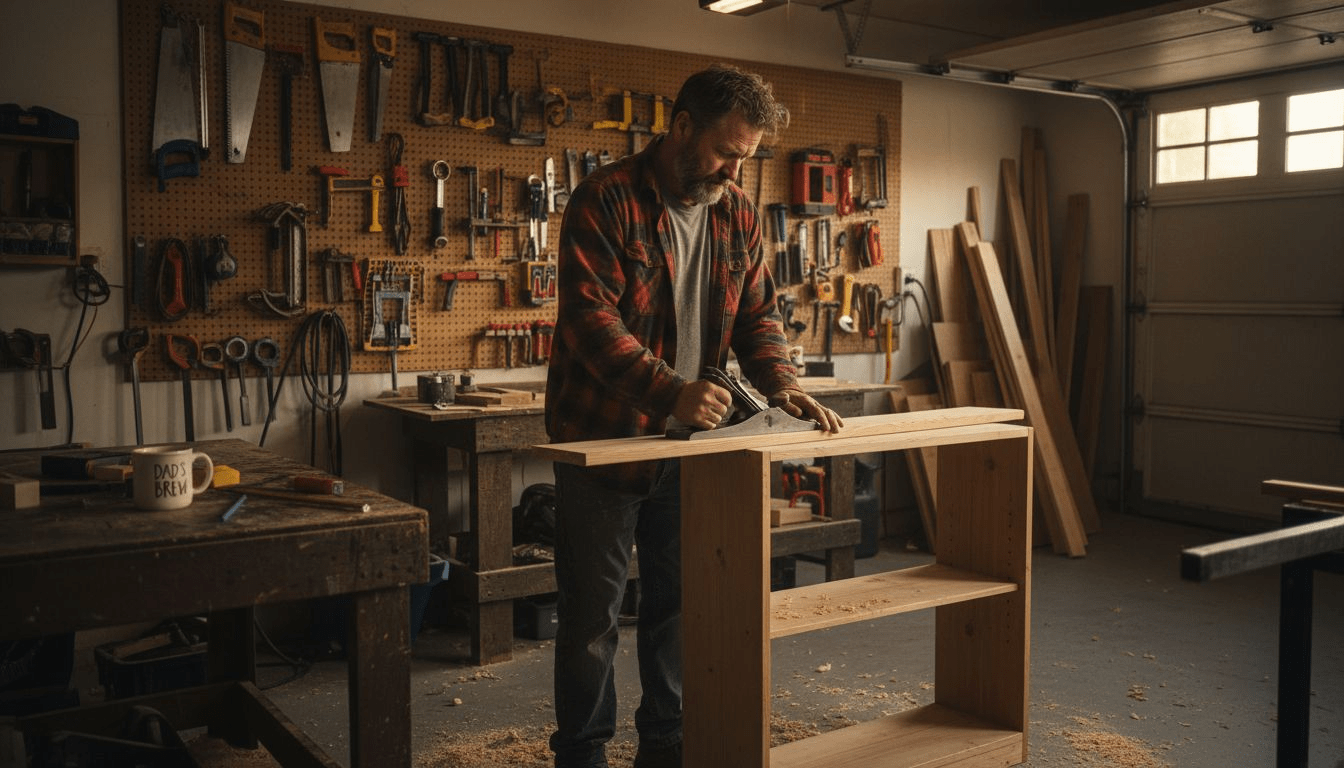
Did you know that regular woodworking sessions can reduce your stress levels by roughly 36%? Beyond this surprising mental boost, DIY woodworking delivers economic savings, skill growth, and creative fulfillment that transforms how you approach furniture and décor projects. Whether you’re a beginner exploring your first coffee table or an experienced crafter refining joinery techniques, understanding these multifaceted advantages will elevate your woodworking journey and help you make informed decisions about your next project.
Table of Contents
- Introduction To DIY Woodworking Benefits
- Physical And Mental Health Benefits
- Economic Savings And Cost-Effectiveness
- Skill Development And Craftsmanship Growth
- Customization And Personal Expression
- Common Misconceptions About DIY Woodworking
- Practical Application And Project Planning Best Practices
- Explore Expert Woodworking Plans And Tips
- Frequently Asked Questions About DIY Woodworking Benefits
Key takeaways
| Point | Details |
|---|---|
| Health benefits | Woodworking reduces stress by about 36% and activates both creative and logical brain regions for enhanced cognitive function. |
| Cost savings | DIY projects typically save 40 to 60% compared to retail furniture while offering complete customization freedom. |
| Skill development | Regular practice improves fine motor skills, spatial reasoning, and craftsmanship through structured progression with detailed plans. |
| Creative expression | Customization allows you to design pieces that perfectly match your home’s style, dimensions, and functional requirements. |
| Planning impact | Using detailed plans reduces errors by 30% and waste by 20%, improving project success and material efficiency. |
Introduction to DIY woodworking benefits
DIY woodworking blends hands-on creativity with technical craftsmanship, producing tangible results you can use and display in your home. This hobby offers four major benefit categories: physical health improvements, mental wellbeing gains, economic advantages, and opportunities for personal expression. Each category delivers distinct value, whether you’re seeking stress relief, budget savings, skill mastery, or unique furniture designs.
Detailed woodworking plans play a crucial role in maximizing these benefits. They provide step-by-step instructions, precise measurements, and material lists that minimize guesswork and costly mistakes. Without structured guidance, beginners often waste materials through cutting errors, miscalculations, or incomplete preparation. Plans also accelerate skill development by teaching proper techniques and introducing tools in a logical sequence.
Many newcomers believe woodworking requires expensive professional equipment or years of apprenticeship. These misconceptions discourage people from starting. In reality, most beginner projects need just five affordable tools: a saw, drill, sander, measuring tape, and clamps. You can complete satisfying projects within weekends, not months.
Structured plans increase project satisfaction by setting clear expectations and breaking complex builds into manageable steps. When you follow a proven blueprint, you spend less time troubleshooting and more time enjoying the creative process. This guidance transforms potentially frustrating experiences into confident learning opportunities that build momentum for future projects.
Key categories of woodworking benefits include:
- Physical activity that improves coordination and motor skills
- Mental engagement that reduces stress and boosts problem-solving abilities
- Financial savings from creating furniture at a fraction of retail costs
- Creative freedom to design custom pieces matching your exact preferences
- Community connections through shared projects and collaborative learning
Physical and mental health benefits
Woodworking provides measurable improvements to both mental and physical wellbeing. Research shows that engaging in DIY woodworking significantly reduces stress through focused manual activity combined with creative expression. After regular woodworking sessions, participants report approximately 36% lower stress levels compared to sedentary activities.

This craft activates multiple brain regions simultaneously. Your logical left hemisphere handles measurements, sequences, and problem-solving while your creative right hemisphere manages design choices, aesthetics, and spatial visualization. This balanced engagement produces a flow state where time seems to pass quickly and worries fade into the background.
Beyond stress reduction, woodworking builds emotional resilience through tangible accomplishment. Completing a bookshelf or side table provides concrete evidence of your capabilities, boosting self-confidence and combating feelings of inadequacy. Each finished project reinforces your ability to plan, execute, and overcome challenges.
“The repetitive motions of sanding, cutting, and assembling wood create a meditative rhythm that calms racing thoughts and centers attention on the present moment, offering therapeutic benefits similar to mindfulness practices.”
Physical benefits extend to fine motor skill improvement and hand-eye coordination. Precise sawing, drilling, and finishing work train your muscles to execute controlled, delicate movements. These skills transfer to other areas of life, from cooking to home repairs, enhancing overall dexterity.
Key mental and physical benefits include:
- Stress reduction of roughly 36% through focused, creative work
- Enhanced cognitive function from engaging both brain hemispheres
- Improved emotional wellbeing and sense of accomplishment
- Better fine motor skills and hand-eye coordination
- Increased physical activity compared to sedentary hobbies
- Meditative flow states that promote mindfulness and presence
Economic savings and cost-effectiveness
DIY woodworking delivers substantial financial advantages over purchasing commercial furniture. Projects typically cost 40 to 60% less than equivalent retail items when you source materials wisely and follow efficient plans. A handmade dining table might require $150 in lumber and supplies while comparable store-bought versions exceed $400.

Careful material planning prevents cost overruns and reduces waste. Detailed plans specify exact dimensions and quantities, letting you purchase only what you need. This precision eliminates expensive mistakes like buying insufficient wood or cutting pieces incorrectly. You can often use leftover materials from one project as starting points for smaller builds.
Reusing and repurposing materials maximizes savings further. Salvaged wood from old furniture, pallets, or construction sites often costs nothing but provides quality material for rustic or distressed projects. This approach combines environmental responsibility with budget consciousness, appealing to makers who value sustainability.
| Item | DIY Cost | Retail Cost | Savings | Customization |
|---|---|---|---|---|
| Coffee table | $80 to $120 | $250 to $400 | 50 to 68% | Full control over size, finish, style |
| Bookshelf | $60 to $100 | $180 to $300 | 60 to 67% | Custom dimensions for your space |
| Dining table | $150 to $250 | $400 to $800 | 56 to 69% | Choose wood type, leg style, finish |
| Nightstand | $40 to $70 | $120 to $200 | 58 to 67% | Match existing bedroom décor |
Budget-friendly strategies for woodworking projects:
- Start with softwoods like pine or poplar, which cost less than hardwoods but still produce attractive results
- Buy lumber in bulk or during sales to reduce per-board costs
- Join local woodworking communities to access tool sharing and material swaps
- Choose projects with simple joinery techniques that require fewer specialized tools
- Plan multiple projects simultaneously to use materials efficiently and minimize waste
- Consider finishing techniques that enhance affordable woods to look premium
Skill development and craftsmanship growth
Consistent woodworking practice accelerates skill acquisition across technical and creative domains. Fine motor skills improve as you master precise cutting, drilling, and sanding techniques. Spatial reasoning develops when you visualize how two-dimensional plans translate into three-dimensional objects, strengthening your ability to mentally rotate and manipulate shapes.
Regular project completion builds confidence through repeated success. Each finished piece proves your growing competence, encouraging you to tackle more complex builds. This positive feedback loop transforms initial uncertainty into assured craftsmanship as you internalize techniques and develop personal workflows.
Community engagement through local clubs, online forums, or workshops helps overcome skill barriers faster than solitary practice. Experienced woodworkers share troubleshooting tips, recommend tools, and demonstrate advanced techniques that would take years to discover independently. For guidance on starting your journey, explore woodworking tips for beginners that cover fundamental skills systematically.
Structured skill progression through detailed plans ensures you learn techniques in logical order. Beginner plans introduce basic tools and joints before advancing to complex designs. This scaffolded approach prevents frustration from attempting projects beyond your current ability while maintaining steady progress toward mastery.
Pro Tip: Start with simple projects like cutting boards or small boxes that teach fundamental skills without overwhelming complexity. Master one new technique per project rather than trying to learn everything simultaneously. This focused approach builds solid foundations for advanced work.
Key aspects of skill development:
- Enhanced fine motor control through repetitive precision work
- Improved spatial reasoning and three-dimensional visualization
- Growing confidence from completing progressively challenging projects
- Access to community knowledge that accelerates learning
- Structured progression from basic to advanced techniques
- Problem-solving abilities that transfer beyond woodworking
Customization and personal expression
Customization ranks among the top motivators for DIY woodworkers who want furniture reflecting their unique tastes and requirements. Unlike mass-produced items limited to standard sizes and finishes, handmade pieces adapt perfectly to awkward spaces, specific color schemes, or functional needs that retail options cannot satisfy.
Personal expression flows through every design choice you make. Selecting wood species, stain colors, hardware styles, and decorative details transforms generic plans into signature creations. A simple bookshelf becomes distinctly yours when you choose walnut over oak, add carved accents, or incorporate hidden compartments for valuables.
Spatial customization solves practical problems that off-the-shelf furniture cannot address. Need a nightstand exactly 18 inches wide to fit between your bed and wall? Build it. Want a coffee table at a specific height to match your couch? Design it. This precision eliminates the compromises and awkward fits common with standard retail dimensions.
Long-term satisfaction from owning custom creations exceeds the temporary pleasure of purchased items. Pieces you built yourself carry emotional significance and stories of problem-solving, skill application, and creative decisions. This connection means you’re more likely to maintain, refinish, and treasure these items for decades rather than discarding them when trends change.
Benefits of customization in woodworking:
- Perfect dimensional fit for unique spaces and layouts
- Complete control over aesthetic choices including wood, finish, and hardware
- Functional modifications tailored to your specific needs
- Emotional connection to pieces you designed and created
- Ability to match existing décor styles precisely
- Opportunity to incorporate personal symbols, patterns, or meaningful details
- Pride of ownership from displaying original craftsmanship
Common misconceptions about DIY woodworking
Myth: Woodworking requires expensive, professional-grade tools costing thousands of dollars. Fact: Most beginner projects need just five affordable tools totaling $150 to $250. A circular saw, cordless drill, random orbit sander, tape measure, and clamps handle 80% of common builds. You can expand your collection gradually as projects demand specialized equipment.
Myth: Woodworking appeals primarily to older adults, particularly retirees with extra time. Fact: Participation among adults aged 25 to 40 has grown significantly in recent years, driven by interest in sustainable living, maker culture, and personalized home décor. Younger woodworkers often share projects on social media, building vibrant online communities.
Myth: The benefits of woodworking are limited to learning basic construction skills. Fact: Mental health improvements, economic savings, creative expression, and social connections extend far beyond technical abilities. These comprehensive benefits impact overall wellbeing, financial health, and personal satisfaction in ways that transcend simple skill acquisition.
Myth: You need a large, dedicated workshop space to pursue woodworking. Fact: Many successful makers operate from garages, basements, or even outdoor patios with portable tools. Compact designs and efficient storage systems let you work in spaces as small as 100 square feet. Folding workbenches and vertical tool storage maximize limited areas.
Myth: Woodworking projects take months to complete, requiring enormous time commitments. Fact: Beginner projects like cutting boards, small shelves, or picture frames often finish within a single weekend. Even substantial furniture pieces typically complete in 10 to 20 hours spread across several sessions, fitting easily into normal schedules.
Myth: All woodworking involves dangerous power tools that frequently cause injuries. Fact: Following basic safety protocols reduces risk dramatically. Proper technique, protective equipment, and attention to detail make woodworking safer than many assume. Hand tool projects eliminate power tool concerns entirely while still producing excellent results.
Practical application and project planning best practices
Effective project planning separates successful builds from frustrating failures. Research demonstrates that using detailed plans reduces errors by 30% while cutting material waste by approximately 20%. These improvements translate directly to cost savings, faster completion times, and higher-quality finished pieces.
Choosing projects matching your current skill level prevents discouragement and material waste. Beginners attempting complex joinery without foundational knowledge often abandon projects halfway through, wasting time and materials. Start with builds rated for your experience level, then gradually increase difficulty as competence grows.
Resource management and time allocation require realistic assessment before starting. Calculate total material costs, estimate completion time honestly, and confirm you have necessary tools. Underestimating these factors leads to project delays, budget overruns, and incomplete builds gathering dust in your workshop.
For comprehensive guidance on managing your projects efficiently, review strategies for woodworking project workflow that cover planning, execution, and finishing phases systematically. Understanding why use woodworking plans helps you appreciate how structured approaches improve outcomes.
Pro Tip: Follow plans closely during your first attempt, resisting the urge to improvise until you understand why each step exists. After mastering the basic build, introduce modifications gradually to match your skill growth and creative vision.
| Factor | With detailed plans | Without plans |
|---|---|---|
| Error rate | 15 to 20% | 45 to 50% |
| Material waste | 10 to 15% | 30 to 35% |
| Completion rate | 85 to 90% | 50 to 60% |
| Average project time | Baseline | 30 to 40% longer |
| Confidence level | High | Low to moderate |
Best practices for effective project planning:
- Read plans completely before purchasing materials or making cuts
- Create a detailed cut list and mark each piece clearly
- Organize materials and tools before starting to maintain workflow
- Break large projects into smaller milestones to track progress
- Document your process with photos for future reference and troubleshooting
- Budget 20% extra time and materials for unexpected challenges
- Review safety procedures specific to each tool and technique
Explore expert woodworking plans and tips
Ready to transform these insights into finished projects? Access hundreds of free woodworking plans designed for every skill level, from beginner-friendly cutting boards to advanced furniture builds. Each plan includes detailed instructions, precise measurements, and material lists that eliminate guesswork and reduce costly errors.
Discover comprehensive guides explaining woodworking plans benefits that boost your success rates and project satisfaction. Learn systematic approaches through expert resources on woodworking project workflow that improve efficiency and confidence. Connect your newfound knowledge with practical tools that help you experience all the health, economic, and creative benefits woodworking offers.
Frequently asked questions about DIY woodworking benefits
What are the easiest woodworking projects for beginners to experience benefits quickly?
Cutting boards, simple picture frames, and small floating shelves offer quick wins that build confidence within a weekend. These projects require minimal tools, teach fundamental techniques like measuring and sanding, and produce useful items you can display immediately. Start with one of these to experience satisfaction and skill development without overwhelming complexity.
How does woodworking improve mental health beyond stress relief?
Woodworking enhances cognitive function by engaging both creative and analytical thinking simultaneously, strengthening neural pathways. It builds emotional resilience through tangible accomplishments that prove your capabilities. The meditative rhythm of repetitive tasks like sanding promotes mindfulness, while problem-solving challenges during builds improve adaptability and confidence in other life areas.
Can DIY woodworking really save money compared to buying ready-made furniture?
Yes, DIY projects typically cost 40 to 60% less than equivalent retail furniture when you plan materials carefully. A handmade coffee table might require $100 in materials versus $300 for a similar store-bought version. Savings increase further when you reuse salvaged materials or build multiple pieces efficiently, though you must account for tool investments if starting from scratch.
What tools do I need to get started without a big investment?
Five essential tools costing $150 to $250 total handle most beginner projects: a circular saw for cutting boards, cordless drill for assembly, random orbit sander for finishing, tape measure for accuracy, and clamps to hold pieces during gluing. Start with these basics and add specialized tools only when specific projects require them, spreading costs across your woodworking journey.
How can I ensure my woodworking projects fit my home’s style and space?
Measure your intended space precisely before selecting or modifying plans, accounting for clearances and surrounding furniture. Choose wood species and finishes that complement your existing décor by bringing home small samples to compare. Customize dimensions within plans to achieve perfect fits, and consider incorporating design elements like hardware or edge profiles that match your home’s aesthetic for cohesive integration.
DIY projects:
DIY Wooden Coffee Table
DIY Shoe Rack
Recommended
- Woodworking Trends 2026: Innovations Shaping DIY
- Master Your Woodworking Project Workflow for DIY Success
- Real Woodwork Plans – Free Woodworking Plans
- Woodworking Tips for Beginners: Build Skills Step-by-Step

“DIY woodworking enthusiast who started with zero experience and a YouTube tutorial.
I build simple, practical projects for my home and share free plans
so other beginners can skip the guesswork.If I can build it, you can too.”