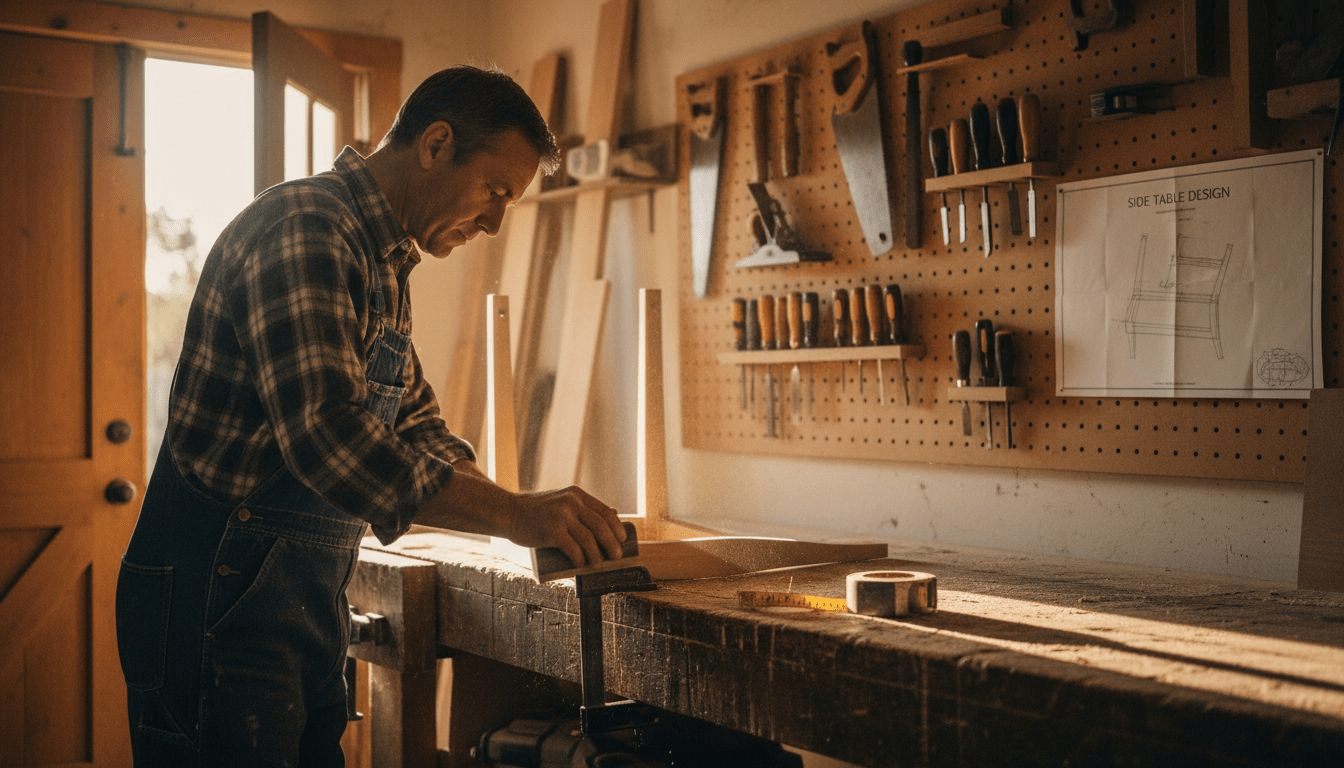
Getting lost in woodworking conversations about cabriole legs or mortise joints? For many beginners, unfamiliar furniture making terms quickly turn simple plans into confusion. Building your vocabulary opens the door to clearer project steps and more accurate results. This guide focuses on essential furniture making terminology, offering straightforward definitions that help you confidently read instructions, follow design plans, and communicate with other woodworkers worldwide.
Table of Contents
- Furniture Making Terms Explained Clearly
- Types of Wood, Materials, and Finishes
- Essential Tools and Joint Terminology
- Common Furniture Styles and Construction
- Avoiding Misunderstandings and Costly Errors
Key Takeaways
| Point | Details |
|---|---|
| Understanding Terminology | Mastering furniture making terminology enhances communication and execution in woodworking projects. |
| Material Selection | Choosing the right wood and finishes directly impacts furniture quality, durability, and aesthetics. |
| Essential Tools | Familiarity with essential woodworking tools and joint types is crucial for creating strong and precise furniture pieces. |
| Error Prevention | Systematic approaches to avoid measurement and tool-related errors can significantly improve project outcomes. |
Furniture Making Terms Explained Clearly
Understanding furniture making terminology transforms amateur woodworking from guesswork into a precise craft. While technical vocabulary might seem intimidating, mastering these key concepts empowers DIY enthusiasts to create professional-quality pieces with confidence. Professional furniture terminology provides the essential language for communicating design intentions and executing woodworking projects accurately.
Furniture making involves numerous specialized terms that describe structural components, design techniques, and aesthetic elements. Here are some fundamental categories of furniture making vocabulary:
-
Structural Terms:
- Apron: Horizontal support piece connecting table legs
- Stretcher: Horizontal bar connecting chair or table legs for stability
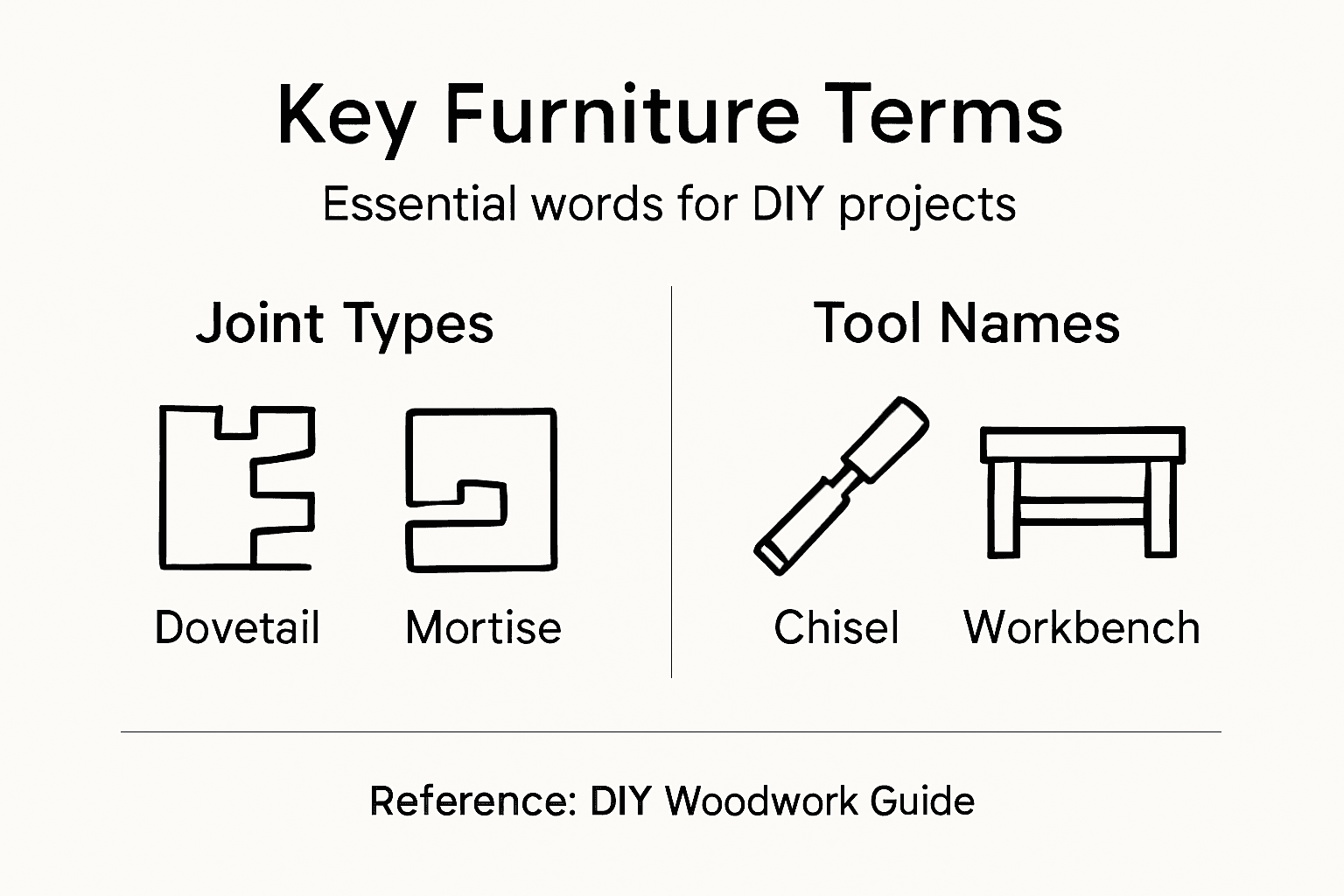
- Mortise: Carved cavity designed to receive a tenon joint
- Tenon: Protruding wooden piece inserted into a mortise for connection
-
Design Elements:
- Cabriole leg: Curved furniture leg with an S-shaped profile
- Ball and claw foot: Ornamental foot resembling an animal’s foot clutching a ball
- Cupid’s bow top: Curved, arched furniture top resembling an archer’s bow
Historical furniture styles also contribute unique terminology that helps woodworkers understand design traditions. Furniture vocabulary from different historical periods reveals intricate design philosophies and craftsmanship techniques passed down through generations.
Pro tip: Create a personal reference notebook with sketches and definitions of key furniture making terms to quickly build your woodworking vocabulary and understanding.
Types of Wood, Materials, and Finishes
Choosing the right wood, materials, and finishes is crucial for creating durable and visually appealing furniture pieces. Furniture construction materials play a critical role in determining the overall quality, functionality, and longevity of woodworking projects. Understanding the characteristics of different wood types and finishing techniques empowers DIY enthusiasts to make informed decisions.
Wood types for furniture making can be broadly categorized into several key groups:
-
Hardwoods:
- Oak: Durable, strong, with prominent grain patterns
- Maple: Dense, smooth, with minimal grain variation
- Walnut: Rich dark color, excellent for elegant pieces
- Cherry: Warm reddish tone, ages beautifully
-
Softwoods:
- Pine: Lightweight, affordable, easy to work with
- Cedar: Naturally resistant to moisture and insects
- Spruce: Lightweight, straight grain
- Redwood: Rot-resistant, ideal for outdoor furniture
Beyond wood selection, materials like plywood, medium-density fiberboard (MDF), and chipboard offer alternative options for different project requirements. Each material brings unique properties such as cost-effectiveness, stability, and weight considerations.
Here’s a quick comparison of hardwoods and softwoods for furniture projects:
| Wood Type | Durability | Workability | Common Uses |
|---|---|---|---|
| Hardwood | Very high | Requires sharper tools | Tables, cabinets |
| Softwood | Moderate to high | Easy to cut and shape | Shelves, frames, trim |
Finishes are equally important in protecting and enhancing wood surfaces. Common finish types include:
- Protective Finishes:
- Polyurethane: Durable, water-resistant coating
- Lacquer: Quick-drying, smooth finish
- Shellac: Natural resin with excellent adhesion
- Varnish: Provides strong surface protection
Pro tip: Always test wood finishes on scrap material first to understand how the color and texture will appear on your specific wood type.
Essential Tools and Joint Terminology
Mastering woodworking requires understanding both essential tools and the intricate terminology of furniture construction. Essential woodworking joint tools form the backbone of creating strong, precise furniture pieces. Knowing which tools to use and how to create different joints can dramatically improve the quality and durability of your woodworking projects.
Key hand tools every woodworker should have in their arsenal include:
-
Cutting Tools:
- Chisels: For carving and cleaning joints
- Hand saws: Precise manual cutting
- Band saw: Versatile power cutting tool
- Coping saw: Intricate curved cuts
-
Measuring and Marking Tools:
- Combination square: Measuring and marking angles
- Marking gauge: Precise wood marking
- Tape measure: Quick length measurements
- Carpenter’s pencil: Marking wood surfaces
Woodworking joints are the critical connections that transform individual pieces of wood into robust furniture structures. Furniture making joint types provide different strengths and aesthetic qualities:
- Common Joint Types:
- Dovetail: Strongest decorative joint
- Mortise and tenon: Traditional strong connection
- Butt joint: Simplest connection method
- Tongue and groove: Alignment and strength
- Rabbet joint: Used for drawer and cabinet construction
Understanding how to select and execute the right joint can mean the difference between a piece that falls apart and one that becomes a treasured heirloom. Precision, practice, and the right tools are key to mastering these fundamental woodworking skills.

Pro tip: Invest in high-quality, sharp tools and practice joint techniques on scrap wood before attempting your final project.
Common Furniture Styles and Construction
Furniture styles reflect cultural histories and design philosophies that evolve through generations. Historical furniture design principles showcase how craftsmanship and aesthetic preferences transform over time, creating distinctive architectural and decorative approaches to furniture making.
Classic furniture styles represent unique design philosophies:
-
European Styles:
- Jacobean: Heavy, ornate designs with intricate carvings
- Queen Anne: Elegant curved lines and cabriole legs
- Chippendale: Refined, sophisticated woodworking techniques
- Art Deco: Geometric shapes and bold architectural elements
-
Global Furniture Styles:
- Scandinavian: Minimalist, functional design
- Mid-Century Modern: Clean lines and organic curves
- Japanese: Minimalist, low-profile construction
- Colonial American: Practical, sturdy woodworking
Furniture construction principles involve understanding how structural design influences overall functionality. Different styles require specific construction techniques that balance aesthetics with practical considerations:
- Construction Elements:
- Frame construction: Determines furniture stability
- Joint techniques: Ensures structural integrity
- Material selection: Impacts durability and appearance
- Finishing methods: Enhances visual and functional qualities
Understanding these styles helps DIY woodworkers appreciate the nuanced approaches to furniture design and develop more sophisticated crafting skills. Each style represents a unique intersection of cultural expression, technological capability, and artistic vision.
This summary highlights how popular furniture styles influence design choices:
| Style | Key Visual Elements | Typical Construction Focus |
|---|---|---|
| Scandinavian | Clean lines, light finishes | Simplicity, efficient joinery |
| Art Deco | Geometric shapes, metalwork | Bold materials, decorative veneer |
| Japanese | Low profile, minimal details | Joinery, natural wood tones |
| Colonial American | Sturdy, functional shapes | Practicality, traditional joints |
Pro tip: Study multiple furniture styles before starting a project to understand design principles and choose techniques that best suit your aesthetic goals.
Avoiding Misunderstandings and Costly Errors
Woodworking requires precision and careful planning to prevent expensive mistakes that can derail entire projects. Common furniture manufacturing defects represent significant challenges for DIY enthusiasts and professional woodworkers alike, demanding strategic approaches to quality control and error prevention.
Potential pitfalls in furniture making often emerge from several key areas:
-
Measurement Errors:
- Inaccurate cutting dimensions
- Misaligned joint connections
- Incorrect angle calculations
- Inconsistent wood thickness
-
Tool-Related Mistakes:
- Using dull or inappropriate cutting tools
- Neglecting tool maintenance
- Improper tool calibration
- Skipping tool safety protocols
Furniture assembly mistakes frequently stem from rushing through critical preparation stages. Professional woodworkers recommend developing systematic approaches to minimize potential errors:
- Prevention Strategies:
- Double-check measurements before cutting
- Create detailed project blueprints
- Practice techniques on scrap wood
- Invest in high-quality measuring tools
- Maintain a clean, organized workspace
Understanding these potential errors helps woodworkers develop more thoughtful, methodical approaches to furniture construction. Patience and careful preparation are often more valuable than advanced technical skills.
Pro tip: Always keep a dedicated notebook to track your mistakes and learning experiences, transforming errors into valuable woodworking insights.
Master Furniture Making Terminology with Real Woodwork Plans
Struggling to fully grasp furniture making terms and wondering how to turn that knowledge into practical projects For DIY enthusiasts passionate about woodworking, mastering terminology like mortise and tenon or understanding finish types is just the first step toward creating beautifully crafted pieces. Our Tables Archives – Real Woodwork Plans offers detailed woodworking plans that put these key concepts into action so you can build confidently and avoid costly errors.

Take your skills beyond vocabulary with step-by-step guidance from https://realwoodworkplans.com. Dive into crafted woodworking plans, gain hands-on experience, and transform your understanding into stunning furniture that lasts. Start exploring now and bring your woodworking aspirations to life.
Frequently Asked Questions
What are some essential structural terms in furniture making?
Common structural terms include apron, stretcher, mortise, and tenon. An apron is a horizontal support piece that connects table legs, while a stretcher provides stability between legs. Mortise refers to a carved cavity designed for a tenon joint, which is a protruding wooden piece used for connection.
How do I select the right type of wood for my furniture project?
Choose hardwoods like oak and walnut for durability and attractiveness in elegant pieces. For more affordable and lightweight options, opt for softwoods like pine and cedar. Consider the project’s purpose, required durability, and aesthetic preferences when selecting your wood type.
What are the most common woodworking joints, and how are they used?
Common woodworking joints include dovetail, mortise and tenon, butt joint, tongue and groove, and rabbet joint. Each joint has specific uses, like dovetails for decorative strength and mortise and tenon for traditional connections in furniture.
What are some tips for avoiding mistakes in furniture making?
To avoid mistakes, double-check measurements before cutting, create detailed project blueprints, and practice techniques on scrap wood. Using high-quality measuring tools and maintaining an organized workspace are also essential for preventing errors.
Recommended
- How to Build Coffee Table: Step-by-Step DIY Guide
- Why Use Woodworking Plans for DIY Success
- Wood Milling Explained: Shaping Better Projects
- Why Finish Wood: Protecting and Enhancing Projects
- Why Custom Window Treatments Matter for Homes – Shop Designer Fabrics by the Yard | Curtains & Drapery

“DIY woodworking enthusiast who started with zero experience and a YouTube tutorial.
I build simple, practical projects for my home and share free plans
so other beginners can skip the guesswork.If I can build it, you can too.”