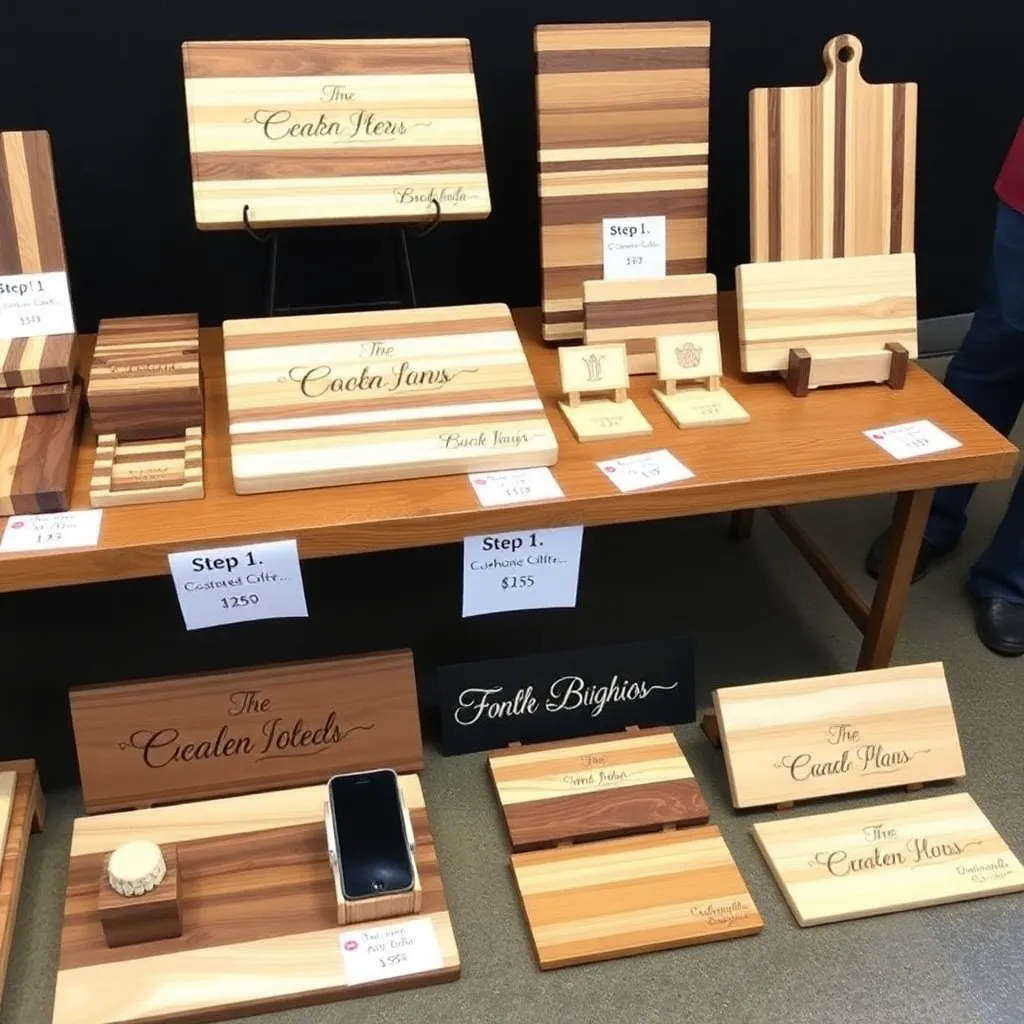
The craft market and Etsy economy reward small wood projects that are personal, functional, and visually distinctive. The most important variable isn’t which project you build — it’s whether you can build it in volume at a cost that leaves margin after materials and time. These eight projects have strong, consistent sales histories because they’re genuinely useful, they photograph well, and buyers are willing to pay a premium for handmade.
Ted’s Woodworking has complete plans for all eight project types with step-by-step instructions and cutting jigs for batch production. Browse Ted’s plans →
Step 1: Personalized Cutting Boards
Retail price range: $45–$85. Material cost: $12–$25. Build time: 2–3 hours (first); 1.5 hours (batch).
Glue up face-grain or end-grain hardwood boards (maple, walnut, or contrasting species combo). Personalize with a laser engraver (most Etsy cutting board sellers use an xTool D1 Pro or Glowforge) with names, monograms, or wedding dates. Apply food-safe mineral oil. The personalization is what separates a $45 cutting board from a $15 one at a kitchen supply store. Build a jig for consistent blank sizing — this cuts production time significantly on repeat orders.
Best sellers: Wedding monogram cutting boards (spike in demand May–June and October–November), family name boards, anniversary date boards, state silhouettes with city coordinates.
Milestone: A board with clean engraving centered precisely on the face, food-safe finish, and no sanding marks visible under raking light.
Step 2: Hardwood Coaster Sets
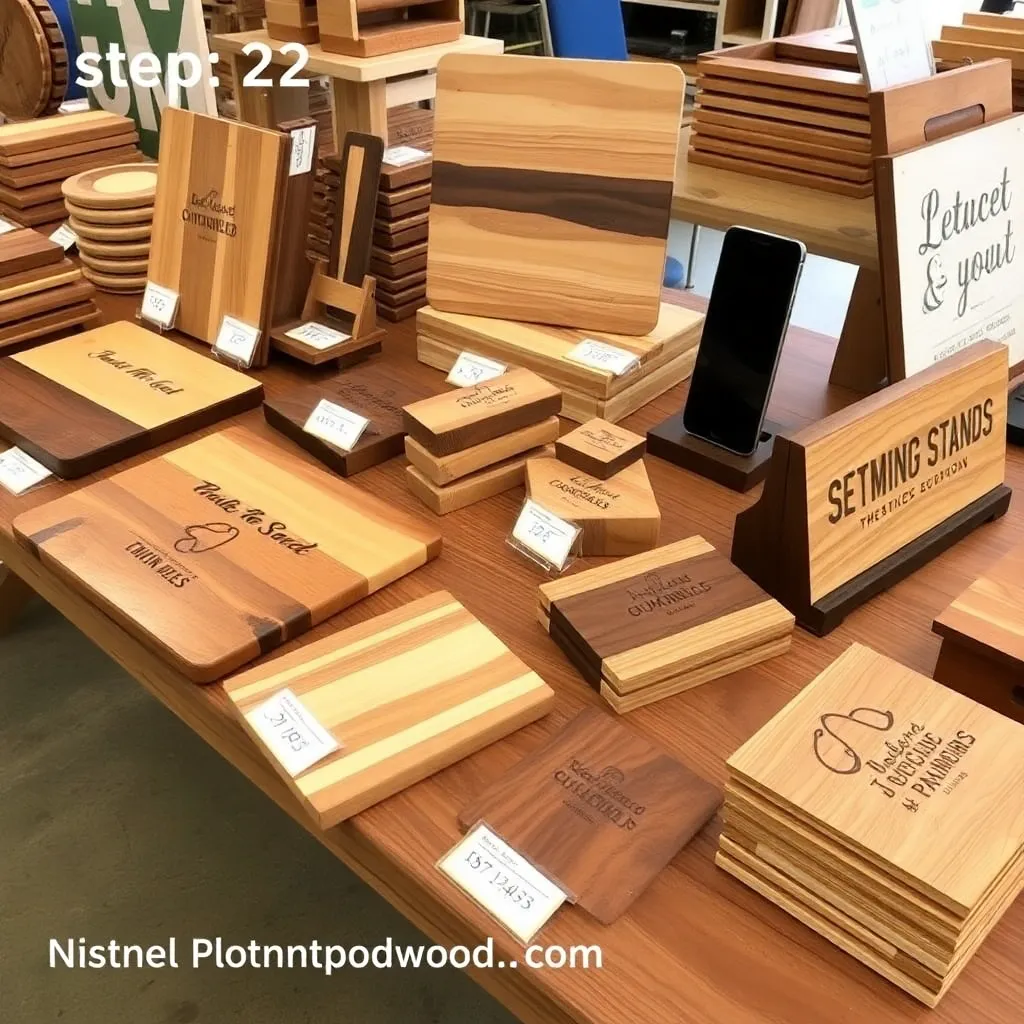
Retail price range: $25–$45 per set of 4. Material cost: $5–$12. Build time: 1.5 hours per set (first); 45 min (batch).
Cut ¾-inch hardwood into 4-inch squares or circles (circle jig on the router or table saw). Route an edge profile. Sand to 220-grit. Apply four coats of wipe-on polyurethane. Add cork feet. Package in a set of four with a rubber band or simple holder. Mixed-species sets (walnut + maple alternating) outsell single-species sets at craft markets. Geometric patterns (herringbone, chevron from angled cuts) command a higher price.
Best sellers: Mixed walnut/maple sets, round coasters with a monogram, map-outline coasters (CNC or laser cut state/city shapes).
Milestone: Four coasters with matching dimensions (within 1/16 inch) and a fully cured polyurethane surface that repels water.
Step 3: Wooden Phone Stands
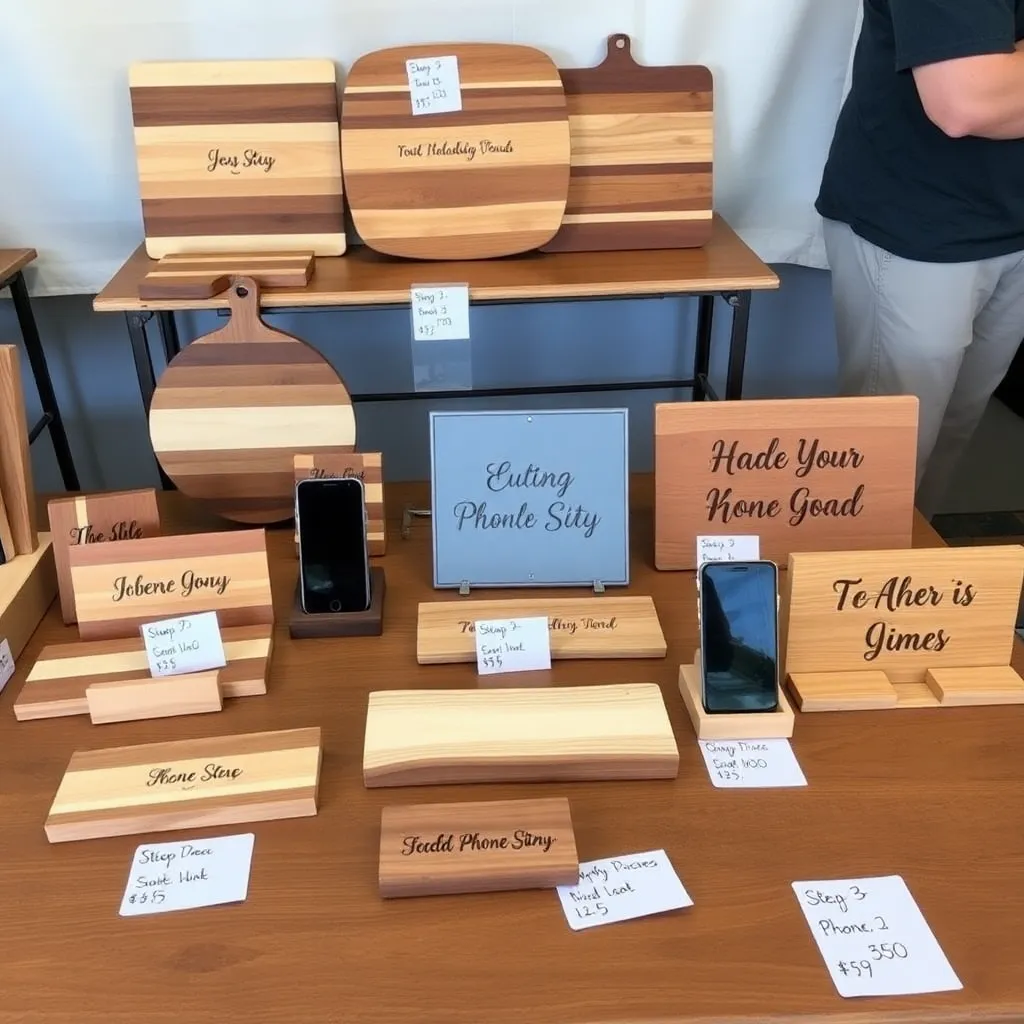
Retail price range: $20–$35. Material cost: $3–$8. Build time: 45 minutes (first); 20 min (batch).
Cut a base and an angled support from ¾-inch hardwood. Route a phone slot across the base. Drill a cable pass-through hole. Glue the support to the base at the correct angle for the target phone size. Sand to 220-grit. Apply three coats of wipe-on polyurethane. Test with multiple phone models before selling — the slot width must accommodate most phone cases (typically ⅜-inch wide works for most). Build a consistent-angle jig to speed up production.
Best sellers: Walnut phone stands sell at 3× the rate of pine at craft markets. Dual-slot charging stands (phone + tablet) command $35–$55.
Milestone: A stand that holds the most common phone sizes (with case) at a comfortable viewing angle.
Step 4: Engraved Signs
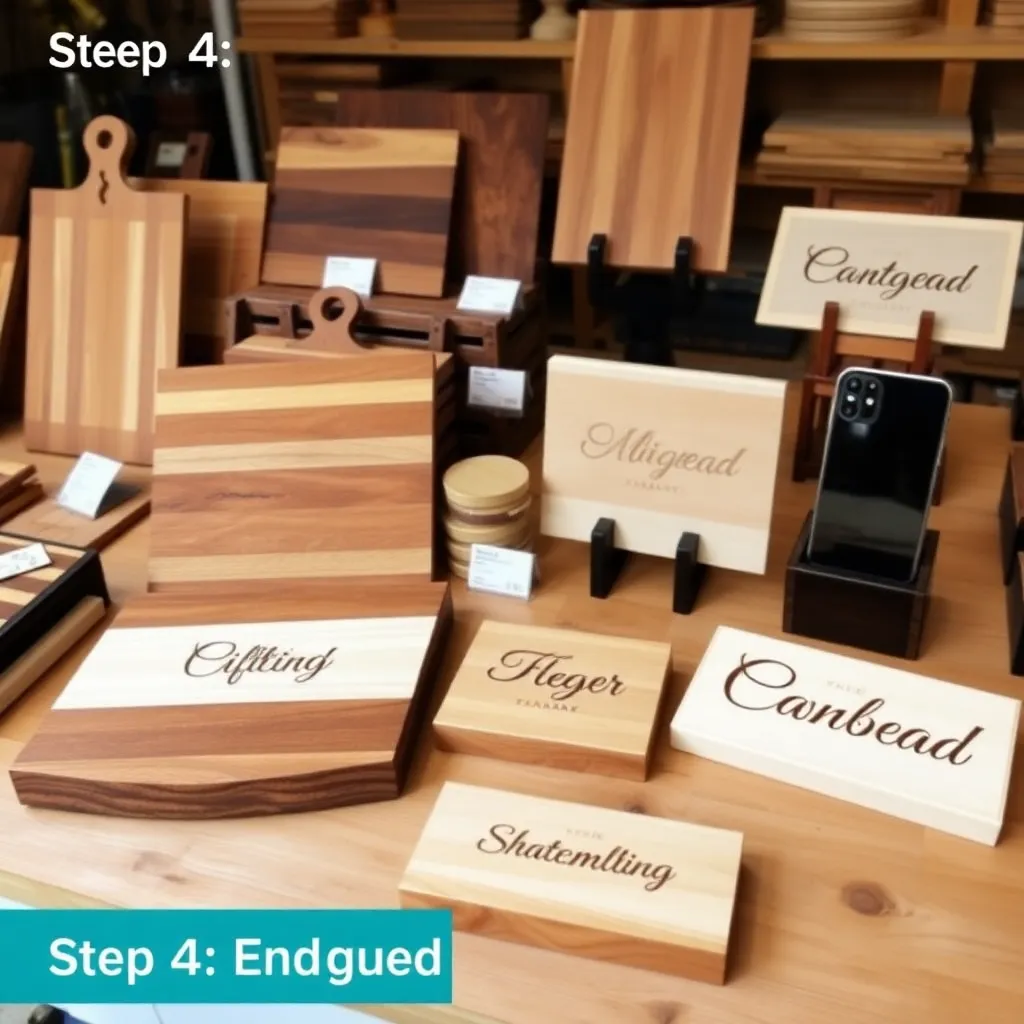
Retail price range: $30–$60. Material cost: $8–$18. Build time: 1.5 hours (with laser).
Cut pine or poplar panels to the sign size (6 × 18, 8 × 24, or 10 × 30 inches are standard market sizes). Sand to 180-grit. Apply a base stain or paint. Engrave the design with a laser engraver or CNC router — text, family names, “Established [year],” inspirational quotes, coordinates. Apply a topcoat of matte polyurethane. Add sawtooth hangers on the back. The sign market is volume-driven: the more designs you have, the more sales you generate, because each buyer wants something slightly different.
Best sellers: “Est.” family name signs, farmhouse-style quotes, coordinate signs for a specific city or address.
Milestone: A sign with centered, level text and a smooth background that doesn’t show brush marks.
Step 5: Wood Bead Keychains
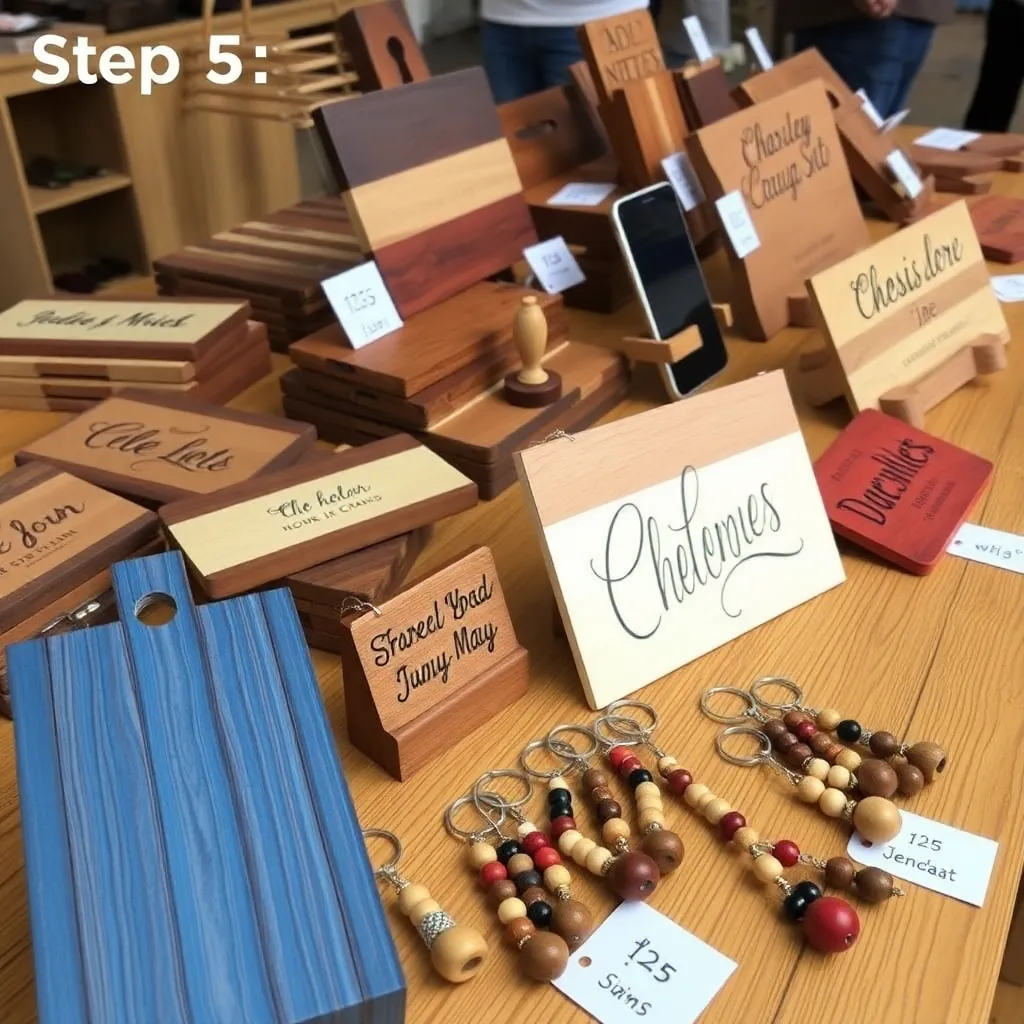
Retail price range: $8–$15 each. Material cost: $1–$3. Build time: 15 min (with lathe).
Turn small beads (¾-inch diameter) from scraps of exotic wood — padauk, purple heart, and zebrawood sell best visually. Drill through the center with a 3/32-inch bit. Thread onto a keychain ring with a 2-inch piece of paracord or leather cord. Apply CA glue finish on the lathe. These are the highest-margin item per hour in this list — a lathe produces 20+ beads per hour from scrap pieces that would otherwise be discarded. Bundle as sets of 3 on a card for $20–$25.
Best sellers: Bundled keychain + matching pen sets, gift card pairings at checkout, custom initials burned into the bead.
Milestone: Beads with a smooth CA finish that can be threaded onto a cord in 30 seconds.
Step 6: Bath and Spa Accessories
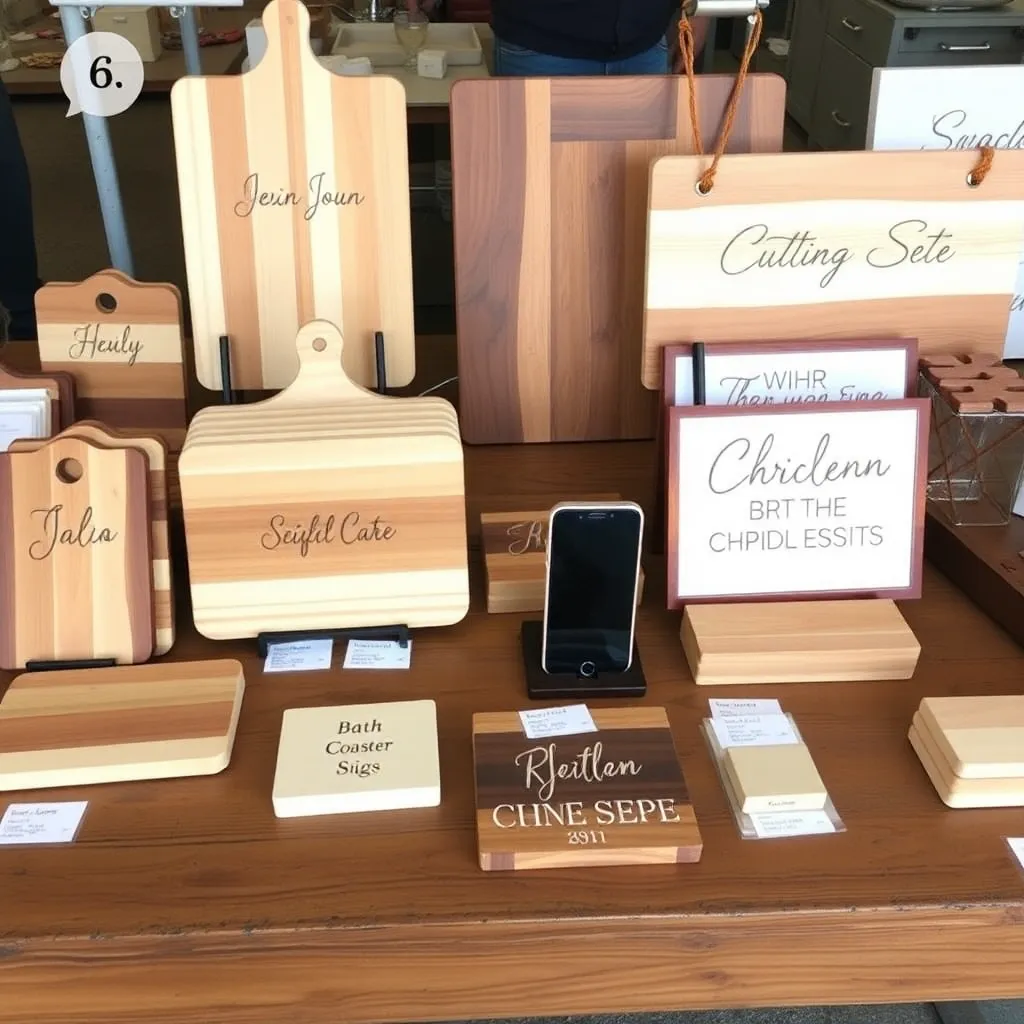
Retail price range: $25–$50 per piece. Material cost: $8–$20. Build time: 2 hours.
Teak and cedar bath accessories sell well because teak’s natural oil resistance makes it genuinely functional in wet environments. Key builds: teak soap dish (3 × 4-inch platform with ¼-inch feet for drainage), bath caddy (spanning the tub with a book ledge and wine glass hole), bamboo bath mat (slat construction), and cedar bath shelf (wall-mounted, 12 inches wide). Always use teak oil on bath accessories — never polyurethane, which will peel in a wet environment.
Best sellers: Personalized bath caddies (name engraved on the top) are the highest individual price point in this category ($65–$90 retail).
Milestone: A bath item with smooth slats, no splinters on the undersurface, and a full teak oil penetration coat.
Step 7: Magnetic Knife Strips
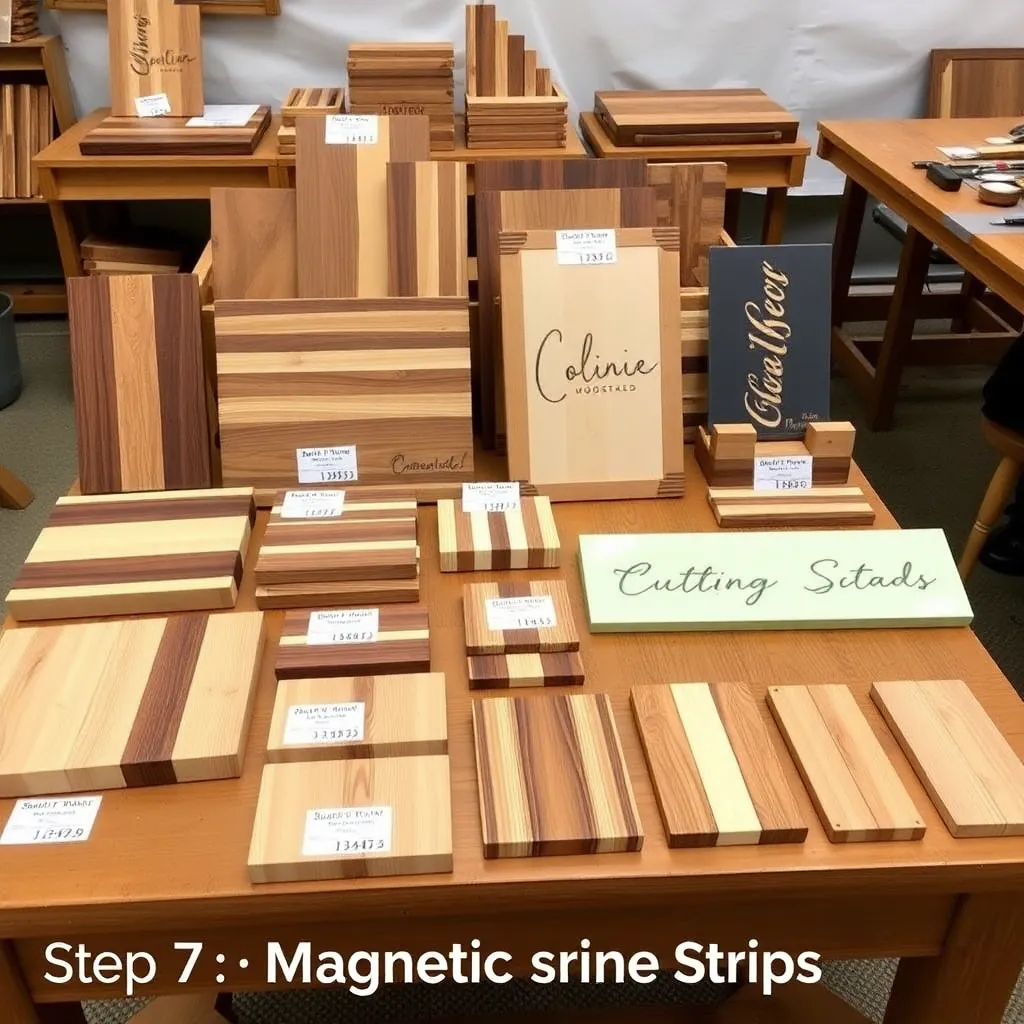
Retail price range: $40–$70. Material cost: $10–$18. Build time: 2 hours.
Route a channel along a 2 × 18-inch hardwood blank. Glue four rare-earth magnets (¾-inch diameter, N52 grade) into the channel with epoxy. Fill and sand flush. Apply three coats of wipe-on polyurethane. Mount with two 2½-inch screws into studs. Walnut and cherry strips command a 40% premium over maple at craft markets. The functional test: a standard chef’s knife should hold firmly at any angle without slipping.
Best sellers: Walnut strips in 16- and 24-inch lengths. Pairing a knife strip with a matching cutting board for a gift set increases average order value by 60%.
Milestone: A strip that holds a 8-inch chef’s knife at 45° without slipping.
Step 8: Wood-Burned Portraits
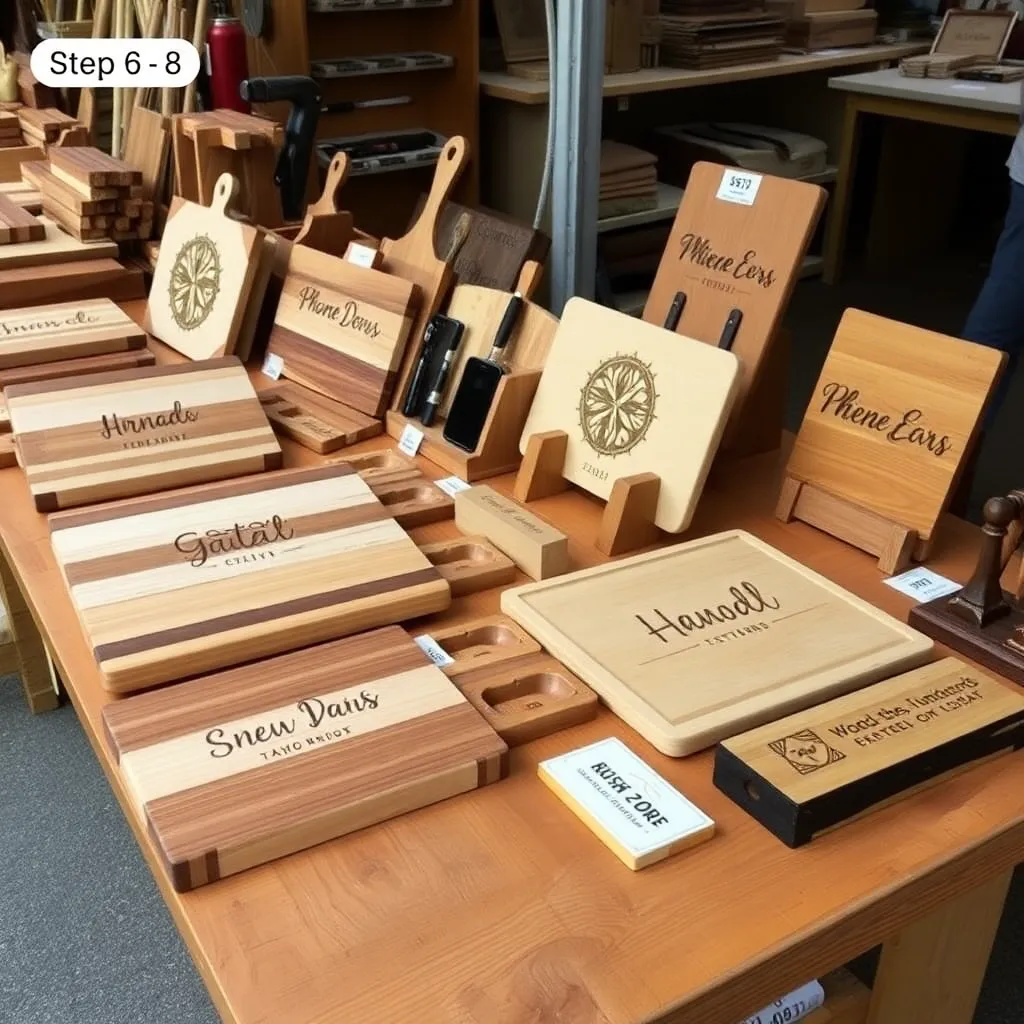
Retail price range: $50–$120. Material cost: $5–$15. Build time: 3–6 hours.
Pyrography portraits of pets, people, or landmarks are the highest per-piece revenue in this guide — but also the highest time investment. Transfer the reference image to a basswood panel using graphite paper. Burn the dark areas first with a shading tip, then details with a fine-tip pen. The learning curve is steep (plan 10–15 practice pieces before selling), but once the technique is established, each portrait becomes a unique high-margin item. Apply a matte spray lacquer to seal the burned surface.
Best sellers: Pet portraits (dogs outsell cats 3:1), house portraits (popular housewarming gift), memorial portraits. Commission work (customer supplies the photo) commands a premium over pre-made inventory.
Milestone: A portrait where the subject is recognizable from 3 feet away with consistent value range (lights and darks).
Small Wood Projects to Sell FAQ
Do I need a laser engraver to sell wood gifts?
No, but it significantly increases revenue per hour for personalized items. A good pyrography pen ($25–$40) produces comparable results on wood and is the right starting tool before investing in laser equipment. The xTool D1 Pro ($250–$300) is the most popular entry-level laser for craft sellers — it pays for itself within the first 10–15 personalized cutting board sales. The Glowforge ($4,000) is the production standard but requires substantial volume to justify the cost.
How do I price handmade wood items for Etsy vs craft markets?
Etsy can support higher prices than local craft markets because buyers compare nationally, not locally. A cutting board that sells for $50 at a local market may sell for $65–$75 on Etsy (plus shipping). However, Etsy takes 6.5% transaction fees + listing fees + potential ad spend — factor these into your pricing. Craft markets allow immediate feedback on pricing: if everything sells out by noon, raise prices next time; if nothing sells, lower prices or change your product mix.
What’s the most profitable small wood project per hour of work?
Wood bead keychains have the highest revenue-per-hour ratio (20+ beads/hour on a lathe at $10–$15 each = $200+/hour in retail value). However, the margin is diluted at craft markets unless sold in sets. Coaster sets and phone stands have the best balance of production speed, margin, and consistent demand. Personalized cutting boards have lower revenue-per-hour but generate repeat orders (wedding seasons, holiday gift rush) that allow efficient batch production.
How many items do I need for a craft market booth?
A minimum viable booth for a 6-foot table: 30–50 items across 3–4 product types, priced from $12–$85 to cover impulse buyers and gift shoppers. Variety in price point matters more than variety in product type. Bring more inventory than you think you need — running out of your best seller mid-market is lost revenue. Display items at multiple heights (use risers, small shelves) and have business cards and an email signup for custom orders.

“DIY woodworking enthusiast who started with zero experience and a YouTube tutorial.
I build simple, practical projects for my home and share free plans
so other beginners can skip the guesswork.If I can build it, you can too.”