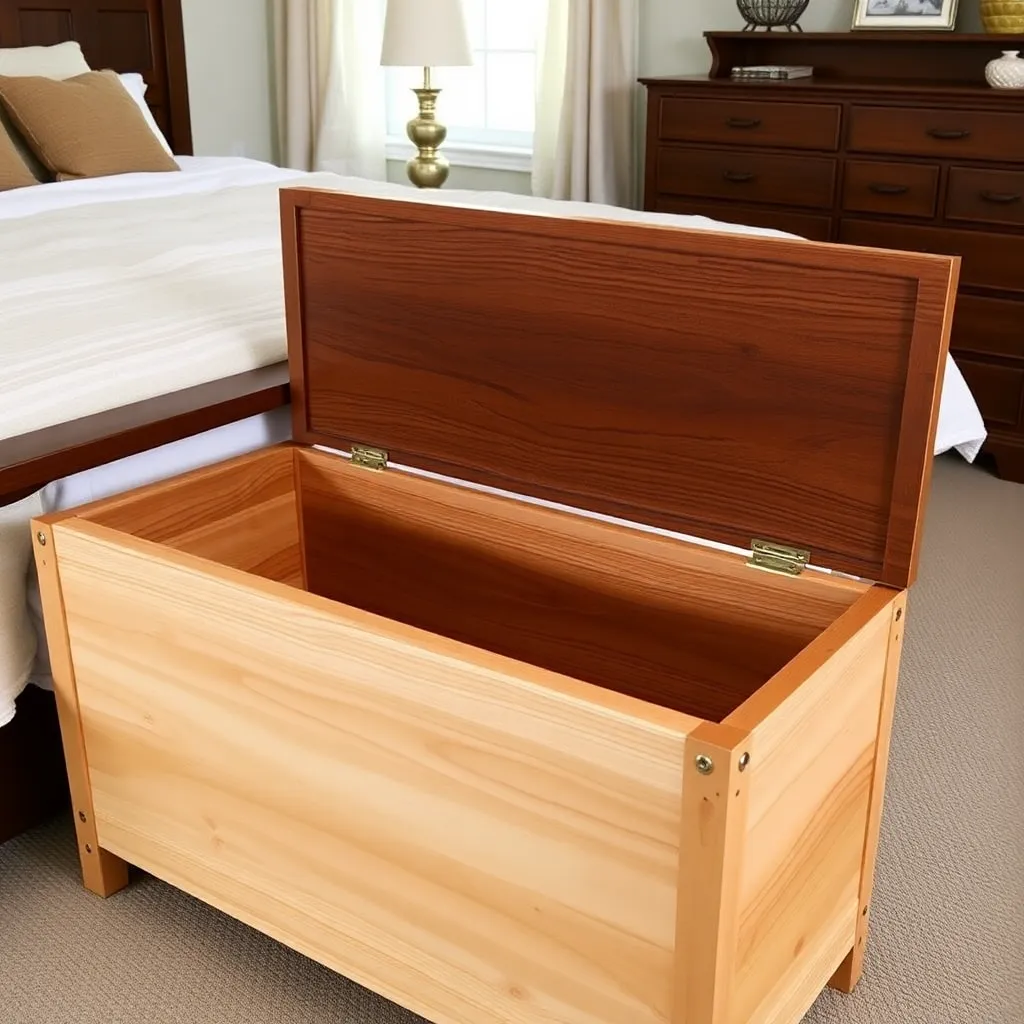
A wooden chest is a box scaled to furniture proportions — a piece that anchors a room and lasts generations. The construction principles are the same as a small box, but the scale introduces new challenges: managing wood movement across wide panels, keeping a large carcass square during assembly, and installing hardware that handles the weight of a full-size lid. These six builds cover the range from a simple child’s toy chest to a traditional cedar-lined blanket chest.
Ted’s Woodworking has complete chest plans with wood movement tables and hardware specifications. Browse Ted’s chest plans →
Step 1: Build a Simple Toy Chest
Goal: A safe, durable toy chest for a child’s room — with a lid support to prevent injury.
Dimensions: 36 × 18 × 18 inches. Build from ¾-inch pine or birch plywood for affordability and ease of painting.
Cut panels:
- Bottom: 34½ × 16½ inches
- 2 sides: 16½ × 17¼ inches
- Front and back: 34½ × 17¼ inches
- Lid: 36 × 18 inches
Assemble with pocket screws and wood glue. Reinforce inside corners with 1 × 1-inch glue blocks. Install two lid supports (spring-loaded, rated for the lid weight) — these are a safety requirement for toy chests to prevent a falling lid from trapping a child’s neck. Drill ventilation holes in the back panel. Paint with a child-safe, low-VOC latex paint. Sand edges and corners to a smooth roundover — no sharp corners.
Milestone: A lid that stays open at 90° without a lid support preventing it from going further, and ventilation holes that pass the pencil test (pencil fits through easily).
Step 2: Build a Blanket Chest With Cedar Lining
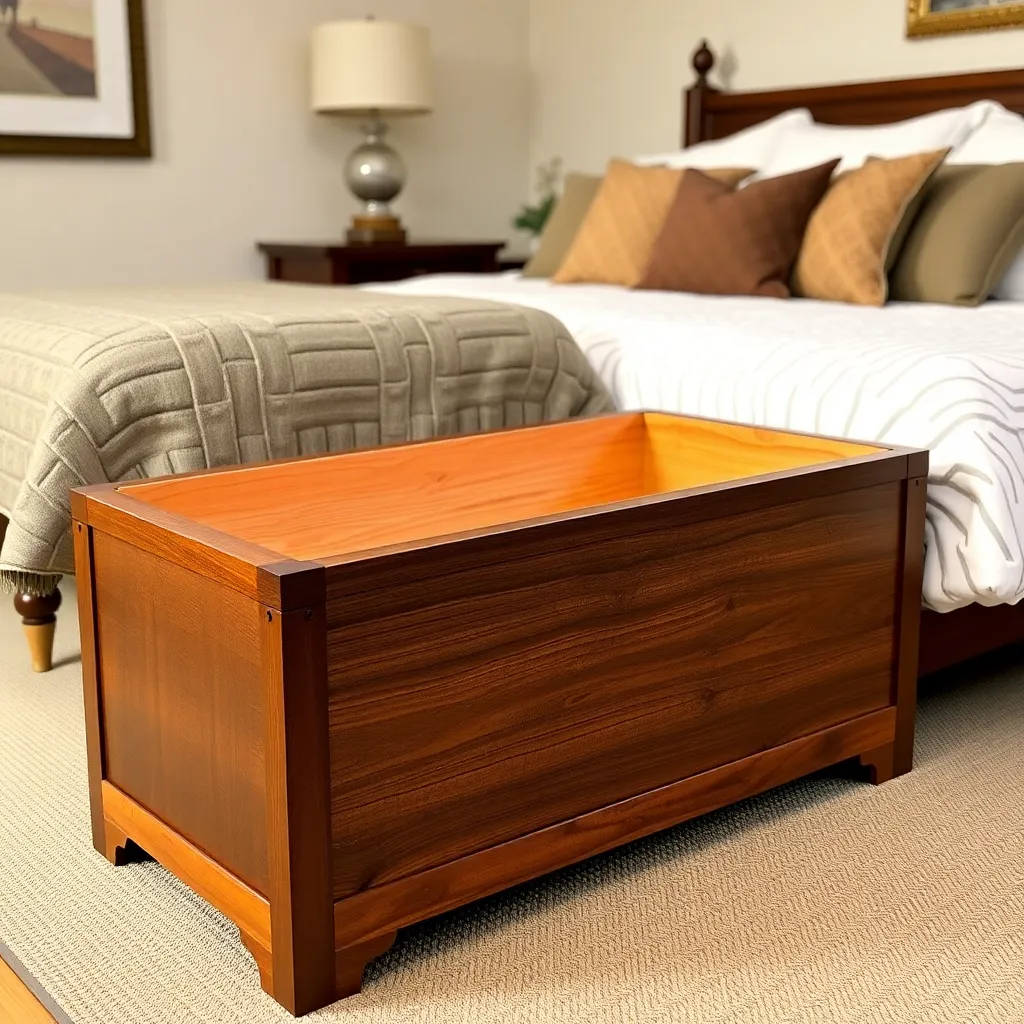
Goal: A cedar-lined blanket chest — a bedroom piece that stores blankets, sweaters, and linens with natural moth deterrence.
Dimensions: 42 × 20 × 22 inches. Build from ¾-inch pine or poplar (painted) or ¾-inch cherry (natural finish).
Cedar lining: cut ⅛-inch aromatic red cedar sheets to fit all six interior surfaces — bottom, lid interior, and all four walls. Do not glue or finish the cedar — it must breathe and should be unfinished to remain aromatic. The cedar sheets simply rest against the interior walls. The cedar aroma repels moths and freshens the stored items.
Install a piano hinge spanning the full back length of the lid. Add a lid support on each end to prevent the lid from falling back past 95°. Install two handles on the front face (recessed cup handles or surface-mount bin pulls). Finish the exterior with stain and two coats of wipe-on polyurethane.
Milestone: A chest where the cedar lining covers all six interior surfaces and the lid opens to a stable 90° position.
Step 3: Build a Blanket Chest With Frame-and-Panel Sides
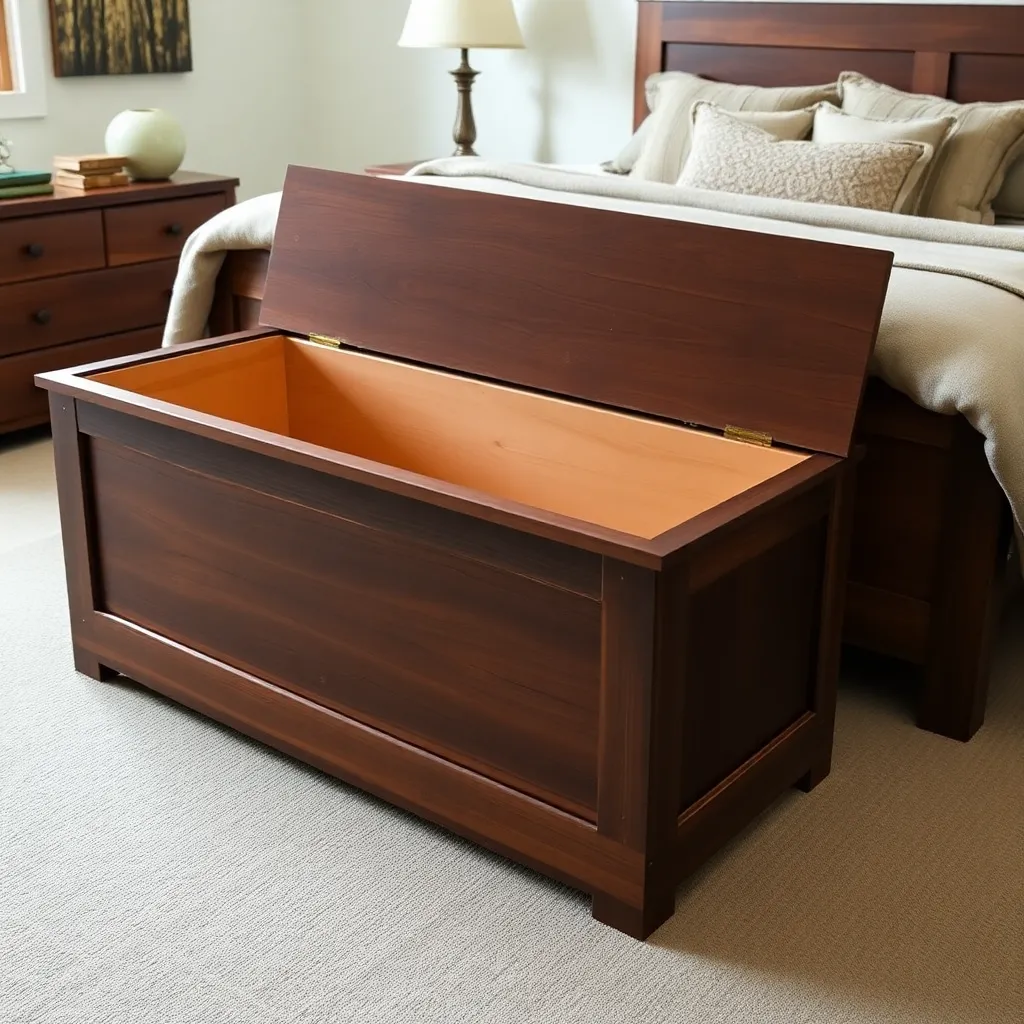
Goal: A traditional chest with frame-and-panel construction — the woodworking approach to managing wood movement.
At 42-inch width, a solid panel expands and contracts by up to ¾ inch seasonally. A frame-and-panel design solves this by letting a center panel float inside a rigid frame — the panel expands and contracts, but the frame size stays constant.
Build each side as a frame (1½-inch wide stiles and rails) with a center panel (¼-inch hardwood plywood or a raised solid-wood panel). The panel fits in a ¼-inch groove on the inside edge of the frame — no glue on the panel, just the frame joints. Corner posts (1½ × 1½ inches) connect the four frame panels. The lid is also a frame-and-panel construction. This is the traditional blanket chest design and is dimensionally stable.
Milestone: A dry-assembled frame-and-panel where the panel moves freely in the groove.
Step 4: Build a Storage Ottoman With Chest Interior
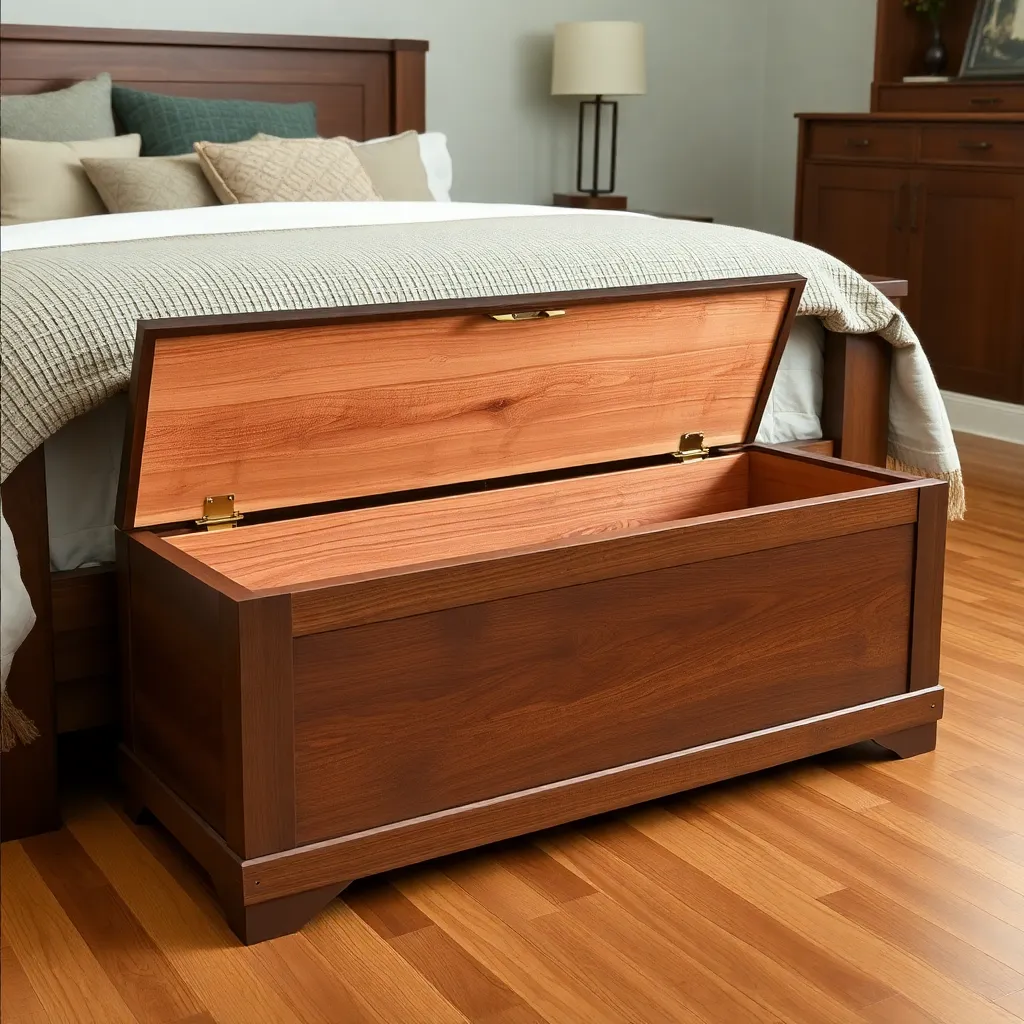
Goal: A chest disguised as a living room ottoman — dual-function furniture.
Dimensions: 24 × 18 × 16 inches (coffee-table height). Build the chest interior from ¾-inch plywood. The exterior finish is the unusual element: wrap the plywood sides with ½-inch foam batting, then staple upholstery fabric over the foam (fabric staples every 2 inches to a ¾-inch stapling ledge on each face). The lid receives the same foam-and-fabric treatment. Add four furniture feet (wooden bun feet, 3 inches).
This is a joinery-light project — the chest itself is pocket screws and plywood. The time is in the upholstery work.
Milestone: A lid that holds 250 lbs of seated weight without flexing, with upholstery fabric that’s taut and wrinkle-free.
Step 5: Build a Dovetail Corner Chest
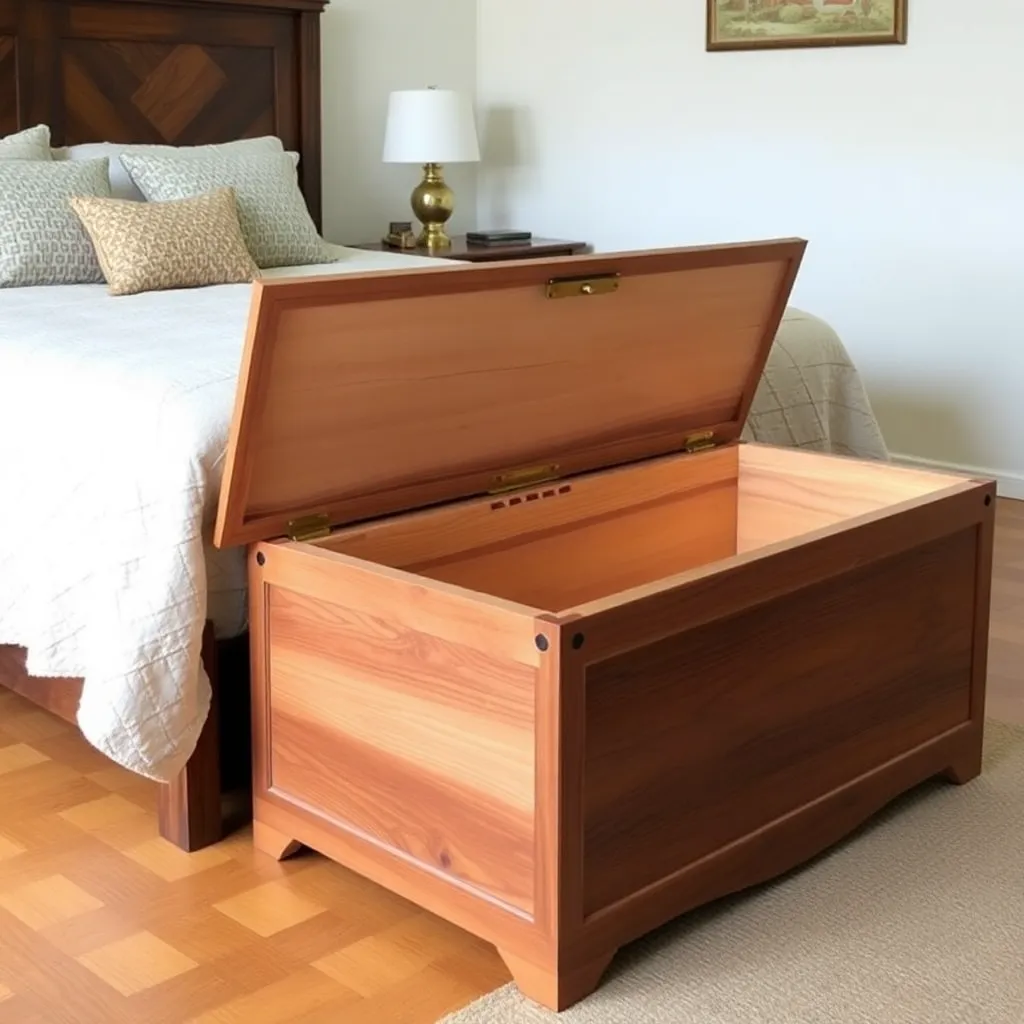
Goal: A chest with hand-cut or router-cut through dovetails at all four corners — the showpiece chest build.
Dimensions: 24 × 14 × 12 inches (a manageable size for showing dovetails). Use ½-inch hardwood (cherry or walnut) — thin enough to make the dovetails proportional to the chest size, thick enough for structural strength.
For router-cut dovetails: use a dovetail jig and a ½-inch dovetail bit. For hand-cut dovetails at this scale: plan 4–5 tails per corner (1½-inch pitch). The chest at this size is more of a blanket/keepsake chest than a full bedroom piece — sized for the end of a bed or as a coffee table.
Install a piano hinge and lid support. Apply Danish oil — it deepens grain without a plastic appearance.
Milestone: Eight through-dovetail corners with consistent tail spacing and no visible gaps after assembly.
Step 6: Build a Sea Chest With Rope Handles
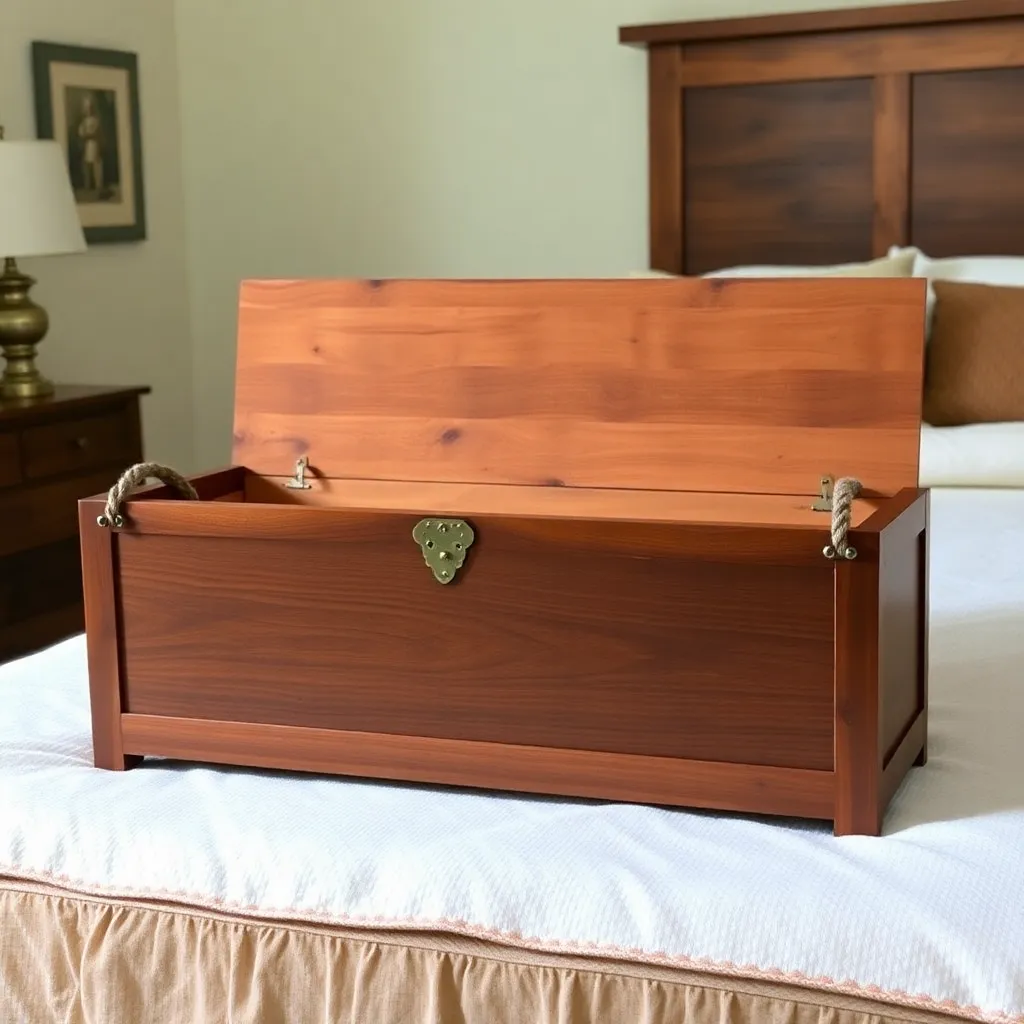
Goal: A traditional nautical sea chest — a functional antique reproduction.
A sea chest is a large, sturdy chest with rope handles, a flat top, and sometimes a till (a small open tray inside). Traditional dimensions: 36 × 18 × 24 inches. Build from ¾-inch white oak (weather-resistant, traditional nautical wood) or solid pine.
Rope handles: drill two 1-inch holes 2 inches apart on each end panel. Thread a 1½-inch diameter manila rope through both holes and knot inside the panel. The rope emerges in a loop through both holes, creating the handle.
Till: a small open tray (4 inches deep, full interior width) resting on two ledger strips near the top of the interior. The till holds small items at the top while the main compartment holds larger items below.
Finish with teak oil — no polyurethane on a traditional sea chest. The finish should soak in, not sit on top.
Milestone: Rope handles that are tight against the end panels and won’t slip when the chest is carried with the full weight of contents.
Wooden Chest Plans FAQ
What is the best wood for a blanket chest?
Pine is the most common choice — it’s affordable, lightweight (important for a large chest), and accepts paint and stain well. Cherry and walnut produce a more refined appearance and improve with age. White oak is the traditional choice for a sea chest or any chest that will be in a humid environment. Birch plywood is useful for the bottom panel — it won’t gap like solid wood and won’t require wood movement accommodation. Whatever species you choose, buy kiln-dried material and let it acclimate in your shop for 3–5 days before building.
How do I prevent the lid from warping on a large chest?
Use frame-and-panel construction for any lid over 18 inches wide — a solid wood lid at that width will cup significantly with seasonal humidity changes. Alternatively, use ¾-inch plywood for the lid (it’s dimensionally stable) and edge-band the exposed edges with solid wood strips. If you use a solid lid, finish all faces equally — applying finish to only one face causes uneven moisture absorption and cupping. Install the hinge only after the lid has acclimated to your shop for several weeks.
What hardware do I need for a chest lid?
The minimum is a piano hinge (spanning the full back length of the lid) and at least one lid support. The piano hinge distributes the stress of opening and closing across the full length — a single point hinge would eventually split the wood at the hinge attachment. Lid supports are safety equipment on toy chests (required by ASTM safety standards) and practical equipment on heavy lids — they prevent the lid from falling back and damaging the hinge, the chest, or a person standing nearby. For heavy lids over 15 lbs, use two lid supports.
How large should a blanket chest be?
A standard queen blanket is 90 × 90 inches folded to roughly 18 × 18 × 6 inches. Three folded blankets plus a pillow require approximately 40 × 20 × 14 inches of interior space. A typical blanket chest interior is 36 × 18 × 16 inches (providing good capacity without being too large for a bedroom). For a foot-of-the-bed chest, measure the space between the bed frame and the wall first — most bedroom configurations leave 12–24 inches at the foot of the bed.

“DIY woodworking enthusiast who started with zero experience and a YouTube tutorial.
I build simple, practical projects for my home and share free plans
so other beginners can skip the guesswork.If I can build it, you can too.”