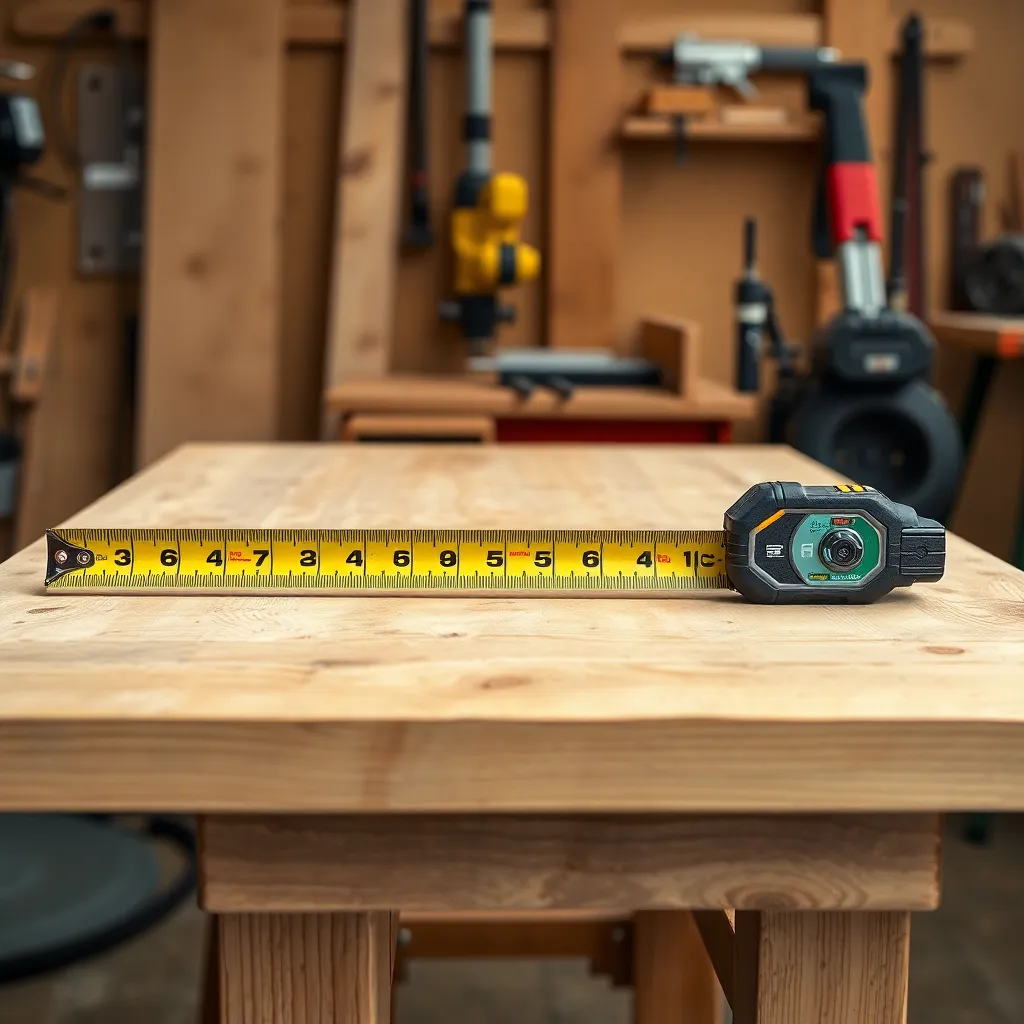
5 feet 4 inches equals 64 inches. The calculation: 5 feet × 12 inches per foot = 60 inches, plus 4 inches = 64 inches total. Converting between feet-and-inches and total inches is one of the most constant mental tasks in woodworking — cut lists need a single unit, calculators need a single unit, and mixing units is the fastest way to cut a board 12 inches too short.
Ted’s Woodworking has complete project plans with dimensions already converted to the right unit for each step. Browse Ted’s plans →
Step 1: Learn the Core Conversion Formula

Goal: Convert any feet-and-inches measurement to total inches in one step.
Total inches = (Feet × 12) + Remaining inches
Common conversions:
- 5’4″ = (5 × 12) + 4 = 60 + 4 = 64 inches
- 6’0″ = (6 × 12) + 0 = 72 inches
- 4’6″ = (4 × 12) + 6 = 48 + 6 = 54 inches
- 7’3″ = (7 × 12) + 3 = 84 + 3 = 87 inches
- 8’0″ = (8 × 12) + 0 = 96 inches
Milestone: Convert 5 feet 11 inches to total inches without a calculator. (Answer: 5 × 12 + 11 = 71 inches)
Step 2: Convert Total Inches Back to Feet and Inches

Goal: Convert a total-inches measurement back to feet-and-inches for plan reading.
Feet = Total inches ÷ 12 (take the whole number)
Remaining inches = Total inches − (Feet × 12)
Example: 76 inches → 76 ÷ 12 = 6 remainder 4 → 6 feet 4 inches
Example: 64 inches → 64 ÷ 12 = 5 remainder 4 → 5 feet 4 inches
Milestone: Convert 83 inches to feet and inches. (Answer: 83 ÷ 12 = 6 remainder 11 → 6’11”)
Step 3: Handle Mixed Units With Fractions

Goal: Convert measurements that include fractional inches (the most common woodworking case).
Woodworking measurements include fractions: 5’4½” (five feet, four and a half inches).
Convert: (5 × 12) + 4½ = 60 + 4.5 = 64.5 inches (or 64½ inches)
For tape measure reading: set the tape to 64½ inches (which reads as 64 inches plus the ½-inch mark). Don’t try to find “5 feet” on the tape and then measure 4½ more inches — this two-step process introduces the risk of misreading the first measurement.
Milestone: Convert 6’2¾” to total inches. (Answer: 6 × 12 + 2.75 = 72 + 2.75 = 74¾ inches)
Step 4: Feet-and-Inches Reference Table

Goal: Recognize common woodworking dimensions immediately without calculating.
| Feet & Inches | Total Inches | Common Use |
|---|---|---|
| 1’0″ | 12″ | Small shelf depth |
| 1’6″ | 18″ | Desk depth, counter depth |
| 2’0″ | 24″ | Standard counter depth |
| 2’4″ | 28″ | Chair seat height, coffee table height |
| 2’6″ | 30″ | Desk height |
| 3’0″ | 36″ | Kitchen counter height |
| 3’6″ | 42″ | Bar height |
| 4’0″ | 48″ | Half a standard sheet |
| 5’4″ | 64″ | Bookshelf height (accessible top shelf) |
| 6’0″ | 72″ | Tall bookshelf, closet rod height |
| 6’8″ | 80″ | Standard door height |
| 7’0″ | 84″ | Closet height, ceiling clearance |
| 8’0″ | 96″ | Standard sheet length, ceiling height |
Milestone: Memorize the most relevant row for your current project without referring to this table.
Step 5: Add and Subtract Feet-and-Inches

Goal: Perform addition and subtraction on mixed units (feet and inches) without errors.
Addition: add the feet together, add the inches together. If the inches total 12 or more, convert the excess to feet.
Example: 3’8″ + 2’7″ = (3+2) feet + (8+7) inches = 5 feet + 15 inches = 5 feet + 1 foot 3 inches = 6’3″
Subtraction: if the inches to subtract are larger than the inches you have, borrow 1 foot (12 inches) from the feet column.
Example: 5’4″ − 1’9″ = borrow 1 foot from 5 → 4 feet and (12+4) inches − 1’9″ = 4 feet 16 inches − 1 foot 9 inches = 3’7″
Milestone: Calculate 6’3″ − 2’8″ without a calculator. (Answer: borrow → 5 feet 15 inches − 2 feet 8 inches = 3’7″)
Step 6: Apply to Woodworking Calculations

Goal: Use feet-to-inches conversion correctly at the most common woodworking decision points.
Marking a cut: always convert to total inches before marking. Set the tape to the total-inches number and make one mark. Don’t find feet first and then add inches.
Calculating remaining stock: after cutting, subtract the piece length from the board length in the same units. Convert both to total inches first if they’re in different formats.
Ordering lumber: lumber is sold in standard lengths (6′, 8′, 10′, 12′, 14′, 16′). Convert your required cut lengths to feet-and-inches, then select the shortest standard length that accommodates each cut plus kerf and waste.
Milestone: Given two boards (one 8′ long, one 6’6″ long) and needing a piece 64 inches long, identify which board to cut from. (Answer: 64 inches = 5’4″. Both boards are long enough, but the 6’6″ board leaves less waste: 6’6″ − 5’4″ = 1’2″ offcut vs. 8′ − 5’4″ = 2’8″ offcut.)
5’4″ to Inches FAQ
How many inches is 5 feet 4 inches?
5 feet 4 inches is 64 inches. Calculation: 5 feet × 12 inches per foot = 60 inches, plus 4 inches = 64 inches total. To mark this on a tape measure: extend the tape to 64 inches (the “64” label) and make your mark. The 64-inch mark is exactly at the 5-foot-4-inch position.
How do I convert feet and inches to inches on a tape measure?
Set the tape to the total-inches number and mark there. Don’t measure to the feet mark first and then add the remaining inches separately — this two-step method can introduce error if the tape slips between steps. For 5’4″: extend to 64 inches and mark once. For 6’8″ (standard door height): extend to 80 inches and mark once. The tape measure’s inch labels run continuously — you don’t need to read in feet, you can just read the total inches directly.
What common woodworking dimensions equal 64 inches?
64 inches (5’4″) is a common bookshelf or cabinet height — tall enough to access the top shelf easily but shorter than a standard 72-inch (6-foot) bookcase. It’s also the height of a common wardrobe upper shelf and appears frequently as the rough opening height for short doors (below standard 6’8″ door height). In framing, 64 inches = 4 stud spaces at 16-inch spacing. In sheet goods, 64 inches is 4 inches less than the 8-foot (96-inch) standard sheet length.
Why do woodworking plans mix feet-and-inches with total inches?
Plans use whichever unit is clearest for each context. Overall dimensions (height, width, depth of a piece) are typically shown in feet and inches because that’s how most people visualize furniture scale (a 6-foot bookcase is more intuitive than a 72-inch one). Individual cut lengths on a cut list are often shown in total inches because that’s what you set the tape to. Detail dimensions (joinery locations, hardware placement) are nearly always in total inches or fractions of an inch. When a plan mixes units, convert everything to total inches before cutting — it eliminates unit-mismatch errors.

“DIY woodworking enthusiast who started with zero experience and a YouTube tutorial.
I build simple, practical projects for my home and share free plans
so other beginners can skip the guesswork.If I can build it, you can too.”