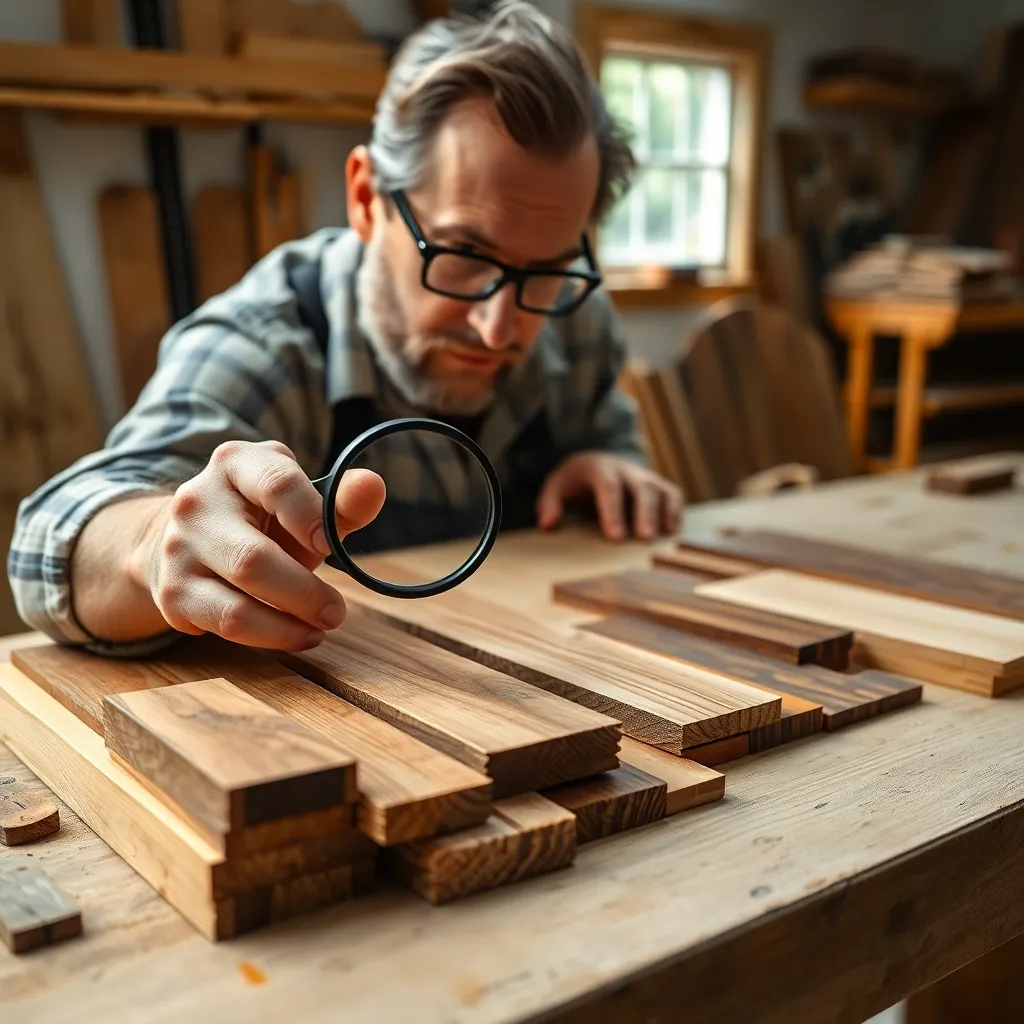
Identifying an unknown wood species is a practical skill with immediate applications — recognizing reclaimed lumber before building with it, understanding what a piece of antique furniture is made from, or identifying a board at a lumber yard that’s labeled incorrectly. Wood identification uses five criteria: color, grain pattern, pore structure, weight/density, and smell. Working through these criteria systematically narrows most unknowns to a small set of candidates.
Ted’s Woodworking has complete project plans with species recommendations and substitution guides. Browse Ted’s plans →
Step 1: Assess the Color
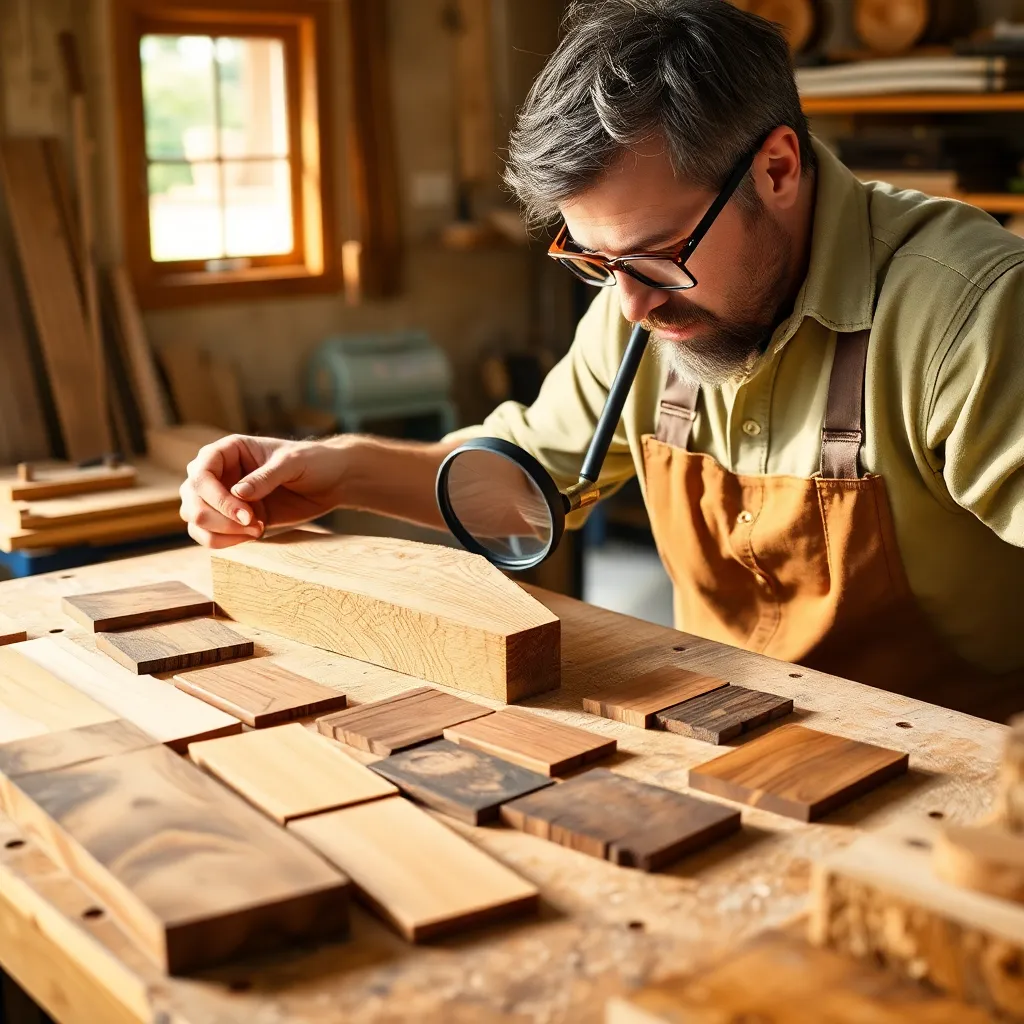
Goal: Use heartwood color as the first filter — it eliminates most species immediately.
Color is the most obvious first criterion. Note: always assess freshly cut or freshly planed wood — the surface of old wood oxidizes and changes color significantly from the true heartwood color.
Dark brown to black: walnut (chocolate brown), wenge (near-black with lighter streaks), ebony (black), African blackwood (near-black)
Red to reddish-brown: cherry (pinkish-red fresh, deepens with age), mahogany (medium to reddish-brown), cedar (reddish with lighter streaks), redwood (deep red-brown)
Yellow to golden: osage orange (bright golden yellow, unique), mulberry (similar to osage orange), teak (golden-brown, oily)
Pale tan to light brown: oak (tan with pinkish tinge in red oak; pale with gray tone in white oak), ash (light tan-beige), elm (light brown)
Nearly white to cream: hard maple (nearly white to cream), birch (pale cream), holly (pure white, very distinctive), poplar (pale green-yellow with dark streaks — the green is diagnostic)
Milestone: Look at the board and eliminate all color categories it doesn’t match. You should be left with 3–6 candidate species.
Step 2: Examine the Grain Pattern
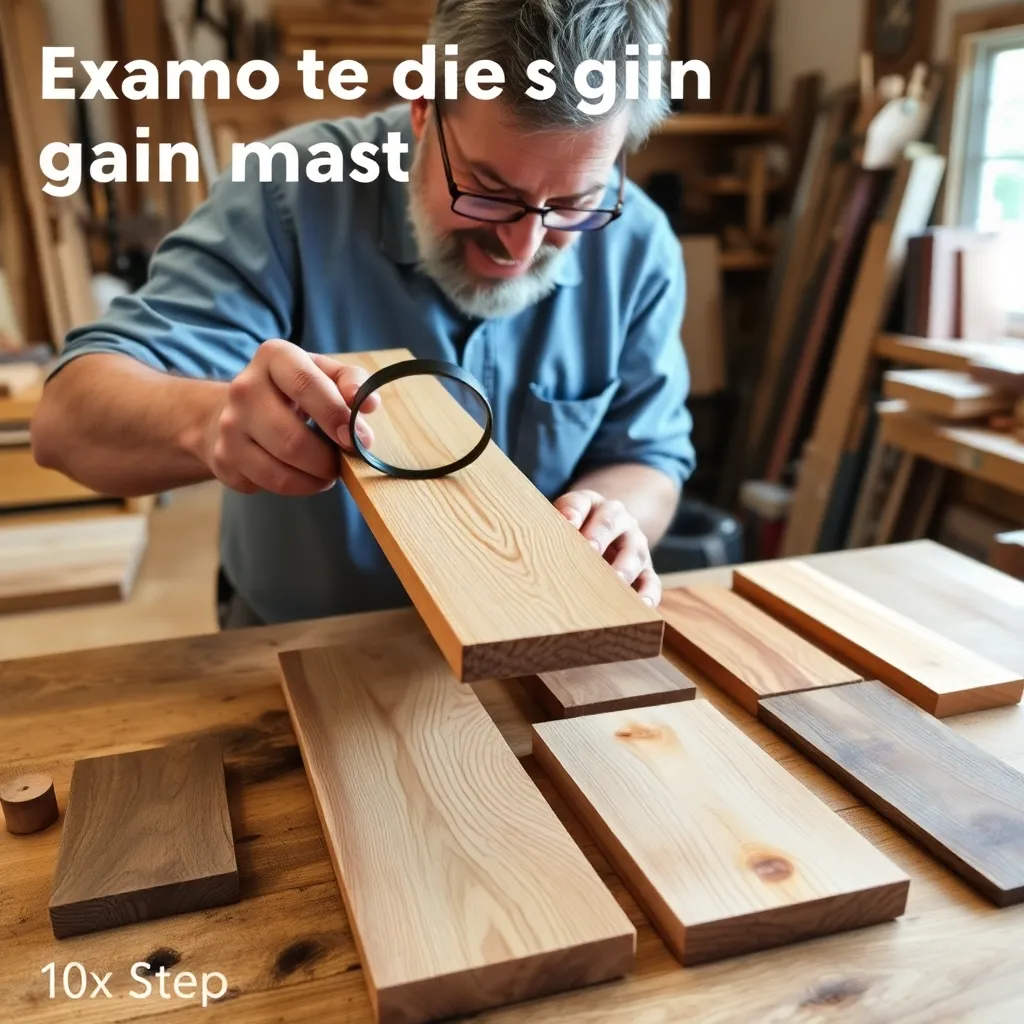
Goal: Use grain pattern to further narrow the candidates.
Straight grain: most common. Grain lines run parallel to the length of the board. Most maple, cherry, and poplar are straight-grained.
Interlocked grain: grain alternates direction at regular intervals. Produces ribbon figure on quartersawn surfaces. Characteristic of mahogany (Swietenia and Khaya), sapele, and some tropical species.
Wavy grain: the grain undulates across the board — produces curly, fiddleback, or tiger figure. Found in curly maple, figured walnut, figured cherry.
Ring-porous grain: clearly visible alternating bands of early wood (light, porous, less dense) and latewood (dark, dense). Characteristic of oak, ash, elm, and hickory. The bands match the tree’s growth rings.
Diffuse-porous grain: pores are small and evenly distributed — no visible banding pattern. Characteristic of maple, cherry, birch, walnut.
Milestone: Describe the grain pattern of the unknown wood and use it to confirm or eliminate candidates from Step 1.
Step 3: Examine the Pore Structure
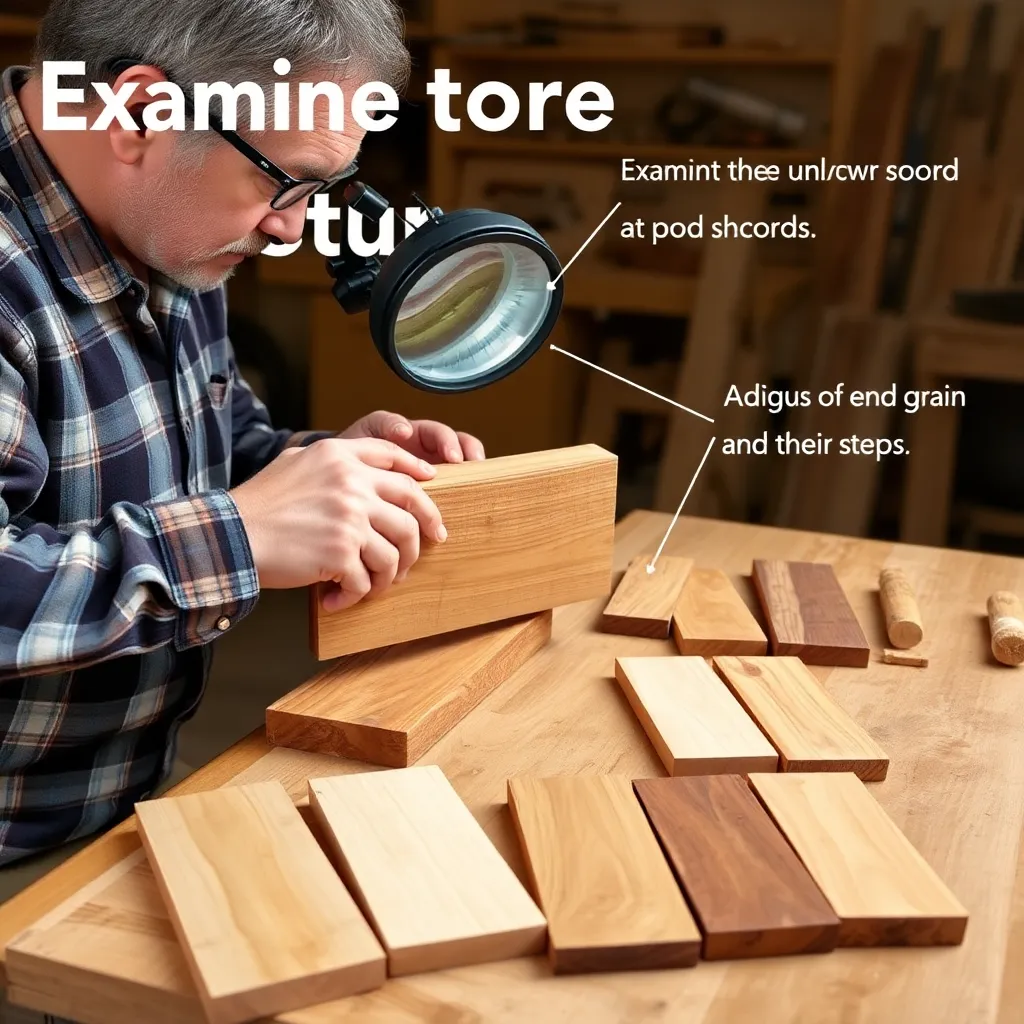
Goal: Use pore size and arrangement to distinguish open-grain from closed-grain species.
Look at the end grain (the cut end of the board) with a 10× loupe or magnifying glass, or look at the face grain in raking light.
Large visible pores (open grain): oak, ash, walnut, elm, hickory. The pores are large enough to see with the naked eye on the face grain.
Very large pores in a ring: elm has distinctive interlocked rings of large pores. Oak has large pores in the earlywood zone of each growth ring.
Small pores, evenly distributed (closed grain): maple, cherry, birch, beech, poplar. Pores are too small to see individually without magnification.
Ray patterns: oak has very distinctive ray patterns visible on quartersawn surfaces — broad, light-colored “flecks” or “feathers” 1–3 mm wide. This is the most diagnostic feature of oak. Beech has smaller but still visible rays. Most other species have rays too fine to see without magnification.
Milestone: Use a loupe to examine the end grain and classify the wood as open-grain or closed-grain.
Step 4: Assess Weight and Density
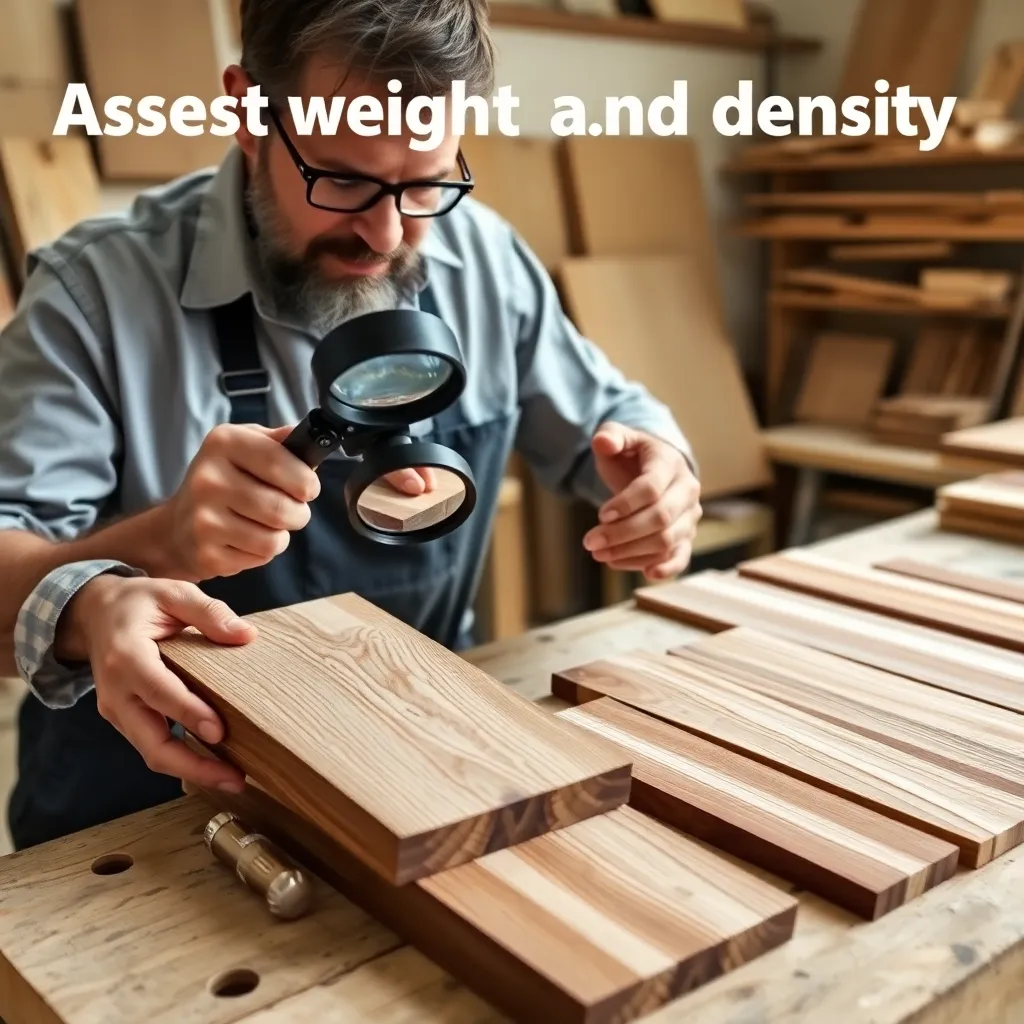
Goal: Use weight as a confirmation tool after color and grain have narrowed the candidates.
Hold the board or pick up a piece and estimate its weight relative to what you’d expect from pine (the reference weight).
Very heavy (much heavier than pine): hard maple, hickory, ipe, osage orange, black locust. These species are noticeably heavier than most others.
Heavy (heavier than pine): red oak, white oak, ash, beech, walnut, cherry.
Medium (similar to pine): mahogany, Douglas fir, teak.
Light (lighter than pine): cedar, redwood, poplar, butternut, basswood.
Very light (much lighter than pine): balsa, paulownia, white pine.
Weight by itself is not diagnostic (many species have similar densities) but eliminates candidates that are dramatically heavier or lighter than the unknown.
Milestone: Lift the unknown board and compare it to a piece of pine of the same size. Classify as lighter, similar, or heavier.
Step 5: Test With Smell
Goal: Use distinctive smells to confirm identification of aromatic species.
Many species have distinctive smells when freshly cut or when lightly sanded. This is most useful for:
Very aromatic: cedar (sharp, distinctive aromatic smell — one of the easiest identifications); sassafras (root beer/anise smell); black cherry (mild almond-like smell from prussic acid in fresh cuts); walnut (faintly acrid/earthy); rosewood (rose-like, distinctive).
Mildly aromatic: mahogany (faintly sweet); teak (oily, slightly medicinal); pine (resinous — distinct from hardwoods).
No significant smell: maple, oak, ash, hickory, poplar. For these species, smell doesn’t help.
Scratch the surface lightly with a fingernail or sand a small area to expose fresh wood. The smell fades within minutes.
Milestone: If the wood has a distinctive smell, use it to confirm identification. If not, proceed to the summary step.
Step 6: Combine the Criteria for Final Identification
Goal: Synthesize all five criteria to reach a confident identification.
Work through a decision tree:
If identification remains uncertain after all five criteria, compare to reference samples (many lumber yards have species samples), use an online wood database (The Wood Database at wood-database.com), or consult a local hardwood dealer.
Milestone: Apply all five criteria to an unknown board and reach a confident identification or narrow to two candidate species.
What Type of Wood Is This FAQ
How can I tell oak from ash?
Both are ring-porous with visible open grain, medium tan color, and similar weight. The most reliable distinguishing feature: oak rays. White oak and red oak both have prominent ray flecks visible on the face (especially on quartersawn surfaces) — wide, light-colored streaks 1–3 mm wide that run across the grain. Ash has very fine rays that are not visible to the naked eye on the face. On the end grain: oak has very obvious rays visible without magnification; ash rays require a loupe to see. Secondary check: ash is typically a lighter, more uniform tan; red oak has a pinkish tone; white oak is a cooler gray-tan. Weight is similar — not useful for distinguishing these two.
How do I identify walnut?
Black walnut is one of the easiest identifications. Fresh-cut heartwood is a distinctive chocolate brown to purple-brown, darker than any other common domestic hardwood. The sapwood (the outer layer) is pale cream, creating a strong contrast. Grain is open (pores visible) but not as dramatic as oak — the pores are visible but the growth ring banding is subtle. Weight is medium-heavy. The smell of fresh walnut is mildly distinctive — slightly acrid or earthy. On a freshly planed surface, the color immediately identifies it. The most common confusion is with butternut (white walnut), which is in the same family but is much lighter brown (honey-tan) and softer.
Can I identify wood from a photo?
Photos help significantly but are rarely definitive. Color in photos varies dramatically with lighting — the same board can look very different under different light conditions. Grain pattern shows up well in high-resolution photos with raking light. Pore structure is sometimes visible. Ray flecks on oak usually show clearly in photos. The criteria that don’t translate to photos: weight, smell, and the tactile quality of hardness. For a photo-based identification, submit to a woodworking forum (the r/whatsthiswood subreddit is a reliable resource) with the best photo you can take — flat-sawn face in natural light, end grain close-up, and a shot alongside a ruler for scale.
Is reclaimed wood safe to use for furniture?
Reclaimed wood is generally safe for furniture with two precautions: (1) remove all hardware (nails, screws, bolts) before milling — hidden fasteners destroy planer and jointer knives; use a metal detector or wand across the board before any machine contact; (2) check for lead paint on boards from pre-1978 buildings — sand a test area and use a lead test swab before sanding any painted reclaimed wood. Beyond these issues, reclaimed wood is often premium material — old-growth lumber with tighter grain rings and higher density than modern fast-grown lumber. Identify the species before use to understand its working properties.

“DIY woodworking enthusiast who started with zero experience and a YouTube tutorial.
I build simple, practical projects for my home and share free plans
so other beginners can skip the guesswork.If I can build it, you can too.”