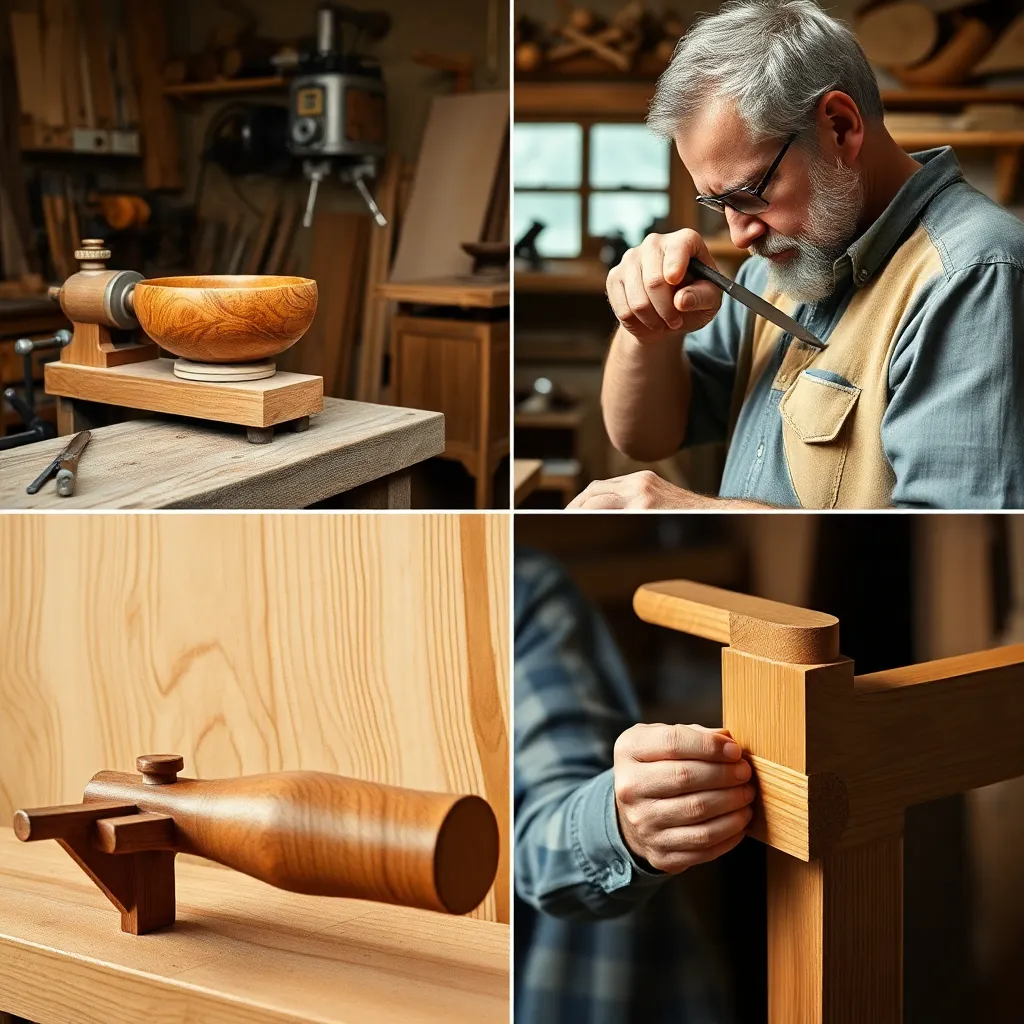
Woodworking is not a single craft — it’s six distinct disciplines, each with its own tools, techniques, wood preferences, and end products. A furniture maker and a wood carver work with different species, different tools, and different standards of precision. Understanding the types of woodworking helps you find the discipline that matches your interests, choose the right starting projects, and understand which skills transfer across disciplines and which are specific.
Ted’s Woodworking has complete plans for furniture, cabinets, outdoor builds, and specialty projects. Browse Ted’s plans →
Step 1: Furniture Making — Joinery-Focused Woodworking
Goal: Understand furniture making as the most technique-intensive woodworking discipline.
Furniture making centers on joinery — the craft of connecting wood pieces so they’re strong, stable, and precise. The defining joints (mortise-and-tenon, dovetail, box joint) require either precision handwork or carefully set-up machines. Furniture makers work primarily with hardwoods: oak, maple, cherry, walnut, and ash for the visual impact of natural wood grain.
Key skills: dimensioning lumber (straightening, squaring, and sizing rough lumber), joinery (hand-cut or machine-cut), wood movement management (designing joints and panels to allow seasonal expansion), and finishing (preparing surfaces and applying durable, beautiful coats).
Wood preferences: furniture-grade hardwoods — cherry and walnut for premium natural-finish work, red oak for affordable natural-finish work, poplar for painted work.
Best entry projects: small side table, simple step stool, wooden tray with handles, box with a fitted lid.
Step 2: Cabinetmaking — Precision Sheet-Goods Woodworking
Goal: Understand cabinetmaking as a discipline built around flat panels and precise fitting.
Cabinetmaking builds storage — kitchen cabinets, bathroom vanities, built-in bookshelves, entertainment centers. The primary material is sheet goods (plywood, MDF, melamine-coated particleboard) cut to precise dimensions and assembled with consistent joints. Face frames (strips of solid wood applied to the front edges) are the interface between the sheet-goods box and the finished surface.
Key skills: sheet goods handling (cutting large panels accurately), dado and rabbet joinery (for fixed shelves and drawer boxes), drawer slide installation, door fitting, and face frame construction.
Wood preferences: cabinet-grade plywood (birch or maple veneer) for boxes, solid poplar or maple for face frames, hardwood veneer panels for visible surfaces.
Best entry projects: simple wall-hung box shelf, small bathroom vanity box, shop storage cabinet.
Step 3: Wood Turning — Lathe-Based Woodworking
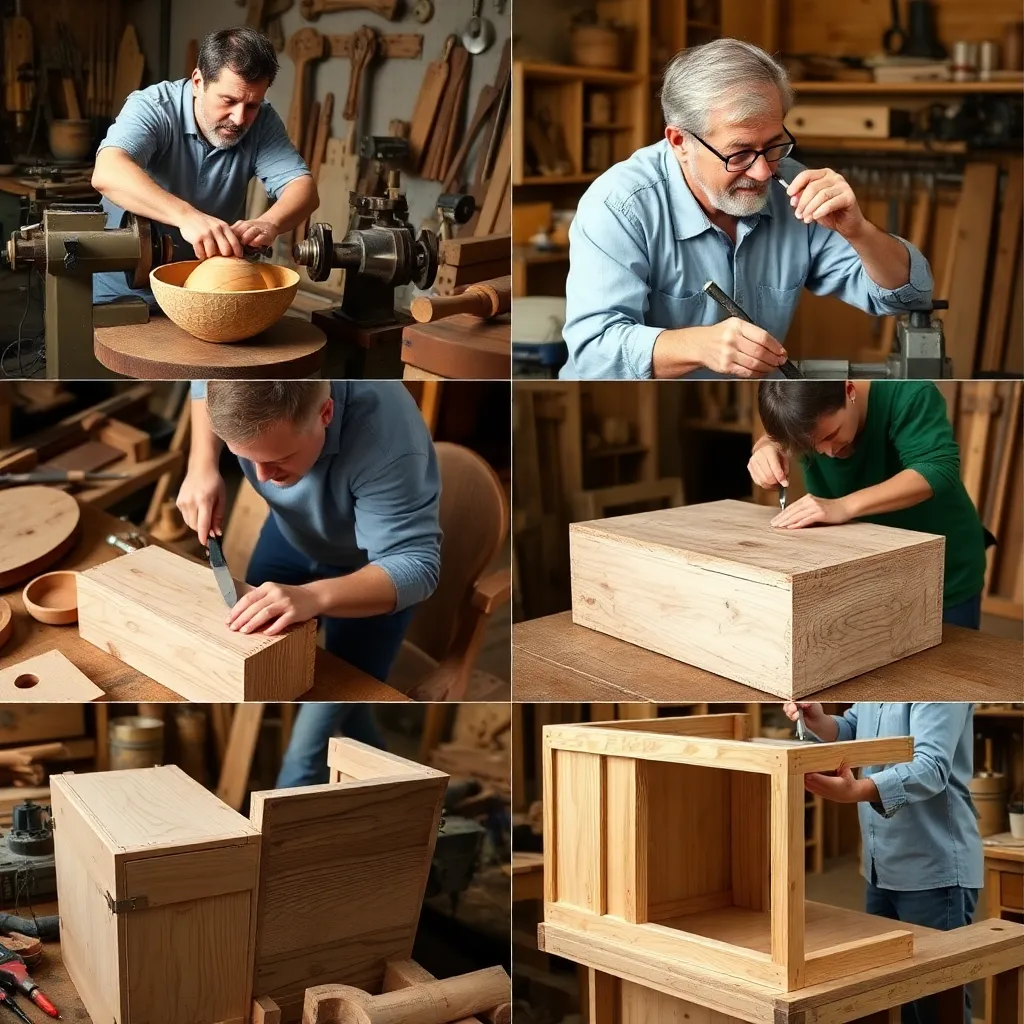
Goal: Understand wood turning as a rotational discipline with its own tool set and wood requirements.
Wood turning uses a lathe to spin the workpiece while cutting tools shape it. The two categories: spindle turning (the wood spins between centers along its length — for table legs, chair rungs, lamp bases) and faceplate turning (the wood spins on one end — for bowls, platters, hollow forms). Turning is faster than furniture making for producing round forms but requires a lathe and specialized gouges, skews, and scrapers.
Key skills: tool rest positioning, cutting vs scraping technique, managing catches (when the tool grabs the wood), hollowing technique for bowls, sanding on the lathe.
Wood preferences: dense, even-grained woods for smooth surfaces (hard maple, cherry, boxwood); figured and burled woods for visual impact (maple burl, black walnut with figure, madrone); green (freshly cut) wood for bowl roughing (dries and changes shape after rough turning).
Best entry projects: wooden mallet, honey dipper, small spindle (practice piece), simple bowl from a turning blank.
Step 4: Wood Carving — Subtractive Hand-Tool Woodworking
Goal: Understand carving as the most manual, tool-diverse woodworking discipline.
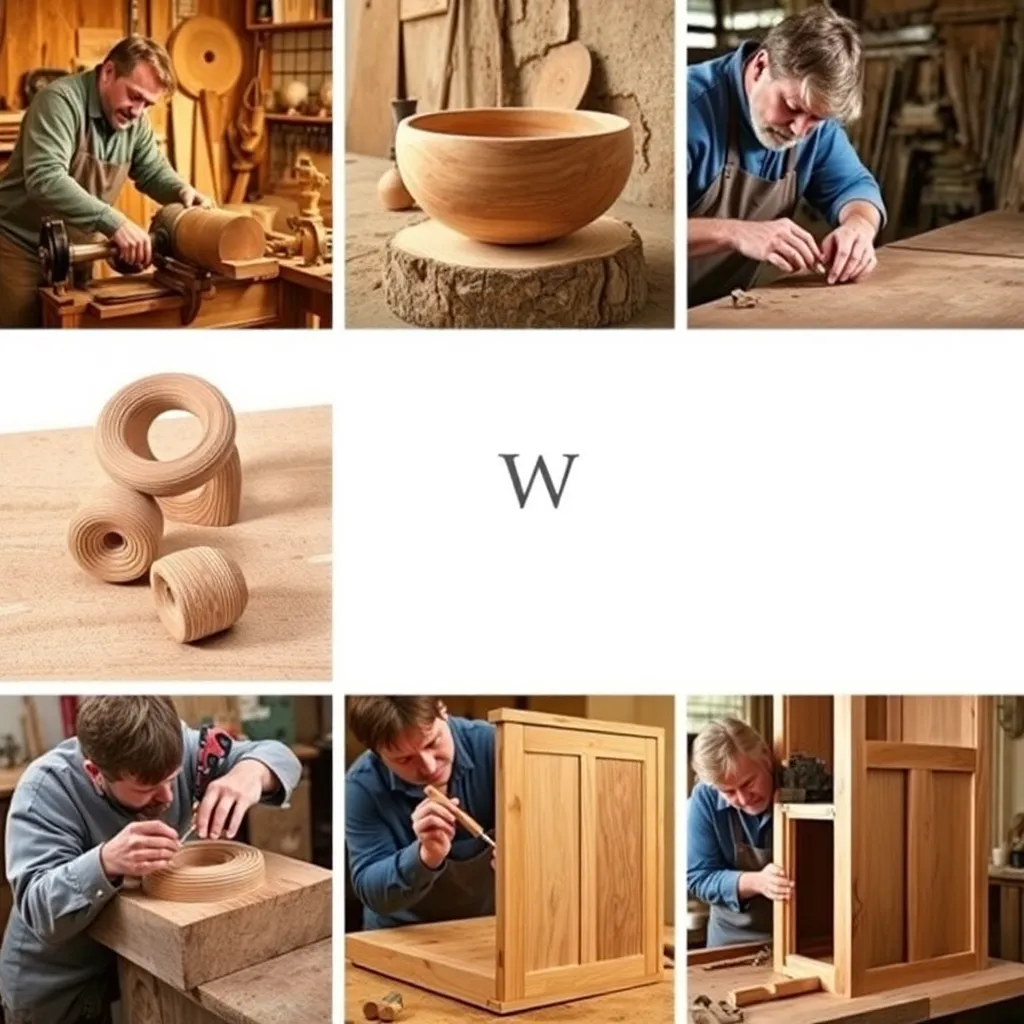
Wood carving removes material with hand tools (chisels, gouges, V-tools, knives) rather than power tools. The carving categories: relief carving (designs carved into a flat surface — the background is removed to make the design stand proud), in-the-round carving (a three-dimensional sculptural form carved from a block), chip carving (geometric patterns made with a single-bevel knife), and whittling (free-form carving with a knife alone).
Key skills: tool sharpening (more critical in carving than any other discipline — dull tools tear wood), grain reading (cutting with the grain vs against it produces dramatically different results), mallet control, and design transfer.
Wood preferences: soft, even-grained, knot-free woods that cut cleanly: basswood (the standard carving wood — soft, consistent, widely available), butternut (slightly harder than basswood, beautiful grain), white pine (inexpensive, widely available, slightly more variable than basswood). Avoid oak and ash for carving — the open grain tears rather than cuts cleanly.
Best entry projects: simple letter opener, spoon carving, small animal figure, chip-carved coaster.
Step 5: Joinery — The Craft of Wood-to-Wood Connection
Goal: Understand joinery as both a subdiscipline and a foundational skill across all woodworking types.
Joinery is the study of how wood pieces connect — the dozens of joint types, their mechanical advantages, the tools required, and when to use each. As a standalone discipline, it’s practiced by hand tool woodworkers who focus on traditional joinery as the art form itself. As a skill, it’s essential in furniture making and cabinetmaking.
Key joint types: butt joint (simplest, weakest — held by fasteners); rabbet and dado (for shelves and drawer bottoms); mortise-and-tenon (the strongest traditional furniture joint); dovetail (for drawer corners and box joints — mechanically interlocking, very strong); box joint (the machine-cut alternative to dovetail).
Wood preferences: any hardwood that takes crisp edges; the finest hand-cut joinery uses cherry, maple, or mahogany (all hold a sharp edge without tearout).
Best entry projects: practice dovetail (cut 10 before using them in a real project), mortise-and-tenon bench vise handle, finger-jointed box.
Step 6: Timber Framing — Large-Scale Structural Woodworking
Goal: Understand timber framing as the intersection of woodworking and structural engineering.
Timber framing builds structural frames — barn frames, house frames, pergolas, pavilions — from large-section timbers (6×6, 8×8, 12×12) joined with traditional mortise-and-tenon joinery pinned with wooden pegs (treenails). It’s distinct from conventional framing (which uses dimensional lumber and metal connectors) in its use of large timbers, exposed joinery, and the visual statement of heavy timber construction.
Key skills: large-scale layout (full-size layout on the shop floor), timber handling (moving heavy stock safely), large mortise-and-tenon cutting, peg drilling and drawboring (a technique that pulls joints tight).
Wood preferences: strong, durable species that hold large joinery: white oak (the traditional choice, very strong, rot-resistant at outdoor connections), Douglas fir (strong, affordable, widely available in large sections), eastern white pine (for interior frames — beautiful, workable, historically accurate).
Best entry projects: garden arbor, simple pergola, small outbuilding frame section.
Types of Woodworking FAQ
Which type of woodworking should I start with?
Furniture making is the most common starting point because the skills (measuring, cutting, joining, finishing) apply to every other discipline and the projects (small table, box, shelf) are immediately useful at home. If you’re drawn to smaller, more meditative work, wood carving has the lowest equipment cost (a few chisels and a mallet get you started). If you want faster results with less joinery complexity, cabinetmaking produces useful storage quickly from sheet goods. Wood turning requires a lathe (a significant investment) but produces results quickly once the basic cuts are understood. Start with the discipline that matches your current tools and interests — the foundational skills transfer significantly between disciplines.
Can I do multiple types of woodworking in the same shop?
Yes — most woodworking shops combine at least two disciplines. The most common combination is furniture making plus cabinetmaking (they share most tools and both use hardwoods and sheet goods). Turning requires a dedicated lathe, which takes space but doesn’t interfere with the other disciplines. Carving requires almost no dedicated equipment and can be done at a workbench used for other tasks. Timber framing is typically a separate discipline due to the scale of materials — the tools overlap with furniture making (large chisels, mallets, hand saws) but the material handling requires different space and infrastructure.
What tools do I need to start woodworking?
The minimum tool set that handles 80% of beginner projects: a circular saw (for rough cuts), a miter saw (for accurate crosscuts), a drill/driver, a random orbit sander, a tape measure and square, and clamps (6–8 bar or pipe clamps to start). This set costs $400–$600 for quality mid-tier tools. The next additions: a router (for dadoes, rabbets, edge profiles), a jigsaw (for curves), and a pocket hole jig (for fast, strong joinery without traditional joint cutting). A table saw, jointer, and thickness planer are valuable but not required until you’re ready to work with rough lumber rather than pre-dimensioned stock.
What is the hardest type of woodworking to learn?
Hand-cut joinery — specifically hand-cut dovetails and mortise-and-tenon joints — requires the most precision and the longest skill development period. The technique gap between a good dovetail and a poor one is almost entirely in sharpening and consistent tool technique, both of which take repetitive practice to develop. Timber framing requires physical strength and large-scale precision that’s mentally demanding. Wood turning has the steepest initial learning curve (controlling tools at the lathe feels unlike any other woodworking skill) but flattens quickly — most people produce their first acceptable bowl within 10–15 hours of practice. Furniture making is the most technique-diverse but also the most rewarding for continuous progression.

“DIY woodworking enthusiast who started with zero experience and a YouTube tutorial.
I build simple, practical projects for my home and share free plans
so other beginners can skip the guesswork.If I can build it, you can too.”