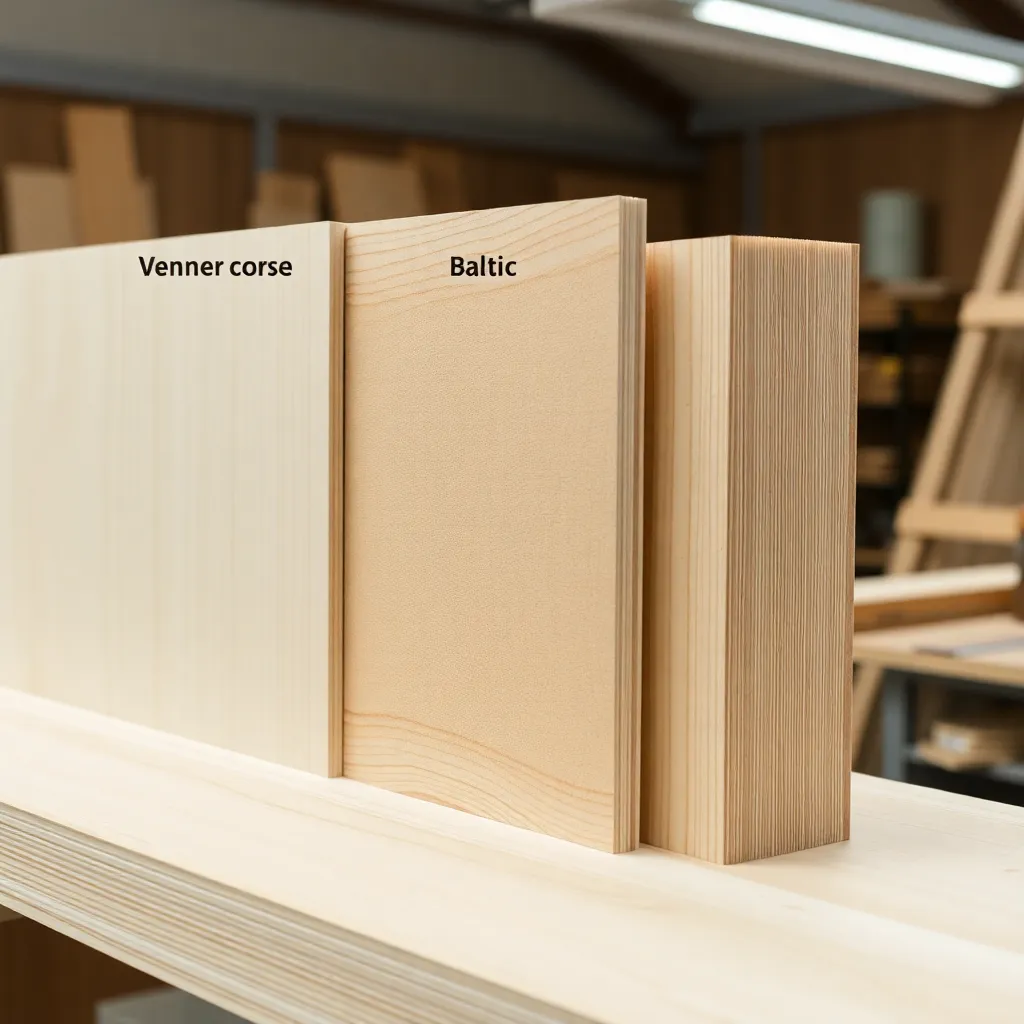
The plywood category covers dozens of distinct products — from the CDX sheathing used in roof decks to the void-free Baltic birch used in fine furniture, from marine plywood for boat building to fire-rated panels for commercial construction. Understanding which type applies to a given project prevents expensive mistakes and reveals the best material for each application.
Ted’s Woodworking has complete project plans with material specifications for every build. Browse Ted’s plans →
Step 1: Understand Veneer Core vs Alternative Core Constructions
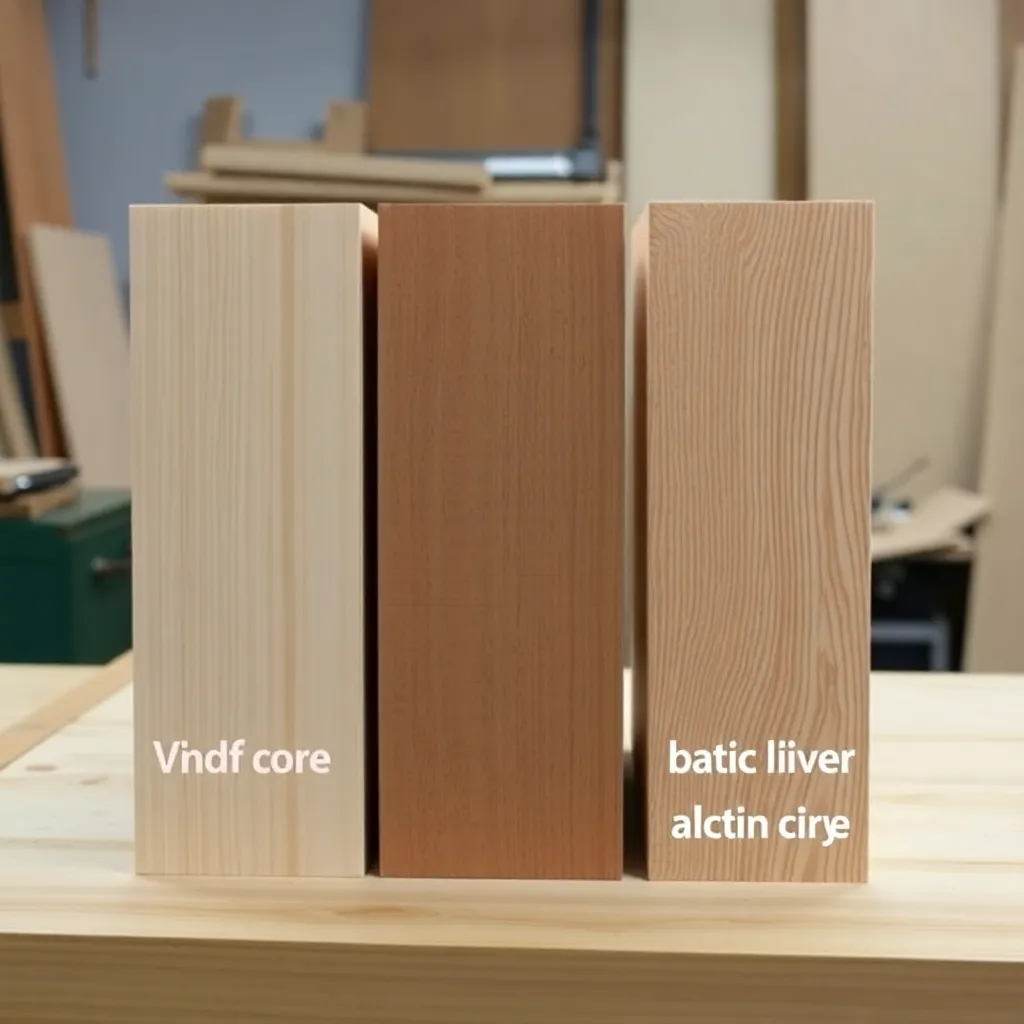
Goal: Identify the three core construction types and understand how each affects performance.
All plywood starts with a core. The core type affects weight, screw-holding ability, flatness, and edge behavior.
Veneer core: built entirely from thin wood veneers — the standard construction. Each veneer layer is oriented at 90° to the adjacent layer. Pros: lightest weight, best screw-holding (especially at the edge), good strength. Cons: may have voids (gaps in the core veneers) that appear when cutting or routing, inconsistent thickness.
MDF core (Medium Density Fiberboard core): a solid MDF core between two face veneers. Pros: very flat, consistent thickness, ideal for painted surfaces (no grain show-through), excellent for routing profiles on the face. Cons: very heavy, poor screw-holding at the edge (screws strip easily parallel to the face), susceptible to moisture (swells significantly).
Particleboard core: similar to MDF core but uses larger wood particles. Pros: flat, less expensive. Cons: heavier than veneer core, worst screw-holding of all types, not suitable for moisture exposure.
Lumber core: solid wood strips form the core, with face veneers on each side. Pros: extremely strong, excellent screw-holding, works like solid wood. Cons: more expensive, can show core telegraph (the core strips show through the face veneer).
Milestone: At a lumber yard, examine the edge of three sheets with different cores and identify the construction type of each.
Step 2: Learn Softwood Structural Plywood Types
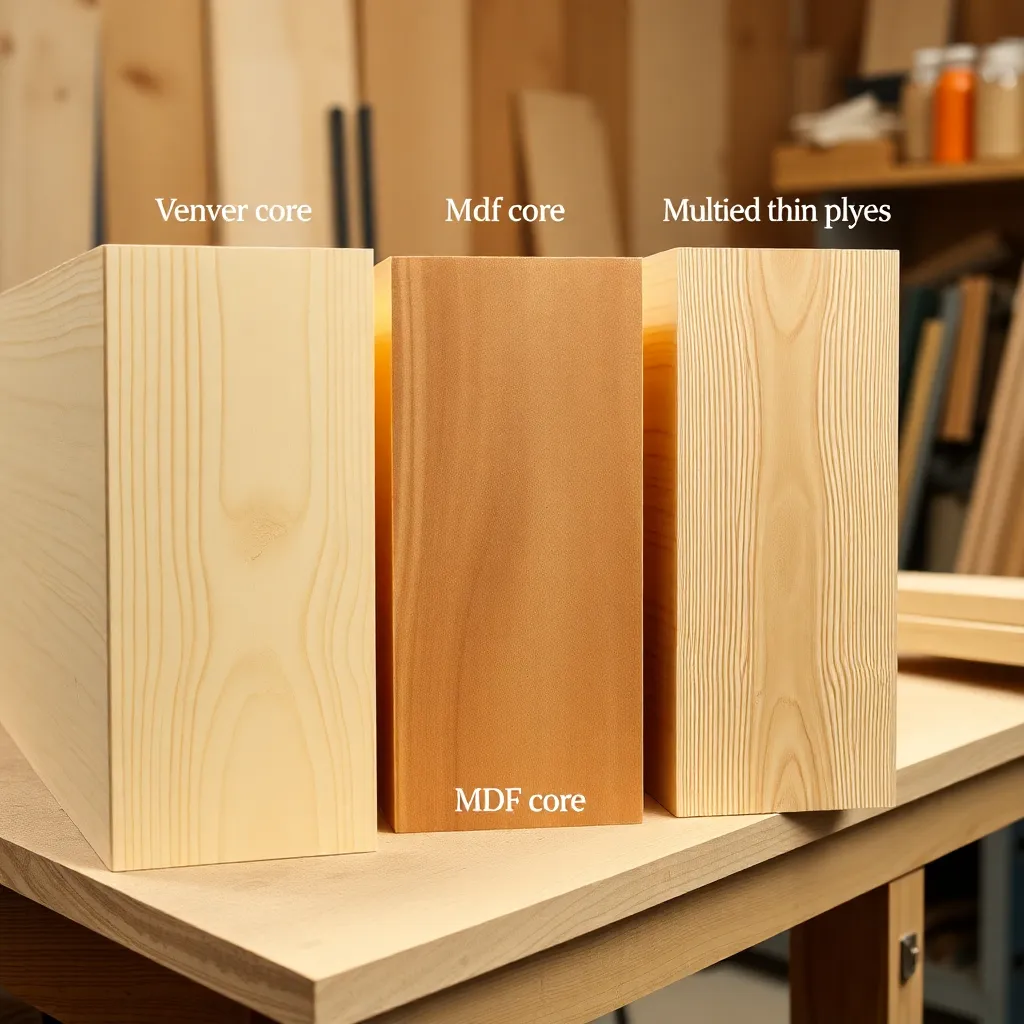
Goal: Identify and correctly specify structural plywood for framing and construction applications.
CDX (C-D Exposure 1): The most common structural plywood. C-face, D-back, Exterior (water-resistant) glue. Used for roof sheathing, wall sheathing, subfloors. Not suitable for appearance applications.
OSB (Oriented Strand Board): Not technically plywood (it’s made from wood strands, not veneers) but serves the same structural applications. Less expensive than CDX, consistent thickness, no voids. Swells significantly at the edges when wet — less suitable than CDX for floor sheathing in wet climates.
T&G (Tongue and Groove) subfloor panels: typically 23/32″ or 1-1/8″ OSB or plywood with a tongue on one long edge and groove on the other — the edges interlock and support each other between joists.
Rated Sheathing: APA-stamped panels for structural applications with a span rating indicating the maximum on-center spacing of the supporting structure.
Milestone: At a home center, identify CDX and OSB and read the grade stamp on each.
Step 3: Identify Hardwood Veneer Plywood Types
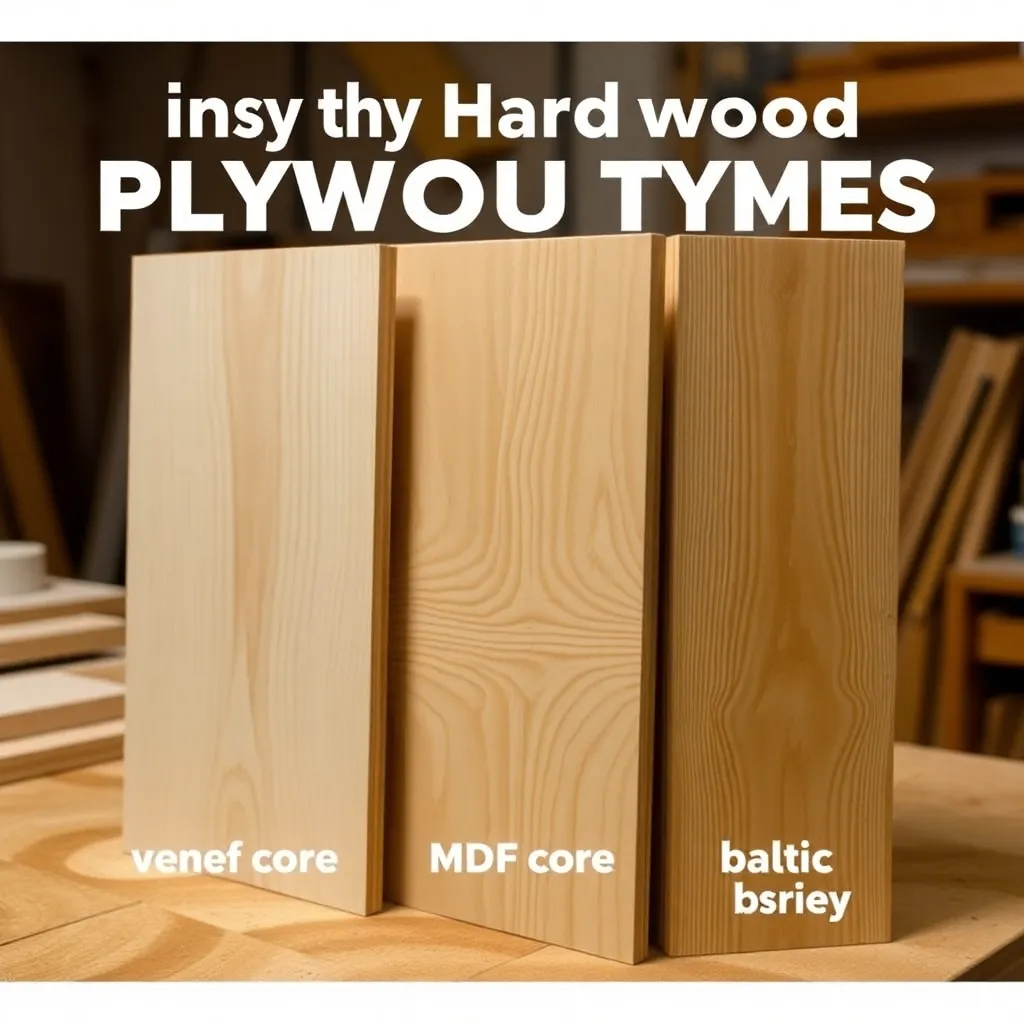
Goal: Know the primary hardwood veneer plywood species and their applications.
Hardwood veneer plywood uses thin slices of a furniture-grade species on the faces over a veneer or MDF core. The species determines the appearance; the core determines the structural properties.
Birch veneer: the most common furniture and cabinet plywood. Pale cream color, fine even grain. Available in most hardware stores and lumber yards. Often sold as “cabinet-grade birch.”
Oak veneer (red and white): flat-sawn oak veneer shows the characteristic cathedral grain pattern; quartersawn shows ray flecks. For traditional or Craftsman-style furniture and cabinets.
Maple veneer: very pale, fine grain — similar to birch but slightly harder and more consistent. Premium pricing.
Cherry veneer: reddish-brown, fine grain. For traditional and period furniture.
Walnut veneer: dark chocolate brown, dramatic. The most visually striking hardwood veneer plywood.
Lauan (Philippine mahogany): a cheap tropical hardwood veneer — used for doors, drawer bottoms, and utility applications where a smooth surface is needed at low cost. Not a fine furniture material.
Milestone: Find three different species of hardwood veneer plywood at a lumber yard and compare the veneer thickness and face quality between them.
Step 4: Understand Baltic Birch and Its Advantages
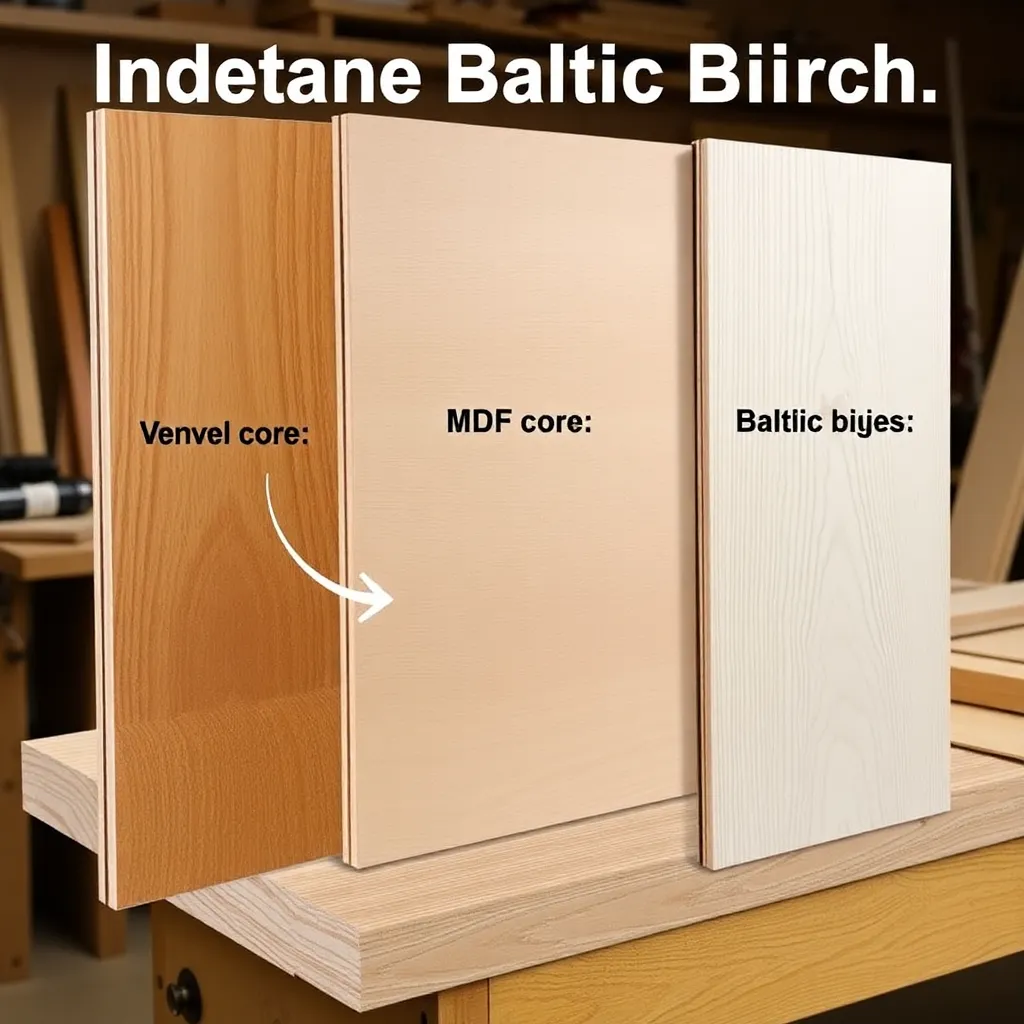
Goal: Know when Baltic birch is the right choice and how it differs from standard birch plywood.
Baltic birch is imported from Finland, Russia, or Baltic countries and is distinct from domestic birch plywood in several important ways:
More, thinner plies: a ¾” Baltic birch sheet has 9–13 plies vs 5–7 in domestic ¾” birch. The additional plies make it more stable and reduce the void problem.
Void-free core: the most important distinction. Baltic birch is manufactured to eliminate voids (gaps in the core veneers). When you cut a dado or rout a slot, there are no hollow spots. Domestic birch may have significant voids.
Consistent thickness: Baltic birch is manufactured to metric dimensions (18mm for nominal ¾”, 12mm for nominal ½”) with tight thickness tolerances. Domestic plywood thickness is notoriously variable — sometimes ± 1/32″ from the nominal.
Square sheets: Baltic birch typically comes in 5×5-foot sheets rather than the standard 4×8, which means less offcut waste for some projects and a different cutting diagram.
Attractive edges: the many thin plies create an attractive layered edge that some furniture makers leave exposed as a design element — no edge banding required.
Best applications: drawer boxes, shop jigs and fixtures, CNC routing, furniture where exposed edges are a design feature, and any application where void-free core and consistent thickness are critical.
Milestone: Compare a cut edge of Baltic birch to a cut edge of domestic birch plywood under raking light and count the plies in each.
Step 5: Know Marine and Specialty Plywood Types
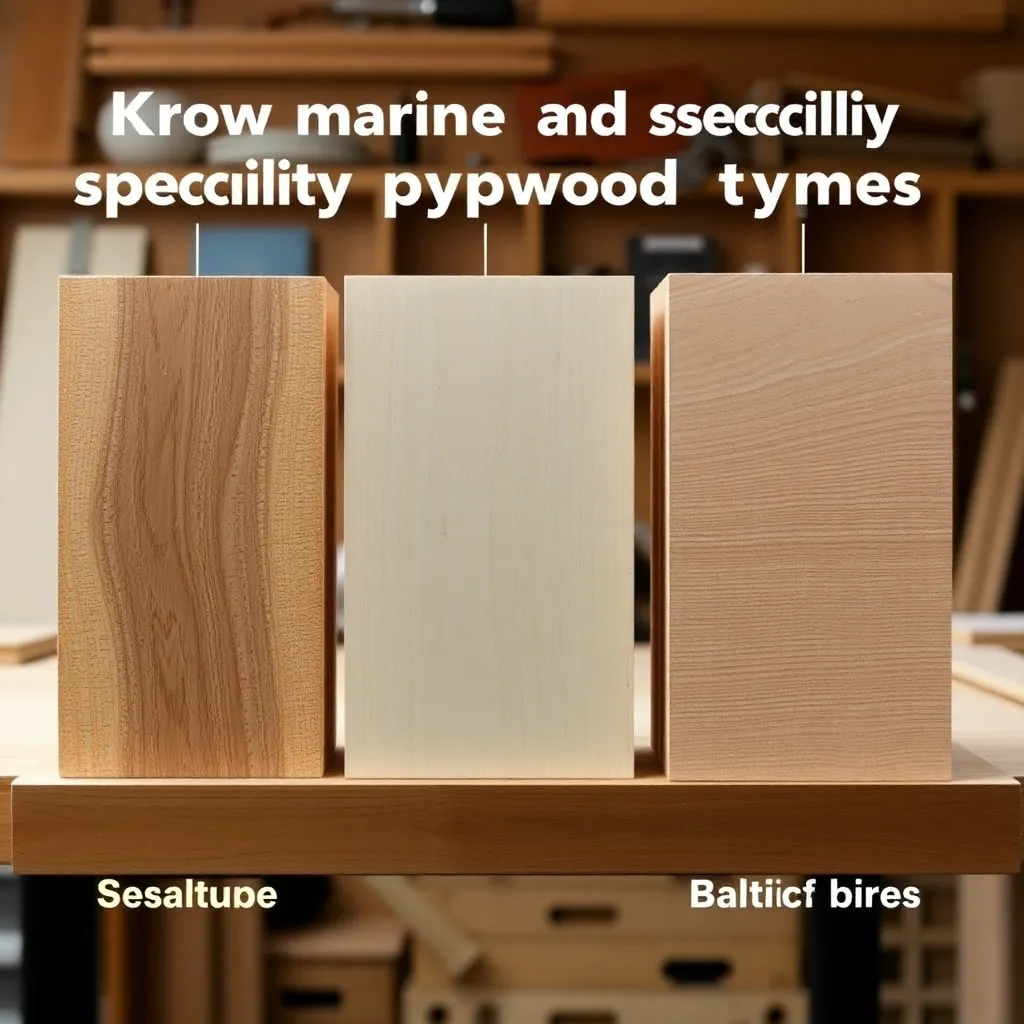
Goal: Identify specialty plywood types and their specific applications.
Marine plywood: manufactured to Lloyd’s of London BS1088 standard (or equivalent). Uses fully waterproof glue, void-free core, and premium face veneers (typically okoume or meranti). More expensive than Exterior-rated plywood. Required for boat building; appropriate for any constantly wet application.
MDO (Medium Density Overlay): standard plywood with a smooth resin-fiber overlay on one or both faces. The overlay creates a very smooth, paint-receptive surface. Used for exterior signs, concrete forms, and painted outdoor furniture.
HDO (High Density Overlay): similar to MDO but harder and more durable overlay. Used for concrete forming (the hard surface releases from concrete without sticking).
Fire-rated plywood: panels treated with fire-retardant chemicals and tested for flame spread. Required in some commercial building applications. Not relevant to most woodworking but useful to recognize.
Bendable plywood (flex ply): thin plywood (typically 1/8″ or 5mm) designed to bend around curves. Available in long-grain-flexible (bends across the width) and cross-grain-flexible (bends along the length) versions.
Milestone: Identify the difference between MDO and standard plywood by examining the face and edge.
Step 6: Select the Right Plywood Type for Your Project
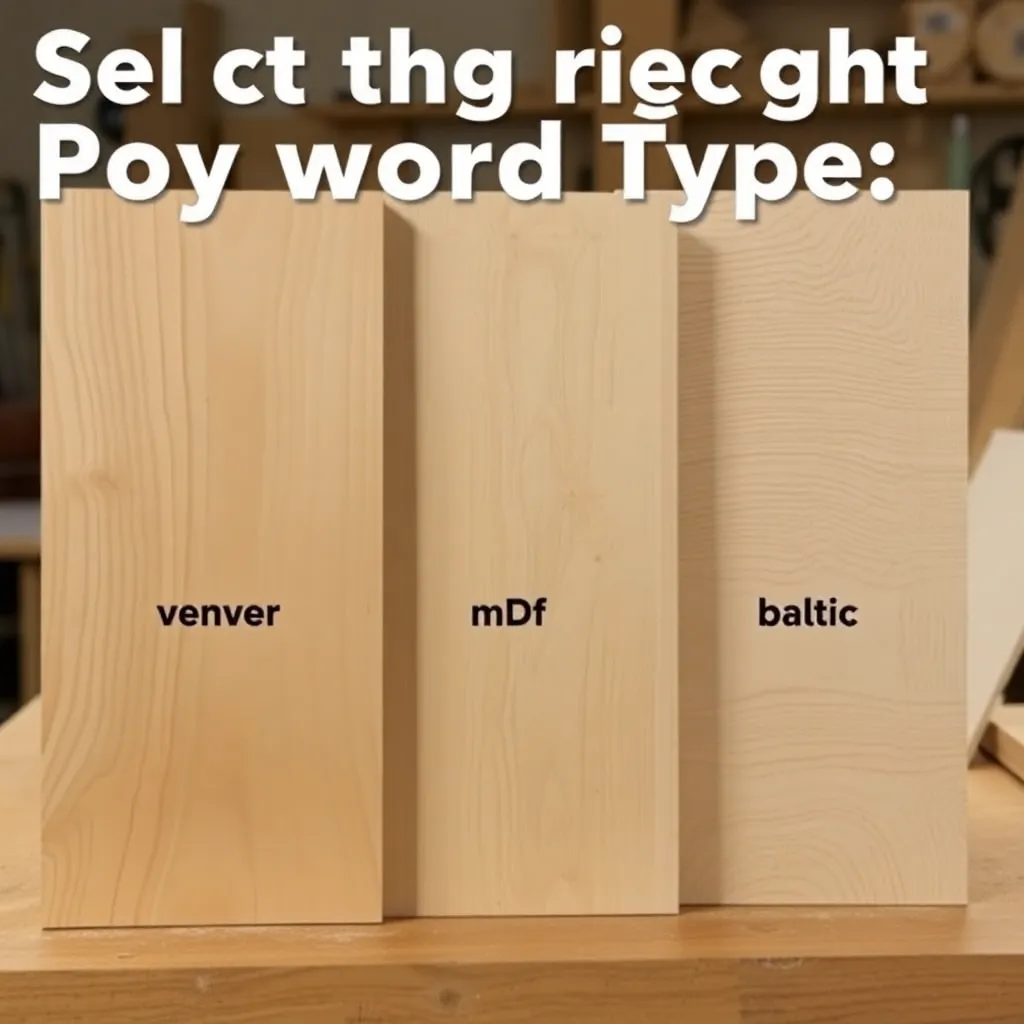
Goal: Apply all the above knowledge to make a correct material specification.
| Project | Recommended Type | Notes |
|---|---|---|
| Kitchen cabinets (boxes) | ¾” birch or Baltic birch veneer core | BB/CP grade Baltic birch is the professional standard |
| Cabinet doors (painted) | MDF-core birch, A-grade face | MDF core eliminates grain show-through in paint |
| Drawer boxes | ½” Baltic birch (BB/CP) | Void-free, holds drawer slide screws |
| Furniture (natural finish) | Hardwood veneer (species matches design) | Choose veneer species for aesthetic |
| Workbench top | ¾” Baltic birch, multiple layers | Laminate 2–3 layers for a 1.5–2.25″ top |
| Boat hull | Marine plywood (BS1088 okoume) | Waterproof glue, void-free, required |
| Roof sheathing | CDX or Rated Sheathing | Structural grade, not for appearance |
| Subfloor | T&G OSB or CDX | T&G eliminates edge movement between joists |
| Outdoor furniture (painted) | Exterior-rated birch or MDO | Exterior glue essential |
| Signs (painted) | MDO | Smooth overlay surface |
Milestone: Write a complete material specification for a project you’re planning — type, grade, core, thickness, and quantity.
Plywood Types FAQ
What is the difference between plywood and OSB?
Plywood is made from thin layers of wood veneer glued in alternating grain directions. OSB (oriented strand board) is made from compressed wood strands (chips) randomly or directionally oriented and bound with adhesive. For most structural applications (sheathing, subfloor), they’re interchangeable — OSB is typically less expensive. Key differences: plywood holds fasteners better at the edge, sheds water better at cut edges, and is preferred in wet climates for subfloors. OSB has no voids, is more consistent across the panel, and is less expensive. For appearance or cabinetry applications: plywood is always the right choice — OSB is a structural material only.
Is Baltic birch worth the extra cost?
For most furniture and cabinet applications: yes. The void-free core eliminates the frustrating experience of routing a slot and finding a hollow, or drilling a pocket hole that falls in a void. The consistent thickness means cabinet joinery (dados, rabbets) fits correctly every time. The attractive edges reduce or eliminate the need for edge banding. Baltic birch typically costs 20–40% more than domestic birch plywood at most suppliers — the premium is easily justified by the reduction in material waste and shop frustration. For utility shop storage and applications where appearance doesn’t matter: standard domestic plywood or CDX is fine.
What plywood is waterproof?
No plywood is completely waterproof — all wood absorbs moisture over time. The meaningful distinction is in the glue: Interior plywood uses glue that fails when wet; Exterior-rated plywood uses water-resistant glue that handles intermittent moisture; Marine plywood uses fully waterproof glue and is designed for constant wet exposure. The veneer species also matters — marine plywood uses okoume or meranti, which are naturally resistant to delamination from moisture. For outdoor projects: Exterior-rated minimum; for boat building: marine grade BS1088 with epoxy sealing.
Can I use plywood for outdoor projects?
Yes, with the right type. Use Exposure 1 or Exterior-rated plywood for any outdoor application — these use water-resistant glue that handles seasonal moisture changes. Seal all edges and faces with primer or paint before installation — cut edges are the most vulnerable to water penetration. For furniture that will remain permanently outdoors: cedar plywood or Exterior-rated birch with a quality exterior primer and paint, or a penetrating oil finish. For a boat or other constantly wet application: marine-grade plywood with epoxy encapsulation is required. Never use Interior-rated plywood outdoors — it will delaminate within one or two seasons.

“DIY woodworking enthusiast who started with zero experience and a YouTube tutorial.
I build simple, practical projects for my home and share free plans
so other beginners can skip the guesswork.If I can build it, you can too.”