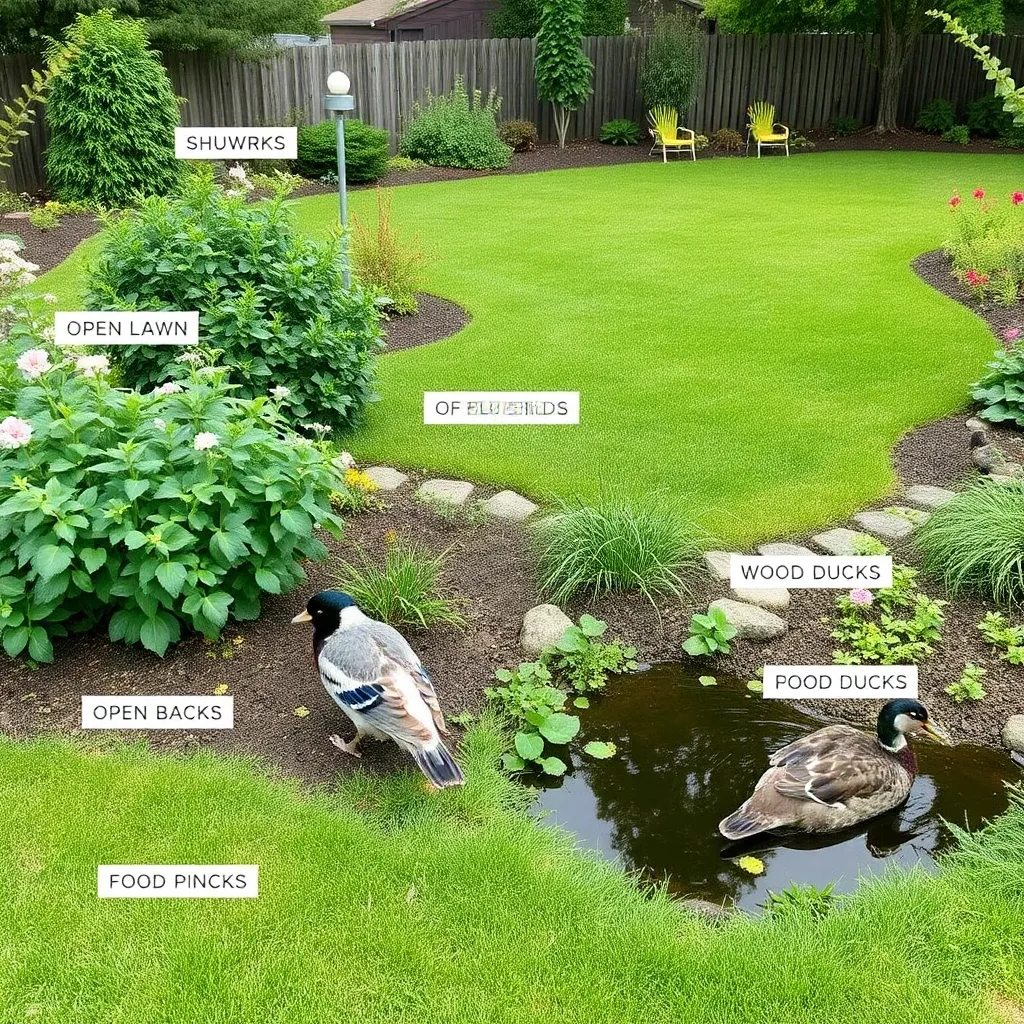
Not all birds nest in the same kind of box — species differ in floor size, entrance hole diameter, interior depth, mounting height, and habitat preference. Building the wrong box in the wrong location is the most common reason a birdhouse sits empty for years. These five bird house plans cover the most popular backyard nesting species in North America, each with species-specific dimensions verified by ornithological research and field testing, and each with a habitat placement guide so the box actually gets used.
Ted’s Woodworking has birdhouse plans for over 30 species with exact entrance hole dimensions, interior depths, and mounting specifications. Browse Ted’s birdhouse plans →
Step 1: Match the Species to Your Habitat
Before selecting a plan, identify which cavity-nesting birds are present or possible in your yard. Building habitat-appropriate boxes dramatically increases occupancy rates.
Quick habitat guide:
- Open lawns, fields, meadows: Eastern Bluebird, Tree Swallow
- Wooded backyards, forest edges: Chickadee, Nuthatch, Downy Woodpecker
- Near water (ponds, rivers, marshes): Wood Duck, Hooded Merganser, Tree Swallow
- Open areas near buildings: Purple Martin (colonial nester — needs a multi-unit house)
- Dense shrubs, thickets: House Wren, Carolina Wren
Species-specific entrance hole sizes (critical — wrong size = wrong species):
| Species | Hole Diameter | Floor Size | Interior Depth |
|---|---|---|---|
| Eastern Bluebird | 1½ inches | 5×5 inches | 10 inches |
| House Wren | 1 inch | 4×4 inches | 6 inches |
| Black-capped Chickadee | 1⅛ inches | 4×4 inches | 8 inches |
| Purple Martin | 2½ inches | 6×6 inches | 6 inches |
| Wood Duck | 4×3-inch oval | 10×18 inches | 24 inches |
Step 2: Build the Wren House (Smallest — Best Beginner Build)
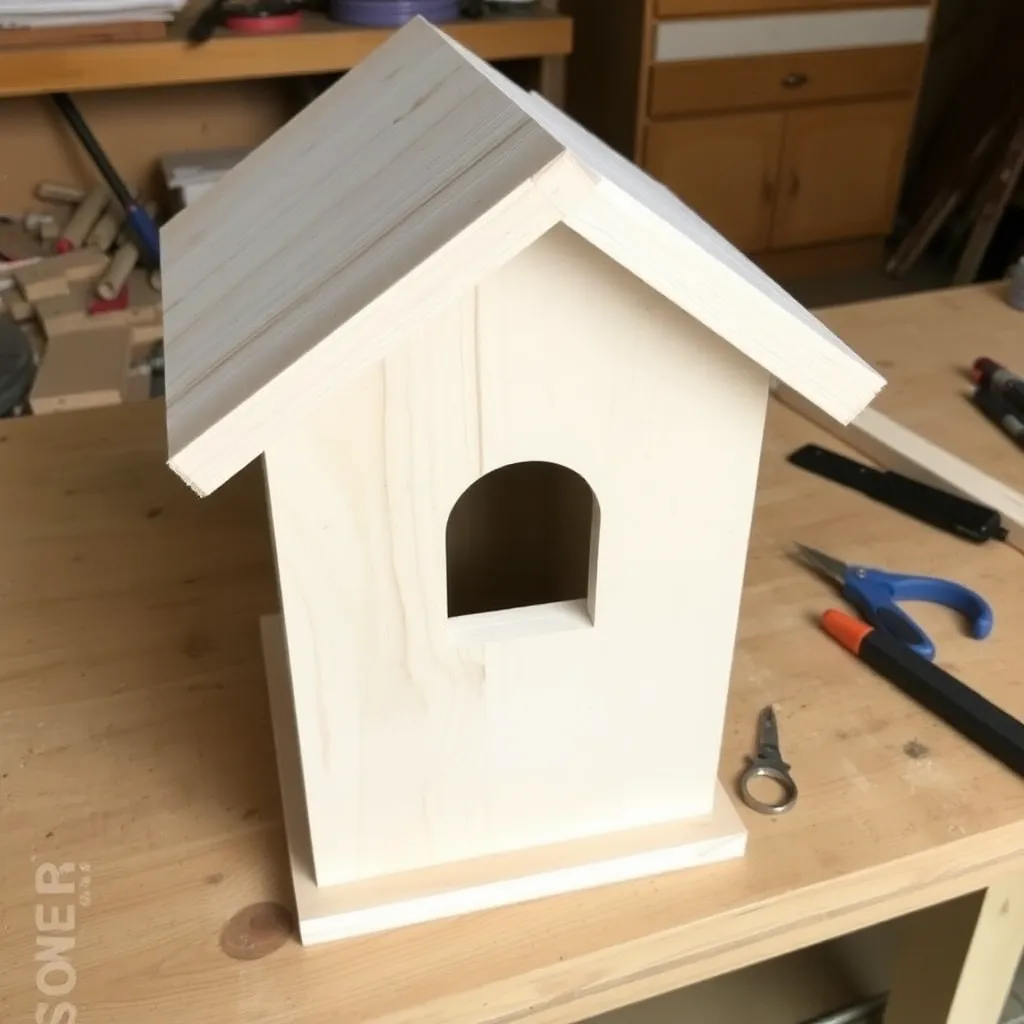
The House Wren house is the simplest birdhouse to build — a small box with a 1-inch entrance that excludes virtually every other bird. Wrens are cavity-nesting generalists that will use almost any well-placed box, making this the most reliably occupied birdhouse design.
Cut list (from one 4-foot 1×6 cedar board):
- Floor: 4×4 inches
- Front and back: 4 inches wide × 8 inches tall
- Two sides: 4 inches wide × 6 inches tall (angled top for roof slope)
- Roof: 6×7 inches (with overhang)
Entrance hole: 1 inch diameter, centered horizontally, 4 inches up from the floor.
Assembly: Same as any simple box — attach sides between front and back; nail floor inside; add pivoting front panel for cleanout access (one screw pivot on each side, 2 inches from the bottom). Add a roof with ¾-inch overhang.
Mounting: 4–10 feet high on a small tree, fence post, or building wall. Wrens are adaptable — they’ll use a box mounted on a wall, in a shrub, or hung from a branch. Face the entrance away from prevailing wind.
Step 3: Build the Chickadee House
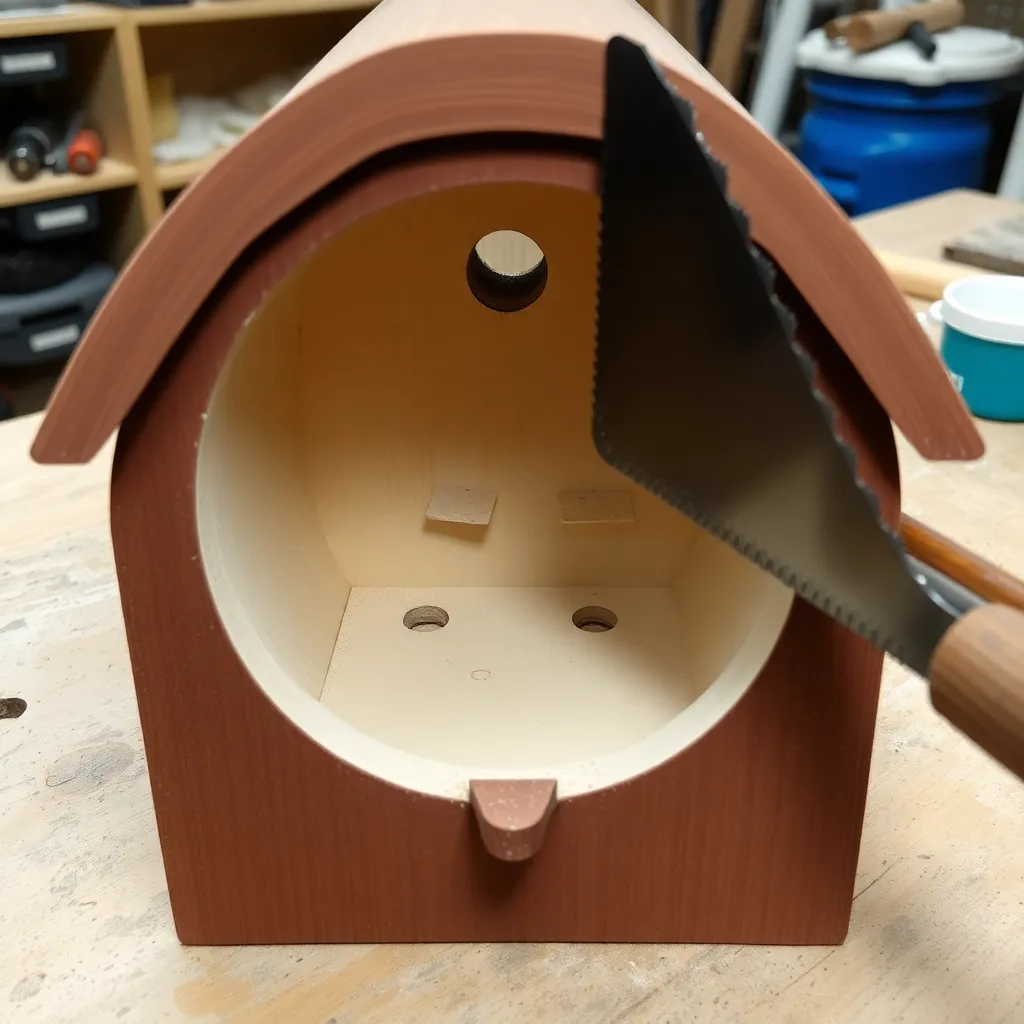
Black-capped and Carolina Chickadees are among the most enthusiastic birdhouse users — they’ll investigate a new box within days of installation. The chickadee house is almost identical to the bluebird box but smaller, with a 1⅛-inch entrance hole.
Cut list (from one 4-foot 1×6 cedar board):
- Floor: 4×4 inches
- Front: 4 inches wide × 9 inches tall (entrance hole 1⅛ inches, 6 inches up from floor)
- Back: 4 inches wide × 14 inches tall (extra height for mounting)
- Two sides: 4 inches wide × 8 inches tall (angled top)
- Roof: 6×7 inches
Interior modification: Score the interior below the entrance hole with a saw or rasp. Chickadees excavate their own cavities in the wild and prefer a rough interior surface. Fill the box with wood chips or sawdust (not sawdust from pressure-treated wood) — chickadees will excavate the chips themselves, triggering nesting instinct.
Mounting: 4–15 feet high on a tree trunk or pole, near woods or forest edges. Chickadees prefer boxes near deciduous trees (oaks, maples, birches) — they glean insects from the bark and foliage of these trees.
Step 4: Build the Purple Martin House
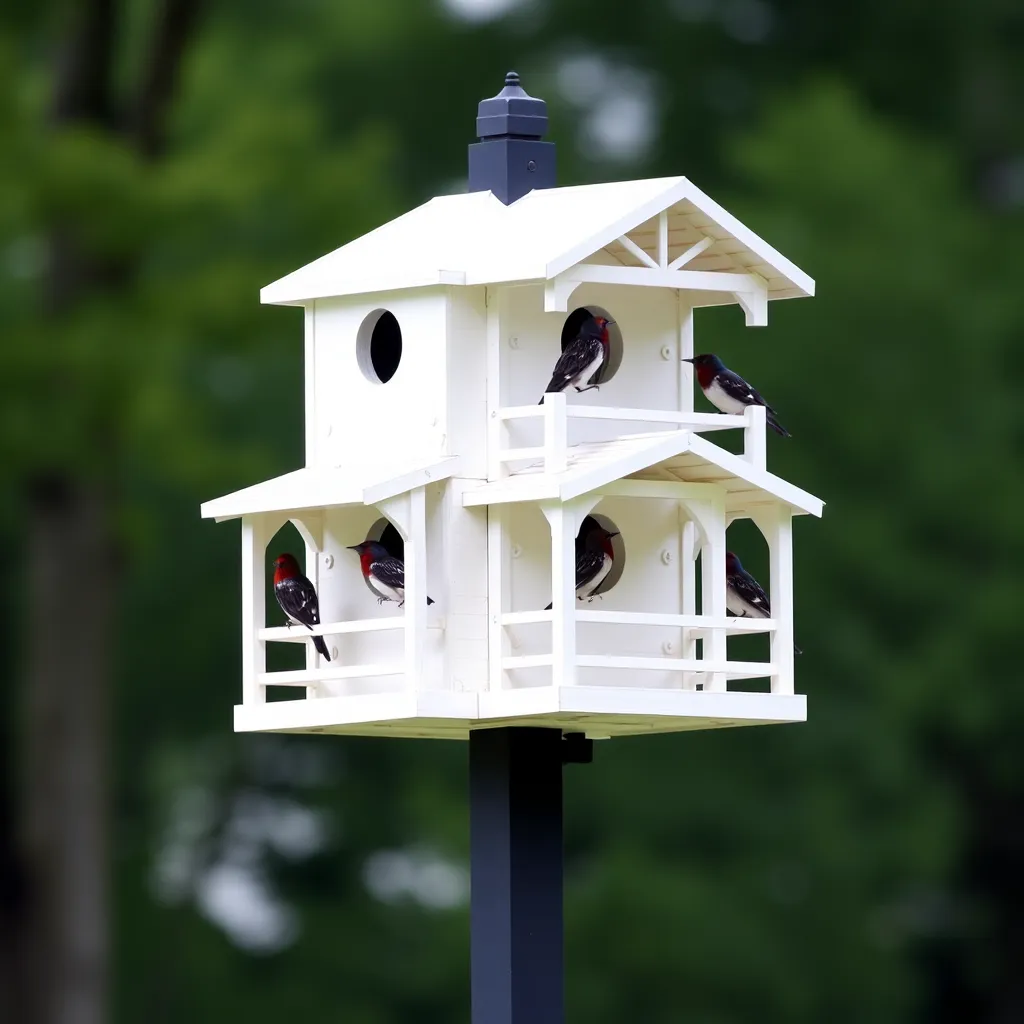
Purple Martins are entirely dependent on human-provided nest sites in the eastern United States — the native cavity trees (old woodpecker holes) have been largely replaced by development. A martin house provides 4–12 individual units clustered on a 15–20-foot pole.
Basic 4-unit design:
- Overall dimensions: 24 inches wide × 12 inches deep × 12 inches tall (two units wide, two units deep)
- Dividers: ½-inch plywood interior dividers create 4 individual compartments (6×6×6 inches each)
- Entrance holes: 2½ inches diameter, one per compartment, centered horizontally and 1 inch up from the floor
- All entrances face outward from the center
Key design features:
- Porch: a 2-inch wide porch extends in front of each entrance hole — martins land on the porch before entering
- Access panels: the roof must hinge up, or the floor must drop, for nest monitoring and cleaning
- Pole mount: the house attaches to a 15–20-foot aluminum or galvanized pole with a winch system for raising and lowering
Mounting: Purple Martins require open sky — the housing must be 40–60 feet from any tree that’s taller than the pole. They nest in colonies, so a single 4-unit house may be sufficient to establish a colony; expand to 8–12 units as the colony grows.
Step 5: Build the Wood Duck Nest Box
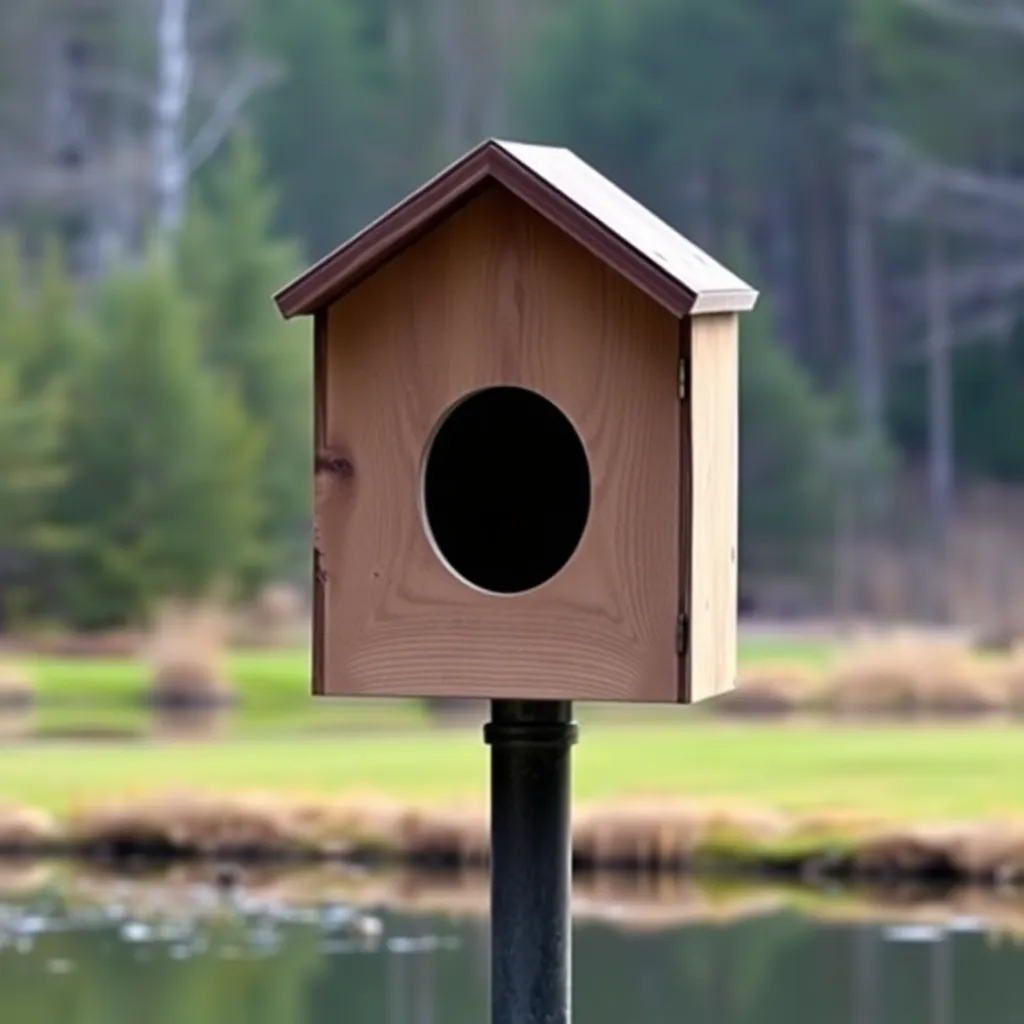
The Wood Duck nest box is the largest and most impactful birdhouse project in this collection — Wood Duck populations collapsed in the early 20th century due to hunting and habitat loss, and their recovery is largely credited to nest box programs. A well-placed box on a pond can fledge 10–15 ducklings per season.
Dimensions (critical — verified by USDA research):
- Interior floor: 10×18 inches
- Interior height: 24 inches
- Entrance hole: 4×3-inch oval (3 inches tall, 4 inches wide), 20 inches above the floor
- Predator guard: 6-inch wide galvanized metal cone attached to the mounting pole below the box
Cut list:
- Front: ¾-inch exterior plywood at 12 inches wide × 28 inches tall (entrance hole cut 20 inches up)
- Back: 12 inches wide × 32 inches tall (extra height for mounting)
- Two sides: 18 inches deep × 24 inches tall (angled top for roof slope)
- Floor: 10×18 inches (¾-inch exterior plywood)
- Roof: 14×22 inches (with 2-inch overhang on all sides)
Interior: Score the interior below the entrance hole with deep horizontal cuts — the hen needs a grip surface to enter and exit. Add 3–4 inches of wood shavings inside.
Mounting: Over water or within 100 feet of water, 4–6 feet above the high-water mark. Face the entrance toward open water. Paired boxes (two boxes facing each other, 10–15 feet apart) increase occupancy. Mount on a smooth metal pole with a predator cone — raccoons are the top nest predator.
Bird House Plans FAQ
What is the most important dimension in a birdhouse?
The entrance hole diameter. It determines which species can enter the box. A 1½-inch hole admits bluebirds and excludes starlings (need 1¾+). A 2-inch hole admits flickers and excludes bluebirds. Every other dimension (floor, depth, mounting height) also matters but the entrance hole is the primary filter. Use a hole saw for precision — spade bits are often slightly oversized.
Why won’t birds use my birdhouse?
The three most common reasons: wrong entrance hole size for the species present, wrong location (in a tree when open-field species are present, or in the open when woodland species are present), and house sparrow competition (sparrows aggressively evict native birds). Secondary reasons: too smooth an interior surface, painted interior, perch present (aids predators), or box placed too close to a feeding station.
Should a birdhouse have ventilation holes?
Yes — small ventilation holes (3/16-inch diameter) drilled in the top of each side wall improve air circulation in summer heat. Without ventilation, the interior can reach temperatures that kill nestlings on hot days. These holes are too small for any bird or predator to use as an entrance.
How many birdhouses should I mount?
One per territory for most species. Bluebirds require at least 100-yard spacing between boxes. Wrens are more tolerant — two boxes 20+ feet apart in different parts of the yard is fine. Purple Martins are colonial and prefer multiple-unit structures. Wood Ducks tolerate paired boxes. Resist the impulse to hang many boxes in the same area — overcrowding causes competition and reduces overall occupancy.
What is the best time of year to put up a birdhouse?
February–March for most temperate-climate cavity nesters — early enough that early arrivals (bluebirds, Tree Swallows) can find and claim the box before they begin nesting. Late-arriving species (House Wrens, Purple Martins) don’t appear until May, but having the box up early doesn’t hurt. Year-round mounting is fine — chickadees and nuthatches use boxes as winter roost sites.

“DIY woodworking enthusiast who started with zero experience and a YouTube tutorial.
I build simple, practical projects for my home and share free plans
so other beginners can skip the guesswork.If I can build it, you can too.”