Choosing the right woodworking project for your home decor can feel overwhelming when you’re staring at endless possibilities online. Many DIYers struggle to pick projects that actually fit their skill level, available tools, and living space. Selecting something too complex wastes time and leads to frustration, while picking too simple leaves you bored. This article provides clear criteria and curated project ideas to match your woodworking abilities, space constraints, and style preferences, helping you build confidence and create beautiful pieces for your home.
Table of Contents
- How To Choose The Right Woodworking Project For Your Home Decor
- Creative Woodworking Ideas For Home Decor
- Materials And Tools Overview For Home Decor Woodworking
- Comparison Table Of Woodworking Projects By Complexity, Cost, And Size
- Situational Recommendations: Best Woodworking Projects For Your Home Needs
- Explore Expert Woodworking Plans For Your Next Project
- Frequently Asked Questions About Home Decor Woodworking
Key Takeaways
| Point | Details |
|---|---|
| Selection criteria matter | Choosing projects depends on skill level, available space, materials, and personal style preferences. |
| Beginner projects are accessible | Most beginner projects require 3-5 basic tools and take under 10 hours to complete. |
| Size impacts feasibility | Projects range from compact shelves to larger furniture, affecting workspace needs and placement options. |
| Comparison simplifies choice | A structured table helps evaluate projects by complexity, cost, size, and time commitment for informed decisions. |
How to Choose the Right Woodworking Project for Your Home Decor
Before you grab your saw and start cutting, take time to assess four critical factors that determine project success. Your current skill level matters most because attempting advanced joinery without proper experience leads to crooked joints and wasted materials. Be honest about your abilities and choose projects within your range, then gradually progress to more complex builds as you gain confidence.
Measure your available workspace carefully, considering both construction area and final placement. A beautiful bookshelf means nothing if it won’t fit through your doorway or overwhelms your room. Think about where you’ll sand, assemble, and finish your project, plus storage for tools and materials during the build.
Wood selection balances cost, appearance, durability, and local availability. Pine offers an affordable starting point for practice pieces, while hardwoods like oak provide lasting beauty at higher prices. Consider wood types for DIY projects that match your budget and desired finish, remembering that some species are easier to work with hand tools than others.
Project complexity and time commitment directly impact whether you’ll actually finish what you start. Beginner woodworking home decor projects typically use simpler techniques like sanding, drilling, and assembling pre-cut parts. Start with weekend projects that build fundamental skills before tackling multi-week furniture builds.
Pro Tip: Create a project checklist covering required tools, estimated hours, wood costs, and skill techniques before committing. This prevents mid-project surprises and helps you gather everything upfront.
Key factors for project selection:
- Skill level assessment: Match your current abilities to project requirements
- Workspace measurement: Ensure adequate construction and storage space
- Material selection: Balance cost, beauty, and workability
- Time commitment: Choose realistic timeframes based on your schedule
- Tool inventory: Verify you own or can borrow necessary equipment
Creative Woodworking Ideas for Home Decor
Floating shelves rank among the most popular beginner woodworking projects because they deliver maximum visual impact with minimal complexity. These modern, space-saving solutions work perfectly in small rooms where floor space is precious. You’ll need basic cuts, simple mounting hardware, and a few hours to create custom storage that appears to float against your wall.
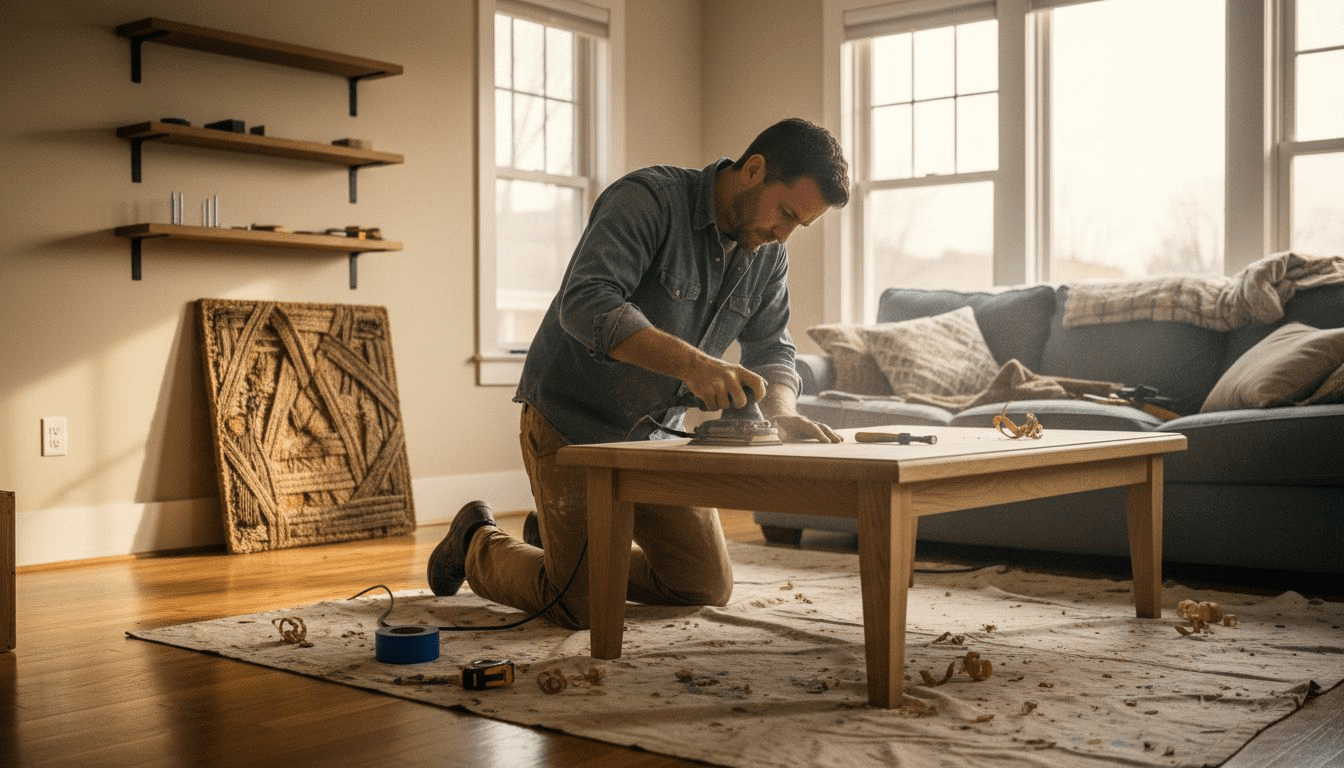
Wooden coffee tables provide functional centerpieces with moderate complexity that suits intermediate woodworkers. These projects teach essential joinery skills like mortise and tenon or pocket holes while creating furniture you’ll use daily. Choose dimensions that fit your living room layout and select wood species that complement existing decor, from rustic reclaimed barn wood to sleek walnut.
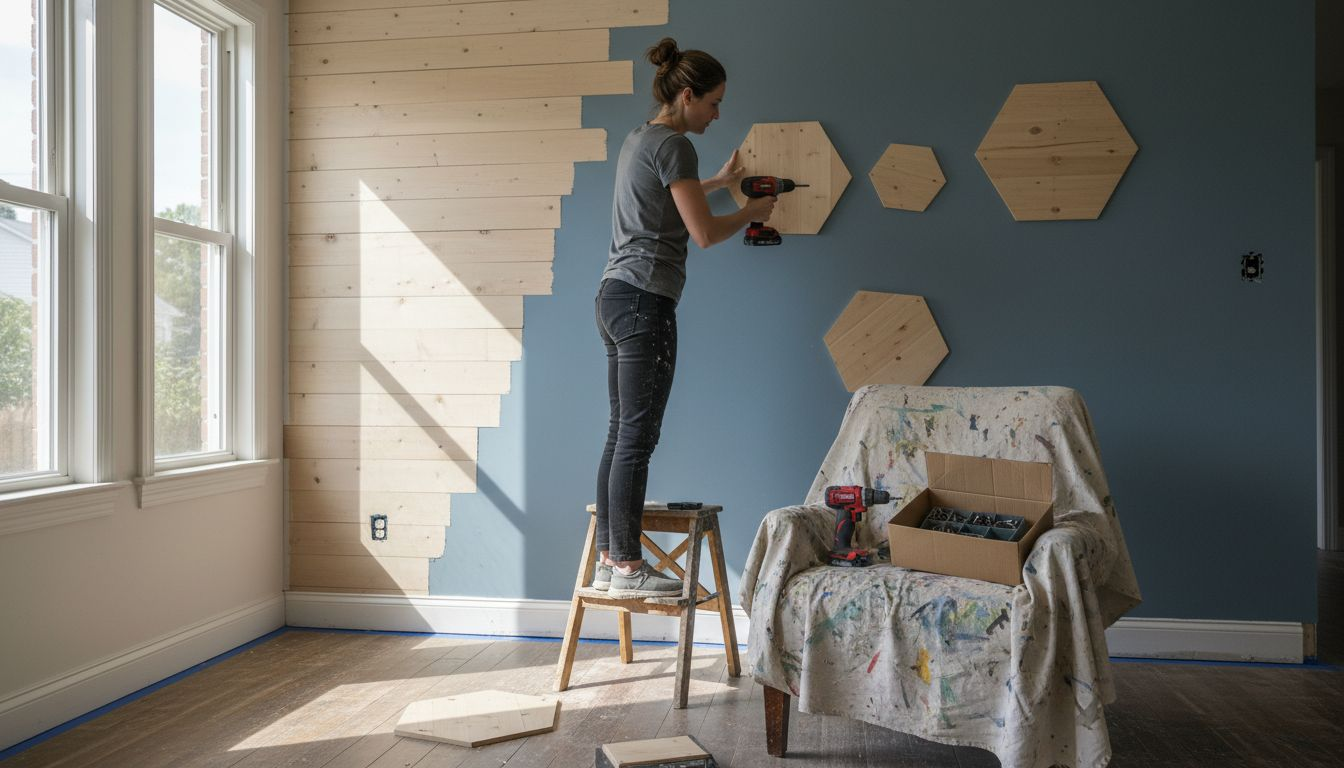
Decorative wall panels allow quick aesthetic upgrades through customizable geometric designs or classic shiplap patterns. These projects scale easily to your available time and space, working equally well as accent walls or smaller focal points. Simple panel projects require only a miter saw, nail gun, and basic measuring skills, making them accessible to most skill levels.
Simple wine racks and wall art represent perfect starter projects needing just a few tools and basic cuts. Wine racks teach angled drilling and structural stability while creating practical kitchen storage. Wall art projects let you experiment with wood burning, staining techniques, or geometric patterns without the pressure of creating functional furniture.
Explore more inspiring woodworking project ideas to find options matching your specific style and skill level.
Popular project categories:
- Floating shelves: Modern storage with hidden brackets
- Coffee tables: Functional furniture building joinery skills
- Wall panels: Customizable aesthetic upgrades
- Wine racks: Practical storage with angled drilling practice
- Wall art: Creative expression with minimal tool requirements
Materials and Tools Overview for Home Decor Woodworking
Pine stands as the go-to choice for beginners because it’s affordable, widely available, and forgiving to work with using hand or power tools. This softwood cuts easily, accepts stains reasonably well, and suits practice projects where mistakes won’t break your budget. Use pine for shelves, simple boxes, or any project where you’re still learning techniques.
Hardwoods like oak, maple, and walnut provide superior durability and stunning grain patterns that elevate finished pieces into heirloom quality. These denser woods resist dents and scratches better than softwoods but demand sharper tools and more careful technique. Reserve hardwoods for projects where appearance and longevity justify the higher material costs.
Reclaimed wood adds instant character and sustainability credentials to your projects, sourcing materials from old barns, pallets, or demolished buildings. This option requires extra prep work to remove nails, clean surfaces, and assess structural integrity, but rewards you with unique patina impossible to replicate with new lumber. Check common wood types and tools for detailed comparisons.
Basic tool kits for beginner projects include a circular saw or miter saw for cuts, cordless drill for holes and fasteners, random orbit sander for smooth finishes, tape measure and square for accuracy, and clamps to hold pieces during assembly. More complex furniture projects add routers for edge profiles, table saws for precision ripping, and specialty clamps for glue-ups.
Pro Tip: Invest in quality measuring and marking tools first, since accurate cuts matter more than fancy power tools. A sharp pencil, reliable square, and good tape measure prevent more mistakes than expensive saws.
Essential materials and tools:
- Pine: Affordable softwood perfect for learning and practice
- Oak/Maple: Durable hardwoods for lasting furniture pieces
- Reclaimed wood: Sustainable option with unique character
- Circular saw: Versatile cutting for most projects
- Drill and bits: Holes, fasteners, and basic joinery
- Sanders: Smooth surfaces for professional finishes
Comparison Table of Woodworking Projects by Complexity, Cost, and Size
| Project Type | Skill Level | Material Cost | Size | Time Required | Best For |
|---|---|---|---|---|---|
| Floating Shelves | Beginner | $20-$50 | Small to Medium | 3-5 hours | Maximizing wall space in compact rooms |
| Wooden Coffee Table | Intermediate | $100-$300 | Medium to Large | 15-25 hours | Learning joinery and creating focal furniture |
| Decorative Wall Panels | Beginner to Intermediate | $50-$150 | Variable | 5-12 hours | Quick aesthetic upgrades with custom designs |
| Wine Rack | Beginner | $15-$40 | Compact | 2-4 hours | Practical kitchen storage with minimal tools |
| Wall Art | Beginner | $10-$30 | Small | 1-3 hours | Creative expression and technique practice |
This comparison reveals clear patterns for project selection based on your constraints. Floating shelves and wine racks offer the fastest path to completed projects with minimal investment, perfect when you need quick wins to build confidence. Coffee tables demand significant time and budget but teach valuable intermediate skills that unlock more ambitious future projects.
Wall panels bridge the gap between simple and complex, scaling to match your available time and desired impact. A single accent wall section takes a weekend, while a full room requires multiple sessions. Material costs vary widely based on wood choice, with pine panels costing a fraction of hardwood alternatives.
Size considerations extend beyond the finished piece to include construction workspace. Coffee tables need adequate assembly area for dry-fitting large components, while wall art fits comfortably on any workbench. Factor in finishing space too, since stain and polyurethane require ventilation and drying time away from dust.
Situational Recommendations: Best Woodworking Projects for Your Home Needs
Your specific situation determines which project delivers the best outcome, so match recommendations to your actual constraints rather than aspirations. Small spaces benefit most from vertical solutions that maximize wall area without consuming floor space. Floating shelves excel here, providing customizable storage that adapts to room dimensions and weight requirements.
Absolute beginners should start with wine racks or simple wall art that build fundamental skills without overwhelming complexity. These projects teach measuring, cutting, sanding, and finishing in manageable doses, creating useful items even if techniques aren’t perfect. Success with starter projects builds confidence for tackling larger builds.
Intermediate woodworkers ready for functional furniture find wooden coffee tables ideal for developing joinery skills and understanding structural requirements. These projects demand precision but reward effort with daily-use furniture that showcases your growing abilities. Choose designs matching your tool collection, progressing from pocket hole construction to more advanced mortise and tenon joinery.
Eco-conscious builders appreciate reclaimed wood projects that transform salvaged materials into rustic home decor with unique character. Barn wood shelves or pallet wall art reduce environmental impact while adding one-of-a-kind aesthetic appeal. Expect longer prep time removing hardware and cleaning surfaces, but enjoy knowing each piece tells a sustainability story.
Understand furniture making terminology to communicate effectively and follow plans accurately.
Situational project matches:
- Limited workspace: Choose compact projects like wine racks or small wall art that fit portable workbenches
- Apartment living: Focus on noise-friendly hand tool projects or portable shelving that moves with you
- Tight budget: Start with pine or reclaimed materials for sub-$30 builds
- Skill building: Progress from wine racks to shelves to simple tables, mastering techniques incrementally
- Quick results: Select 2-4 hour projects like wall art for immediate satisfaction
- Heirloom quality: Invest time and hardwood budget in coffee tables or larger furniture pieces
Explore Expert Woodworking Plans for Your Next Project
Ready to transform inspiration into finished projects? Real Woodwork Plans provides detailed, step-by-step guidance designed specifically for DIY enthusiasts building confidence and skills. Access free woodworking plans covering beginner to advanced projects, each with material lists, cut diagrams, and assembly instructions that eliminate guesswork.
Discover why using woodworking plans accelerates your learning curve and reduces costly mistakes. Expert plans provide proven techniques, accurate measurements, and troubleshooting tips that books and videos miss. Browse woodworking project ideas 2026 to find designs matching your skill level, available tools, and home decor style, then download plans that walk you through every cut and connection.
Frequently Asked Questions About Home Decor Woodworking
What’s the easiest woodworking project for beginners?
Wine racks and simple floating shelves require only basic tools like a saw, drill, and sander while teaching fundamental skills. These projects take 2-5 hours and cost under $50, making them perfect for building confidence without major investment. Start with straight cuts and simple joinery before progressing to more complex designs.
How much space do I need to complete woodworking projects?
Space requirements vary dramatically by project size and construction method. Small items like wall art need just a few square feet of workbench, while coffee tables require 6-8 feet of assembly area plus finishing space. Consider vertical storage for tools and materials when workspace is limited.
Can reclaimed wood be used for home decor projects?
Yes, reclaimed wood adds rustic charm and sustainability to projects but demands careful preparation. Inspect for hidden nails, staples, or damaged sections before cutting, and plan extra time for cleaning and planing surfaces. The unique patina and story behind salvaged materials reward the additional effort.
How do I know if a project fits my skill level?
Review required techniques and tools before committing to any build. Beginner projects use simple joinery like butt joints or pocket holes, while intermediate builds introduce mortise and tenon or dovetails. If a plan mentions techniques you’ve never tried, practice on scrap wood first or choose a simpler alternative.
What tools should I buy first as a beginner?
Invest in accurate measuring tools, a quality circular saw or miter saw, cordless drill with bits, random orbit sander, and several clamps before considering specialty equipment. These basics handle 80% of home decor projects and serve you across multiple builds. Add tools gradually as project complexity increases.
How long do woodworking projects typically take?
Simple projects like wine racks or wall art require 2-5 hours of active work time. Intermediate furniture like coffee tables demands 15-25 hours spread across multiple sessions for cutting, assembly, and finishing. Always add buffer time for mistakes, drying between finish coats, and unexpected complications.
Recommended
- Woodworking Tips for Beginners: Build Skills Step-by-Step
- Master Your Woodworking Project Workflow for DIY Success
- 7 Inspiring Woodworking Project Ideas 2026 for DIY Skill-Building
- Real Woodwork Plans – Free Woodworking Plans

“DIY woodworking enthusiast who started with zero experience and a YouTube tutorial.
I build simple, practical projects for my home and share free plans
so other beginners can skip the guesswork.If I can build it, you can too.”