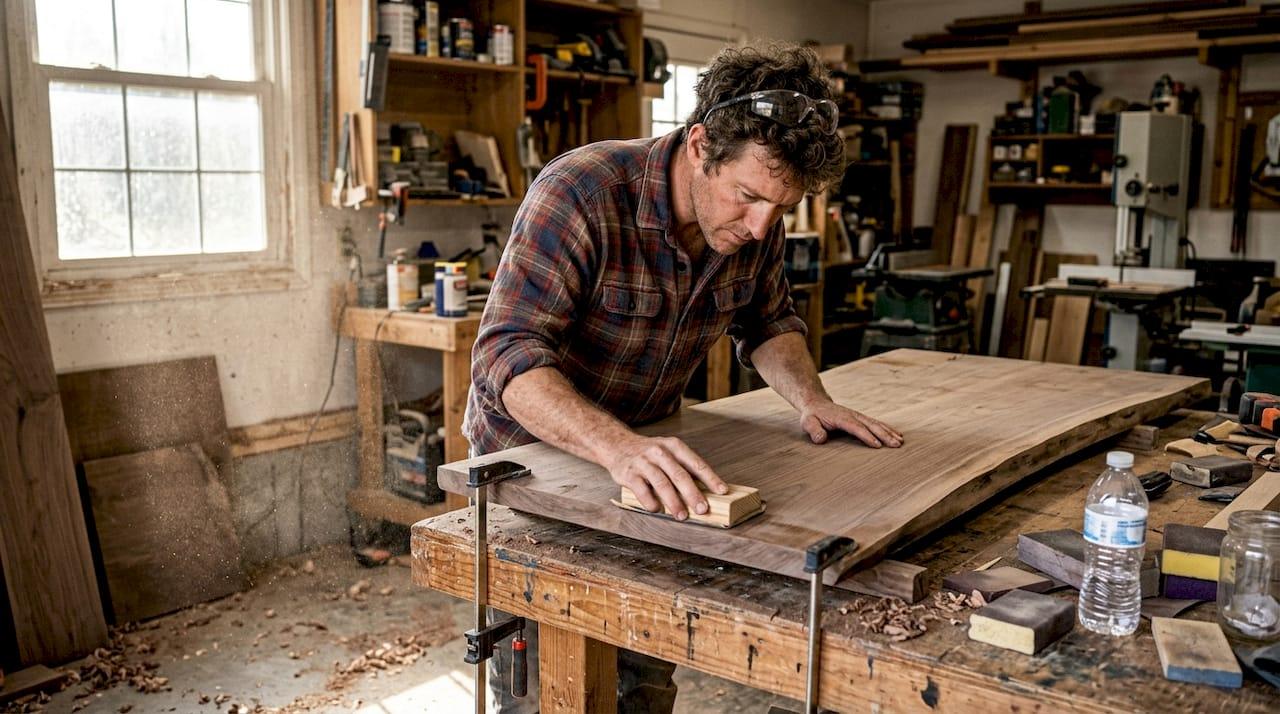
Even the most carefully jointed, perfectly measured furniture project can look rough and unprofessional if sanding is treated as an afterthought. Most DIY woodworkers spend hours selecting the right wood and cutting precise joints, then rush through sanding in twenty minutes. That imbalance shows up immediately in the final finish. Sanding is the step that separates a piece that looks handmade in the best way from one that just looks unfinished. This guide walks you through the science behind sanding, how to choose the right grit, how different wood species change your approach, and a step-by-step workflow that delivers consistently flawless results.
Table of Contents
- Why sanding is essential in furniture making
- How grit selection impacts your finish
- Sanding for different woods: What you must know
- Steps for flawless sanding: From prep to perfect finish
- A fresh take: Why sanding is the overlooked art of furniture making
- Level up your DIY with expert plans and resources
- Frequently asked questions
Key Takeaways
| Point | Details |
|---|---|
| Sanding is essential | Sanding shapes the look and longevity of any furniture finish and cannot be skipped. |
| Grit choice matters | Using the right grit sequence transforms rough wood into a smooth, finish-ready surface. |
| Wood type affects technique | Adapting your sanding method to the wood’s properties avoids surface flaws and maximizes quality. |
| Follow systematic steps | A step-by-step approach—progressing through grits, removing dust, and checking work—ensures flawless results. |
Why sanding is essential in furniture making
Sanding does more than smooth a surface. It physically reshapes the wood at a microscopic level, preparing it to accept stain, oil, or topcoat in a way that raw or roughly cut wood simply cannot. When you run sandpaper across wood, you are removing tiny fibers and leveling peaks and valleys in the grain. The result is a surface that reflects light evenly and holds finish uniformly.
Skipping or rushing sanding creates problems that no amount of finish can hide. Uneven coloration appears because stain absorbs differently into rough and smooth patches. Splinters remain trapped under finish layers. Wear resistance drops because the finish never fully bonds to a poorly prepared surface. Understanding why sanding matters is the first step toward treating it as a core skill rather than a chore.
Here is what proper sanding actually accomplishes:
- Levels the surface by removing mill marks, planer ridges, and tool scratches
- Opens the wood grain so stains and finishes penetrate evenly
- Improves adhesion by giving the finish something to grip at a microscopic level
- Removes contamination like oils from handling that would otherwise repel finish
- Prevents long-term failure including peeling, bubbling, and uneven wear
The science backs this up clearly. Surface roughness decreases as you move from coarser to finer grits, dropping from approximately 1.37 micrometers Ra at 120 grit all the way to 0.26 micrometers Ra at 1000 grit on walnut. That is an 81% reduction in surface roughness from a single change in technique.
“The difference between a 120-grit finish and a 1000-grit finish is not just about smoothness. It is about how much light scatters, how evenly stain absorbs, and whether your topcoat lasts five years or twenty.”
Think of it this way. Painting a wall with a rough texture gives a completely different result than painting a smooth, primed wall. The same logic applies to wood, except the stakes are higher because wood grain is directional, porous, and reactive to moisture and chemistry.
How grit selection impacts your finish
Grit number refers to the size of abrasive particles on the sandpaper. Lower numbers mean larger, coarser particles that cut aggressively. Higher numbers mean finer particles that refine the surface. Choosing the wrong grit at the wrong stage wastes time and can actually set you back.
Here is a practical breakdown of what each grit range does:
- 60 to 80 grit: Aggressive material removal, shaping, and leveling major defects
- 100 to 120 grit: General smoothing, removing machine marks, starting most projects
- 150 to 180 grit: Intermediate smoothing before final passes
- 220 to 320 grit: Pre-finish surface prep, opens grain without over-smoothing
- 400 to 1000 grit: Ultra-fine finishing, between-coat sanding, final polish
Real measurement data shows just how dramatic the difference is. Walnut surface roughness drops from 1.37µm Ra at 120 grit to 0.26µm Ra at 1000 grit. That is not a marginal improvement. It is a fundamentally different surface.
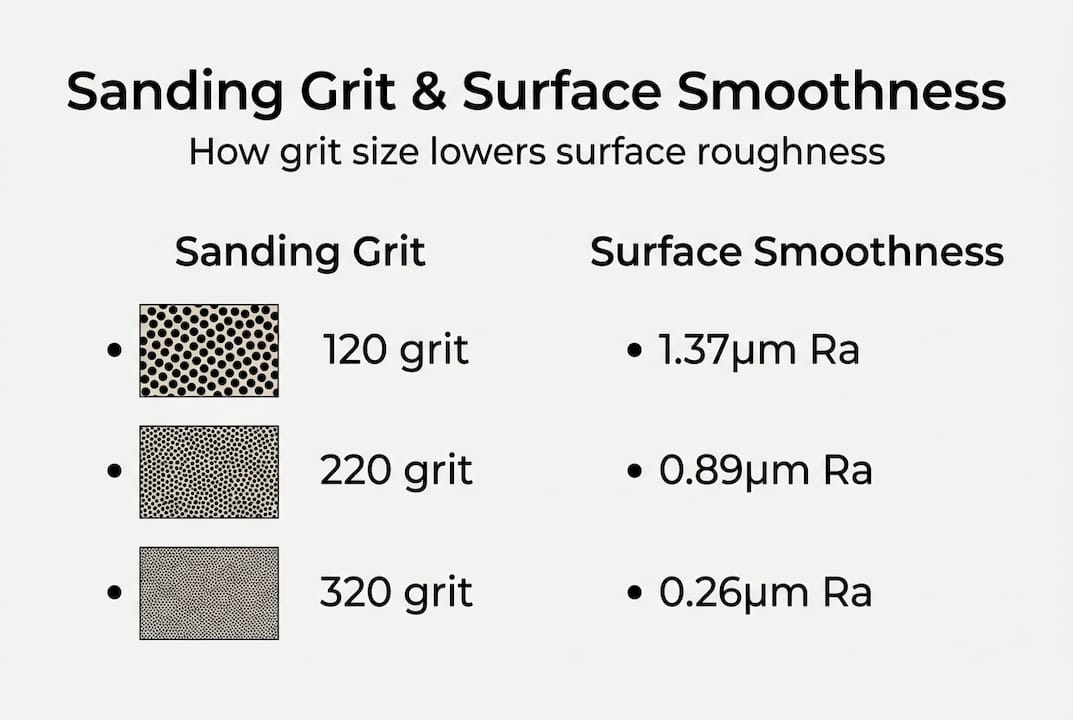
| Grit | Ra (µm) | Best use |
|---|---|---|
| 120 | 1.37 | Initial smoothing, shaping |
| 220 | 0.89 | Pre-finish prep |
| 400 | 0.54 | Between finish coats |
| 1000 | 0.26 | Final polish, ultra-smooth finish |
For most furniture projects, you will not need to go beyond 320 grit before applying your first coat of finish. Going finer than that can actually close the grain too much, reducing how well oil-based finishes penetrate. For water-based finishes, 220 grit is often the sweet spot.
Learning best sanding techniques also means knowing when to stop. Over-sanding with fine grits on softwoods can burnish the surface, which looks smooth but actually repels stain. Pair your sanding knowledge with protecting wood with finishing to get the full picture of how surface prep and finish selection work together.
Pro Tip: Always sand with the grain, never across it. Cross-grain scratches catch light and show through even multiple coats of finish. If you need to remove material quickly, go coarser rather than changing direction.
Sanding for different woods: What you must know
Not all wood responds the same way to sandpaper. The species, density, and any prior treatment all change how you should approach the sanding sequence. Getting this wrong means either over-sanding and burnishing or under-sanding and leaving visible scratches.
Here is how three common wood types compare:
| Wood type | Density | Starting grit | Finishing grit | Notes |
|---|---|---|---|---|
| Oak (hardwood) | High | 100 | 220 | Prominent grain, accepts stain well |
| Pine (softwood) | Low | 120 | 180 | Prone to burnishing, use light pressure |
| Thermally modified | Variable | 120 | 320+ | Can get rougher post-sanding |
Hardwoods like oak and maple are dense, so they can handle more pressure and benefit from starting at 100 grit to cut through the surface efficiently. Softwoods like pine are much more forgiving of the blade but much less forgiving of technique. Too much pressure or too fine a grit too early and you burnish the surface, sealing the pores and blocking stain absorption.
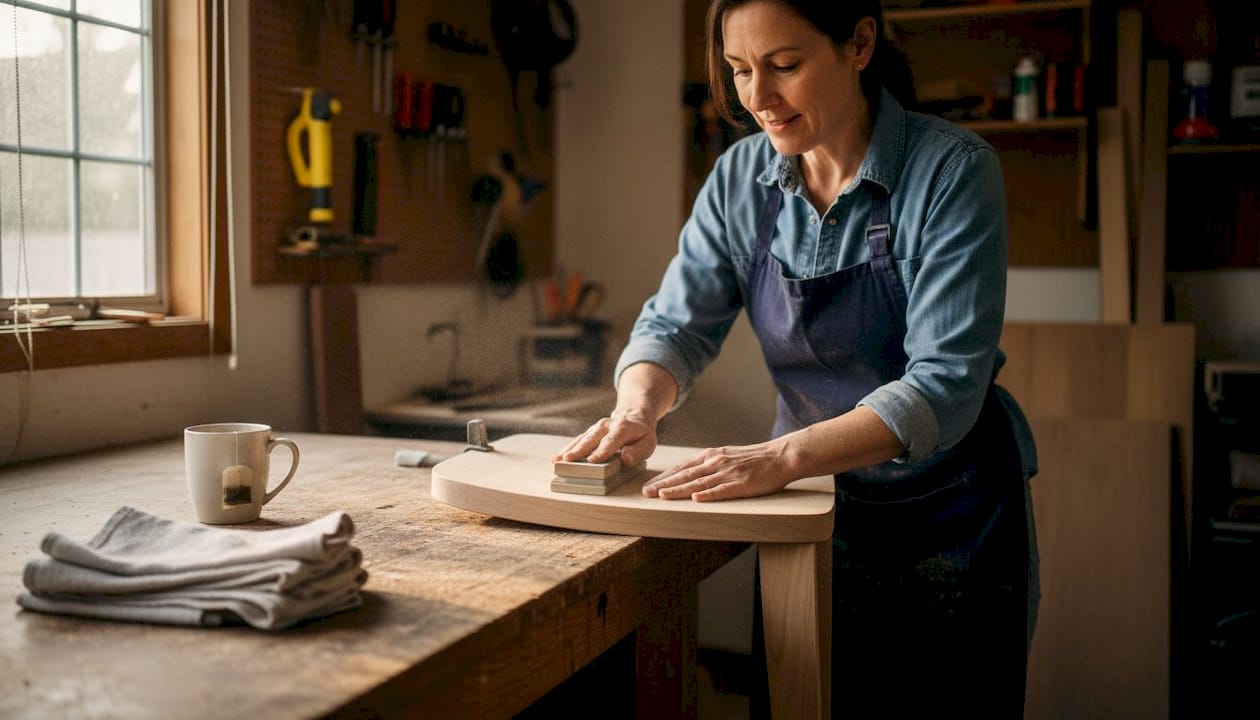
Thermally modified wood is a special case. Thermal modification increases roughness post-sanding in some species, which means you may need to go finer than expected to achieve the same smoothness you would get from untreated wood. This surprises a lot of woodworkers who assume modified wood behaves like standard lumber.
Here is a simple process for adapting your sanding to the wood type:
- Identify the species and look up its Janka hardness rating to gauge density
- Choose your starting grit based on how much material needs to be removed and how hard the wood is
- Apply consistent, light pressure and let the abrasive do the work
- Check the surface under raking light after each grit to confirm scratches are gone before moving up
- Adjust your sequence if the wood responds unexpectedly, such as closing up or getting rougher
Understanding wood types and durability helps you make smarter decisions before you even pick up the sandpaper. And if you are not sure whether your lumber qualifies as furniture grade wood, that distinction matters for how you approach the entire sanding sequence.
Pro Tip: Always test your sanding sequence on a scrap piece of the same wood before committing to the full project. Five minutes of testing can save you hours of regret.
Steps for flawless sanding: From prep to perfect finish
Knowing the theory is one thing. Having a reliable workflow is what actually gets you consistent results. The following sequence works for most furniture projects and can be adapted based on what you learned in the previous sections.
- Inspect the raw surface under a bright light or raking lamp to identify mill marks, scratches, and any raised grain
- Start with the appropriate coarse grit (usually 100 to 120) and work the entire surface evenly, always moving with the grain
- Remove all dust with a tack cloth or vacuum before moving to the next grit
- Progress through grits without skipping more than one step at a time. Jumping from 80 to 220 leaves 80-grit scratches that 220 cannot fully remove
- Sand edges and corners carefully using a sanding block to maintain flat, consistent contact and avoid rounding over sharp lines
- Final inspection: Run your hand across the surface with your eyes closed. You will feel imperfections your eyes miss
- Wipe down with a damp cloth to raise the grain slightly, let it dry, then do a final light pass with your finest grit before finishing
Dust removal between grits is one of the most skipped steps and one of the most important. Leftover coarse grit particles sitting on the surface act like sandpaper themselves, dragging across the wood and creating new scratches as you move to a finer grit. Surface preparation is essential before finishing for both durability and visual appeal.
Here is a quick checklist before you apply any finish:
- No visible scratches under raking light
- Surface feels uniformly smooth to the touch
- All edges are consistent, not rounded or uneven
- Wood is completely dust-free
- Grain is raised and re-sanded if water-based finish will be used
Building these habits early makes a real difference. If you are just getting started, reviewing basic sanding skills and beginner woodworking tips will give you a strong foundation to build from.
A fresh take: Why sanding is the overlooked art of furniture making
Here is something most guides will not tell you. Sanding is not the boring part. It is the moment the piece becomes what it is supposed to be. Every other step, the cutting, the joinery, the assembly, builds the structure. Sanding reveals it.
We have seen countless projects where the woodworking itself was excellent but the piece looked amateurish because the maker rushed through surface prep. And we have seen simple, basic designs that looked absolutely stunning because someone took the time to sand properly and finish thoughtfully. The difference is not talent. It is patience and attention.
The conventional wisdom is that sanding is a means to an end. We think that is backwards. Sanding is where you develop your eye for detail, your feel for the material, and your standard for what counts as good enough. Those habits carry over into every other part of your work.
If you want your furniture to reflect real craftsmanship in woodworking, start by treating sanding as a skill worth mastering, not a box to check. The makers whose work you admire most are almost always the ones who sand the longest.
Level up your DIY with expert plans and resources
Mastering sanding is a turning point in your woodworking journey. Once you see how much surface prep changes the final result, you start approaching every project with more intention and confidence.

The next step is putting that skill to work on projects worth the effort. At realwoodworkplans.com, you will find detailed DIY project ideas designed for makers at every level, from first-time builders to experienced craftspeople. Each plan walks you through material selection, joinery, and finishing so nothing gets left to guesswork. Beyond the plans themselves, you can explore the DIY woodworking benefits that go well beyond saving money, including the satisfaction of building something that lasts.
Frequently asked questions
What grit sandpaper should I use for finishing wood furniture?
Start with 120 grit for initial shaping and smoothing, then progress through 180 and 220 grit, finishing at 220 to 320 grit for a clean, pre-finish surface. Finer grits reduce roughness significantly, so skipping steps leaves scratches behind.
How does sanding impact stain and finish durability?
Proper sanding opens the wood grain and creates a uniform surface that helps finishes bond tightly, which directly improves wear resistance and longevity. Surface preparation is one of the strongest predictors of how long a finish holds up under daily use.
Should I sand between coats of finish?
Yes. A light pass with 320 to 400 grit between coats removes dust nibs and levels any raised grain, giving each new coat a clean surface to adhere to and producing a noticeably smoother final result.
Do all wood types require the same sanding technique?
No. Hardwoods tolerate more pressure and benefit from starting at 100 grit, while softwoods need lighter pressure to avoid burnishing. Thermally modified wood can actually get rougher after sanding, requiring a finer finishing grit than standard lumber.
Recommended
- Master sanding in woodworking for flawless finishes
- Finishing wood explained: techniques and tips for DIY projects
- Why Finish Wood: Protecting and Enhancing Projects
- What is furniture grade wood? A DIY guide for quality
- Finishing Supplies: Brushes & Wood Finishing Materials

“DIY woodworking enthusiast who started with zero experience and a YouTube tutorial.
I build simple, practical projects for my home and share free plans
so other beginners can skip the guesswork.If I can build it, you can too.”