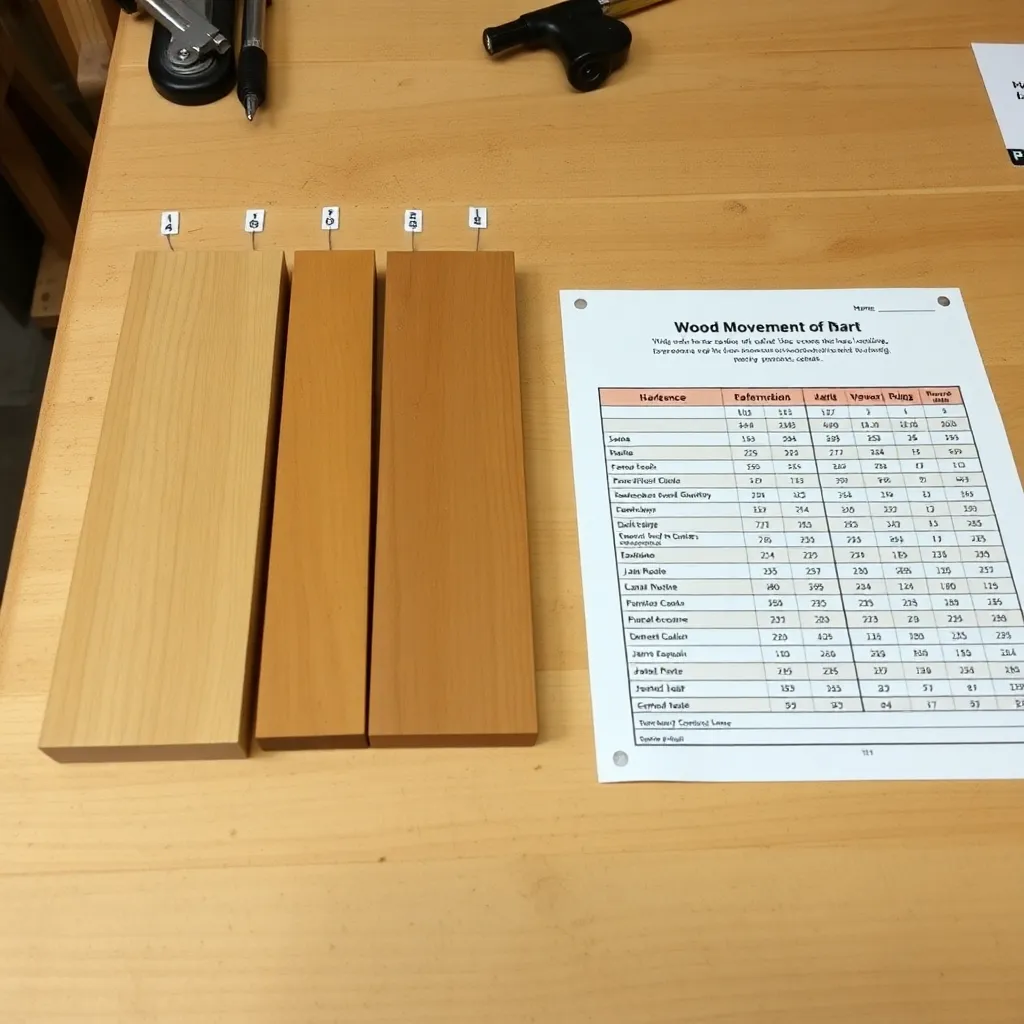
Every wood species has a measurable set of physical characteristics that predict how it will perform in a build. Janka hardness tells you how much the surface resists denting. Wood movement ratings tell you how much a panel will expand in summer and contract in winter. Workability ratings tell you how well the species responds to cutting, planing, and routing. Understanding these characteristics lets you select the right species for each application and avoid the most common material mistakes.
Ted’s Woodworking has complete project plans with species recommendations matched to each build’s requirements. Browse Ted’s plans →
Step 1: Understand the Janka Hardness Scale
Goal: Read and apply Janka hardness ratings to furniture and project material decisions.
The Janka hardness test measures the force required to embed a steel ball (0.444 inches diameter) to half its diameter into the wood surface. The result in pound-force (lbf) is the Janka rating. Higher = harder.
Reference points:
Practical application: Janka rating correlates with dent resistance on tabletops and flooring. For a dining table that will see daily use: choose a species above 1000 lbf. For a decorative side table: any furniture hardwood is adequate.
Milestone: Look up the Janka rating of a species you use regularly and compare it to hard maple (1450 lbf) as a reference.
Step 2: Understand Wood Movement
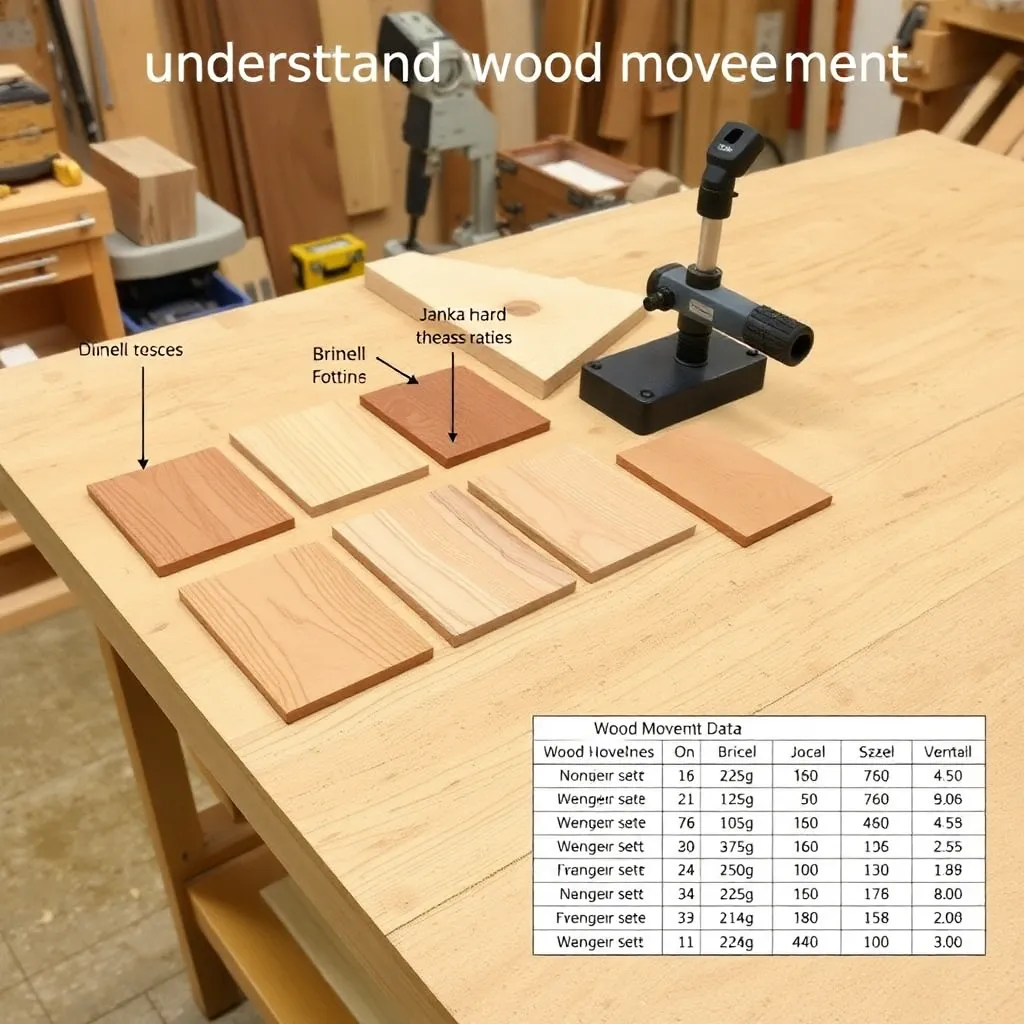
Goal: Calculate expected seasonal movement for common species and design panels accordingly.
Wood expands when humidity rises and contracts when humidity drops. This movement is across the grain (width and thickness), never along the grain (length). Two movement values matter:
Quartersawn lumber moves roughly half as much as flat-sawn lumber — this is why quartersawn boards are preferred for wide panels and door frames.
Approximate flat-sawn movement for common species (per inch of width, 4% humidity change):
Example: a 12-inch wide flat-sawn red oak tabletop in a home where humidity swings 20% seasonally: 12 × 0.01 × 5 = 0.60 inches of movement. The table joints must accommodate ⅝-inch movement.
Milestone: Calculate expected seasonal movement for a 14-inch wide walnut panel in your climate (estimate seasonal humidity swing).
Step 3: Assess Workability
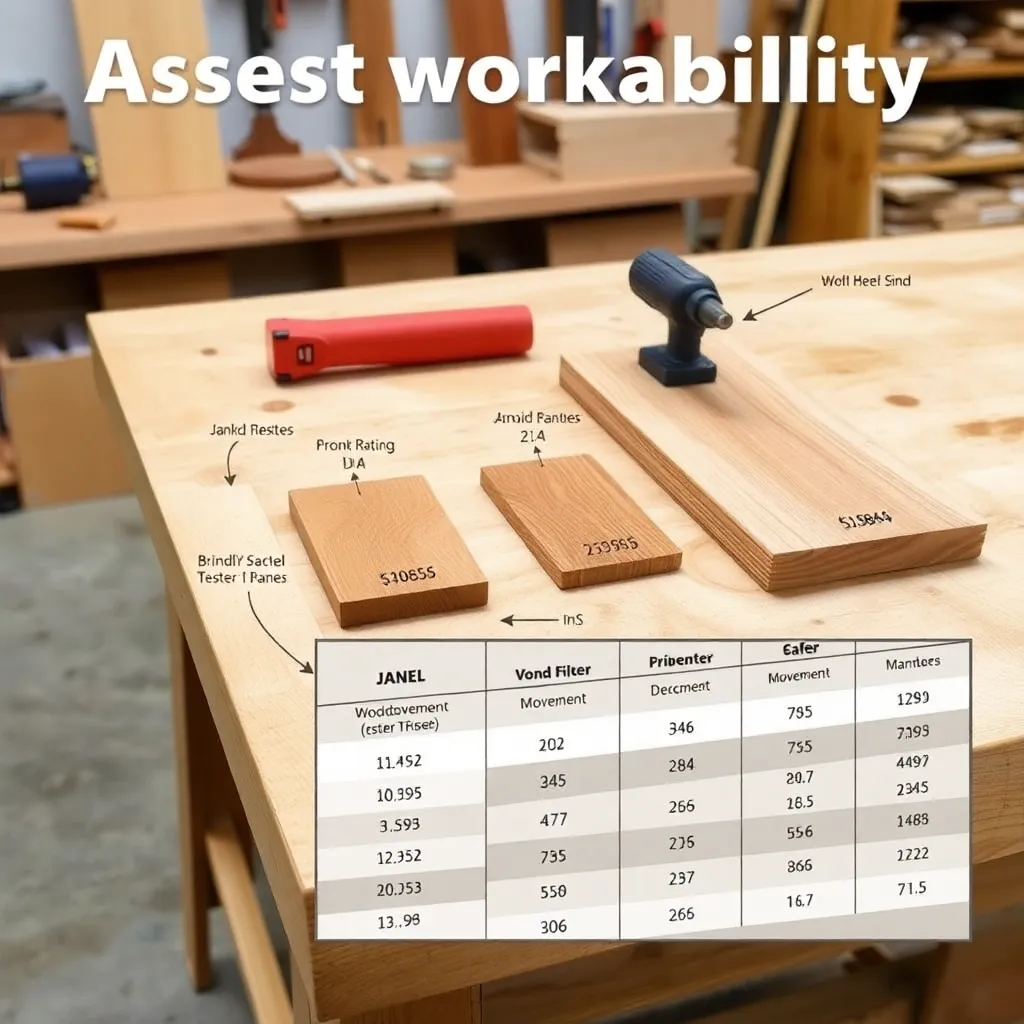
Goal: Understand the workability characteristics that affect shop experience and result quality.
Workability encompasses five sub-properties:
Sawing: most species saw without issue. Very hard species (hard maple, hickory) dull blades faster. Resinous species (pine, teak) gum up blades. Green (wet) wood saws more easily than dry but moves after cutting.
Planing and jointing: the critical factor is grain direction. Species with straight grain (poplar, cherry, mahogany) plane cleanly in either direction. Species with interlocked grain (mahogany, sapele) tearout in one direction — must plane with the grain. Very hard species (hard maple) require very sharp, thin-set plane irons.
Routing and shaping: most species rout cleanly with sharp carbide bits. Open-grain species (oak, ash) show tearout on router profiles — take multiple light passes approaching final depth. Very hard species require slower feed rates.
Sanding: hardness correlates with sanding time (harder species take longer to flatten). Open-grain species clog sandpaper faster than closed-grain. Sand in sequence (80→120→150→180 for most furniture work).
Gluing: all common furniture species glue well with PVA (yellow woodworking glue). Exceptions: teak and rosewood contain oils that interfere with glue adhesion — wipe the joint surface with acetone immediately before gluing.
Milestone: Mill a board of a species you’ve never worked before and note one characteristic (grain tearout direction, hardness, smell) that’s different from your usual species.
Step 4: Understand Finishing Behavior
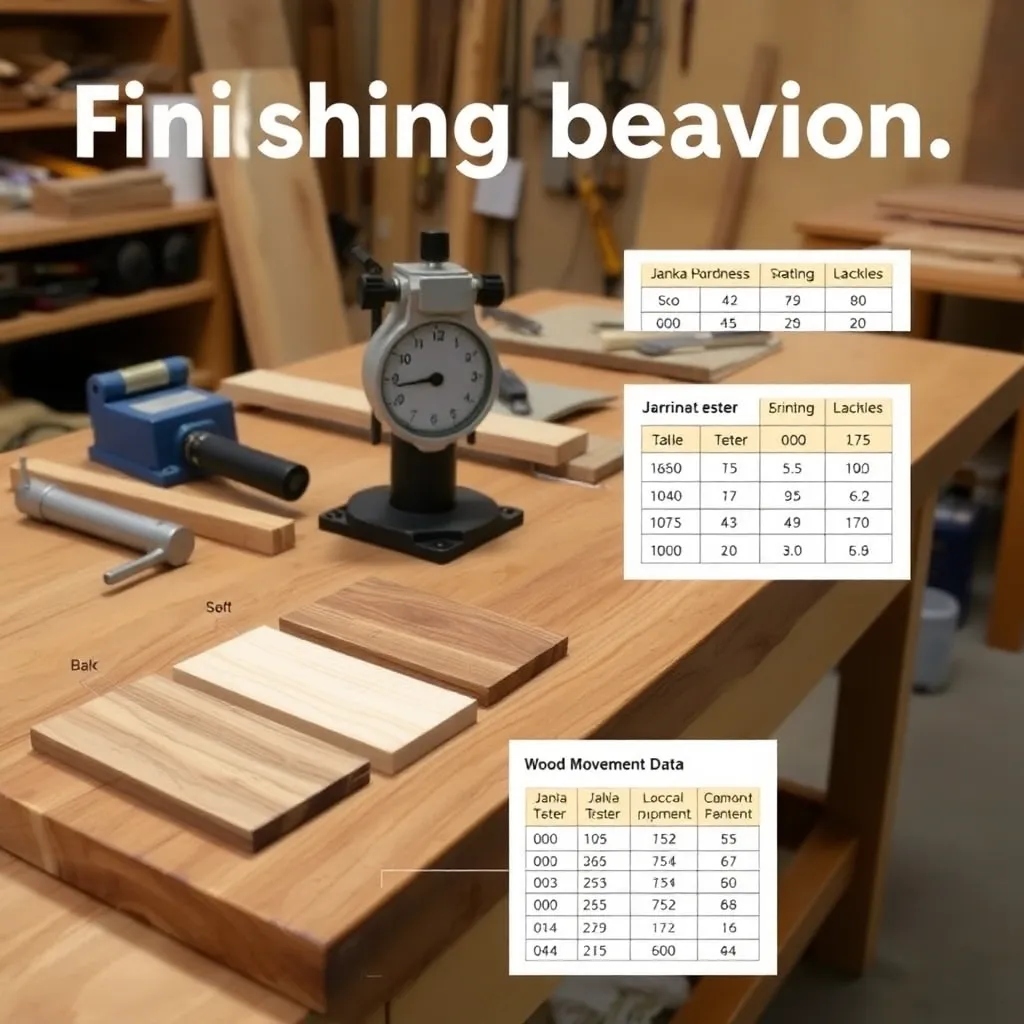
Goal: Predict finishing challenges for any species based on its grain and chemistry.
Blotching: closed-grain species with irregular density (cherry, pine, birch, maple) absorb stain unevenly — some areas absorb more, producing dark blotches. Prevention: apply a pre-conditioner (water-based) or shellac wash coat before staining; use gel stain (which sits on the surface rather than penetrating); or skip stain and use a natural finish.
Grain raising: water-based finishes raise the grain (small fibers stand up) on first application. Prevention: pre-raise the grain by wiping the surface with a damp cloth, allowing to dry, then sanding with 180–220 grit before applying any finish.
Pore filling: open-grain species (oak, ash, walnut) show pore texture through most finishes. For a perfectly smooth surface: apply a paste grain filler (tinted to match) before finishing. For a natural feel where pore texture is acceptable: skip filling and apply oil finish directly.
Tannin reactions: high-tannin species (oak, chestnut, redwood) react with iron — rust stains form when iron (from fasteners or tools left on the surface) contacts the tannic acid. Use stainless steel fasteners and brass hardware with high-tannin species.
Milestone: Test your standard finish on an offcut of a new species before applying it to the project — check for blotching, grain raising, and color shift.
Step 5: Match Species Characteristics to Applications
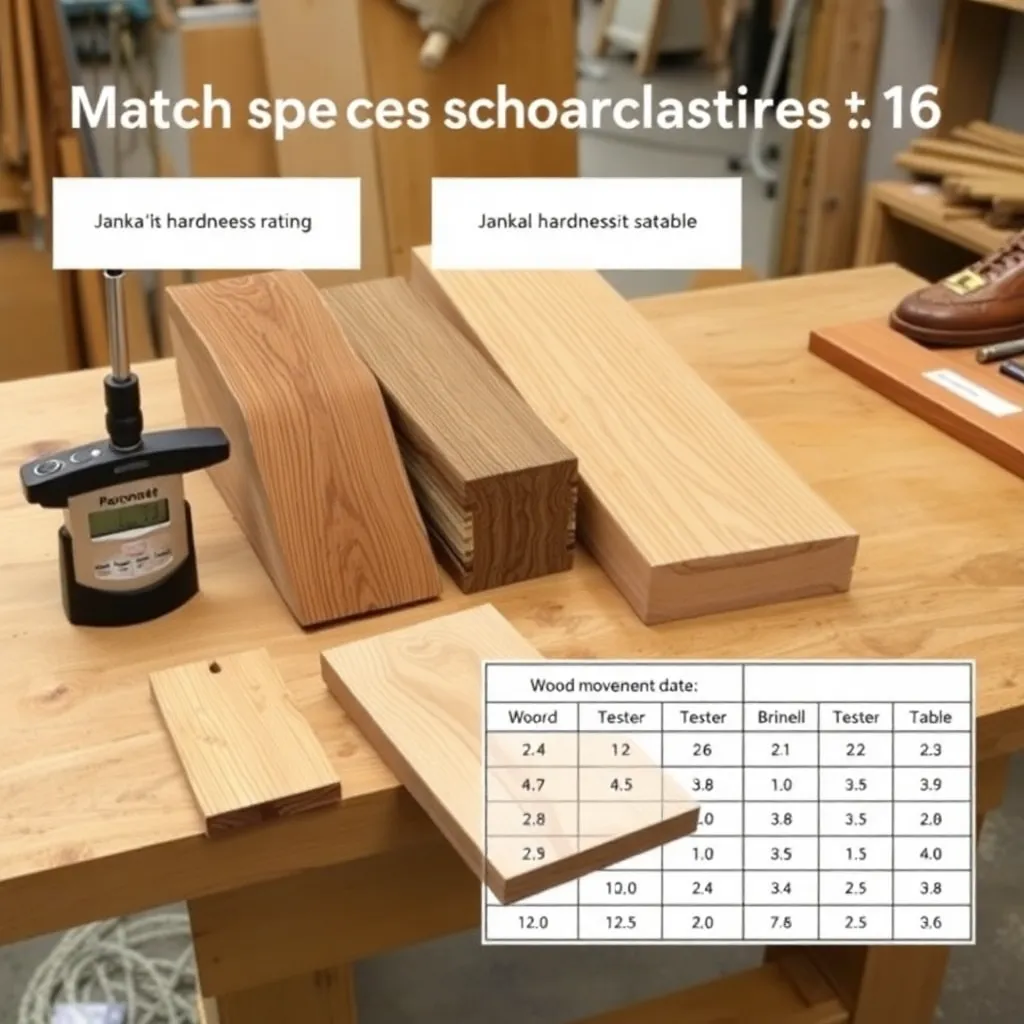
Goal: Build a species selection framework for the most common woodworking applications.
| Application | Critical Characteristic | Best Species |
|---|---|---|
| Cutting board | Hardness + food-safe | Hard maple, end-grain walnut |
| Workbench top | Hardness + flatness | Hard maple, Douglas fir (laminated) |
| Dining tabletop | Hardness + stability | White oak, hard maple, cherry |
| Cabinet doors | Stability (no movement) | Quartersawn white oak, cherry |
| Outdoor furniture | Decay resistance | Teak, cedar, ipe, white oak |
| Turned bowl | Density + even grain | Cherry, hard maple, walnut |
| Carved figure | Soft + even grain | Basswood, butternut, white pine |
| Bent-wood parts | Steam-bending ability | White ash, white oak, hickory |
| Painted furniture | Surface smoothness | Poplar, soft maple |
Milestone: For three projects you want to build, select a species using the framework above and verify the choice against the Janka and movement data from Steps 1 and 2.
Step 6: Build a Personal Species Reference
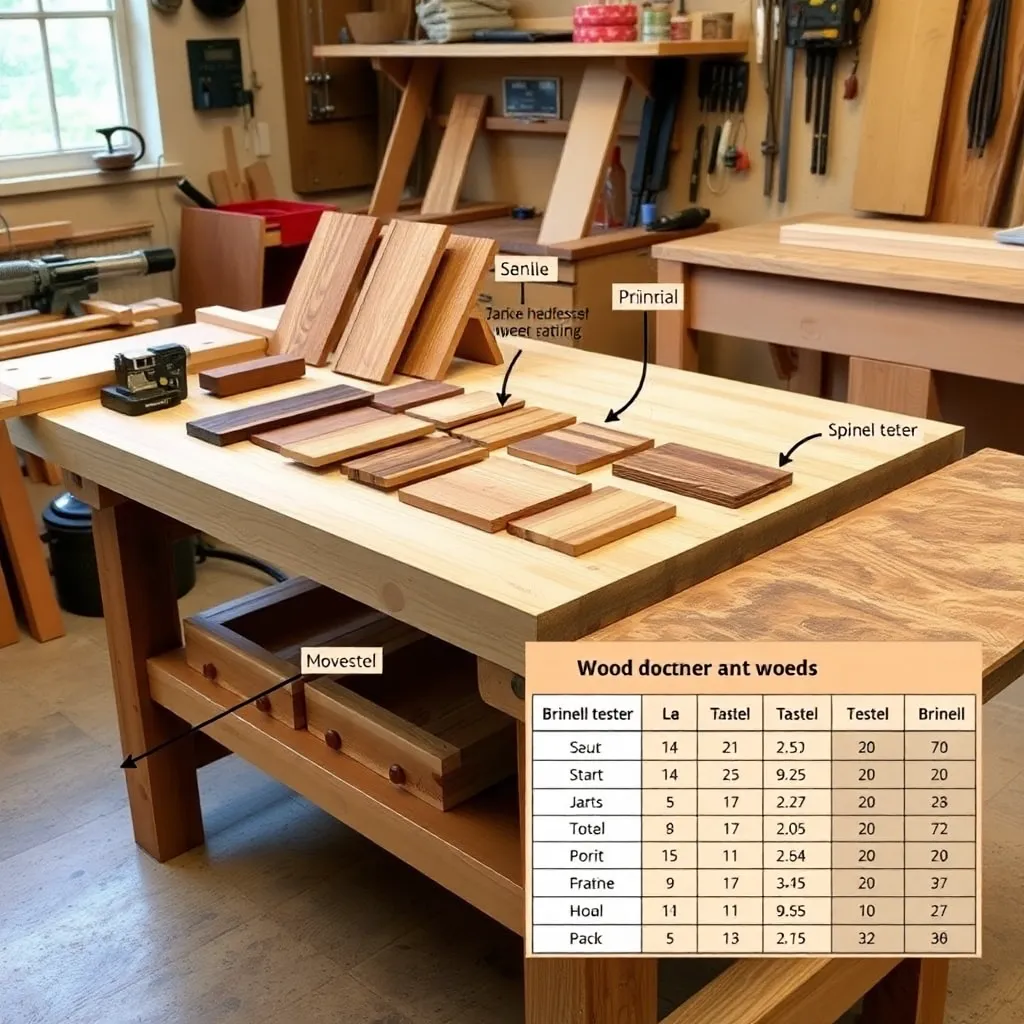
Goal: Create a working reference of the species you use most, with their key characteristics noted.
For each species in your regular rotation, record:
Over time this becomes a personal reference tuned to your shop, your tools, and your suppliers. The most useful data point that published references don’t capture: how the specific boards from your supplier actually behave — mill quality, drying quality, and handling affect workability more than species alone.
Milestone: Create a one-page reference card for your 5 most-used species.
Wood Species Characteristics FAQ
What does Janka hardness mean for everyday woodworking?
Janka hardness predicts dent resistance and tool wear. A species with Janka 800 lbf will dent more easily under impact than one with Janka 1450 lbf — relevant for tabletops, workbench tops, and flooring. For tool wear: harder species dull cutting edges faster (especially relevant for hand tools and router bits). For most home woodworkers: species between 900 and 1450 lbf (cherry to hard maple) represent the practical range. Below 900 lbf (poplar, pine): the surface dents easily with normal use. Above 1450 lbf (hickory, ipe): tools dull noticeably faster and the wood is physically harder to cut.
Which wood moves the least seasonally?
The most dimensionally stable common species: teak (approximately 0.40% movement per inch width per 4% humidity change), Honduras mahogany (0.41%), western red cedar (0.30%), and black locust (low movement). For practical furniture work in climates with moderate humidity swings: mahogany or teak for the most stable wide panels. Cherry and walnut are moderately stable (0.71–0.78%) — stable enough for most furniture if the joinery accommodates movement. Red oak and beech are the most unstable common furniture species — wide panels must have well-designed floating joints to avoid cracking.
Why does wood grain direction matter for planing?
Wood fibers grow in a specific direction along the length of a board. Planing “with the grain” means the cutting edge travels in the direction the fibers are angling toward the surface — the fibers are sheared cleanly. Planing “against the grain” means the cutting edge travels in the direction the fibers are angling away from the surface — the cutting edge levers up the fibers instead of shearing them, causing tearout (a ragged surface where fibers are torn out rather than cut). The rule: look at the edge of the board and plane in the direction the grain lines slope upward. For interlocked grain (mahogany, sapele): alternate direction and take very light passes with a well-tuned plane.
Does harder wood make stronger furniture?
Hardness and structural strength are related but not identical. Harder wood resists denting (important for tabletop and floor surfaces) but doesn’t necessarily mean stronger joints. The structural strength of furniture joints depends on: (1) the shear strength of the wood (resistance to forces along the grain), (2) the surface area of the joint, and (3) the quality of the glue bond. Cherry (950 lbf) makes furniture joints as strong as or stronger than red oak (1290 lbf) because cherry’s closed grain provides a better glue surface. For load-bearing structural members (workbench legs, chair legs under a heavy user): choose a species with high compressive strength — white oak, hickory, and hard maple all perform well.

“DIY woodworking enthusiast who started with zero experience and a YouTube tutorial.
I build simple, practical projects for my home and share free plans
so other beginners can skip the guesswork.If I can build it, you can too.”