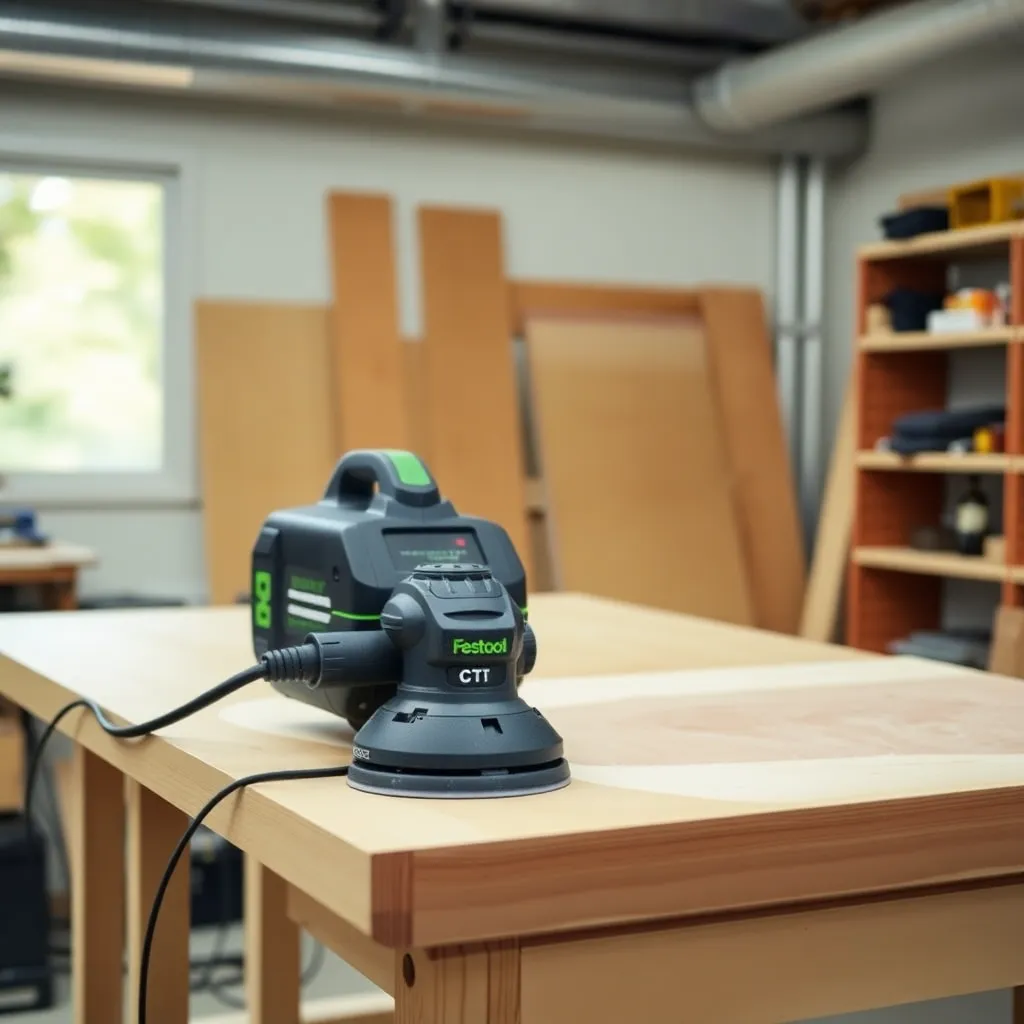
A dust extractor is the premium portable dust collection solution for woodworking — purpose-built for continuous fine-dust capture with HEPA filtration, automatic filter cleaning, and tool-triggered power. Where a shop vac is a general utility tool adapted for dust collection, a dust extractor is engineered from the ground up for the most hazardous dust in the shop: the fine particles from sanding, routing, and finish work that a standard shop vac filter doesn’t capture.
Ted’s Woodworking has 16,000+ woodworking plans including shop setup guides. Browse Ted’s plans →
This guide is part of our complete Shop Layout and Dust Collection: Plan Your Workshop for Efficiency — covering workshop layout, dust collection systems, and shop organization.
Step 1: Understand What Makes a Dust Extractor Different
Goal: Know the key differences between a dust extractor and a standard shop vac.
HEPA filtration: true HEPA filters capture 99.97% of particles at 0.3 microns — the most penetrating particle size for respiratory hazards. Standard shop vac filters (even “HEPA-style” or “fine dust” marketed filters) typically capture particles down to 1–5 microns at 95–98% efficiency — not true HEPA. For fine sanding dust, which peaks in the 1–5 micron range, the difference between a true HEPA filter and a standard filter matters for health protection.
Auto-clean filter (pulse clean): professional dust extractors have an automatic filter cleaning mechanism — a burst of air pulse-cleans the filter at set intervals, maintaining suction throughout a long sanding session. Standard shop vacs clog progressively, losing suction as the filter fills. For production sanding or long sessions, this matters.
Tool-triggered power: a dust extractor’s power outlet starts the extractor automatically when the connected tool is powered on, and runs for a few seconds after the tool stops to clear the hose. This keeps the extractor running exactly when needed without requiring a separate switch.
Continuous duty rating: dust extractors are rated for continuous operation (8+ hours). Many shop vacs are not rated for continuous use and can overheat with extended fine-dust sanding sessions.
Milestone: Compare the filter specs on your current shop vac (filtration micron rating and capture efficiency) against true HEPA specs.
Step 2: Milwaukee M18 FUEL Dust Extractor — Best Cordless
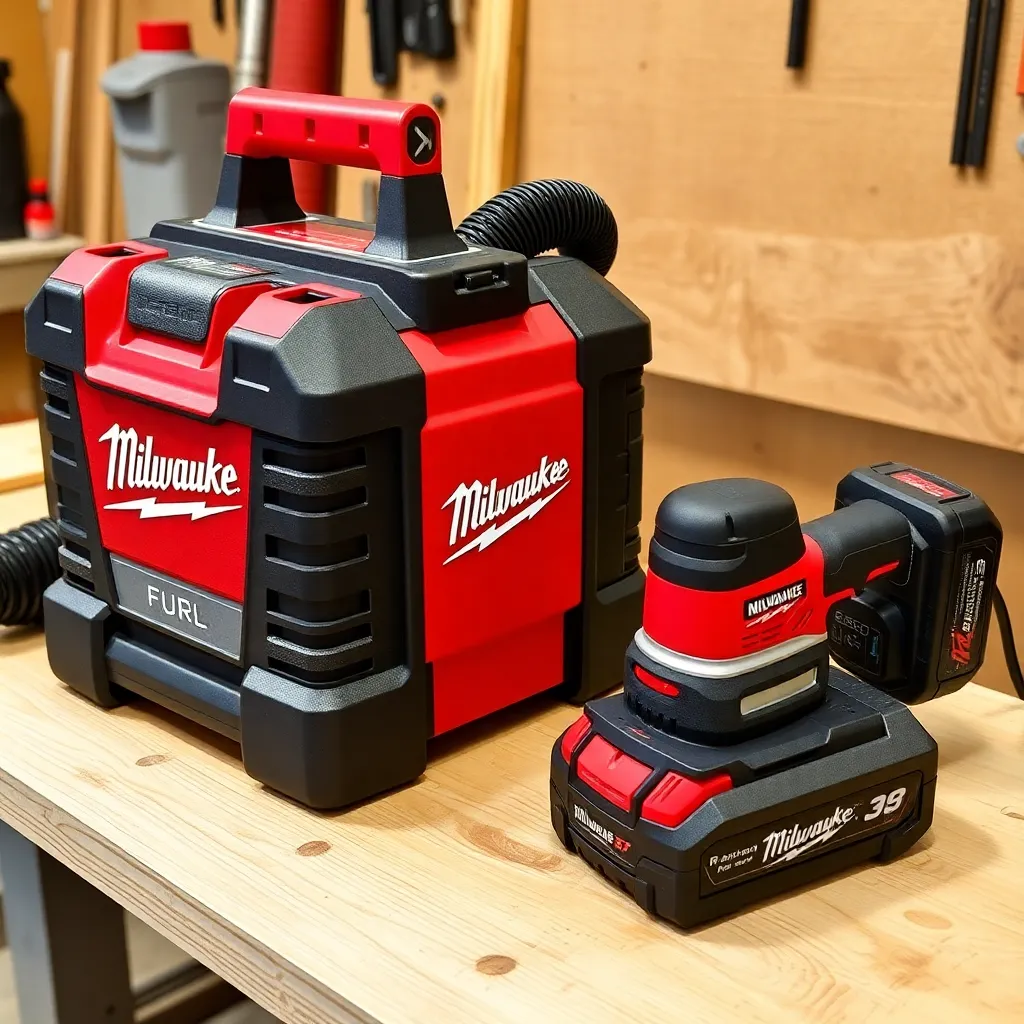
Goal: Evaluate the Milwaukee M18 FUEL as the leading cordless dust extractor option.
The Milwaukee M18 FUEL dust extractor (model 0885-20) is the benchmark cordless dust extractor — powerful enough for sustained sanding sessions, genuinely portable without a cord, and compatible with the M18 battery ecosystem most contractors already own.
Specs:
- Suction: 57 CFM, 68″ water lift
- Filter: true HEPA (99.97% at 0.3 microns)
- Capacity: 2.5 gallons
- Auto-clean filter: yes (REDLINK intelligence pulse-cleans)
- Tool activation: Bluetooth tool triggering with M18 tools
- Weight: 9.6 lbs (without battery)
- Battery: M18 REDLITHIUM (8.0 Ah recommended for full sessions)
Best uses: job site sanding, finish carpentry, on-site routing and trim work, any application where running a power cord to a dust extractor is impractical. In the shop, it excels for random orbital sanding and detail work where you’re moving frequently.
Limitation: cordless means battery management. A 8.0 Ah battery provides approximately 45–60 minutes of continuous sanding extraction. For shop sessions longer than an hour, keep a spare battery charged or consider the corded Festool.
Cost: extractor body $300–$350; add $150–$200 for an 8.0 Ah battery if not already in the M18 ecosystem.
Milestone: If you already own M18 tools, the body-only purchase makes the Milwaukee extractor the most cost-effective premium option.
Step 3: Festool CT Extractors — Professional Standard
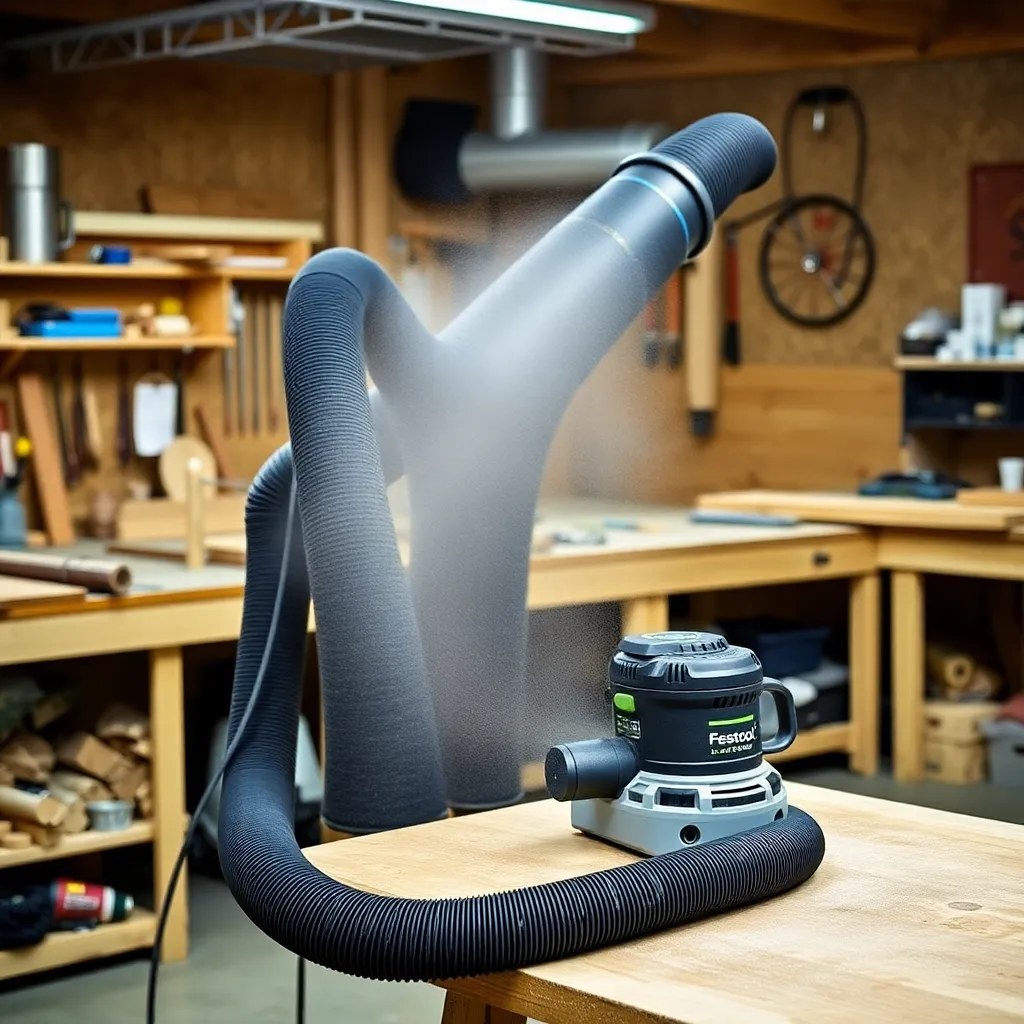
Goal: Evaluate Festool CT series as the reference-standard corded dust extractor.
Festool CT extractors are the professional benchmark — used by cabinet shops, finish carpenters, and serious woodworkers worldwide. The CT series ranges from the CT 15 (1.5 gallons, compact) to the CT 48 (12.7 gallons, for production environments). For most woodworkers, the CT 26 or CT 36 is the practical choice.
CT 26 specs:
- Suction: 68 CFM, 83″ water lift
- Filter: HEPA (99.9995% at 0.3 microns — beyond standard HEPA)
- Capacity: 6.9 gallons
- Auto-clean: yes (AUTOCLEAN pulse cleaning)
- Tool activation: yes (plug-in tool trigger)
- Bluetooth: optional with CT-F MIDI models
CT 36 specs: same filtration and features, 9.5-gallon capacity — better for longer sessions before emptying.
Festool’s ecosystem advantage: Festool sanders, routers, and track saws are designed with matching hose connectors that seal perfectly to CT extractors. The integrated design produces better dust capture than non-matched combinations. If you use Festool tools, Festool extractors are the natural companion.
Cost: CT 26: $550–$600; CT 36: $600–$650. Premium pricing, but the filtration quality, continuous-duty rating, and build quality justify the investment for serious shop use.
Milestone: If you do fine finishing work (applying oil finishes, lacquer, or water-based finishes) in the shop, the Festool CT’s superior filtration keeps the shop air clean enough that finishing quality improves.
Step 4: Mid-Range Options — Bosch and Makita
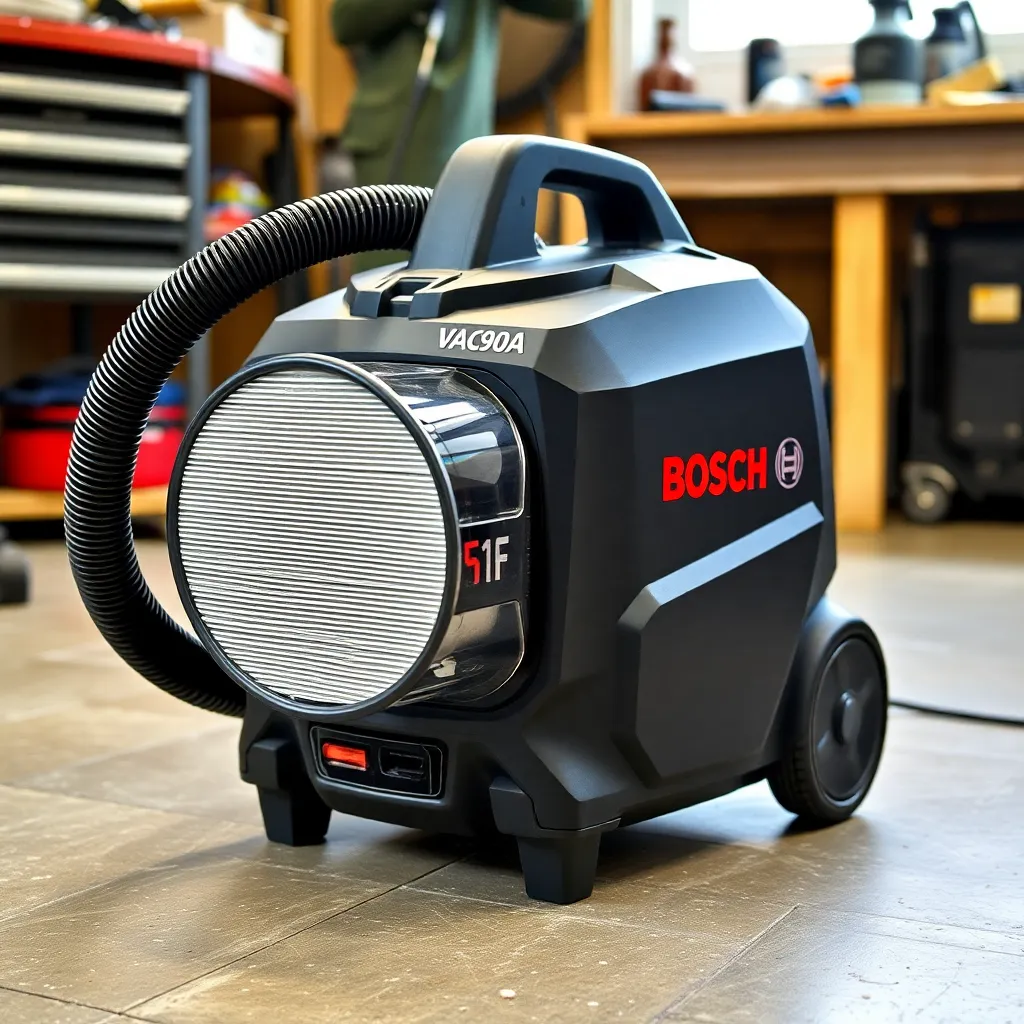
Goal: Evaluate mid-range dust extractors for the woodworker who wants better than a shop vac without the Festool price.
Bosch VAC090A (9-gallon, corded):
- 150 CFM suction (higher than most extractors — Bosch prioritizes airflow over suction depth)
- HEPA filter
- Auto-filter cleaning
- Tool-triggered power
- Cost: $200–$250
The Bosch VAC090A is the best value in the mid-range — true HEPA, auto-clean, tool trigger, and adequate CFM for all portable tool dust extraction. The 9-gallon capacity reduces emptying frequency. The main limitation vs Festool: build quality and connector ecosystem.
Makita XCV04Z (cordless, 18V):
- Compatible with Makita 18V/36V LXT batteries
- HEPA filter
- 4-gallon capacity
- Auto start with compatible Makita tools
- Cost: $200–$250 (body only)
For woodworkers already in the Makita ecosystem, the XCV04Z provides cordless HEPA extraction at a competitive price with the Milwaukee M18 FUEL.
Milestone: Identify which battery platform you’re already invested in — the cordless extractor in that platform is usually the best value.
Step 5: Matching the Extractor to the Application
Goal: Select the right extractor for each dust-generating operation.
Random orbital sanding: the highest-priority application — sanding generates the finest, most dangerous dust. Use: any HEPA extractor, connected via the sander’s dust port with a matching hose adapter. Flow: 80–100 CFM is adequate; filtration quality matters more than CFM for sanding.
Detail sanding (5-inch and smaller pads): same requirements as random orbital. Use the same extractor; connection hose may be smaller (1-inch or 27mm adapters common).
Routing: routers generate significant coarse chip alongside fine dust. A router table needs both fence dust extraction and bit-level extraction. Use: an extractor or shop vac with 2.5-inch hose. CFM matters more here — the chips need to move.
Hand sanding: surprisingly effective when connected to an extractor via a sanding block with dust extraction holes (Mirka, Festool, and others make sanding blocks with integrated dust pickup). Mostly used in finishing applications where powered sanding would leave marks.
Miter saw (portable): connect to the miter saw’s dust port with an adapter. A shop vac or mid-range extractor works well — the miter saw generates coarse chips that don’t require HEPA filtration at the extractor (the fine fraction becomes airborne regardless).
Milestone: Identify the three most dust-intensive operations you perform and verify your extractor is correctly connected and filtered for each.
Step 6: Maintenance and Filter Care
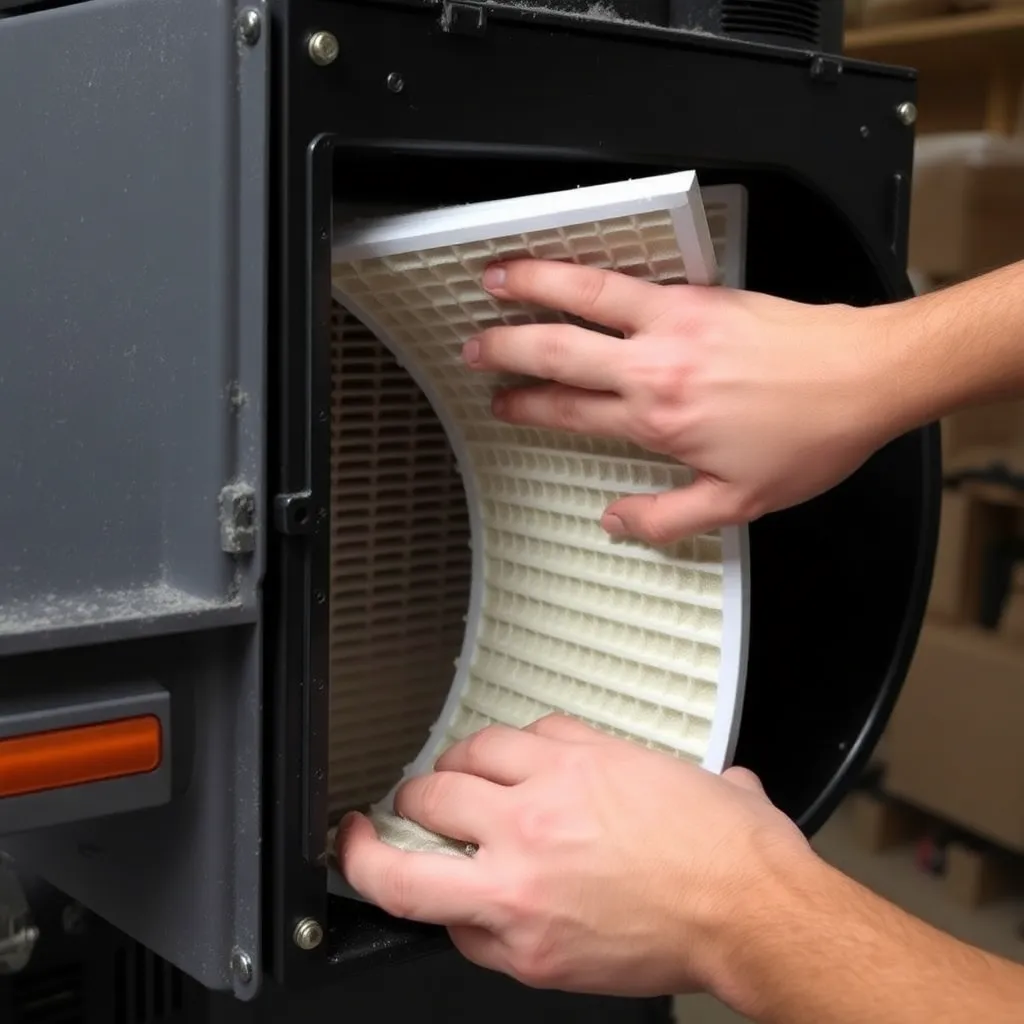
Goal: Maintain extractor performance through proper filter care and emptying procedures.
When to empty: empty the collection bag or container when it reaches 2/3 full — a full container reduces suction and causes fine dust to back up into the filter. For HEPA extractors, emptying into a sealed garbage bag (don’t open the container in the shop — seal the collection bag before removal) prevents re-releasing fine dust.
Filter cleaning: even auto-clean systems benefit from manual filter inspection and occasional cleaning. Tap the filter gently over an outdoor trash can (not in the shop) to dislodge accumulated fine dust. HEPA filters are not washable — replace when suction drops despite a clean bag and clean filter exterior.
Filter replacement interval: a HEPA filter used for moderate sanding (several hours per week) typically lasts 1–3 years depending on use intensity and dust type. Fine MDF dust clogs HEPA filters faster than solid wood sanding dust. Replacement HEPA filters cost $30–$80 depending on brand.
Hose inspection: flexible extraction hoses develop cracks and leaks over time, especially at connection points. A leaking hose reduces suction significantly — inspect connections before each use and replace cracked hose sections.
Milestone: Set a calendar reminder to inspect the HEPA filter every 3 months and replace it if suction has dropped more than 20% from the extractor’s rated performance.
Dust Extractor for Woodworking FAQ
What is the difference between a dust extractor and a dust collector?
A dust extractor is a portable unit — compact, moves with you, designed for hand-held and bench-top tool dust collection with HEPA filtration. A dust collector is a stationary or semi-stationary unit connected via ductwork to stationary machines (table saw, jointer, planer). Most serious shops use both: a dust collector for stationary machines (high CFM required to move chips through ductwork) and a dust extractor for portable sanding and routing work (HEPA filtration required for fine dust health protection). The two systems complement each other — they don’t overlap.
Is a Festool dust extractor worth the price?
For professional use or serious hobbyist woodworkers who prioritize health and finishing quality: yes. The Festool CT’s filtration efficiency (99.9995% vs standard HEPA’s 99.97%), continuous-duty rating, and auto-clean system justify the premium for woodworkers who spend significant time sanding. For occasional sanding in a hobby shop: a mid-range Bosch VAC090A or even a shop vac with upgraded HEPA filter provides adequate protection at a significantly lower price. The honest answer: the health benefit of HEPA filtration is available from the Bosch at $250. The Festool’s additional premium buys build quality, better connector integration, and superior filtration — real benefits, but not essential for every woodworker.
Can I use a dust extractor for my table saw?
A dust extractor is not the right tool for a table saw — the table saw generates too much volume of chips for an extractor’s capacity (2–10 gallon tanks fill quickly during extended ripping sessions) and most extractors don’t have enough CFM to move chips through the cabinet efficiently. Use a dedicated dust collector (1.5 HP, 600+ CFM) for stationary machines. Connect the extractor to the blade guard’s fine-dust port as a supplement if the saw has one — this captures the fine fraction that the collector misses — but the primary connection should be a 4-inch hose to a dust collector.
Do dust extractors work with all sanders?
Most dust extractors work with most sanders using hose adapters — the hose diameter on an extractor (typically 27mm, 36mm, or 1.5 inches) often doesn’t match the sander’s dust port (typically 1/4 inch to 1 inch). A set of universal hose adapters ($10–$20) covers most combinations. Festool tools use Festool’s own connector system and work seamlessly with Festool CT extractors without adapters. Milwaukee M18 tools are designed to work with Milwaukee M18 extractors. For non-matching combinations, the universal adapter approach works well — the slight reduction in sealing vs a matched system has minimal practical impact on dust capture efficiency.

“DIY woodworking enthusiast who started with zero experience and a YouTube tutorial.
I build simple, practical projects for my home and share free plans
so other beginners can skip the guesswork.If I can build it, you can too.”