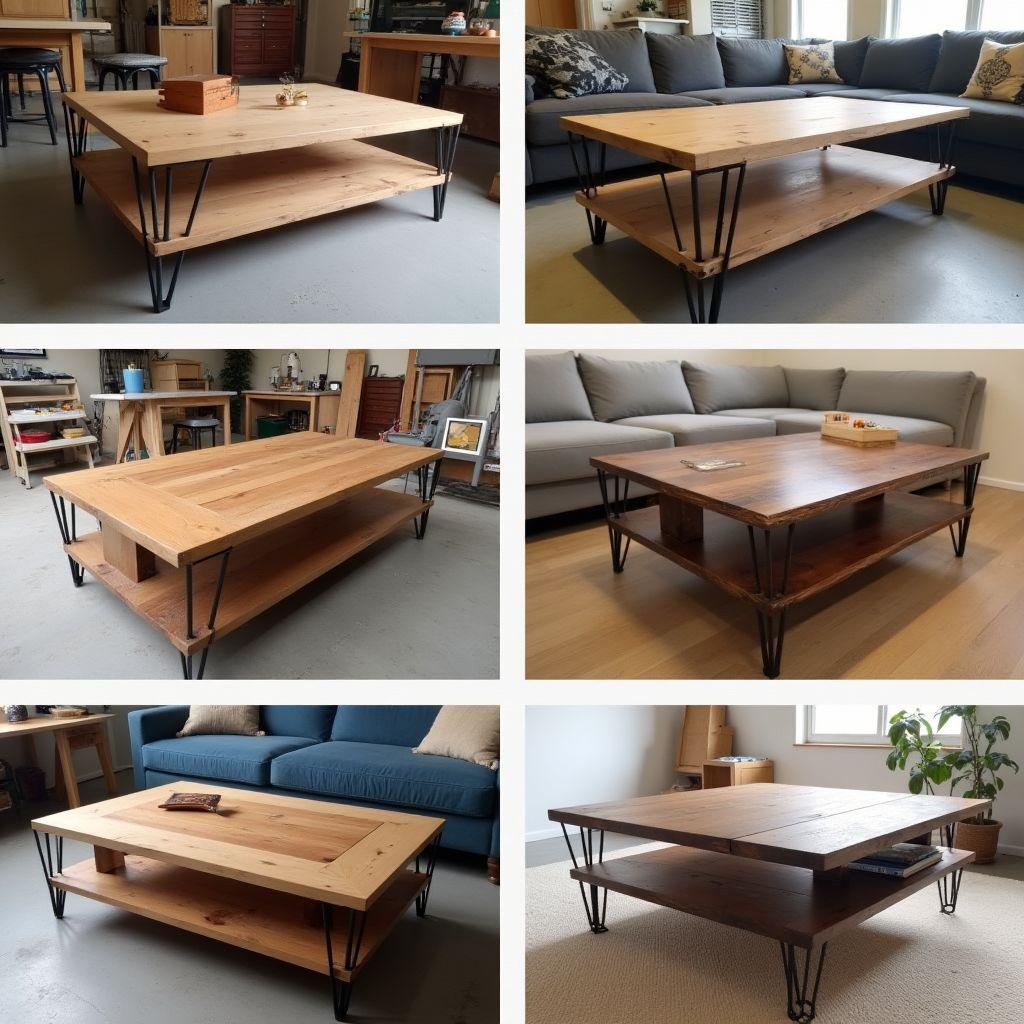
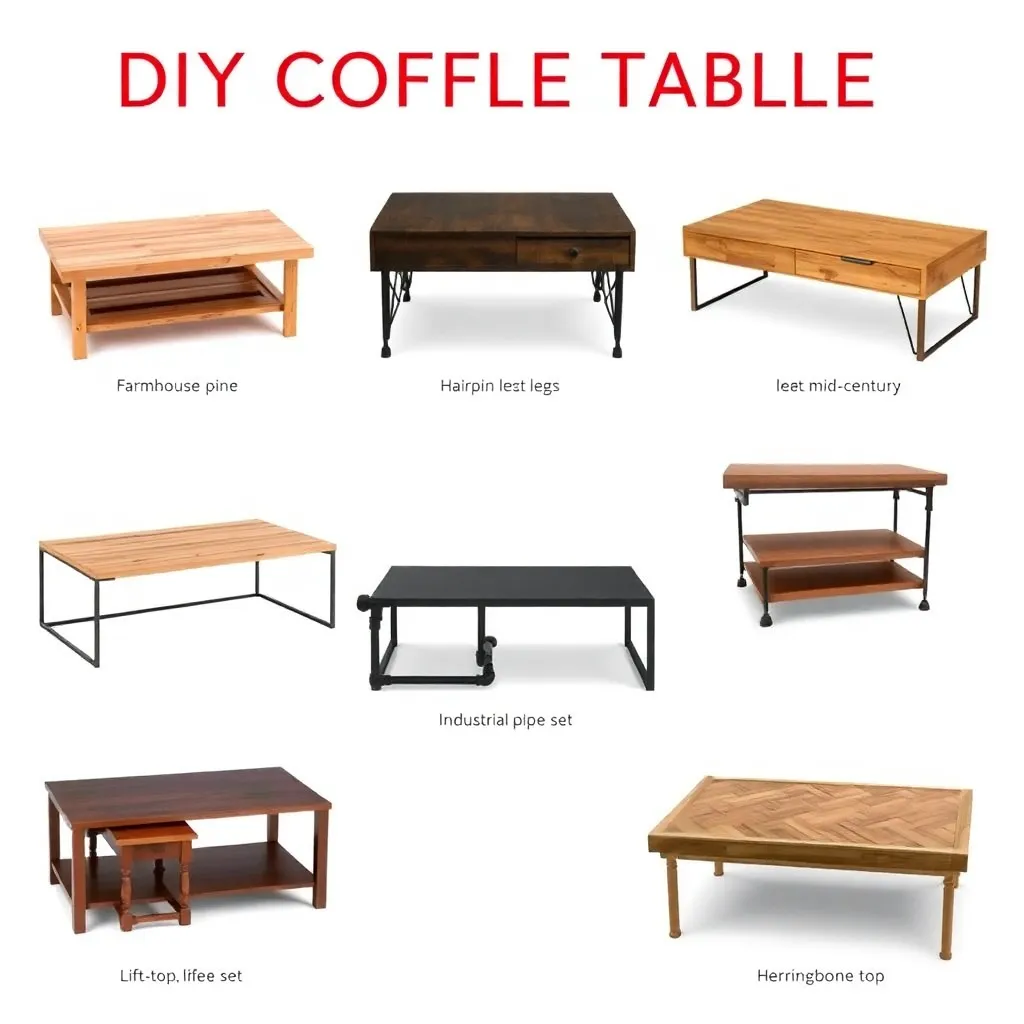
If you have landed here from our coffee table plans hub, this is your full menu of styles. These eight coffee table furniture plans span the whole range, from a beginner farmhouse build you can finish in an afternoon to advanced puzzle and concrete tops that reward real shop experience. This guide is part of our complete woodworking furniture plans library.
Every plan below comes with the same practical details: skill level, materials, a 2026 cost range, the minimum tools you need, and realistic build time. Own only a drill and a circular saw? There is a build here for you. Have a full router-table setup and a stack of walnut? There is a build for you too.
One more thing on cost. Every price on this page reflects current mid-2026 big-box pricing, not stale 2023 figures. Lumber has moved, and we account for it. You came to build, not to browse, so let’s get into it.
Skill Level Guide: Where Should You Start?
Three tiers sort the whole list. Match yourself to one before you pick a plan.
Beginner: You can make square crosscuts, drive pocket-hole joinery, and sand and finish. You own a drill, a circular or miter saw, and a random orbital sander. Start with the Farmhouse Plank or the Hairpin Leg build. Both finish in a single day and look intentional, not like a first attempt.
Intermediate: You break down sheet goods accurately, cut router edges and dadoes, install hardware, and understand wood movement. You own a table saw or track saw and a router.
Advanced: You handle router-table joinery, mill hardwood from rough stock, work with GFRC or concrete, and hold tolerances under 1/32 inch.
Use this quick-pick table to jump straight to a plan that fits your tier, budget, and weekend.
| Plan | Skill Level | Cost (2026) | Build Time |
|---|---|---|---|
| 1. Farmhouse / Rustic Plank | Beginner | $65-$90 | 4-6 hrs |
| 2. Mid-Century Hairpin Leg | Beginner-Intermediate | $65-$120 | 2-4 hrs (plywood top) |
| 3. Industrial Pipe | Beginner | $80-$140 | 3-5 hrs |
| 4. Lift-Top with Storage | Intermediate | $120-$160 | 6-10 hrs |
| 5. Nesting Set | Intermediate | $90-$130 | 6-8 hrs |
| 6. Herringbone Top | Intermediate | $80-$130 | 6-10 hrs |
| 7. Puzzle / Geometric | Advanced | $120-$180 | 8-12 hrs |
| 8. Concrete / GFRC Top | Advanced | $90-$150 | 8-14 hrs (3-5 days) |
How to Choose Your Material
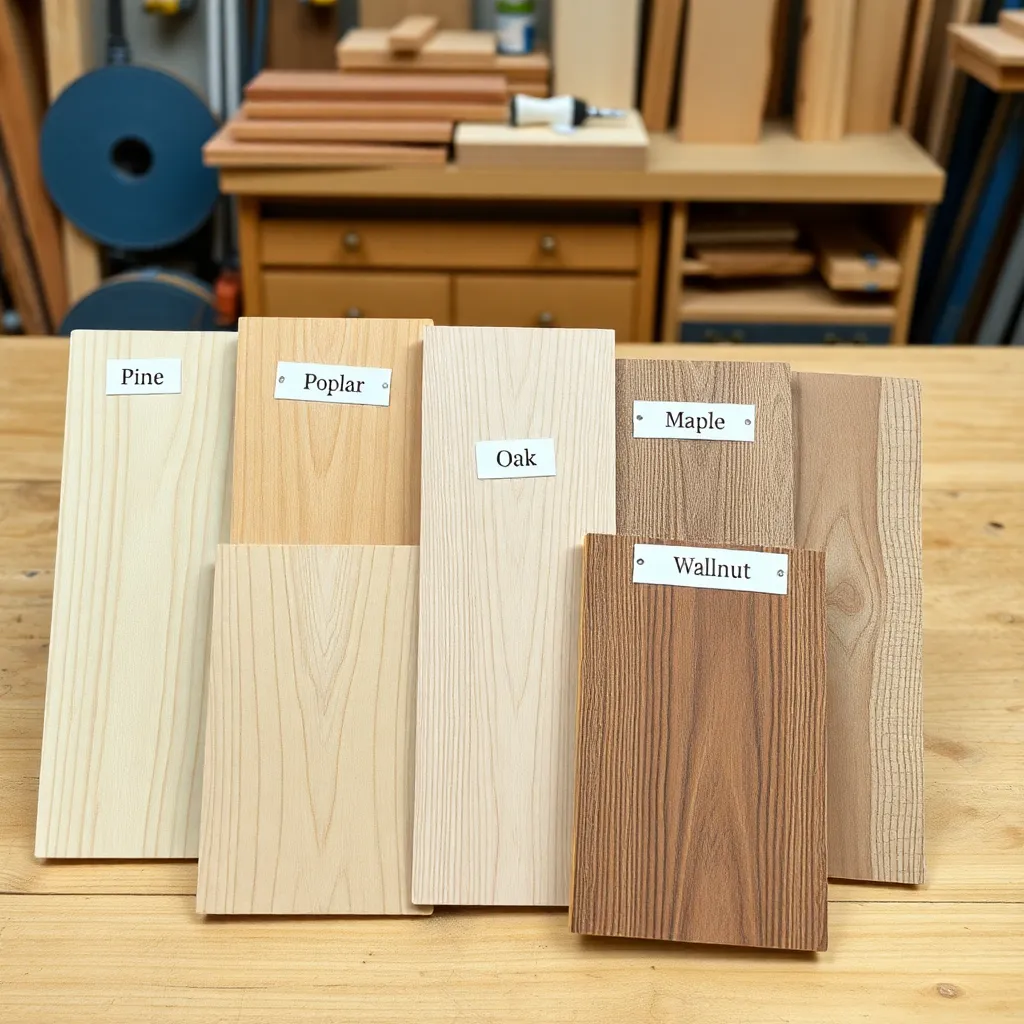
Material choice drives cost, finish, and durability more than any other decision you make on these builds. Pick the wrong species for your finish and you fight blotchy stain or wasted money all weekend.
Here is how the seven materials in these plans stack up. Janka numbers measure hardness in pounds-force (lbf): higher resists dents better.
| Material | Janka (lbf) | Workability | Stain/Paint | Best For | 2026 Cost |
|---|---|---|---|---|---|
| Pine (#2 Common) | 380 | Excellent, self-countersinks | Blotchy stain, great paint | Beginner farmhouse, painted pieces | $2.50-$4.00/BF |
| Poplar | 540 | Excellent, minimal tearout | Poor stain, outstanding paint | Painted furniture, frames, aprons | $3.50-$5.50/BF |
| Red Oak | 1220 | Good, open grain | Excellent stain, good paint | Stained furniture, herringbone tops | $5.50-$9.00/BF |
| Hard Maple | 1450 | Moderate, can burn | Clear/oil only, hard to stain | High-wear tops, puzzle builds | $6.00-$10.00/BF |
| Black Walnut | 1010 | Good with sharp tools | Natural oil showcase | Puzzle builds, showcase tops | $12.00-$20.00/BF |
| Birch Plywood (3/4″) | n/a | Excellent, flat, stable | Great paint, veneer base | Box carcasses, nesting tops | $55-$80/sheet |
| Reclaimed Wood | Varies | Moderate to difficult | Excellent natural/oil | Industrial and rustic tops | $3-$15/BF |
The one-line takeaway: paint means poplar or pine, stain means red oak, natural means walnut or maple, and boxes mean birch plywood. Reclaimed wood adds character but budget an extra 2 to 4 hours for de-nailing and prep.
1. Farmhouse Coffee Table Plans (Beginner)
- Skill: Beginner
- Materials: 1×6 #2 pine top planks, 4×4 pine legs, 1×4 pine aprons, pocket-hole screws (1-1/4″ and 2-1/2″), wood glue, stain or paint plus polyurethane
- Cost (July 2026): $65-$90 at Home Depot or Lowe’s
- Tools: Pocket-hole jig, miter or circular saw, drill/driver, random orbital sander, 4 to 6 clamps
- Build time: 4-6 hours over one weekend day
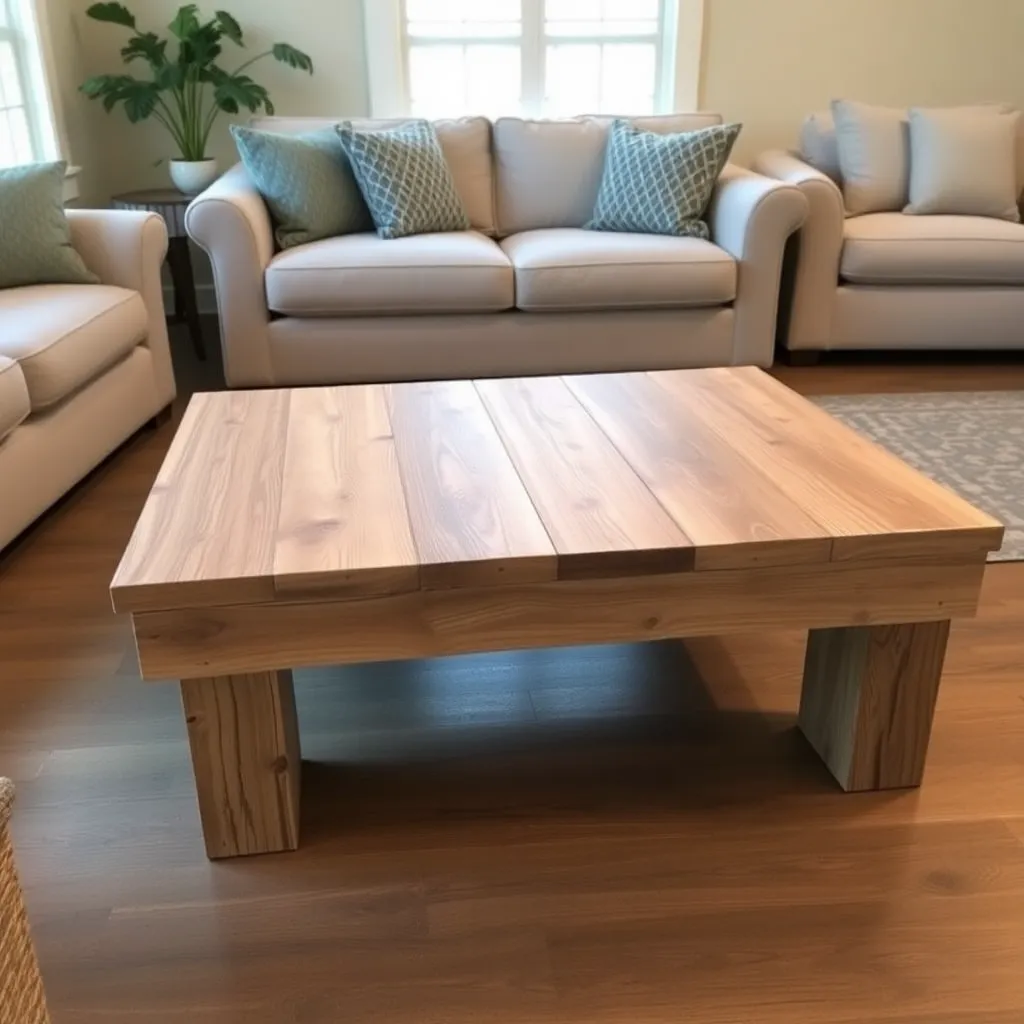
This is the fastest beginner build in the category, and it uses pocket-hole joinery only. No router, no dado, no complex cuts. You edge-glue the 1×6 planks into a top, pocket-screw the 1×4 aprons into a frame, and bolt on the 4×4 legs. A typical build lands at 48″L x 24″W x 18″H, which suits most living rooms.
Expect pine board prices to run about 16% higher than last year thanks to Canadian softwood tariffs, which is why the range starts at $65 rather than the $50 you may see in older roundups. The budget end uses #2 pine throughout; the upper end covers finishing supplies and heavier hardware.
Because pine dents easily, a protective finish matters here. Apply a pre-stain conditioner if you stain, or prime well if you paint. For the complete cut list and step-by-step instructions, see our full guide to building a DIY coffee table.
2. Mid-Century Modern Hairpin Leg Coffee Table Plans (Beginner to Intermediate)
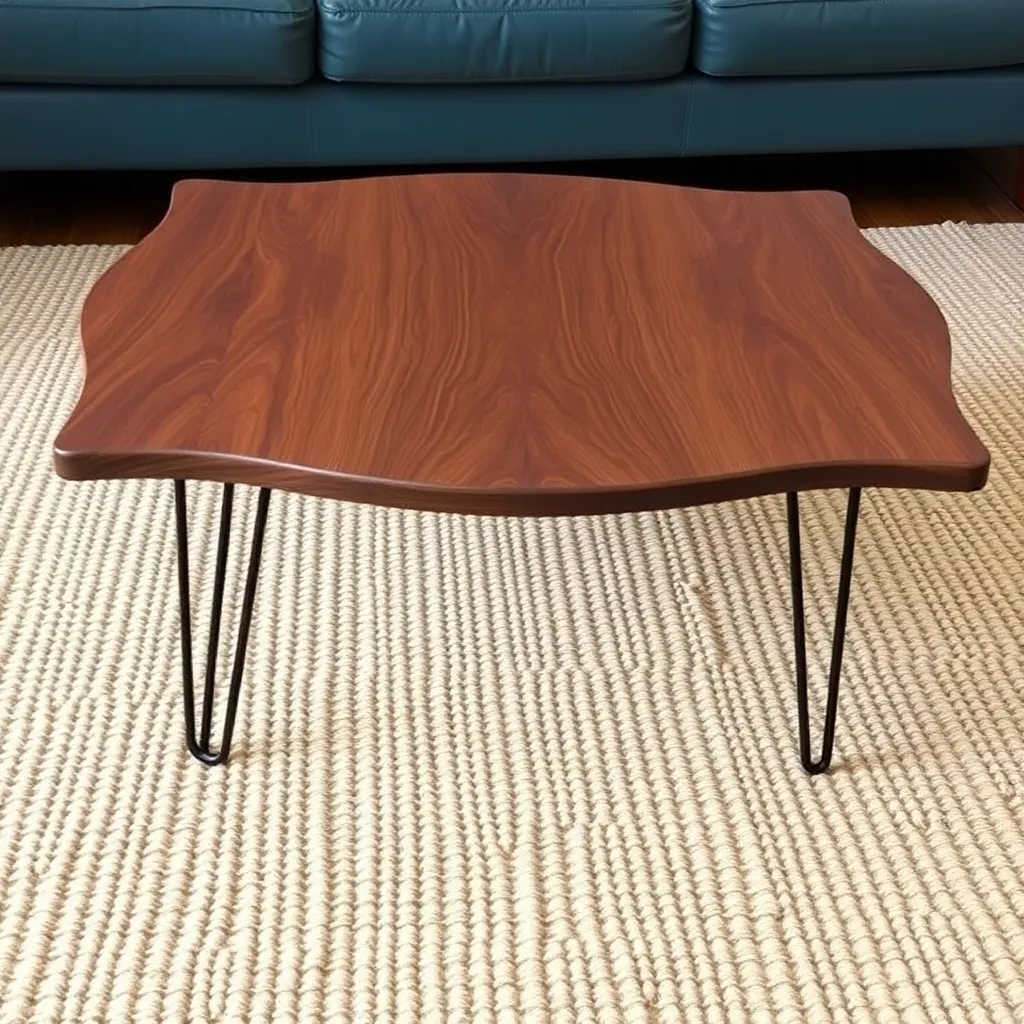
- Skill: Beginner-Intermediate
- Materials: 3/4″ birch or walnut-veneer plywood top (48″ x 24″), iron-on edge banding, set of 4 hairpin legs (16″ height), leg mounting screws, Danish oil, Rubio Monocoat, or polyurethane
- Cost (July 2026): $65-$120
- Tools: Circular or track saw, drill/driver, iron for edge banding, sander
- Build time: 2-4 hours (plywood top) or 4-8 hours (solid wood glue-up top)
This build has the lowest barrier to a modern, retail-quality look, and the hairpin legs do most of the aesthetic heavy lifting. The plywood-top version is genuinely beginner work: cut a plywood top, iron on edge banding, screw four pre-made legs to the underside, and finish. Step up to a solid-wood glue-up top and it becomes an intermediate job.
Cost splits by ambition. The budget end pairs a birch plywood top with $15 to $30 Amazon legs. The mid-range end pairs walnut-veneer plywood with quality Home Depot legs from Crates & Pallet or WEN at $45 to $85 a set. Both land a clean 48″L x 24″W x 16-18″H table.
It is the most Instagram-friendly build on the list and among the cheapest. If you have never touched edge banding, practice on a scrap: run a hot iron slowly along the strip, then trim the overhang flush with a sharp chisel or trim tool.
3. Industrial Pipe Coffee Table Plans (Beginner)
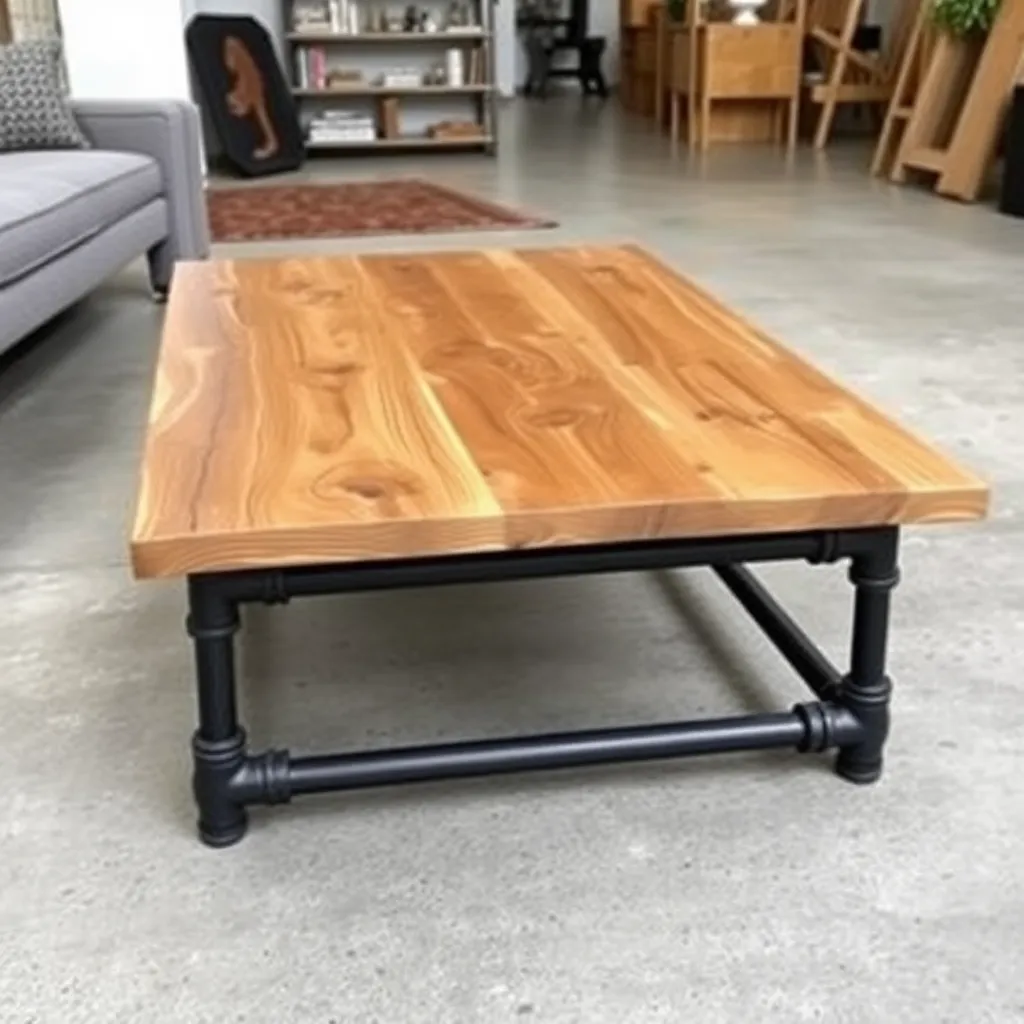
- Skill: Beginner
- Materials: Reclaimed or rough-sawn wood top (2-3″ slab or glued-up 2x boards), 3/4″ black iron pipe, black iron floor flanges, T-fittings and elbows, lag screws, oil-based or Danish oil finish
- Cost (July 2026): $80-$140
- Tools: Pipe wrench or channel-lock pliers, drill/driver, sander
- Build time: 3-5 hours
There is no woodworking joinery in this build at all. The pipe threads together by hand like plumbing, and the flanges lag-screw straight to the underside of the top. Your only woodworking is preparing the top: sand it smooth and oil it. That makes it a true beginner build even though it looks tough.
Fittings drive the cost. Budget $50 to $90 for a typical 4-leg H-frame base, which needs 10 to 16 pieces: flanges at $6 to $10 each, pipe nipples at $3 to $6, and T-fittings at $4 to $7. A reclaimed wood top adds $25 to $60. Total lands at $80 to $140 depending on top choice and base complexity.
The pipe frame is the design element, so lean into it. Reclaimed wood tops pair perfectly with the raw metal, and any pipe configuration works, which makes this the most customizable build here. Wire-brush the pipe to remove the factory oil coating before you assemble, or it will transfer to everything it touches.
Want Printable Cut Lists and Diagrams?
These eight styles cover the full range, from a weekend farmhouse table to an advanced concrete top. But if you want printable, dimensioned plans with full cut lists and step-by-step diagrams across thousands of designs, a ready-made library is the shortcut. Ted’s Woodworking delivers 16,000+ plans beyond these 8 styles, so you can print a plan and start cutting instead of drafting your own. No pressure: the builds on this page stand on their own.
4. Lift-Top Coffee Table Plans with Storage (Intermediate)
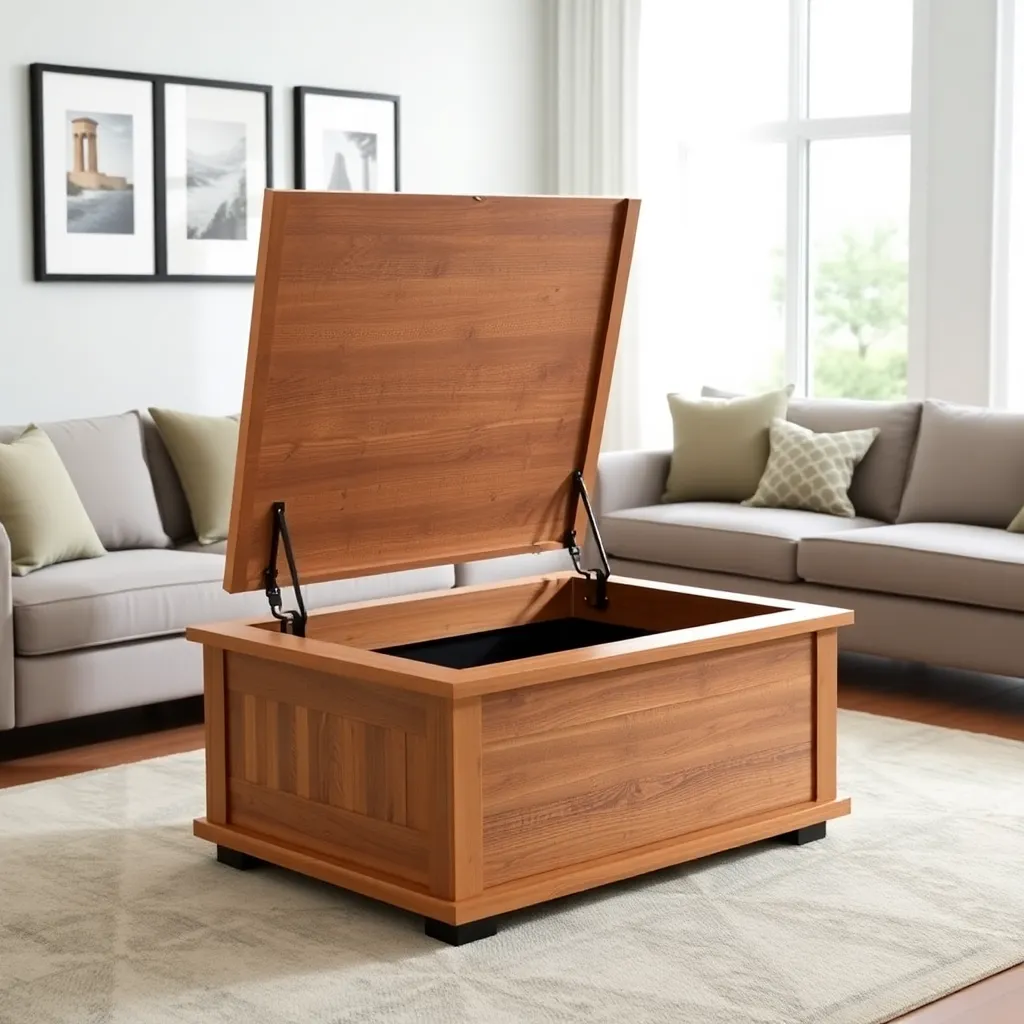
- Skill: Intermediate
- Materials: 3/4″ birch plywood (box carcass and lid), 1×2 pine or poplar face frame, lift-top mechanism (spring-assist or gas piston pair), pocket-hole screws, iron-on edge banding, paint or veneer plus polyurethane
- Cost (July 2026): $120-$160
- Tools: Table or track saw, pocket-hole jig, optional router, drill/driver, 6+ clamps, iron
- Build time: 6-10 hours over one weekend
This is the most functionally useful table on the list. Hidden storage plus the lift-top mechanism turns it into a laptop desk or a casual dining surface. It earns its intermediate rating through accurate plywood box construction, hardware installation, and precise lid sizing so the mechanism operates smoothly.
The mechanism is the biggest cost variable. Spring-assist pairs run $25 to $45 and suit lighter tops under 20 pounds. Gas-piston pairs run $35 to $60, hold any angle, and handle heavier plywood tops better. A 3/4″ birch plywood sheet runs $55 to $80, and two sheets plus the mechanism and hardware land you at $120 to $160 for a clean 44″L x 24″W x 18″H build.
Size the lid so it clears the box walls by a consistent 1/16″ on every side, or the mechanism will bind. For the complete build, including carcass dimensions and mechanism installation, see our full guide to the lift-top coffee table with storage.
5. Nesting Coffee Table Set Plans (Intermediate)
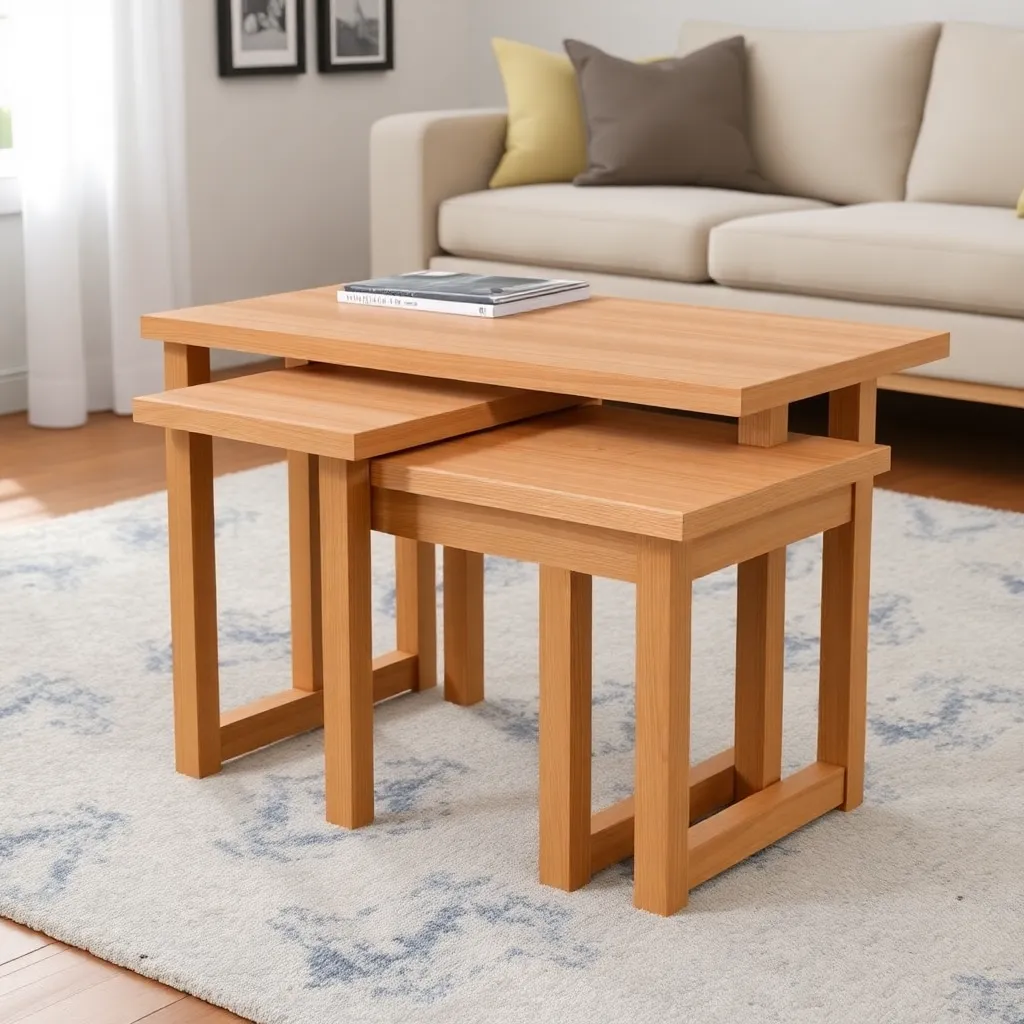
- Skill: Intermediate
- Materials: 3/4″ birch or hardwood plywood tops, 1-1/2″ square hardwood leg stock (oak, maple, or poplar), pocket-hole screws, wood glue, stain or paint plus finish
- Cost (July 2026): $90-$130 for a 2 to 3 piece set
- Tools: Table or guided circular saw, pocket-hole jig, drill/driver, accurate square, clamps, sander
- Build time: 6-8 hours (3-piece set)
The nesting set is space-efficient by design: the full set stores as a single footprint, which makes it ideal for smaller living rooms or flexible seating. One sheet of birch plywood yields all the tops with minimal waste, so material cost stays reasonable for what looks like three finished tables.
The critical design challenge is the sizing formula. Each table must clear the next by 1.5″ in height and 2″ in width and depth when nested. A clean 3-piece set runs Large at 42″L x 22″W x 18″H, Medium at 36″L x 18″W x 16″H, and Small at 28″L x 14″W x 14″H. Leg placement must account for the inner table’s leg clearance, so mark and dry-fit before you commit.
Accuracy is everything here. A square that is off by even a degree stacks up across three tables and turns clean nesting into a jam. For the full sizing math and assembly sequence, see our guide to nesting coffee tables.
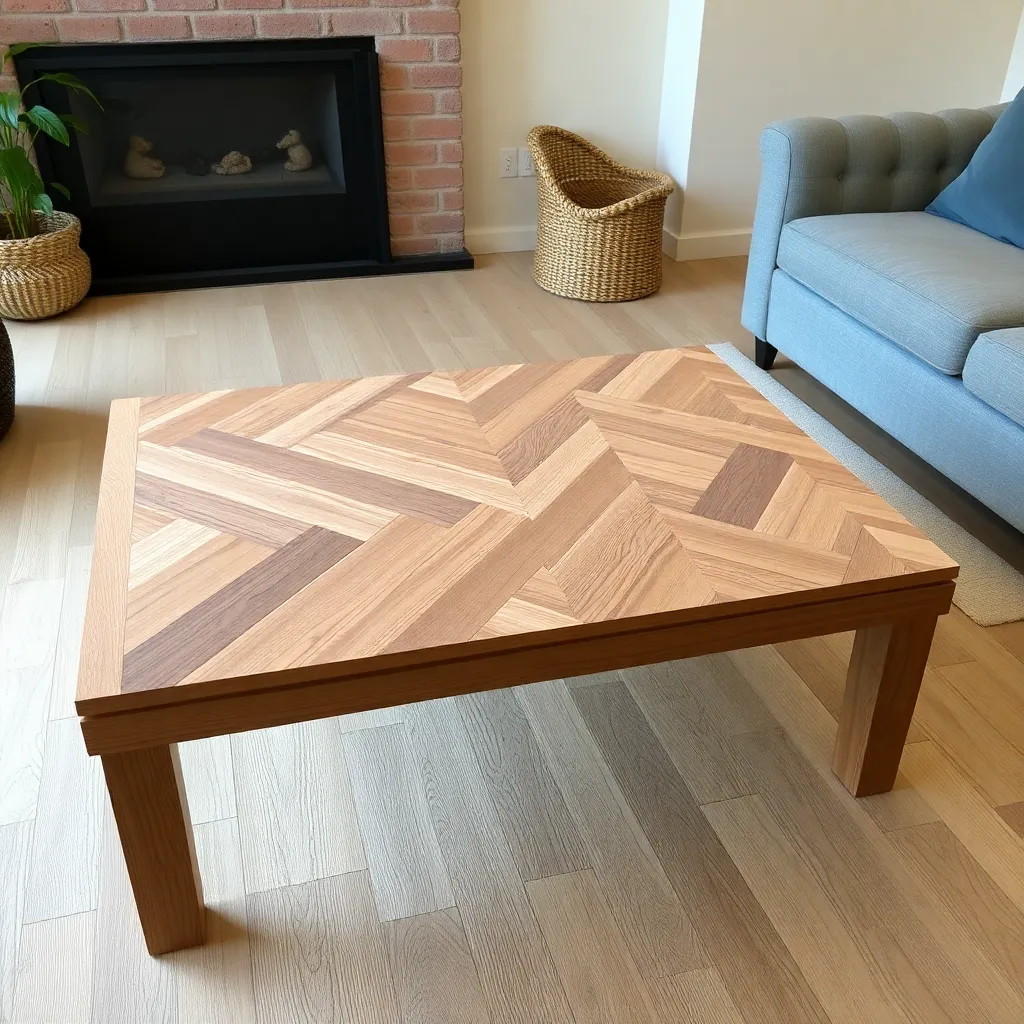
6. Herringbone Top Coffee Table Plans (Intermediate)
- Skill: Intermediate
- Materials: 1×2 or 1×3 oak, maple, or pine strips, 3/4″ plywood substrate, 1×4 apron, 4×4 or turned legs, wood glue, stain or finish plus polyurethane
- Cost (July 2026): $80-$130
- Tools: Miter saw (accurate 45 degrees), optional table saw for ripping, random orbital sander, glue spreader, clamps or brad nailer
- Build time: 6-10 hours
This build has the most visually dramatic top on the list, and the pattern looks far harder than it is. The frame beneath is beginner-level box work. The intermediate skill lives entirely in the top: accurate 45-degree miter cuts and careful pattern layout so the strips align without gaps.
Cost tracks your species choice. All-pine is cheapest and can hit roughly $30 in wood cost alone for the top, as builders like Pine and Poplar have proven. An oak-and-maple two-tone top adds cost but delivers the classic contrast. Total range runs $80 to $130 for a 48″L x 24″W x 18″H table.
Plan on roughly 80 to 100 strips for a 48×24 top at 1.5″ strip width. Start your layout from the center of the substrate and work outward, and dry-fit the entire pattern before you spread a drop of glue. That single habit is the difference between a crisp herringbone and a weekend of frustration.
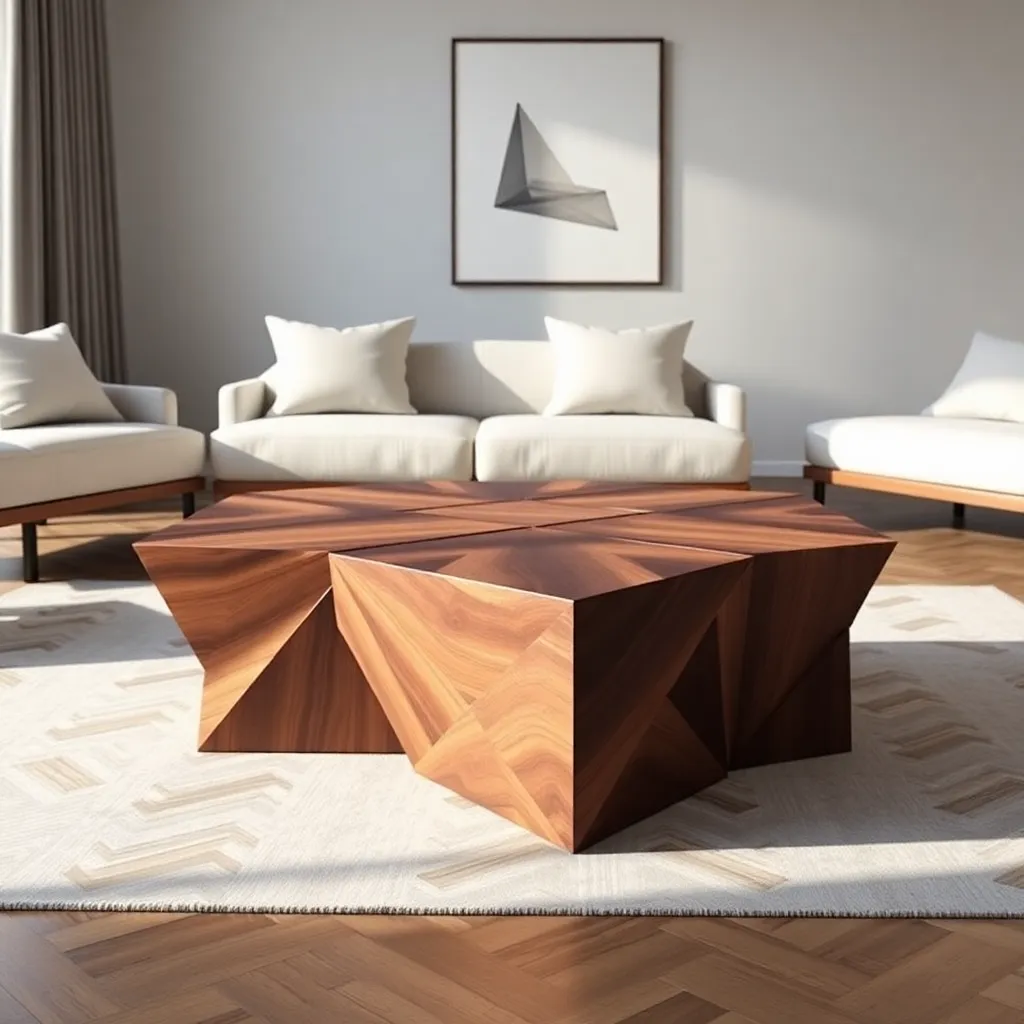
7. Puzzle / Geometric Interlocking Coffee Table Plans (Advanced)
- Skill: Advanced
- Materials: 4/4 or 5/4 hardwood (walnut, cherry, oak, or figured maple), router bits (straight and spiral up-cut), finishing oil or wax (Danish oil, Rubio Monocoat)
- Cost (July 2026): $120-$180
- Tools: Router table with fence, spiral up-cut bits (1/2″ and 3/4″), miter saw, hand plane or card scraper, mallets and assembly blocks. No film finish: use oil or wax.
- Build time: 8-12 hours across multiple sessions
This one uses zero fasteners. The table assembles and disassembles through interlocking geometry alone, which makes it a genuine conversation piece. The joints must be machined to tight tolerances on a router table with jigs, and one bad cut ruins an expensive hardwood blank, so it is squarely advanced work.
Species drives the budget. Walnut or cherry pushes cost toward $150 to $180, since walnut runs $12 to $20 per board foot and you need 8 to 10 board feet. Oak or hard maple bring it down to $120 to $140. There is no hardware cost to offset the premium lumber, so the wood is your whole spend. Finished size runs 40-48″L x 20-24″W x 16-18″H.
Skip any film finish. A polyurethane build-up changes the fit of the interlocking joints and can lock or loosen them. Use Danish oil or a hard wax oil like Rubio Monocoat instead. For the full jig setup and joint geometry, see our complete guide to the puzzle coffee table.
8. Concrete / GFRC Top Coffee Table Plans (Advanced)
- Skill: Advanced
- Materials: Portland cement (Type I/II), fine silica or play sand, AR glass fibers, GFRC polymer additive, 3/4″ melamine-coated MDF mold, foam backer rod, concrete sealer, separate wood or metal base
- Cost (July 2026): $90-$150 top, base adds $25-$60
- Tools: Circular saw for the mold, caulk gun plus silicone, margin trowel and mixing bucket, optional angle grinder with diamond pad, foam brushes
- Build time: 8-14 hours over 3-5 days (48-72 hour cure)
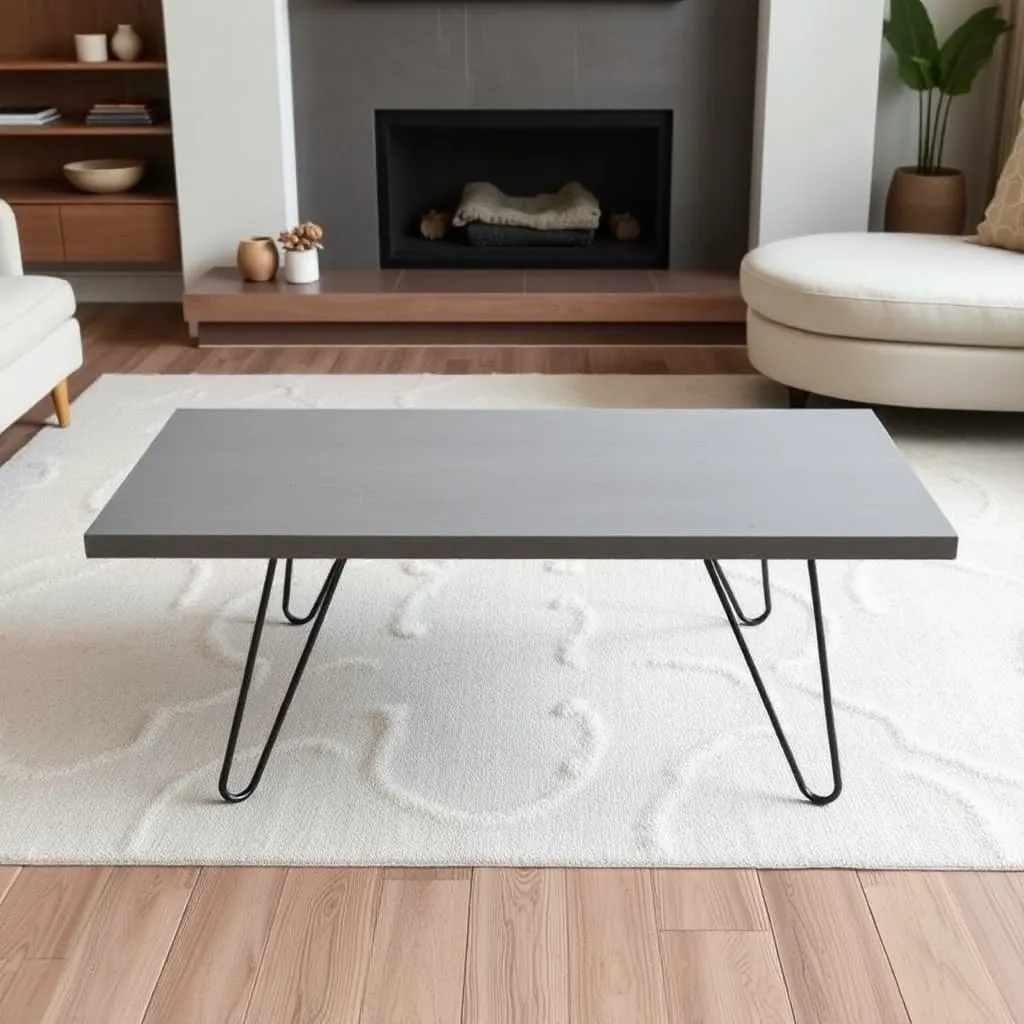
This is the only build here made from a material you mix yourself, and it is advanced for good reason. GFRC mixing, mold construction, fiber reinforcement, and sealing all demand research and practice. Errors in mix ratio or cure time produce cracking or a weak slab, so treat your first pour as a learning run.
Weight is the warning that matters most. Standard cast concrete runs about 12 to 14 pounds per square foot, so a 48×24 top hits 96 to 112 pounds and becomes a liability for furniture joints and flooring. GFRC runs about 4 to 6 pounds per square foot at 3/4″ to 1″ thickness, dropping the same top to 32 to 48 pounds. Always use GFRC indoors.
Itemized, GFRC materials for a 48×24 top run roughly $85 to $140: cement $8 to $12, silica sand $8 to $12, AR glass fibers $15 to $25, polymer $20 to $35, melamine form $20 to $35, and sealer $15 to $25. Budget builds skip the polymer and use a standard mix, cutting cost to $90 to $110 with a simpler surface. The payoff is a top that looks like polished concrete at a fraction of the cast weight.
A Note on 2026 Material Costs
If our cost ranges look higher than older project roundups, tariffs are the reason. The combined U.S. tariff on Canadian softwood lumber now sits at roughly 35.9%, and the Framing Lumber Composite Index reached about $468 per thousand board feet in March 2026, up 16.4% year over year. Canadian SPF is the backbone of big-box pine supplies, so it carries the full burden.
The practical takeaway: budget 15 to 20% above 2023 figures when you compare older project costs found online. Current mid-2026 big-box benchmarks run pine 2x4x8 at $5 to $8, 1x6x8 at $8 to $14, a birch plywood sheet at $55 to $80, red oak at $5.50 to $9 per board foot, and walnut at $12 to $20 per board foot. Every figure on this page reflects that current pricing.
Coffee Table Furniture Plans FAQ
What type of coffee table is easiest to build?
The farmhouse plank and the hairpin leg tables are the easiest for beginners. The farmhouse build uses only pocket-hole joinery, with no complex cuts or router work. The hairpin leg version is even faster: cut a plywood top, band the edges, screw on four pre-made legs, and finish. Both are achievable in a single day with basic tools.
How much does it cost to build a coffee table?
As of mid-2026, a DIY coffee table costs $65 to $180 in materials depending on design and wood species. A simple pine farmhouse table runs $65 to $90. A hairpin leg plywood top runs $65 to $120. A lift-top with storage runs $120 to $160. A puzzle-style hardwood table can reach $120 to $180. Lumber prices sit roughly 15 to 20% above 2023 thanks to Canadian softwood tariffs.
What wood should I use for a coffee table?
For painted tables, choose poplar or pine: poplar takes paint better, pine is cheaper. For stained tables, red oak is the best beginner choice because it accepts stain evenly and is widely available. For a natural oil finish, black walnut or hard maple are the premium picks. For structural panels like a lift-top box or nesting tops, 3/4″ birch plywood is the standard. For industrial or rustic styles, reclaimed wood adds character at $3 to $15 per board foot.
How long does it take to build a coffee table?
Build time ranges from 2 hours to several days. Hairpin leg with a plywood top runs 2 to 4 hours. Farmhouse plank runs 4 to 6 hours. Industrial pipe runs 3 to 5 hours. Lift-top with storage runs 6 to 10 hours. Nesting set runs 6 to 8 hours. Herringbone top runs 6 to 10 hours. Puzzle or geometric runs 8 to 12 hours. Concrete runs 8 to 14 hours spread over 3 to 5 days for the cure. These figures assume a reasonably equipped shop and exclude finish drying time.
Do I need a table saw to build a coffee table?
No. The farmhouse plank, hairpin leg, and industrial pipe designs need only a miter or circular saw and a drill. A table saw helps break down plywood cleanly, but a circular saw with a straightedge guide produces equally accurate cuts. The nesting set and herringbone top benefit most from a table saw for consistent ripping. The puzzle build needs a router table, which is a more specialized tool than a table saw.
Where can I find free coffee table plans?
Several sources offer free plans. Kreg Tool’s project library has 40-plus free plans with difficulty ratings, and Ana White offers detailed free farmhouse-style plans. Our own dedicated build guides cover farmhouse at /diy-coffee-table/, lift-top at /lift-top-coffee-table-with-storage/, nesting at /nesting-tables-coffee-table/, and puzzle at /puzzle-coffee-table/, each with full materials lists and step-by-step instructions.
Which coffee table plan is best for a small living room?
The nesting set is the top pick because the full set stores as a single footprint and expands only when you need it. The lift-top is a strong second choice: it doubles as a work or dining surface, so one piece of furniture earns two jobs in a tight room.
Ready to pick one and start cutting? Head back to the coffee table plans hub for the full cluster, then open the dedicated guide for whichever build matched your skill level above.

“DIY woodworking enthusiast who started with zero experience and a YouTube tutorial.
I build simple, practical projects for my home and share free plans
so other beginners can skip the guesswork.If I can build it, you can too.”