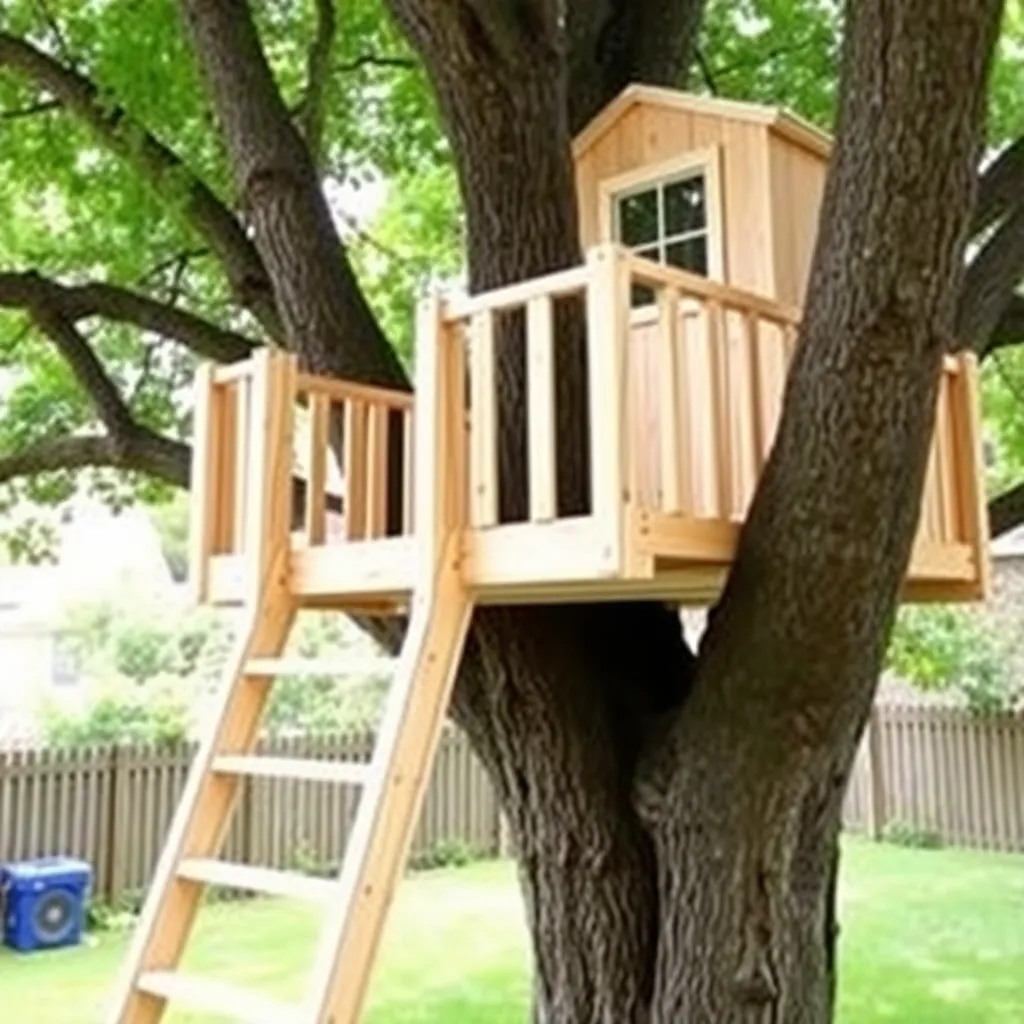
Simple Treehouse Plans: Build a Basic Platform in One Weekend for Under $300
The most common treehouse mistake is overbuilding. A child aged 4–8 is perfectly happy with a 4×4-foot platform, a railing, and a ladder — they supply the imagination. These simple treehouse plans cover a basic elevated platform buildable in one weekend by two adults with no specialized skills, using under $300 in materials. The design scales from a minimal open platform to an add-on system where you build the platform first, then add walls, a roof, and accessories in future weekends as time and budget allow.
Ted’s Woodworking has simple treehouse plans for every skill level, from basic platforms to fully enclosed multi-level builds. Browse Ted’s treehouse plans →
Step 1: Pick the Right Tree and Height
Ted’s Woodworking has over 16,000 step-by-step plans with cut lists, materials lists, and detailed diagrams. Browse Ted’s plans →
A simple treehouse requires less tree than a complex one — the platform is smaller and lighter, so a single strong crotch (the Y-junction where the trunk splits into major branches) or a single straight trunk with one TAB or two knee braces is enough.
Minimum requirements:
- Single trunk: 10 inches diameter at platform height, with knee braces running to the ground (post-supported) or to lower branches
- Crotch build: two diverging trunks or branches, each 8+ inches diameter, within 18 inches of each other at platform height
- Platform height for young children: 4–5 feet — close enough to the ground to feel safe, high enough to feel thrilling
At 4–5 feet, most jurisdictions don’t require a permit, and a fall from this height — while possible — is not dangerous on soft ground. This is the sweet spot for first-time treehouse builders.
Step 2: Build the Platform Frame
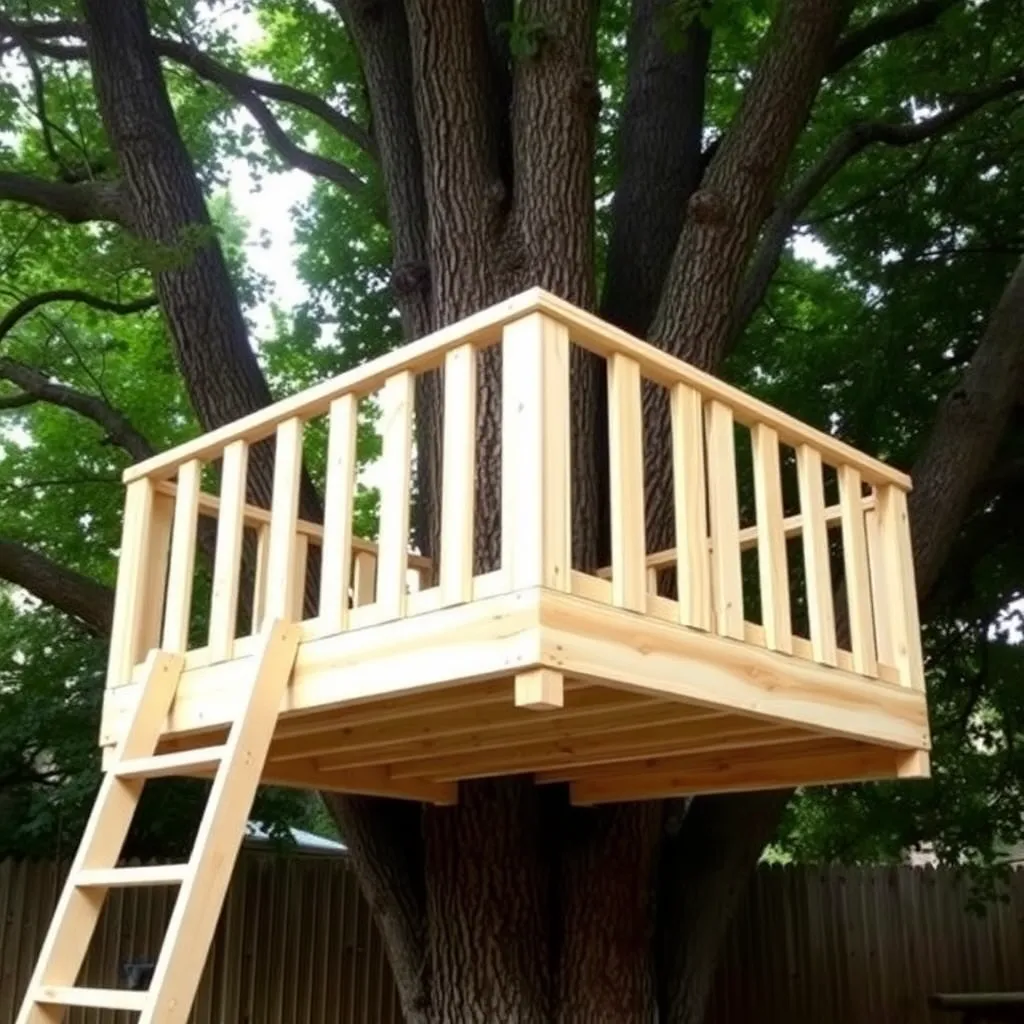
A 4×4-foot platform is the minimum useful size — two children fit comfortably. A 4×6-foot platform is better; a 6×6-foot platform is the practical maximum for a simple single-weekend build.
Cut list for a 4×6-foot platform:
- 2 × long rim joists: 2×6 at 72 inches
- 3 × short cross joists: 2×6 at 45 inches (one at each end, one in the center)
- Decking: five 2×6 boards at 72 inches (laid across the cross joists)
Assemble the frame on the ground. Square it (diagonals must be equal), then nail or screw decking boards to the top at ⅛-inch spacing for drainage. Pre-assembling on the ground is much easier than framing in the air.
Step 3: Install Support Posts or Attach to Tree
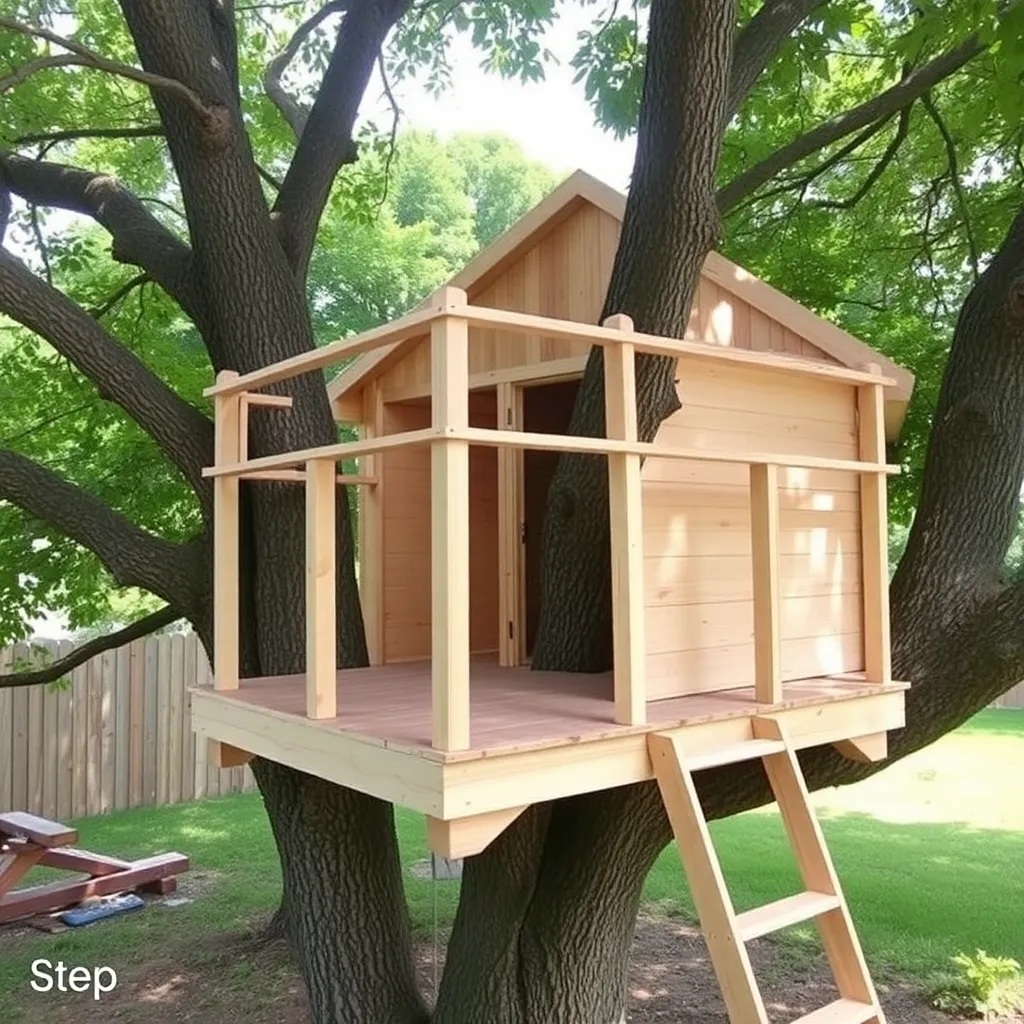
Post-supported method (easiest — no tree attachment needed):
- 4 × 4×4 posts, 6 feet tall, set in concrete at 2-foot depth
- Posts go at the four corners of the platform
- The platform frame rests on top of the posts and is bolted down
- One or two of the posts may pass through the branches — the tree is visual decoration, not structural
Post-supported platforms need no tree expertise, no permits in most areas, and can be built even if the tree has no suitable crotch. The platform looks like it’s in the tree even if it’s technically beside it.
Single-tree attachment (for a true treehouse feel):
- 2 × knee braces: 2×6 at 48 inches, run from the underside of the platform frame down to the trunk at 45 degrees, anchored with 3/8-inch lag screws into the trunk
- 1 × main ledger: 2×6 or 2×8 bolted to the trunk with a single TAB or two 3/8×6-inch lag screws (minimum 4-inch embedment)
- The platform rests on the ledger and is triangulated by the knee braces
Step 4: Add Railings
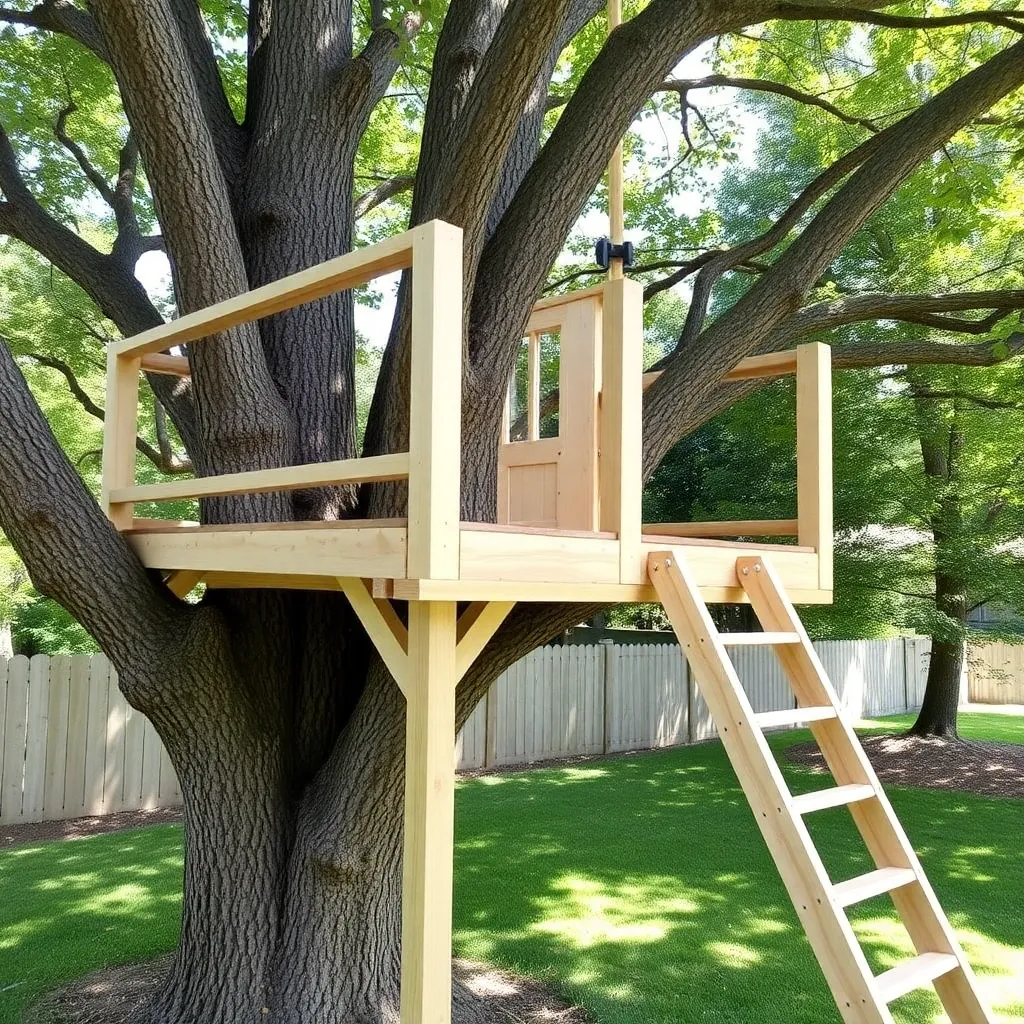
At 4–5 feet of height, railings are strongly recommended but may not be legally required. Install them anyway — they’re fast to build and make the platform usable (children can lean against them, hang things from them, and feel secure enough to actually play).
Simple railing system:
- 4 × corner posts: 4×4 at 42 inches, bolted through the rim joists
- Top rail: 2×4 spanning between posts
- Infill: 1×4 horizontal boards at 3-inch spacing (horizontal rails look great and are faster to install than vertical balusters)
Leave one rail section open as the ladder entry point — install a grab rail beside the ladder opening instead.
Step 5: Add a Ladder and Optional Roof
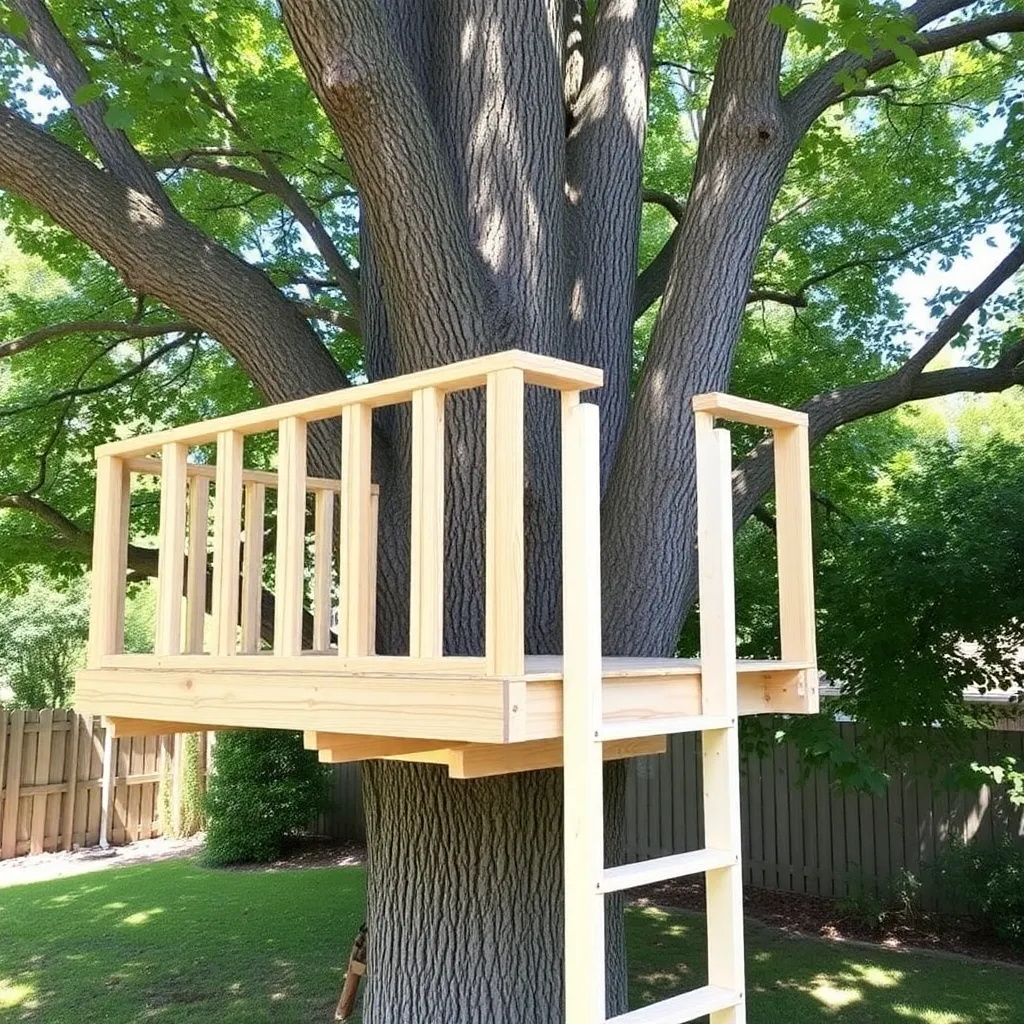
Fixed ladder:
- 2 × side rails: 2×4 at 66 inches
- 6 × rungs: 2×4 at 18 inches (at 10-inch vertical spacing)
- Mount at 70-degree angle — steep enough to be compact, not so steep it’s difficult
- Bolt the top of the rails to the platform frame
Optional quick roof (add-on in a future weekend):
- 4 × rafters: 2×4 at 60 inches, cut at 30-degree angle
- Ridge board: 2×4 at 72 inches
- Roofing: corrugated metal panels or outdoor fabric (canvas canopy)
The simplest roof is a canvas canopy on a simple ridge-pole — costs $40, installs in 2 hours, and gives shade and rain protection without any roofing skills.
Ted’s Woodworking has over 16,000 step-by-step plans with cut lists, materials lists, and detailed diagrams. Browse Ted’s plans →
Simple Treehouse Plans FAQ
What is the simplest treehouse design?
A post-supported platform at 4 feet height with railing and a ladder. No attachment to the tree, no structural engineering, no permit required in most areas. Four 4×4 posts, a 2×6 frame, some decking, and a railing. Total build time: 6–8 hours for two adults.
Can I build a simple treehouse by myself?
The platform and posts: yes, alone. Lifting the pre-assembled frame into position is a two-person job unless you build it in place piece-by-piece. The rest — railings, ladder, roof — is single-person work. Budget a full day solo, or half a day with a helper.
How do I make a simple treehouse safe?
Use properly rated hardware (no drywall screws — use structural screws or bolts), install railings on all open sides, ensure the platform is level and the posts or supports are plumb, and inspect all connections annually. The biggest safety risks in simple treehouses are: unstable posts (set them in concrete), weak decking joints (bolt, don’t just nail the frame), and inadequate railings (install them even if not legally required).
What tools do I need to build a simple treehouse?
Circular saw, drill/driver, level, tape measure, speed square, and a hammer. A post hole digger if using ground-set posts. No specialty tools required. Two ladders are helpful when lifting the platform frame.
How long does a simple treehouse last?
With pressure-treated posts and frame, cedar or treated decking, and galvanized hardware: 15–20 years. The first things to fail are usually the decking boards (especially if untreated pine) and the ladder rungs (constant foot traffic). Inspect and replace individual boards as needed — the frame typically outlasts the surface materials by many years.

“DIY woodworking enthusiast who started with zero experience and a YouTube tutorial.
I build simple, practical projects for my home and share free plans
so other beginners can skip the guesswork.If I can build it, you can too.”