
Choosing the right wood for your furniture or home décor project can feel overwhelming when you’re just starting out. Many beginners assume all wood types perform similarly, but this misconception can lead to disappointing results and wasted materials. The truth is that wood selection directly impacts how your finished piece looks, how long it lasts, and how easy it is to work with during construction. Understanding wood hardness, grain patterns, and moisture behavior gives you the knowledge to make confident choices that match your skill level and project goals. This guide breaks down the essential factors that separate mediocre projects from exceptional handcrafted pieces.
Table of Contents
- Understanding Wood Hardness And The Janka Hardness Scale
- How Grain Orientation And Moisture Affect Wood Hardness
- Balancing Hardness And Workability: Choosing The Right Wood For Your Project
- Applying Wood Selection Knowledge To Enhance Your Woodworking Projects
- Explore Woodworking Plans And Boost Your DIY Success
- Frequently Asked Questions
Key takeaways
| Point | Details |
|---|---|
| Janka hardness measures durability | Higher Janka ratings indicate woods that resist dents and wear better over time. |
| Grain and moisture affect performance | Wood grain direction and moisture content change how hard wood feels and how easily you can shape it. |
| Match wood to project needs | Harder woods excel in high-traffic furniture while softer species make learning easier for beginners. |
| Test before committing | Working with small samples helps you understand how different woods behave before buying full boards. |
Understanding wood hardness and the Janka hardness scale
Wood hardness determines how well your project withstands daily use and accidental impacts. The Janka hardness scale measures this property by recording the force needed to embed a steel ball into wood, with higher ratings indicating greater durability and resistance to wear. This standardized test gives you an objective way to compare hundreds of domestic and exotic species before making purchasing decisions.
The test works by pressing a 0.444-inch steel ball halfway into a wood sample and measuring the pounds of force required. A red oak sample typically needs around 1,290 pounds of force, earning it a Janka rating of 1,290. Brazilian walnut, one of the hardest woods available, scores an impressive 3,680 on the same scale. These numbers translate directly to real-world performance in your finished projects.
The Janka Hardness Scale provides an objective way to compare the hardness of hundreds of domestic and exotic lumber species, helping you predict how well different woods will hold up in specific applications. Understanding these ratings prevents costly mistakes like choosing pine for a dining table that will show dents from daily plate impacts within months.
Common wood Janka ratings reveal clear patterns:
- Balsa: 100 (extremely soft, used mainly for models)
- Pine: 380-870 (varies by species, good for learning)
- Red oak: 1,290 (classic furniture choice)
- Hard maple: 1,450 (excellent for cutting boards)
- Brazilian cherry: 2,350 (premium flooring material)
- Lignum vitae: 4,500 (among the hardest woods globally)
Pro Tip: Woods with ratings above 1,200 work well for furniture that sees heavy use, while species below 1,000 suit decorative pieces or projects where you prioritize easy shaping over maximum durability.
Variation exists even within the same species depending on where the tree grew, which part of the trunk you’re using, and how the wood was cut. Quarter-sawn boards often test harder than plain-sawn pieces from the same tree. Moisture content at testing time also affects results, making standardized conditions essential for fair comparisons. Learning about wood types explained helps you understand these nuances and select materials that match your project requirements.
How grain orientation and moisture affect wood hardness
Grain direction creates significant differences in how wood responds to tools and stress. Wood cut with the grain generally offers better resistance to denting than wood tested across the grain, which explains why end grain cutting boards last longer than edge grain versions despite using the same species. When you plane or sand along the grain, fibers support each other and resist compression more effectively.
Cutting across the grain severs these supportive fibers, creating weaker points where dents form more easily. This matters when you’re deciding how to orient boards in table tops, chair seats, or decorative panels. Positioning the grain to run lengthwise in high-stress areas maximizes the wood’s natural strength without adding weight or thickness.
Moisture content dramatically changes how hard wood feels and performs. Humidity and moisture levels can affect wood hardness significantly, with properly dried wood maintaining its strength while wet lumber feels softer and dents more readily. Fresh-cut green wood contains so much water that it cuts almost like cheese, but the same piece becomes rock hard after proper drying.

Kiln drying removes moisture in controlled conditions, improving hardness and dimensional stability simultaneously. This process heats wood in large chambers while carefully managing humidity levels to prevent cracking and warping. Kiln drying tonewood reduces moisture content to optimal levels, typically between 6% and 8% for indoor furniture, which maximizes hardness while preventing future movement.
Practical moisture management tips:
- Store wood in your workshop for two weeks before cutting to let it adjust to local humidity
- Use a moisture meter to verify wood has reached equilibrium with your environment
- Avoid working green wood for furniture that needs tight joints
- Apply finish to all surfaces equally to prevent uneven moisture absorption
- Keep finished pieces away from heating vents and direct sunlight
Pro Tip: Wood continues responding to seasonal humidity changes throughout its life, so factor in some expansion and contraction room when designing table tops and wide panels, even with properly dried lumber.
Understanding wood selection role in project success means recognizing that grain and moisture interact with species hardness to create the final working characteristics. A properly dried soft maple board often machines more cleanly than wet red oak despite having a lower Janka rating.
Balancing hardness and workability: choosing the right wood for your project
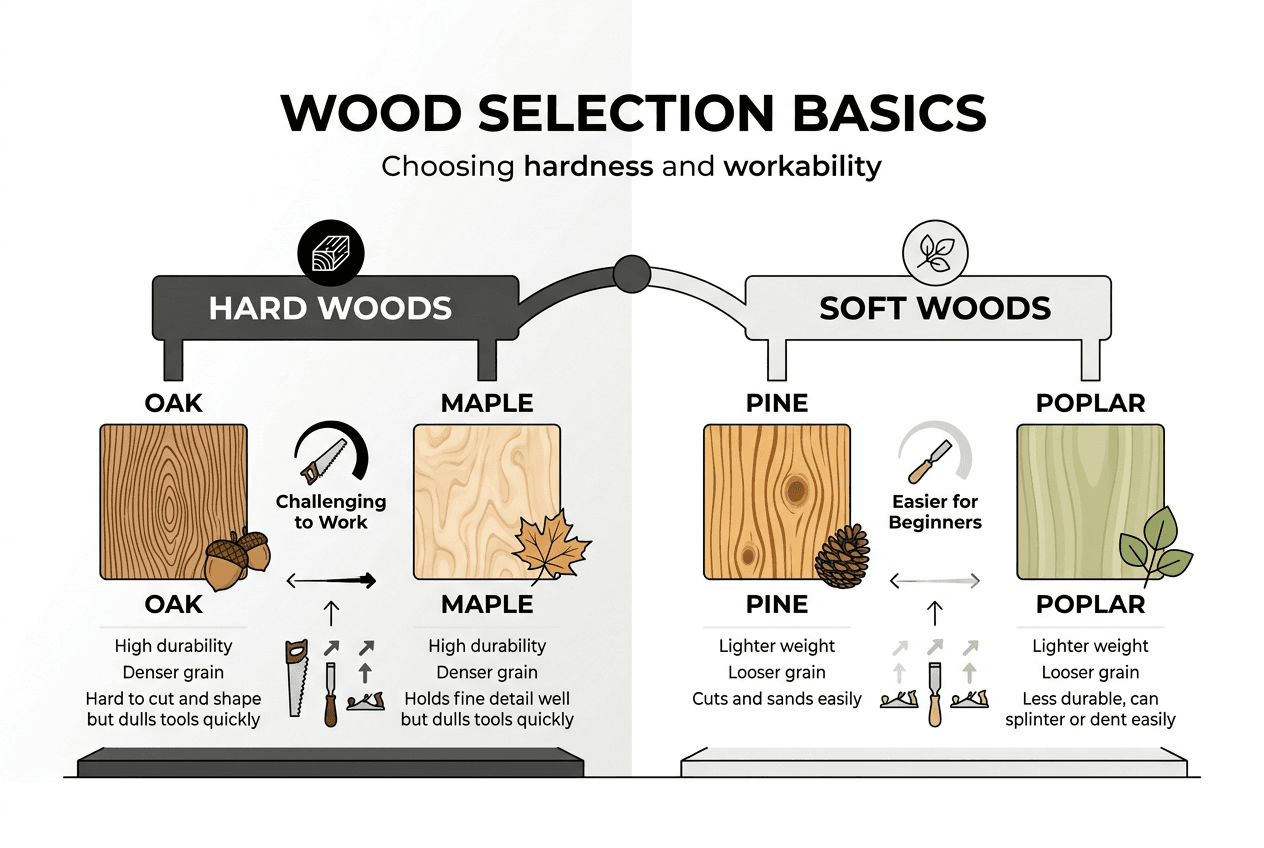
Selecting wood requires weighing durability against ease of working, especially when you’re building skills. Harder woods are generally more durable but can be harder to work with, requiring a balance between hardness and ease of handling based on the project’s needs. Softer species let you practice joinery and shaping techniques without fighting the material, while harder options deliver finished pieces that last decades.
Common woods ranked by hardness and typical applications:
| Wood Species | Janka Rating | Best Uses | Beginner Friendly |
|---|---|---|---|
| Pine | 380-870 | Practice projects, shelving, painted furniture | Yes |
| Poplar | 540 | Painted cabinets, secondary wood for drawers | Yes |
| Cherry | 950 | Fine furniture, decorative boxes | Moderate |
| Red oak | 1,290 | Tables, chairs, traditional furniture | Moderate |
| Hard maple | 1,450 | Cutting boards, workbenches, flooring | No |
| Hickory | 1,820 | Tool handles, high-impact applications | No |
Softer woods like pine and poplar cut cleanly with basic hand tools and forgive minor technique errors that would chip or tear harder species. You can shape them with standard drill bits and router bits without burning edges or dulling cutters quickly. These characteristics make them ideal for learning fundamental skills before investing in premium hardwoods.
For high-traffic areas, wood with a Janka rating of 1,200 or higher is recommended to ensure the surface resists daily wear without showing excessive damage. Kitchen tables, entryway benches, and desk tops benefit from this durability threshold. Decorative wall art and display shelves perform fine with softer species since they experience minimal physical stress.
Follow these steps to choose wood that matches your project:
- Identify how the finished piece will be used and how much wear it will experience
- Determine your skill level honestly and consider what tools you own
- Check Janka ratings for species available at your local suppliers
- Compare grain patterns and color to ensure they match your design vision
- Calculate project costs including waste, since harder woods typically cost more
- Purchase a small sample board to test cutting and finishing before buying full quantities
Pro Tip: Buy a variety pack of small offcuts from different species and practice your joinery techniques on each type to discover which woods suit your tools and working style before committing to large project purchases.
Exploring types of wood for furniture durability reveals that medium-hardness species often provide the sweet spot for hobbyist woodworkers. Cherry and walnut deliver beautiful results without requiring industrial-grade equipment or exceptional physical strength. Following proven woodworking tips for beginners helps you develop skills progressively while working with increasingly challenging materials.
Applying wood selection knowledge to enhance your woodworking projects
Transforming wood knowledge into better projects requires systematic application of what you’ve learned about hardness, grain, and moisture. When choosing wood for projects, consider the Janka Hardness Scale to assess durability, remembering that softer woods are easier to work with but may dent more easily while harder woods are more durable but can be more challenging to cut and shape. This fundamental trade-off guides every material decision you make.
Practical selection tips organized by project category:
- Dining tables and desks: Choose woods rated 1,200 or higher to resist daily impacts and scratches
- Decorative boxes and small crafts: Medium hardness woods like cherry or walnut provide beauty without excessive difficulty
- Outdoor furniture: Select naturally rot-resistant species like cedar or treat softer woods with proper finishes
- Cutting boards: Hard maple or other tight-grained hardwoods prevent knife damage and bacteria absorption
- Picture frames and wall art: Softer woods work perfectly since they experience minimal physical stress
- Children’s toys: Avoid splinter-prone softwoods and choose smooth, durable hardwoods with non-toxic finishes
Proper wood preparation and storage preserve the qualities you selected the material for in the first place. Stack boards with spacers between each piece to allow air circulation on all surfaces. Keep your wood pile off the ground using blocks or pallets to prevent moisture wicking from concrete floors. Cover outdoor storage with tarps that allow air movement while blocking rain.
Acclimation matters more than many beginners realize. Moving wood from a cold garage into a heated workshop causes immediate moisture changes that lead to warping and cracking. Let boards adjust for at least two weeks in the space where you’ll work them, longer for thick stock or extreme climate differences. This patience prevents joints from opening and panels from cupping after assembly.
Experimenting with different species accelerates your learning curve dramatically. Each wood teaches you something new about tool sharpness requirements, ideal feed rates, and finishing behaviors. Pine shows you how soft grain absorbs stain unevenly while maple demonstrates the importance of sanding progression for achieving glass-smooth surfaces. Oak reveals how open pores require grain filler for mirror finishes.
Pro Tip: Start your first few projects with moderately priced domestic hardwoods like red oak or poplar, then gradually work up to premium species like walnut or exotic imports as your skills improve and you understand how to avoid costly mistakes.
Building a reference collection of finished samples helps you make faster decisions on future projects. Keep a small piece of each species you work with, applying your standard finishing process to one side while leaving the other raw. Label each sample with the wood name, source, date, and any notes about working characteristics. This physical library becomes invaluable when clients or family members ask you to match existing furniture.
Exploring home decor woodworking projects gives you practical applications for testing different wood types in real-world scenarios. Each completed piece adds to your experience base and helps you develop intuition about which species suit specific design styles and functional requirements.
Explore woodworking plans and boost your DIY success
Selecting the right wood marks just the beginning of creating exceptional furniture and décor pieces. Detailed plans transform your material knowledge into finished projects by providing exact measurements, cut lists, and assembly sequences that eliminate guesswork. Real Woodwork Plans offers comprehensive guides designed specifically for hobbyists ready to move beyond basic projects.

Our woodworking plans boost DIY success by breaking complex builds into manageable steps that match your current skill level. Each plan includes wood selection recommendations based on the project’s intended use, helping you apply Janka ratings and workability factors to real scenarios. Beginner-friendly instructions explain not just what to do but why each step matters for structural integrity and visual appeal.
Combining solid wood knowledge with proven woodworking tips for beginners creates a foundation for tackling increasingly ambitious projects with confidence. Our guides cover everything from tool selection to finishing techniques, ensuring you avoid common pitfalls that waste materials and time. Understanding woodworking project workflow helps you plan efficient build sequences that produce professional results even in a modest home workshop.
Frequently asked questions
What is the Janka hardness scale and why does it matter?
The Janka hardness scale measures the force in pounds required to embed a 0.444-inch steel ball halfway into a wood sample. This standardized test provides an objective comparison between species, helping you predict how well different woods resist dents, scratches, and general wear. Higher Janka ratings indicate harder woods that maintain their appearance longer in high-traffic applications like dining tables and flooring.
How does moisture content affect the wood I choose?
Wet or green wood feels significantly softer than properly dried lumber because water fills the cell structure and makes fibers more pliable. This excess moisture causes wood to warp, crack, and shrink as it dries after you’ve built your project. Kiln-dried wood with 6% to 8% moisture content provides optimal hardness and dimensional stability for indoor furniture, preventing joints from loosening and panels from cupping over time.
Which wood hardness is best for beginner woodworking projects?
Softer woods with Janka ratings between 400 and 900, like pine and poplar, let beginners practice fundamental techniques without fighting the material or requiring expensive specialized tools. These species cut cleanly with basic hand tools, forgive minor errors, and cost less than premium hardwoods. Mid-range options like cherry (950) or red oak (1,290) provide good durability for furniture projects once you’ve developed solid joinery skills.
Can I use exotic woods for furniture and home décor?
Exotic woods offer unique grain patterns and colors but vary widely in hardness from very soft balsa to extremely hard lignum vitae. Check Janka ratings before purchasing since some exotic species machine differently than familiar domestic woods and may require carbide-tipped tools or adjusted techniques. Many tropical hardwoods also contain natural oils that affect glue adhesion and finishing, so research specific working characteristics and plan your process accordingly for successful results.
Recommended
- Wood Types Explained: Choosing for DIY Projects
- Role of Wood Selection in DIY Woodworking Projects
- How to make wooden joints: beginner’s guide in 2026
- Types of wood for furniture: 6 options with Janka ratings
- płyty meblowe – MDF i HDF | Emmi Kuchnie – stolarz Bydgoszcz
- 7 Smart Sustainable Tonewood Options for Luthiers