
You cut the last board, only to realize it’s three inches too short. The frustration of wasted materials and costly mistakes haunts many DIY woodworking enthusiasts. The secret to turning chaos into precision lies in solid planning. Detailed woodworking plans transform your builds from trial and error into confident, repeatable success.
Table of Contents
- Introduction To Woodworking Plans
- How Detailed Plans Improve Project Success
- Common Misconceptions About Woodworking Plans
- Frameworks And Tools For Effective Woodworking Planning
- Real-World Application: Benefits Of Planning In DIY Woodworking
- Explore Expert Woodworking Plans To Elevate Your Projects
- FAQ
Key takeaways
| Point | Details |
|---|---|
| Plans define specifications | Woodworking plans provide detailed measurements, materials, tools, and instructions for each project. |
| Error reduction | Using structured plans significantly decreases mistakes and material waste during builds. |
| Adaptable frameworks | Plans serve as flexible guides that enhance creativity rather than limit design choices. |
| Skill development | Beginners achieve higher project completion rates when following detailed plans. |
| Quality consistency | Structured planning improves build accuracy and enables successful project replication. |
Introduction to woodworking plans
Woodworking plans are detailed blueprints that outline every aspect of a project from start to finish. They serve as your roadmap, guiding you through measurements, cuts, assembly sequences, and finishing touches. Think of them as your project’s DNA, encoding all the information needed to bring your vision to life.
Every effective woodworking plan includes several core components. Accurate measurements ensure pieces fit together perfectly. Comprehensive material lists prevent mid-project supply runs. Tool requirements help you prepare your workspace before starting. Step-by-step instructions break complex builds into manageable tasks.
These components matter because precision drives woodworking success. A measurement off by even a quarter inch can throw an entire project out of alignment. Material lists prevent costly overbuying or frustrating shortages. Tool checklists ensure you have everything ready, maintaining workflow momentum.
Beginner woodworkers show higher completion rates when using detailed plans compared to those working without structured guidance. This advantage extends beyond novices. Experienced builders rely on plans for complex projects, unfamiliar techniques, or when precision is non-negotiable.
Understanding why use woodworking plans transforms how you approach every build:
- Plans eliminate guesswork, replacing uncertainty with clear direction
- They provide visual references that complement written instructions
- Material optimization reduces waste and keeps budgets under control
- Repeatable results allow you to recreate successful projects confidently
- Learning accelerates as you internalize proven building sequences
Pro Tip: Keep a notebook alongside your plans to document modifications, tool settings, and lessons learned for future reference.
How detailed plans improve project success
Detailed woodworking plans act as insurance against the most common DIY pitfalls. Clear instructions eliminate the guesswork that leads to misaligned joints, incorrect angles, and wasted materials. When every cut has a specified measurement and every step follows a logical sequence, errors become rare exceptions rather than frustrating norms.
Time efficiency jumps dramatically with proper planning. Instead of stopping mid-build to figure out the next step, you maintain steady progress. You know which pieces to cut first, which joints to assemble in what order, and when to apply finishes. This flow state keeps projects moving forward and maintains your enthusiasm.
Consistent quality becomes achievable when following structured plans. Your first bookshelf might take twice as long as your third, but the quality remains uniform because you’re following the same proven blueprint. This repeatability is invaluable when building matching furniture sets or creating pieces as gifts.
Projects without plans suffer from rework and wasted materials, indicating significantly higher risk compared to planned builds.
The practical benefits extend across every project phase:
- Error reduction through precise specifications and visual guides
- Time savings from eliminating decision paralysis during builds
- Material efficiency by cutting strategically and minimizing offcuts
- Confidence building as successful completions stack up
- Skill transfer as techniques learned in one plan apply to future projects
Working with beginner woodworking projects built around solid plans develops your fundamental skills faster. Each completed project reinforces good habits: measuring twice, cutting once, and following logical assembly sequences.
The difference becomes crystal clear when you compare planned versus unplanned approaches. Planned projects finish on schedule with minimal material waste. Unplanned builds stretch timelines, burn through extra lumber, and often require mid-project redesigns. Understanding woodworking plans for DIY success shifts your entire building philosophy from reactive problem solving to proactive execution.
Common misconceptions about woodworking plans
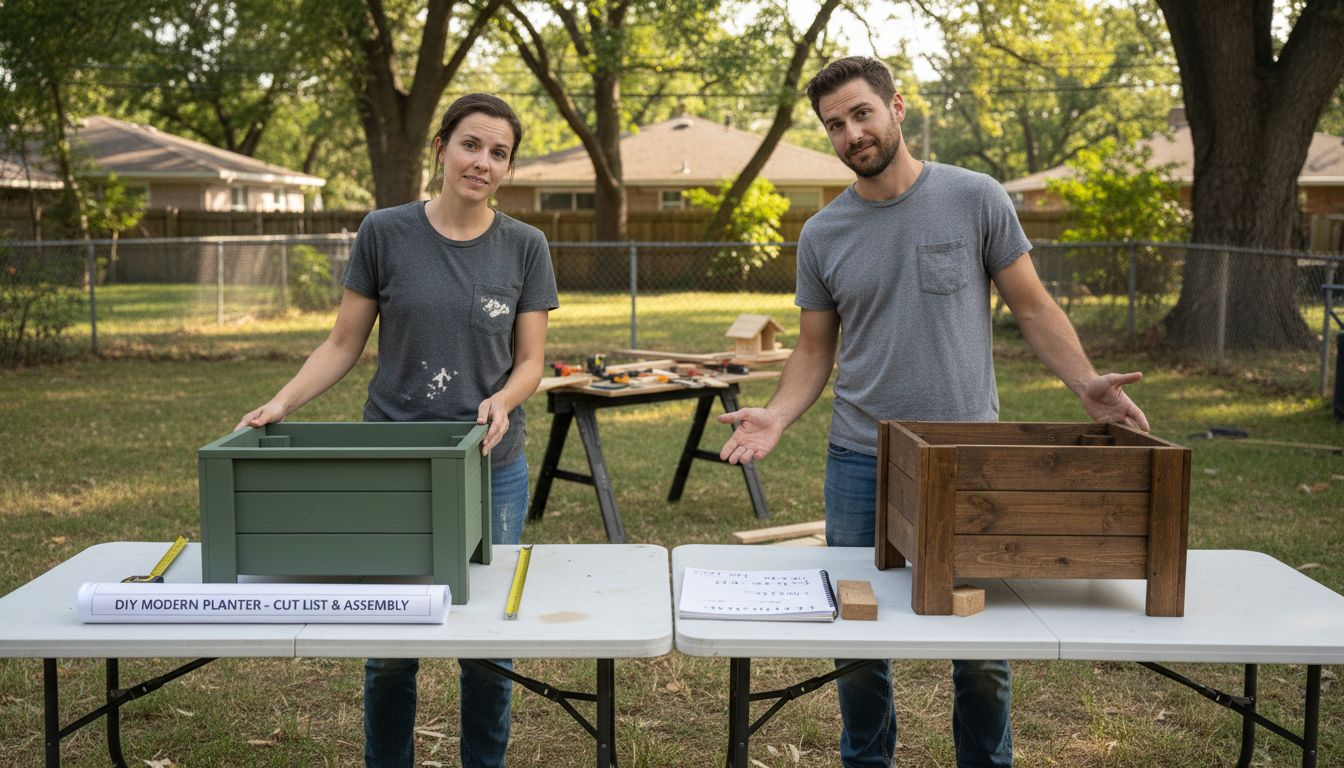
Many DIY enthusiasts avoid woodworking plans, believing they stifle creativity and force cookie-cutter results. This couldn’t be further from reality. Plans provide a foundation that actually enables creative exploration. Once you understand the structural requirements and proven techniques, you can confidently modify dimensions, swap materials, or add decorative elements.
Another persistent myth suggests only professionals need detailed plans while hobbyists can wing it. The opposite is true. Experienced woodworkers emphasize plans as indispensable for enabling skill growth and confident experimentation. Beginners benefit most from structured guidance that prevents costly mistakes and builds proper techniques from day one.
Plans aren’t rigid rules demanding absolute obedience. They’re adaptable guides that solve common problems while leaving room for personal touches. Think of them as recipes: you can follow them exactly or adjust ingredients once you understand how components interact. The framework keeps you safe while exploration keeps builds interesting.
Key flexibility points in every plan:
- Dimensions can scale up or down while maintaining proportions
- Wood species swap easily when you match hardness and grain characteristics
- Joinery methods adapt based on your tool collection and skill level
- Finish options range from natural oils to painted surfaces
- Decorative details personalize otherwise standard designs
Pro Tip: Make one project exactly as planned first, then modify your second build. This approach teaches you which elements are structural necessities versus aesthetic choices.
The fear that plans limit creativity often stems from viewing them as endpoints rather than starting points. A well-designed chair plan teaches you about ergonomics, joint strength, and material selection. Armed with this knowledge, you can design your own variations or completely original pieces. Woodworking tips for beginners emphasize this learning progression.
Plans actually accelerate creative development by removing the burden of reinventing solutions to solved problems. Why spend hours figuring out optimal shelf spacing when proven dimensions already exist? Use that saved time and mental energy for the creative elements that make your project uniquely yours.
Frameworks and tools for effective woodworking planning
Successful woodworking planning follows a three-layer framework that balances precision with adaptability. Design clarity establishes what you’re building and why. Process mapping outlines how components come together. Adaptive execution allows real-time adjustments without compromising structural integrity.
Every effective plan incorporates essential components that work together seamlessly. Material lists specify wood types, dimensions, and quantities needed. Detailed diagrams show how pieces connect from multiple angles. Tool checklists ensure you have everything required before starting. Cut lists organize your workflow for maximum material efficiency.
Planning frameworks including material lists and diagrams drastically improve build consistency and quality across projects. These structured approaches transform abstract ideas into concrete building sequences.
Follow this planning sequence for any woodworking project:
- Define project goals and measure available space precisely
- Research designs and select a plan matching your skill level
- Create or obtain detailed material and cut lists
- Gather all required tools and verify their working condition
- Organize workspace for efficient material flow and safety
- Review assembly sequence and identify potential challenges
- Prepare materials with accurate cuts before assembly begins
Digital tools have revolutionized woodworking planning. Computer-aided design (CAD) software lets you visualize projects in three dimensions, spot interference issues before cutting wood, and generate precise cut lists automatically. Popular options like SketchUp offer free versions perfect for hobbyist needs.
| Framework Element | Primary Benefit | Application Example |
|---|---|---|
| Material lists | Cost control and waste reduction | Calculating exact board feet needed |
| Visual diagrams | Assembly clarity | Understanding complex joinery angles |
| Process mapping | Workflow efficiency | Sequencing cuts for optimal material use |
| Tool checklists | Preparation completeness | Ensuring specialty bits are available |
| Dimension tables | Precision consistency | Maintaining uniform measurements across components |
Pro Tip: Build a planning template with sections for materials, tools, steps, and notes. Reuse this framework across projects to develop consistent preparation habits.
Balancing detailed planning with execution flexibility proves crucial. Over-planning creates analysis paralysis where you never start building. Under-planning leads to constant interruptions and mistakes. The sweet spot involves thorough preparation for critical elements like joinery and structural components while remaining flexible on decorative details.
Designing wood projects becomes systematic when you apply these frameworks consistently. Each project builds on lessons learned, gradually expanding your capabilities and confidence.
Real-world application: benefits of planning in DIY woodworking
The measurable differences between planned and unplanned woodworking projects tell a compelling story. Accuracy improves dramatically when working from detailed specifications. Waste drops as optimized cut lists maximize material usage. Builder satisfaction soars with successful completions replacing frustrating failures.
Material waste reduces by up to 40% through effective project planning. This translates directly to cost savings, especially on expensive hardwoods. A dining table project that might waste $80 in lumber without planning could save $32 simply by following an optimized cut list.
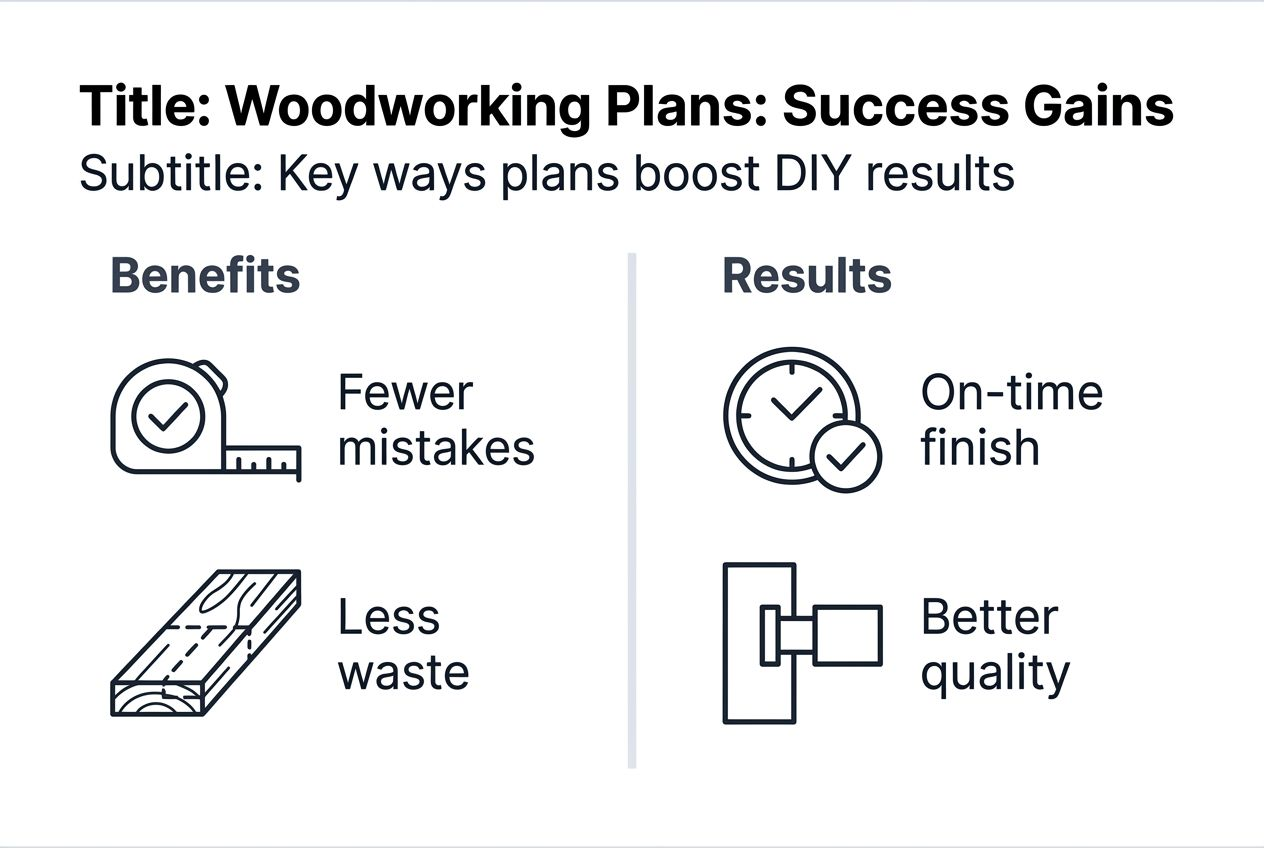
Beginner woodworkers using detailed plans show higher completion rates and satisfaction compared to those working without structured guidance. This success builds momentum, encouraging continued skill development and more ambitious projects.
| Metric | Planned Projects | Unplanned Projects | Improvement |
|---|---|---|---|
| Error rate per project | 2 to 3 mistakes | 8 to 12 mistakes | 70% reduction |
| Material waste | 10% to 15% | 25% to 40% | 60% decrease |
| Average completion time | On schedule | 40% over estimate | Significant time savings |
| Project satisfaction | 85% to 90% positive | 50% to 60% positive | 50% higher satisfaction |
| Skill retention | High technique transfer | Limited learning | Better skill building |
The skill development advantages compound over time. Each planned project teaches proven techniques that apply broadly. You internalize proper measurement habits, efficient cutting sequences, and reliable assembly methods. This knowledge base accelerates future projects and enables confident experimentation.
Confidence gains deserve special attention:
- Reduced anxiety about making irreversible mistakes
- Willingness to attempt more complex joinery and techniques
- Ability to estimate project timelines and costs accurately
- Comfort explaining your process to others seeking advice
- Motivation to tackle ambitious builds previously deemed too difficult
Understanding project planning for woodworkers creates a positive feedback loop. Success breeds confidence, which encourages skill development, leading to more ambitious projects and greater satisfaction. This cycle transforms casual hobbyists into accomplished craftspeople.
Effective woodworking project workflow optimization starts with solid planning and extends through every build phase. The initial time invested in studying plans, preparing materials, and organizing workspace pays dividends throughout construction. Projects flow smoothly, problems get caught early, and finished pieces match your vision.
Explore expert woodworking plans to elevate your projects
Ready to transform your woodworking results? Real Woodwork Plans offers an extensive collection of detailed, tested plans for every skill level and project type. Whether you’re building your first bookshelf or tackling an heirloom dining table, you’ll find clear instructions and comprehensive material lists that set you up for success.
Start by exploring why use woodworking plans to understand how structured approaches accelerate your learning curve. Complement your planning knowledge with practical woodworking tips for beginners that cover essential techniques and common pitfalls. Master your build sequence using proven woodworking project workflow strategies that professional builders rely on.
Pro Tip: Choose three plans at increasing difficulty levels. Build them in sequence to progressively develop your skills while maintaining consistent success rates.
FAQ
What are the essential components of a good woodworking plan?
Material lists, precise measurements, tool requirements, and step-by-step instructions form the foundation of effective plans. Good plans also provide visual diagrams showing assembly from multiple angles and leave space for personal notes or modifications. These elements work together to eliminate guesswork and guide you confidently through each build phase.
Can I modify woodworking plans to fit my project needs?
Yes, plans serve as adaptable guides rather than rigid rules requiring exact replication. You can adjust dimensions, swap materials, or modify decorative elements while maintaining structural integrity. The key is understanding which components are critical for stability and which offer flexibility for customization.
How do woodworking plans save money on materials?
Plans specify exact material cuts and quantities needed for each project component. This precision reduces material waste by up to 40% compared to unplanned builds. Optimized cut lists minimize offcuts, prevent expensive mistakes requiring replacement lumber, and eliminate the need to buy extra wood as insurance against errors.
Are woodworking plans only for advanced woodworkers?
Plans prove especially valuable for beginners seeking to reduce errors and build foundational skills correctly. Beginner woodworkers using detailed plans show higher completion rates and satisfaction compared to those working without guidance. Even experienced craftspeople rely on plans for complex projects, unfamiliar techniques, or when precision is essential.
DIY projects:
DIY Wooden Coffee Table
DIY Shoe Rack
Recommended
- Project Planning for Woodworkers: 40% More Success in 2026
- Real Woodwork Plans – Free Woodworking Plans
- Woodworking Trends 2026: Innovations Shaping DIY
- Why Use Woodworking Plans for DIY Success

“DIY woodworking enthusiast who started with zero experience and a YouTube tutorial.
I build simple, practical projects for my home and share free plans
so other beginners can skip the guesswork.If I can build it, you can too.”