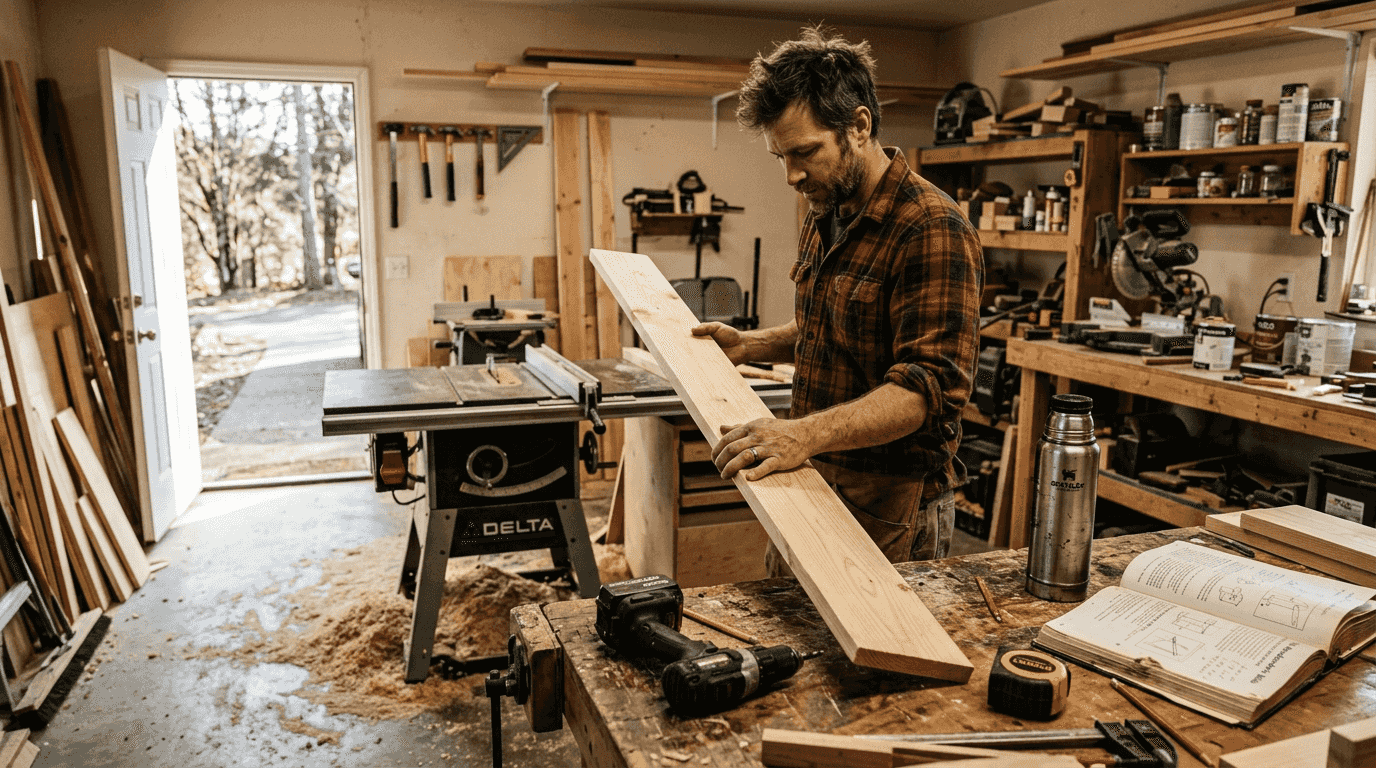
Choosing the right woodworking tools can feel overwhelming when you’re starting out. With hundreds of options available, beginners often struggle to separate essential tools from nice-to-haves. The good news is that building a functional workshop doesn’t require breaking the bank or buying every tool in sight. Essential tools improve accuracy, efficiency, and safety in woodworking, transforming ambitious ideas into finished projects. This comprehensive checklist provides a clear roadmap tailored for DIY woodworking enthusiasts in 2026, helping you invest wisely and build confidence from your very first cut.
Table of Contents
- How To Evaluate Woodworking Tools: Criteria For Your Checklist
- Must-Have Power Tools For Faster, Precise Woodworking Projects
- Essential Hand Tools: Precision And Control For Home Projects
- Troubleshooting And Maintenance: Keep Your Tools Performing At Their Best
- Discover Woodworking Plans To Put Your Tools To Work
- Frequently Asked Questions
Key takeaways
| Point | Details |
|---|---|
| Power tools boost efficiency | Drills, saws, planers, and sanders increase project speed by up to 40% while delivering repeatable accuracy. |
| Hand tools provide precision | Measuring tapes, squares, chisels, and clamps offer fine control that power tools cannot replicate. |
| Start with versatile equipment | Multipurpose tools maximize value and functionality before investing in specialized gear. |
| Maintenance prevents problems | Regular cleaning and blade sharpening eliminate 70% of common tool issues and extend lifespan. |
| Quality matters for core tools | Investing in durable essentials prevents costly mistakes and improves project outcomes. |
How to evaluate woodworking tools: criteria for your checklist
Before filling your workshop, understand what makes a tool worth buying. Smart tool selection starts with clear criteria that match your skill level and project goals.
Assess versatility first. A cordless drill that handles drilling, driving screws, and mixing finishes delivers more value than a single-purpose tool. Beginner woodworking focuses on versatile tools that offer the most bang for your buck. Multipurpose equipment reduces clutter and simplifies your learning curve.
Quality trumps quantity every time. Cheap tools fail faster, deliver inconsistent results, and create safety hazards. Invest in solid core tools like a reliable tape measure, quality drill bits, and sharp chisels. You can upgrade specialty items later as your skills develop.
Consider ease of use and maintenance needs. Complex tools with finicky adjustments frustrate beginners and slow progress. Look for intuitive controls, clear markings, and straightforward cleaning procedures. Check compatibility with accessories you already own to avoid buying duplicate battery systems or incompatible blades.
Start with multipurpose tools before specialized equipment. A circular saw handles most cutting tasks before you need a miter saw or table saw. This approach lets you build essential woodworking skills without overwhelming your budget or workspace.
Proper tool classification helps you organize your toolkit:
- Measuring and layout tools ensure accuracy
- Cutting tools shape wood to size
- Shaping tools refine edges and surfaces
- Fastening tools join pieces securely
- Finishing tools smooth and polish surfaces
Pro Tip: Create a priority list ranking tools by how often you’ll use them. Buy your top five first, then add tools as specific projects demand them. This prevents impulse purchases and keeps your workshop focused on what you actually need.
Understanding these criteria transforms shopping from guesswork into strategic planning. You’ll build a workshop that grows with your abilities while avoiding expensive mistakes that collect dust. For more guidance on getting started, explore woodworking tips for beginners to complement your tool selection.
Must-have power tools for faster, precise woodworking projects
Power tools revolutionize DIY woodworking by delivering speed and consistency that hand tools simply cannot match. These essential machines form the backbone of an efficient workshop.
Cordless drills offer mobility while corded models provide consistent power for extended sessions. Variable speed controls let you adjust torque for different materials, preventing stripped screws or cracked wood. Interchangeable bits transform a single drill into a versatile workhorse for boring holes, driving fasteners, or mixing finishes. Choose cordless for portability around large projects and corded for heavy-duty workshop tasks.
Table saws deliver straight, repeatable cuts that define professional-looking furniture. The flat surface and adjustable fence system ensure identical pieces every time, critical for drawers, cabinets, and frames. Planers smooth rough lumber to exact thickness, saving money on pre-surfaced boards while giving you control over final dimensions.
Routers shape decorative edges, cut grooves for joinery, and hollow out areas for inlays. A quality router with multiple bits opens creative possibilities for custom profiles and professional details. Sanders remove tool marks and prepare surfaces for finishing, with orbital models handling flat areas and detail sanders reaching tight corners.
Power tools increase completion speed up to 40% compared to hand methods. This efficiency matters when tackling larger projects or working within tight deadlines. Repeatable accuracy from power tools improves quality and creates tighter joints that strengthen finished pieces.
Comparing corded versus cordless options:
| Feature | Corded | Cordless |
| — | — |
| Power consistency | Unlimited runtime | Battery-dependent |
| Mobility | Limited by cord length | Complete portability |
| Weight | Generally lighter | Heavier with battery |
| Cost | Lower initial investment | Higher upfront cost |
Pro Tip: Choose cordless drills for projects requiring movement around workpieces or job sites. Select corded models when working at a fixed bench with demanding materials like hardwoods or metal. Many woodworkers keep both types to maximize flexibility.
“The right power tool doesn’t just save time, it opens possibilities you couldn’t achieve by hand. Precision joinery and smooth finishes become accessible to beginners willing to learn proper techniques.”
Investing in quality power tools pays dividends through every project. They reduce physical strain, minimize errors, and let you focus on creativity rather than tedious manual labor. Understanding your woodworking project workflow helps you select tools that match your actual building process.
Essential hand tools: precision and control for home projects
While power tools deliver speed, hand tools provide the fine control and quiet operation that define quality craftsmanship. These traditional implements remain indispensable for detail work and accurate layouts.
Measuring and layout tools form the foundation of every successful project. A 25-foot tape measure handles most furniture dimensions, while a combination square ensures perfect 90-degree angles and marks consistent depths. Accurate layout relies on quality measuring tapes and combination squares. Marking gauges scribe parallel lines for joints, and a sharp pencil or marking knife creates visible reference points.
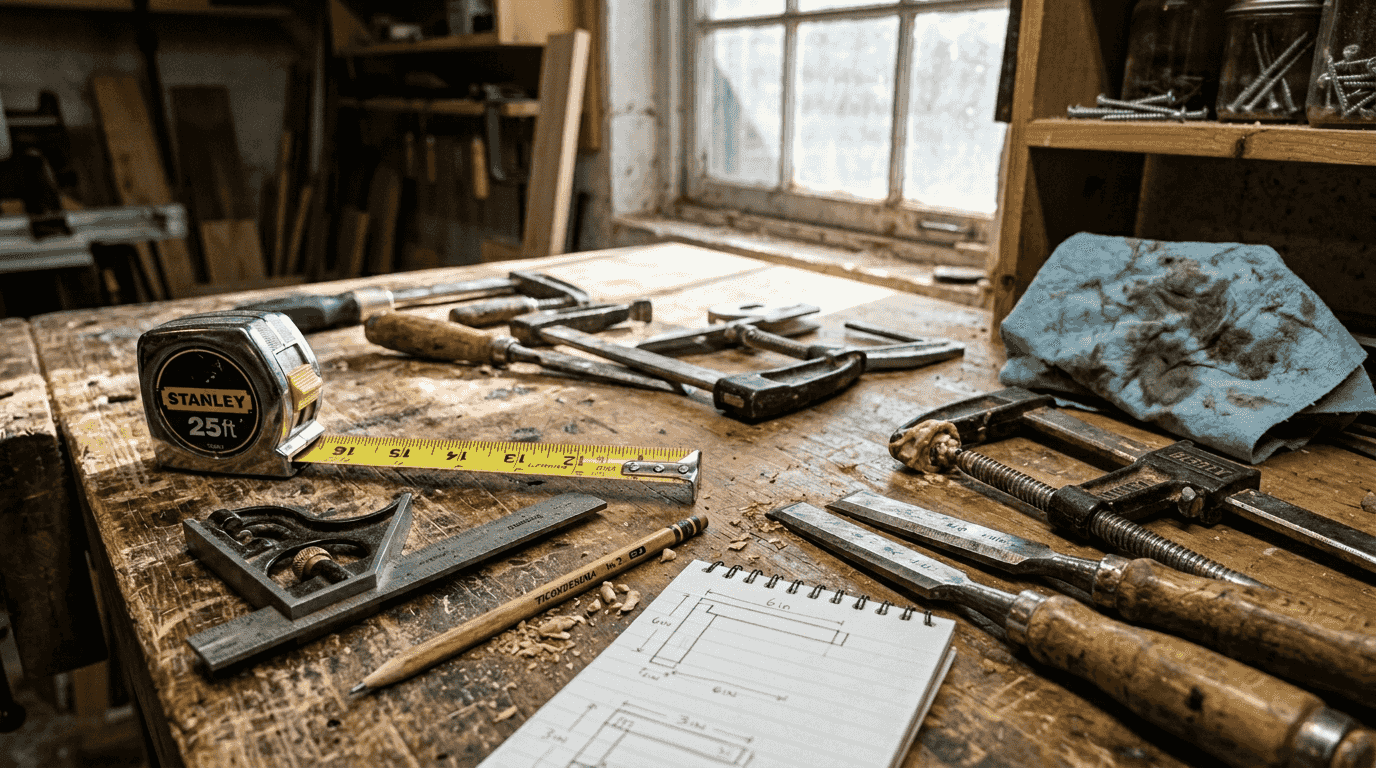
Clamps rank among the most critical tools in any workshop. They hold pieces securely during gluing, allow safe cutting by stabilizing workpieces, and act as extra hands when assembling complex projects. Bar clamps handle large panels, C-clamps grip smaller pieces, and spring clamps provide quick holds for lightweight tasks. You can never own too many clamps.
Chisels carve mortises, clean up saw cuts, and shape intricate details. A basic set with 1/4-inch, 1/2-inch, 3/4-inch, and 1-inch widths covers most needs. Keep them razor sharp for clean cuts that require minimal sanding. A quality mallet drives chisels without damaging handles, while a block plane smooths end grain and adjusts tight-fitting joints.
Hammers drive nails and persuade stubborn parts into alignment. A 16-ounce claw hammer suits general carpentry, while a smaller finish hammer prevents dents in delicate trim work. Hand saws cut where power tools cannot reach, with a Japanese pull saw offering exceptional control for precise joinery.
Over 85% of furniture makers use hand tools for at least 30% of their projects due to precision and control. This statistic highlights how even experienced woodworkers value the tactile feedback and quiet operation that hand tools provide.
Seven core hand tool functions organize workshop essentials:
- Measuring ensures accurate dimensions and layouts
- Marking transfers measurements to wood surfaces
- Cutting shapes pieces to size
- Shaping refines edges and surfaces
- Holding secures work during operations
- Striking drives fasteners and adjusts joints
- Smoothing prepares surfaces for finishing
Maintenance extends hand tool lifespan significantly. Clean metal surfaces after each use to prevent rust. Apply a thin coat of paste wax or light oil to protect tools in humid environments. Store chisels and saws with blade guards to preserve sharp edges. Regular sharpening keeps cutting tools performing like new.
Hand tools excel where power tools prove too aggressive or noisy. They let you work late at night without disturbing neighbors, require no electricity in remote locations, and provide immediate feedback through your hands. This direct connection to the work builds skills and confidence that translate across all woodworking tasks. Learn more about hand tool woodworking essentials to deepen your traditional skills.
Troubleshooting and maintenance: keep your tools performing at their best
Even the best tools fail without proper care. Understanding common problems and preventive maintenance saves money while ensuring consistent results.
Common planer issues plague woodworkers who skip routine upkeep. Dull blades tear fibers instead of slicing cleanly, leaving fuzzy surfaces that require extensive sanding. Uneven cutting produces boards with tapered thickness, ruining projects that demand precision. Snipe creates deeper cuts at board ends, wasting material and forcing creative workarounds. Burn marks appear when blades spin too fast for feed rate, while tearout shreds figured grain that should showcase natural beauty.
Dull blades cause 70% of planer issues, and 60% link to preventable maintenance or incorrect operation. These statistics reveal how simple care prevents most problems. Regular blade sharpening and correct usage eliminate the majority of frustrations.
Maintenance steps for reliable performance:
- Clean sawdust and resin buildup after every session using compressed air and solvent
- Lubricate moving parts monthly with appropriate oils to prevent binding
- Inspect blades weekly for nicks, checking sharpness with a thumbnail test
- Adjust tables and fences quarterly to maintain square alignments
- Replace worn drive belts annually before they slip or break
- Store tools in dry locations with silica packets to control moisture
Power tool maintenance requires attention to electrical components. Check cords for fraying, test switches for positive engagement, and verify that safety guards move freely. Carbon brushes in motors wear over time, so replace them when sparking increases or power drops noticeably.
Hand tool upkeep focuses on edge retention and rust prevention:
- Sharpen chisels and plane irons when they no longer slice paper cleanly
- Oil saw blades after use to prevent corrosion
- Tighten loose handles before they separate completely
- Flatten plane soles on sandpaper adhered to glass for true surfaces
- Clean tape measure cases to ensure smooth extension and retraction
Proper operation prevents damage before it starts. Feed wood through planers at consistent speeds, avoiding sudden stops that gouge surfaces. Support long boards on both sides of table saws to prevent binding and kickback. Use appropriate blade speeds for different materials, slowing down for dense hardwoods and speeding up for softwoods.
“An ounce of prevention truly equals a pound of cure in woodworking. Fifteen minutes of weekly maintenance prevents hours of troubleshooting and eliminates the expense of premature tool replacement.”
Pro Tip: Schedule routine maintenance after every few projects rather than waiting for problems to appear. Mark your calendar for monthly deep cleans and quarterly adjustments. This proactive approach keeps tools performing reliably when you need them most.
Documenting maintenance creates accountability and reveals patterns. Note blade sharpening dates, part replacements, and any unusual behavior in a simple logbook. This history helps diagnose recurring issues and proves invaluable when seeking warranty service or selling used equipment.
Consistent care transforms tools from disposable commodities into lifelong companions. Well-maintained equipment delivers professional results that elevate every project, building your reputation and satisfaction. Apply these lessons across your beginner woodworking projects to develop habits that serve you for decades.
Discover woodworking plans to put your tools to work
You’ve built a solid toolkit, now transform those tools into beautiful finished projects. Detailed woodworking plans bridge the gap between owning equipment and creating furniture you’ll treasure for years.
Step-by-step instructions eliminate guesswork and build confidence. Clear diagrams show exactly where each cut goes, while material lists prevent expensive shopping mistakes. Free woodworking plans offer beginner-friendly projects that teach fundamental techniques without overwhelming new woodworkers.

Explore projects matched to your skill level and available tools. Simple boxes and shelves introduce basic joinery, while coffee tables and bookcases challenge growing abilities. Each completed project reinforces skills and reveals areas for improvement, creating a natural learning progression.
Comprehensive woodworking tips for beginners complement project plans with technique guidance. Learn proper tool handling, safety practices, and finishing methods that transform raw lumber into polished pieces. Fresh woodworking project ideas 2026 spark creativity and keep your workshop buzzing with exciting builds.
Frequently asked questions
What basic tools should every beginner woodworker have?
A tape measure, cordless drill, combination square, several clamps, and a small handsaw form a basic starter toolkit. These five tools handle measuring, drilling, marking square lines, holding pieces during work, and making simple cuts. Add a block plane and chisel set as your first upgrades to expand capabilities.
How do I maintain my woodworking tools to prevent problems?
Regular cleaning after each use removes sawdust and resin that cause binding and corrosion. Sharpen blades when they no longer cut cleanly, and apply light oil to metal surfaces in humid environments. Proper storage in dry locations with organized racks prevents accidental damage and keeps tools ready for immediate use.
What are the benefits of using power tools over hand tools?
Power tools speed up projects by up to 40% compared to manual methods while providing consistent accuracy across repeated cuts. They reduce physical fatigue on large projects and deliver professional results that would require years of hand tool practice. Power tools excel at repetitive tasks like sanding entire tabletops or cutting dozens of identical parts.
Can I start woodworking with just hand tools?
Yes, many woodworkers use hand tools exclusively for precision work and quiet operation that doesn’t disturb neighbors. Hand tools require less initial investment and teach fundamental skills through direct tactile feedback. However, power tools significantly boost efficiency for larger projects, so most woodworkers eventually adopt a hybrid approach that leverages the strengths of both categories.