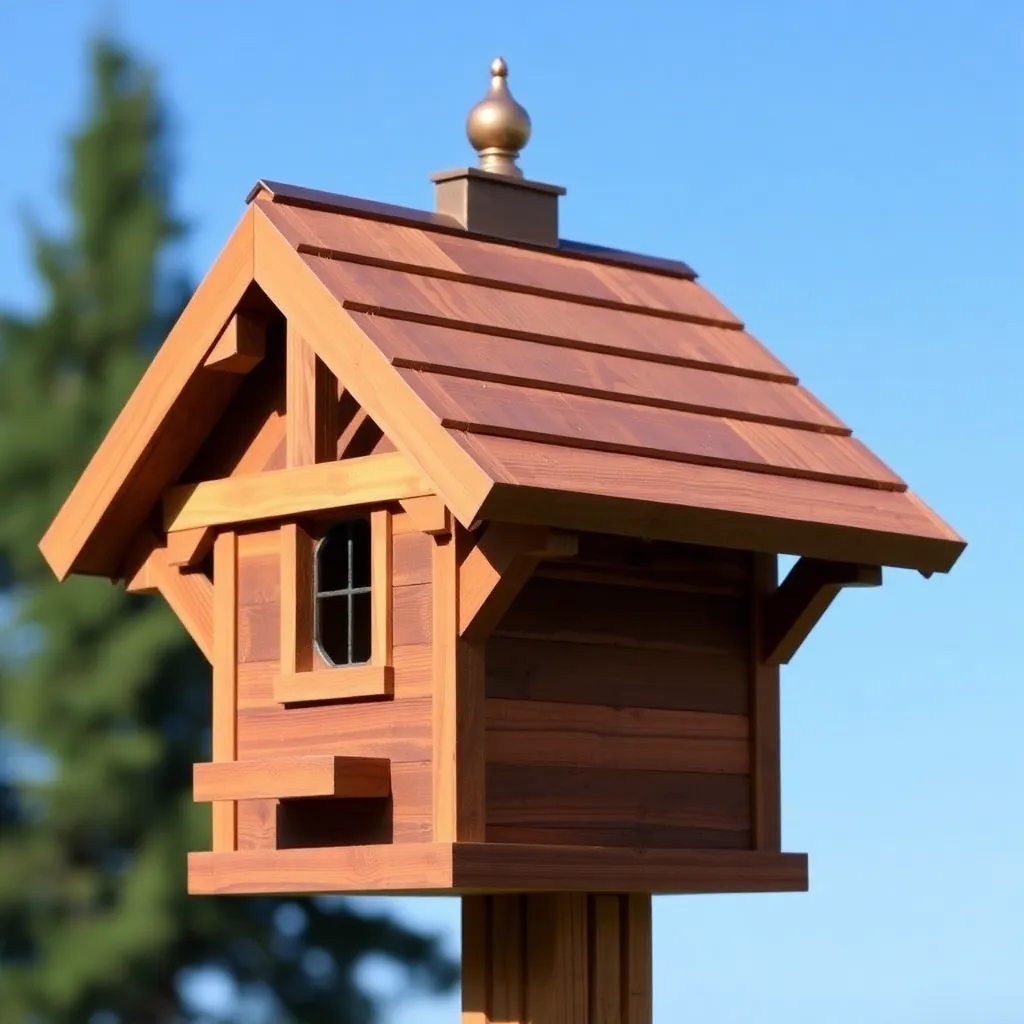
A well-designed birdhouse does two things: it meets the functional specifications for its target species, and it looks intentional in the garden. Most commercial birdhouses fail at both — the dimensions are wrong, the wood is cheap, and the design looks like a toy. These six birdhouse designs start from verified functional specifications for real bird species, then build outward into distinct visual styles — Craftsman, modern, reclaimed, duplex, turned, and minimalist Japanese. Each design includes the species it’s built for, a cut list, and finishing notes.
Ted’s Woodworking has birdhouse design plans in dozens of styles with complete cut lists, finishing guides, and species compatibility charts. Browse Ted’s birdhouse plans →
Step 1: The Classic Craftsman Birdhouse (Bluebird)
The Craftsman birdhouse adapts the Arts-and-Crafts design vocabulary — lap siding, wide eave overhangs, a copper roof cap — to the standard NABS bluebird box. It looks like a miniature Craftsman bungalow and works exactly as well as the plain cedar box.
Target species: Eastern Bluebird (1½-inch entrance hole, 5×5-inch floor, 10-inch depth)
Design elements:
- Lap siding: ½-inch cedar cut into ¾-inch-wide strips and applied horizontally with ⅛-inch reveals on the front and side exterior panels — gives the textured, layered look of Craftsman siding
- Wide roof overhang: the roof extends 2 inches beyond the front and sides (standard boxes have ¾-inch overhang)
- Copper roof cap: cut a piece of 16-oz copper flashing to the roof size, fold it over the peak, and secure with copper nails. The copper weathers to a green patina within a year and looks handsome in any garden
- Exposed rafter tails: add ½-inch thick × 1-inch wide cedar strips under the roof overhang as decorative rafter tails (6 evenly spaced on the front, 4 on each side)
- Finish: oil-rubbed cedar exterior; leave all interior surfaces unfinished
Step 2: The Modern Geometric House (Tree Swallow or Wren)
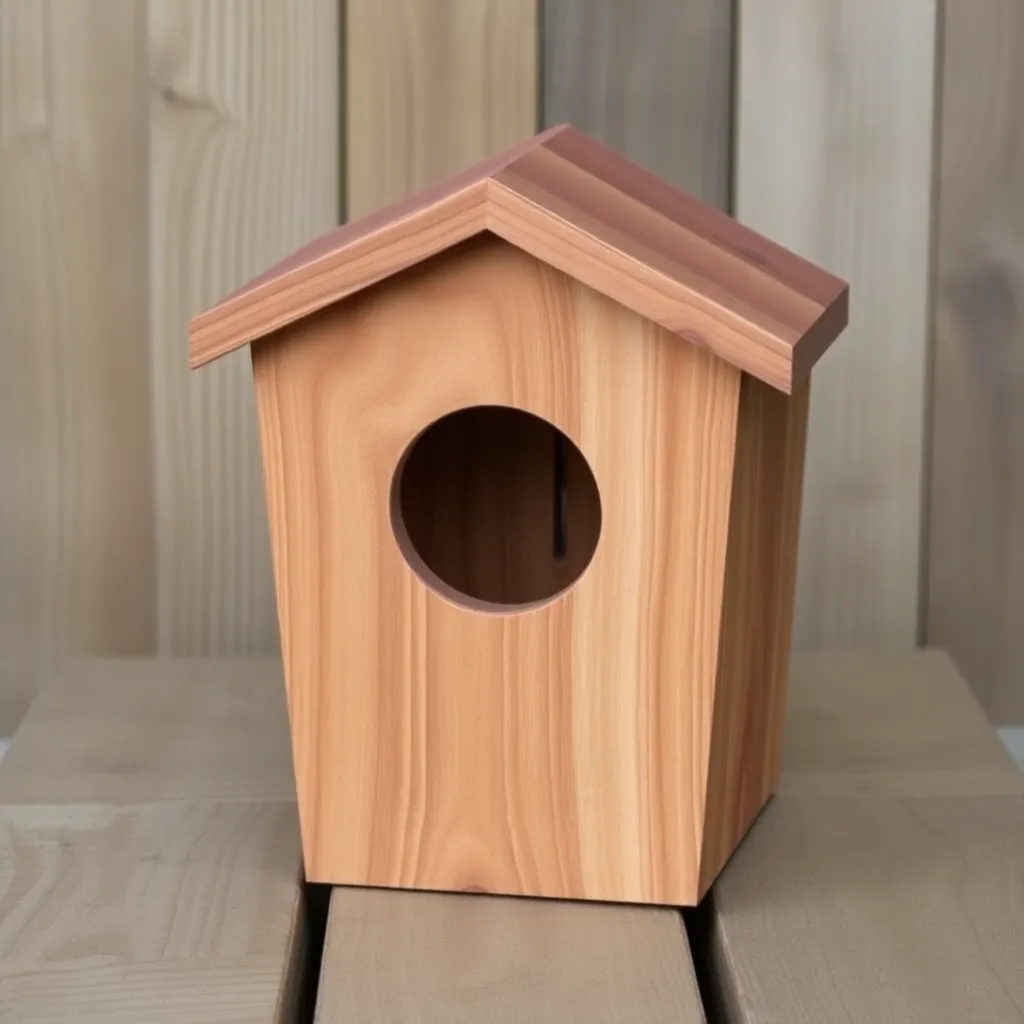
A minimal, angular design built from cedar slats — a hexagonal or pentagonal cross-section instead of the standard rectangular box, made from five or six identical cedar strips mitered at the same angle.
Target species: Tree Swallow (1½-inch hole) or House Wren (1-inch hole)
Design elements:
- Cross-section: a regular hexagon built from six ¾-inch cedar strips, each mitered at 30 degrees on both edges — clamp and glue all six pieces simultaneously with a band clamp; the tension holds everything in alignment while the glue sets
- Overall height: 10 inches for the body; the top is capped with a simple hexagonal roof panel
- Entrance hole: drill through one face panel at the correct species diameter
- Finish: leave bare cedar (weathers silver-gray) or apply a single coat of tung oil for a warm golden tone that holds its color for 2–3 years before requiring reapplication
- Mounting: the hexagonal body accepts a ½-inch threaded rod through the bottom, which screws into a standard flanged mounting bracket — clean and hardware-store simple
Step 3: The Reclaimed Barn-Wood House (Chickadee or Wren)
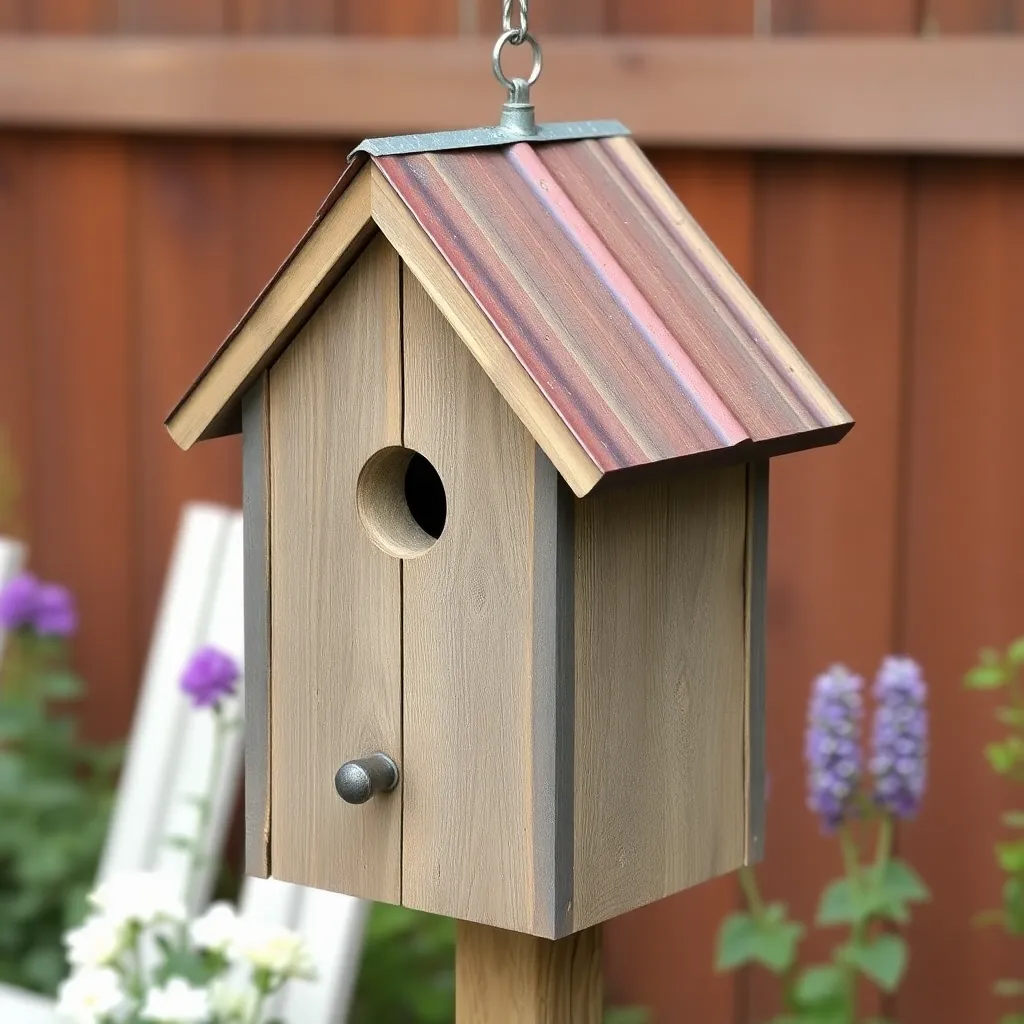
Reclaimed fence boards, pallet wood, or weathered barn siding have the ideal surface texture for birdhouses — rough, naturally weathered, chemically free (old barn wood predates pressure treatment). The visual character comes from the material itself; the joinery is the same simple box construction as any other birdhouse.
Target species: Chickadee (1⅛-inch hole) or House Wren (1-inch hole)
Design elements:
- Material sourcing: old fence boards (cedar or pine), disassembled pallets (confirm no chemical treatment markings — IPPC code HT = heat treated, safe; MB = methyl bromide, toxic), or weathered barn siding from a salvage yard
- Joinery: hand-cut dovetail corners (a visible technical detail that elevates the craft) — the dovetail pins on the side panels are visible at the front corners; glue only (no nails or screws on the visible faces)
- Roof: a piece of reclaimed corrugated metal (from a salvage yard) cut to size with tin snips; the texture and rust patina of old metal roofing is visually correct with reclaimed wood
- Finish: none — the reclaimed surface is the finish; the material has already weathered to its final state
Step 4: The Stacked Duplex Martin House (Purple Martin)
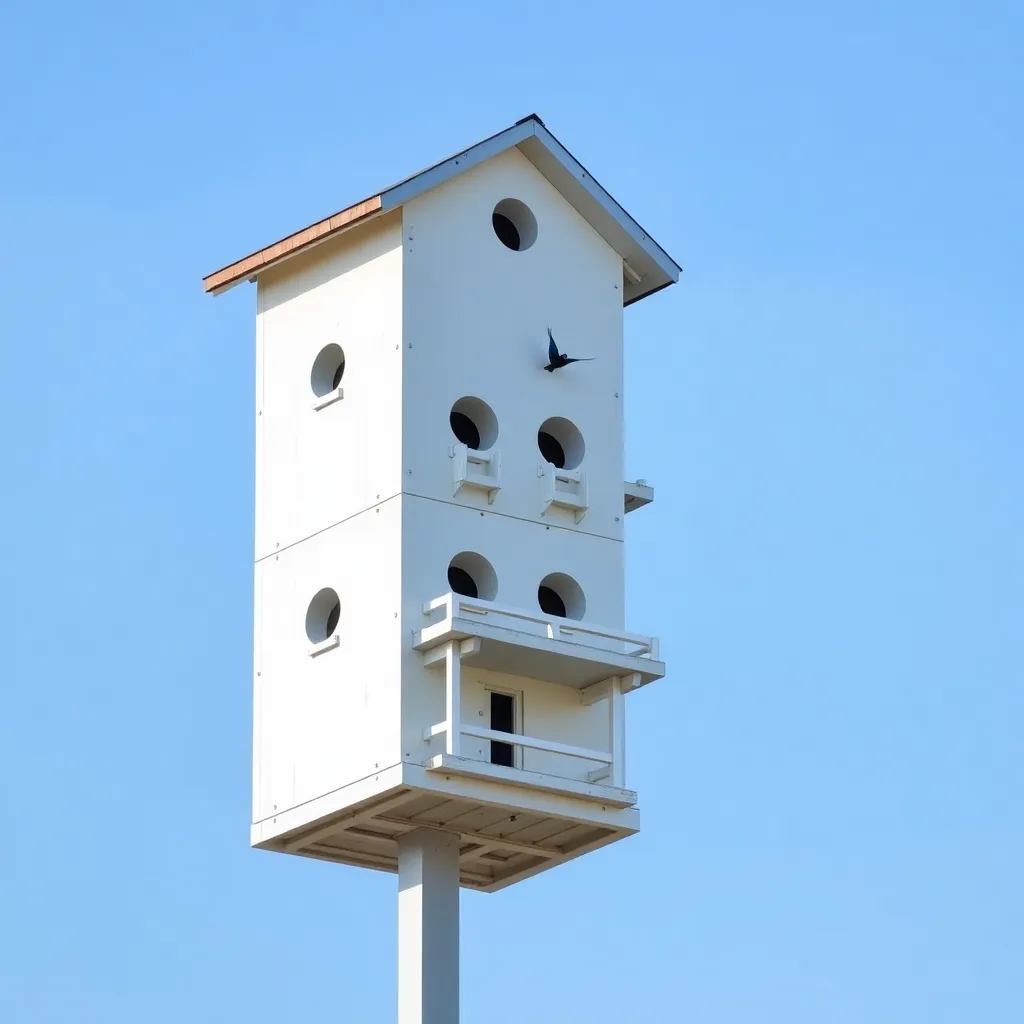
A two-story, 8-unit purple martin house built as two identical 4-unit boxes stacked on a central post. More traditional than the large-scale apartment martin houses (which require winches and aluminum components) but still provides enough capacity to establish a colony.
Target species: Purple Martin (2½-inch entrance hole, 6×6-inch floor)
Design elements:
- Each floor: a 24×24-inch box divided into four 6×6×6-inch compartments by ½-inch plywood dividers; two compartments face forward, two face backward
- Stacking: the lower box sits on a central post; the upper box is attached to the top of the lower box via four corner posts (1½-inch aluminum square tubing, 12 inches long)
- Porches: each entrance hole has a 2-inch wide porch with a ¼-inch wire mesh floor (for traction and drainage)
- Access: the roof of the top box is hinged for monitoring; the floor of each compartment is hinged for cleaning; the structure can be disassembled from the central post for winter storage
- Finish: white exterior paint — Purple Martins strongly prefer white housing (reflects heat; makes the colony visible to scouts)
Step 5: The Turned Gourd-Style House (Wren or Chickadee)
Traditional gourd birdhouses hung from porches and trees are one of the oldest North American birdhouse traditions — wrens and Purple Martins have nested in gourd colonies for centuries. A lathe-turned version in spalted maple or wild cherry replicates the shape in permanent hardwood.
Target species: House Wren (1-inch hole) or Chickadee (1⅛-inch hole)
Design elements:
- Turning: a 4-inch diameter × 8-inch tall cylinder, turned with a ⅜-inch wide tenon at the top (to accept a turned wooden cap) and a slight gourd-like bulge in the middle
- Hollowing: hollow the body on the lathe using bowl gouges, leaving ¾-inch wall thickness; drill the entrance hole through the front face before parting off the bottom
- Base plug: a ¾-inch thick turned disk press-fits into the bottom; it can be tapped out for cleaning
- Cap/roof: a turned convex disk, 5 inches diameter, that fits over the top tenon
- Hanging: a 3/16-inch brass eye screw in the top of the cap; hang from copper wire or a heavy rope
Step 6: The Minimalist Japanese-Influenced Design (Chickadee or Nuthatch)
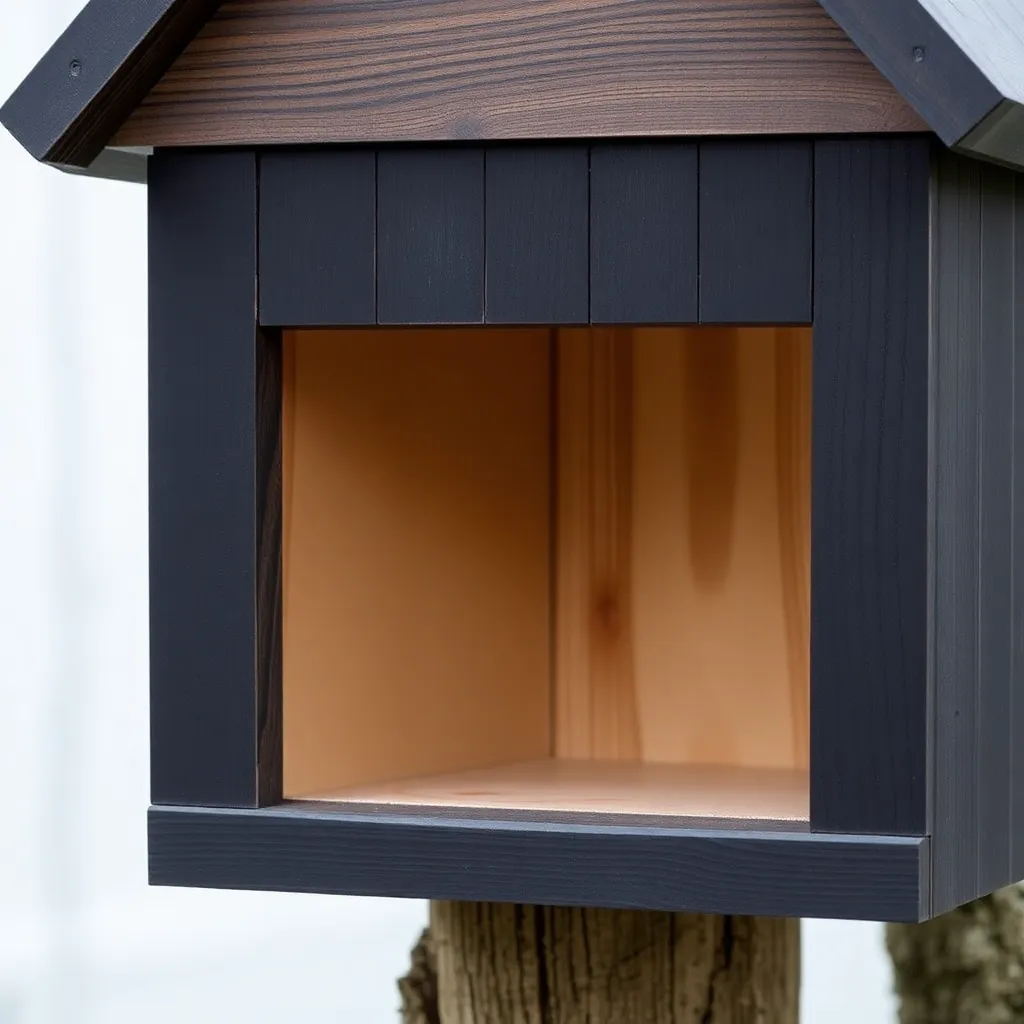
Inspired by Japanese craft principles — clean lines, visible joinery, the natural beauty of the material. A simple box but built with through-mortise-and-tenon corners (visible on the exterior as neat rectangular tabs) and a shou sugi ban (charred cedar) exterior finish.
Target species: Chickadee or White-breasted Nuthatch (1⅛-inch entrance hole)
Design elements:
- Through-tenon joinery: the front and back panels extend 1 inch beyond the side panels; the ½-inch square tenons on the side panels pass through slots cut in the front and back and are wedged from the outside — the visible wedged tenon is a traditional Japanese woodworking detail (kusabi)
- Roof: a simple flat or slightly sloped lid in ¾-inch cedar with a slight overhang; attached with two brass pivot pins for access
- Shou sugi ban finish: char the exterior surface with a propane torch until the surface carbonizes; wire-brush lightly to remove loose char; the remaining charred surface is weather-resistant, insect-resistant, and visually striking (charcoal black with a subtle silver wire-brush texture). Apply a single coat of tung oil after charring to stabilize the surface
- Interior: unfinished cedar — no finish, no char; rough texture only
Bird Houses Designs FAQ
Does a decorative birdhouse design affect bird occupancy?
Only if the functional specifications are wrong. Birds evaluate: entrance hole size, interior dimensions, mounting height, habitat, and absence of predator attractors (perches, dark interior surfaces). Shou sugi ban versus plain cedar makes no difference to a chickadee — the dimensions and location determine occupancy. Functional specifications must be met regardless of the design style.
What is the best finish for an outdoor birdhouse?
Unfinished cedar or redwood is the best all-around choice — naturally rot-resistant, no chemical off-gassing, weathers gracefully. For painted designs, use exterior latex in light colors (white, gray, tan) on the exterior only. Avoid oil-based paints, stains, or sealers on the interior — the solvents and VOCs persist for months and deter nesting birds or harm eggs. Tung oil on the exterior is acceptable; linseed oil is also acceptable but takes longer to cure.
Can I use plywood for a decorative birdhouse?
Exterior-grade plywood (ACX or better, rated for outdoor use) is acceptable for all structural parts. Standard interior plywood uses urea formaldehyde glue that off-gasses in heat — avoid it for any birdhouse interior. The main aesthetic limitation of plywood is the visible end grain — cover it with solid wood edge banding or plan the design so the end grain faces are painted.
How do I make the entrance hole the exact right size?
Use a hole saw (not a spade bit). Hole saws cut exactly their rated size; spade bits often run 1/16 to 1/8 inch oversize. For 1½-inch bluebird holes: use a 1½-inch hole saw. Check with calipers after cutting and lightly sand if oversize. For a 1-inch wren hole: a standard 1-inch spade bit is often 1–1/16 inches — check and adjust.
Are decorative birdhouses safe to give as gifts if they’ll be used for birds?
If they meet functional specifications for a real species, yes. If they’re built as decorative objects (wrong dimensions, painted interiors, perches, non-weather-rated materials), label them clearly as decorative only — a bird that nests in an undersized box with painted interior walls and a perch is at higher risk of nest failure. The most thoughtful gift is a correctly built bluebird or wren box with a copy of the species-specific mounting guide.

“DIY woodworking enthusiast who started with zero experience and a YouTube tutorial.
I build simple, practical projects for my home and share free plans
so other beginners can skip the guesswork.If I can build it, you can too.”