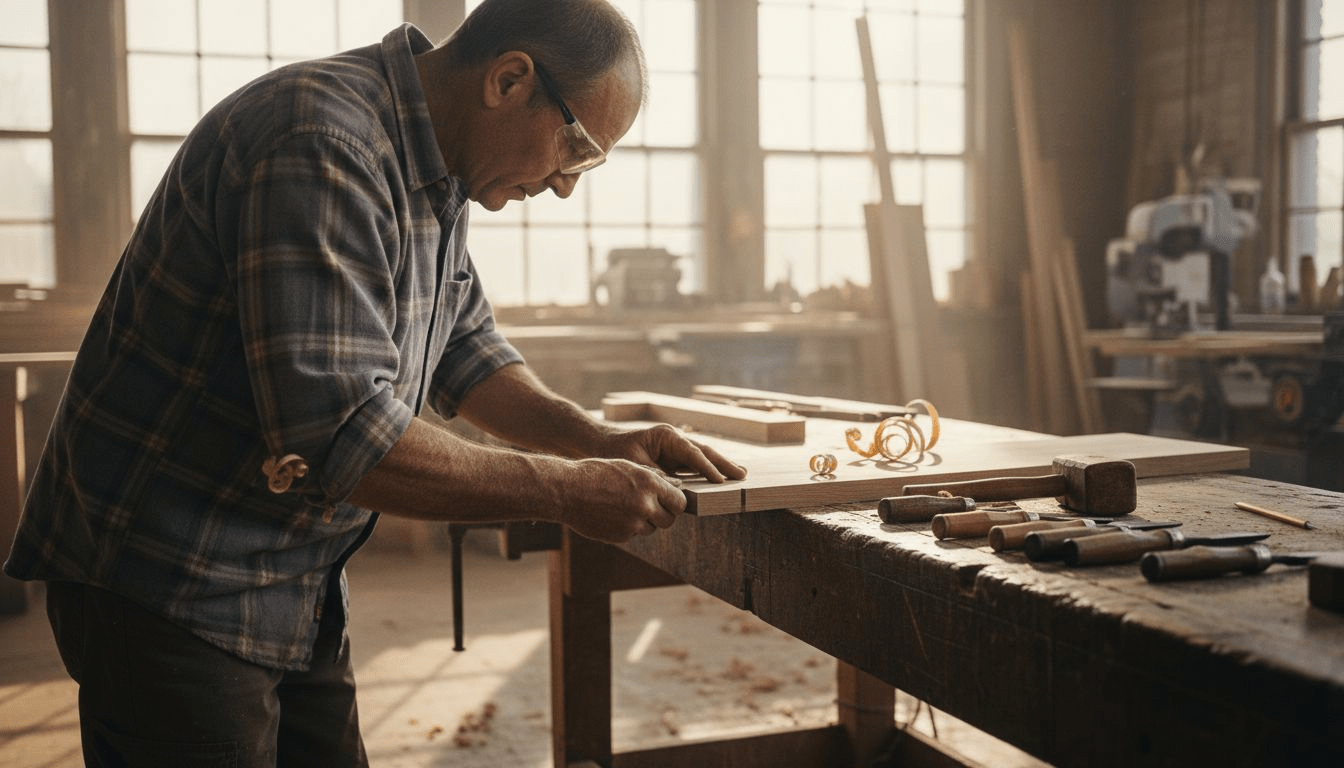
Choosing the right joinery method can boost furniture strength by over 30% compared to using glue alone. Proper joinery techniques provide both the mechanical durability and visual appeal that define high-quality handcrafted furniture. This guide walks you through essential joinery methods, helping you select and apply techniques that ensure your furniture pieces last for decades while showcasing skilled craftsmanship.
Table of Contents
- Understanding Joinery: What It Is And Why It Matters
- Overview Of Common Joinery Techniques And Their Functions
- How Joinery Influences Furniture Durability And Aesthetics
- Common Misconceptions About Joinery Strength And Adhesive Use
- Comparison Of Joinery Types For Different Furniture Styles And Uses
- Practical Guidelines For Selecting And Applying Joinery Techniques
- Explore Woodworking Plans And Build With Confidence
Key takeaways
| Point | Details |
|---|---|
| Joinery strength | Proper mechanical joints increase furniture durability by 30% or more compared to adhesive-only connections. |
| Joint selection matters | Different joints serve specific mechanical and aesthetic purposes in furniture construction. |
| Glue limitations | Using glue alone reduces joint strength significantly, weakening furniture under load. |
| Mortise-and-tenon durability | These joints offer superior load-bearing capacity, ideal for chairs and tables. |
| Match joint to function | Choose joinery based on furniture style, expected loads, and desired appearance. |
Understanding joinery: what it is and why it matters
Joinery refers to the methods used to connect wood pieces, forming solid furniture components that withstand daily use. These connections provide mechanical strength, distribute loads evenly, and add stiffness to prevent wobbling or breaking. Beyond structural performance, joinery enhances visual appeal by showcasing craftsmanship through exposed dovetails, mortise-and-tenon details, or finger joints.
Over 70% of expert woodworkers rely on traditional mechanical joinery for structural integrity rather than fasteners or adhesive alone. This preference reflects joinery’s proven ability to handle stress, resist movement, and maintain tight fits over years of use. Glue and screws provide supplementary holding power but cannot replace the interlocking geometry of well-designed joints.
Mechanical joinery techniques create physical connections that lock wood pieces together:
- Mortise-and-tenon joints fit a projecting tenon into a matching mortise cavity
- Dovetail joints use angled interlocking pins and tails to resist pulling forces
- Lap joints overlap wood pieces, providing surface area for glue and mechanical resistance
- Finger joints interlock multiple small projections, distributing stress across the connection
Understanding these fundamentals helps you build furniture that balances strength, beauty, and longevity. Selecting appropriate joinery techniques furniture strength benefits ensures your projects perform well and look professional.
Overview of common joinery techniques and their functions
Mortise-and-tenon joints deliver high load-bearing capacity, making them ideal for chairs, tables, and bed frames. The tenon fits snugly into the mortise, creating resistance against bending, twisting, and pulling forces. This joint type handles cyclic stress from repeated use better than simpler connections.
Dovetail joints offer superior resistance to tension, making them perfect for drawer construction where pulling forces occur regularly. The angled pins and tails lock together, preventing separation even without glue. Visible dovetails also signal quality craftsmanship, adding aesthetic value to cabinets and boxes.
Pocket-hole joinery trades some strength for assembly speed, appealing to DIY builders working on quick projects. Angled screws driven through jigs connect boards at their edges or ends. While faster than cutting mortises or dovetails, pocket holes provide only moderate strength compared to traditional joints.
Each technique balances competing factors:
- Strength: How much load the joint handles before failing
- Aesthetics: Whether the joint adds visual interest or remains hidden
- Skill requirement: Complexity of cutting and fitting the joint accurately
- Assembly time: How quickly you can create and join the connection
Matching joint types to furniture functions improves both performance and appearance. For additional guidance on building skills progressively, explore woodworking tips for beginners step guide to develop confidence with various techniques.
How joinery influences furniture durability and aesthetics
Glue used alone reduces joint strength by approximately 40%, creating weak points that fail under stress or humidity changes. Adhesive bonds depend entirely on surface contact and penetration into wood fibers. Without mechanical interlocking, glued joints separate when wood expands, contracts, or experiences impact.
Mortise-and-tenon joints last 30% longer under cyclic stress compared to dowel joints, demonstrating the value of proper joinery design. The increased surface area and interlocking geometry distribute forces more evenly, preventing stress concentrations that cause cracks or splits. Well-fitted mechanical joints maintain their integrity even as wood moves seasonally.
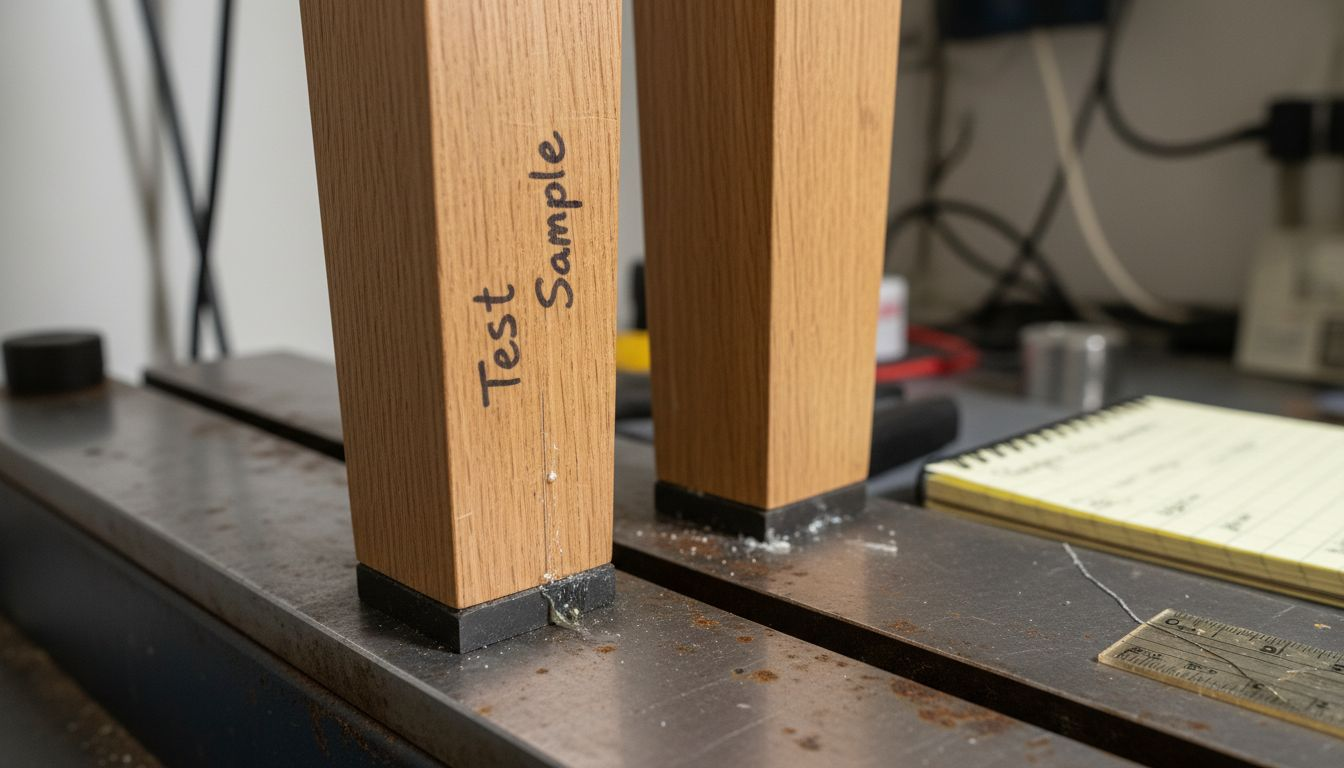
Dovetail joints combine structural stability with craft beauty, creating visible connections that users appreciate. The angled pins resist pulling forces while the exposed joint pattern showcases precise cutting and fitting. This dual benefit makes dovetails popular for drawers, jewelry boxes, and high-end cabinetry.
Key durability factors include:
- Proper wood preparation: Smooth, square surfaces ensure tight fits and strong bonds
- Grain orientation: Aligning grain direction prevents splitting and maximizes strength
- Joint geometry: Correct angles and proportions distribute stress effectively
- Adhesive application: Using glue as a supplement, not the primary holding mechanism
Combining appropriate joints with quality wood selection amplifies furniture performance. Learn more about material choices at types of wood for furniture durability stats to optimize both joinery and wood species for your projects.
Pro Tip: Always cut joints slightly tight and trim for perfect fit rather than cutting loose and relying on glue to fill gaps. Tight mechanical connections provide far better strength and longevity.
Common misconceptions about joinery strength and adhesive use
Many beginners assume modern adhesives eliminate the need for traditional joinery, but glue remains insufficient without mechanical interlocking. Adhesive bonds weaken over time due to moisture, temperature changes, and wood movement. Relying solely on glue creates furniture that fails prematurely under normal use.
Nails and screws concentrate stress poorly compared to joinery, leading to splitting and loosening. Metal fasteners create point loads that exceed wood fiber strength, causing cracks to propagate. Mechanical joints distribute forces across larger surface areas, preventing these failures.
Another misconception involves assuming all joints provide equal strength regardless of load direction. Joints resist specific force types based on their geometry:
- Mortise-and-tenon joints excel at resisting bending and twisting
- Dovetail joints prevent pulling forces but offer less resistance to compression
- Lap joints provide moderate strength in multiple directions but lack the capacity of interlocking designs
Matching joint type to expected loads prevents weak connections that compromise furniture integrity. Beginners often underestimate the importance of this alignment, selecting joints based on ease rather than mechanical requirements.
Combining mechanical joints with adhesive provides optimal results. Glue fills minor gaps and adds supplementary holding power, while the joint geometry handles primary structural loads. This approach delivers strength that exceeds either method used alone.
Pro Tip: Apply glue sparingly to joinery surfaces, using just enough to wet the wood without excess squeeze-out. Too much glue weakens joints by preventing tight mechanical fits.
For clearer understanding of woodworking terms and concepts, visit furniture making terminology explained to build your knowledge foundation.
Comparison of joinery types for different furniture styles and uses
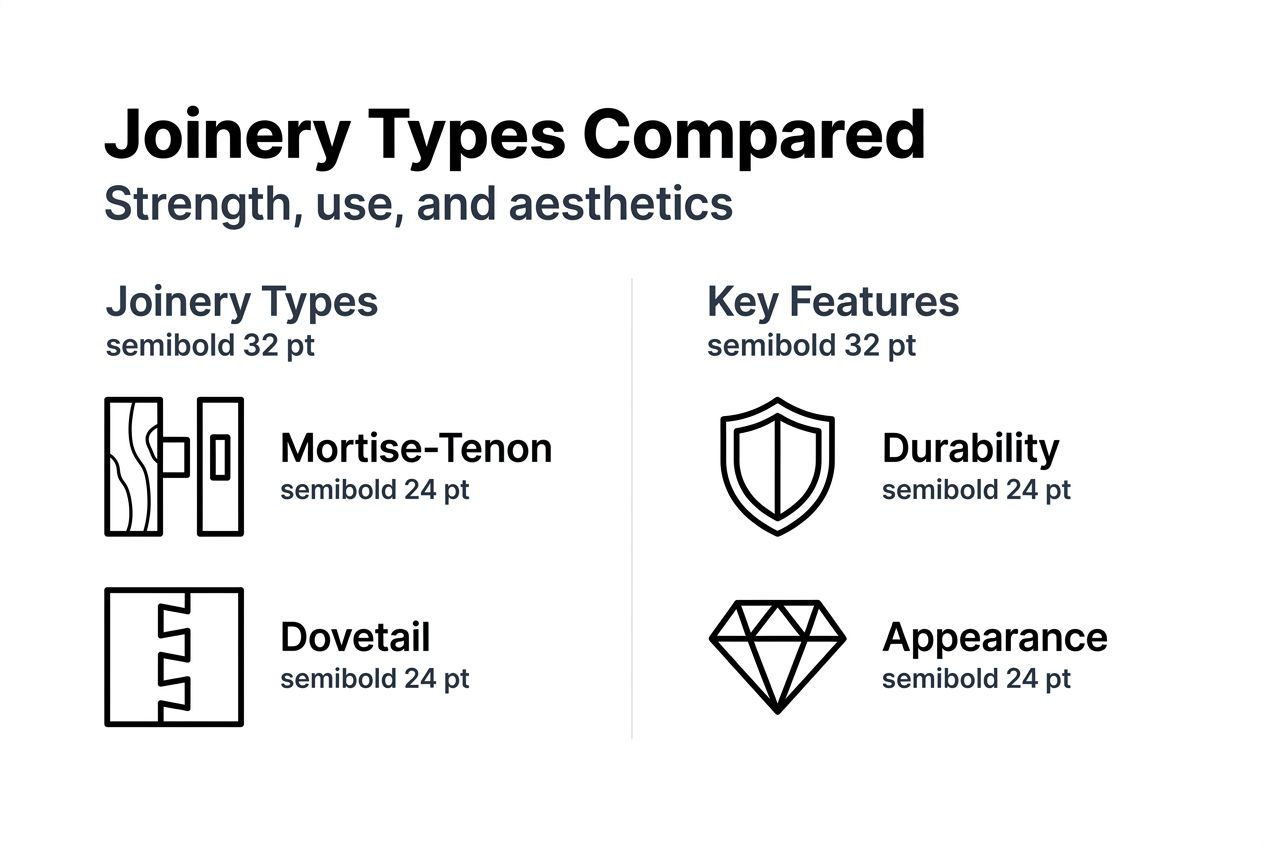
| Joint Type | Strength Rating | Aesthetics | Ease of Use | Best Applications |
|---|---|---|---|---|
| Mortise-and-tenon | Highest | Hidden or visible | Moderate to difficult | Chairs, tables, bed frames |
| Dovetail | High | Highly visible craft | Difficult | Drawers, boxes, cabinets |
| Pocket-hole | Moderate | Hidden | Easy | Quick projects, face frames |
| Lap joint | Moderate | Visible or hidden | Easy to moderate | Light-duty frames, practice projects |
| Butt joint | Low | Hidden | Very easy | Temporary furniture, beginner practice |
Pocket-hole joinery offers only 60% of the strength of mortise-and-tenon joints, making it suitable for projects with lighter loads. The speed advantage appeals to DIY builders creating face frames, shelving, or furniture that won’t bear heavy weight. For load-bearing pieces, invest time in stronger joint types.
Mortise-and-tenon joints top the strength rankings but require skill, sharp tools, and patience. Cutting precise mortises and matching tenons demands practice and attention to detail. The effort pays off in furniture that withstands decades of use without loosening or breaking.
Dovetail joints provide excellent tension resistance plus attractive appearance, making them ideal for cabinetry and boxes. The visible joint pattern signals quality craftsmanship, adding value to finished pieces. Hand-cut dovetails require significant skill, while router jigs simplify the process for consistent results.
Simple joints like lap and butt connections serve as good skill-building steps for beginners. These techniques teach fundamental concepts of wood preparation, gluing, and clamping without the complexity of advanced joinery. Start here to develop confidence before progressing to mortise-and-tenon or dovetail work.
Choosing the right joint depends on multiple factors:
- Furniture function: Load-bearing pieces need stronger joints
- Desired aesthetics: Visible joints add craft appeal, hidden joints create clean lines
- Available tools: Some joints require specialized equipment
- Skill level: Match complexity to your current abilities while challenging yourself to grow
Explore detailed guidance on joint selection and application at joinery techniques furniture strength benefits to make informed choices for your projects.
Practical guidelines for selecting and applying joinery techniques
Start by mastering simple joints to develop fundamental skills before attempting complex connections. Butt joints and lap joints teach you to cut square ends, apply glue evenly, and use clamps effectively. These basics transfer directly to more advanced techniques.
Progress to reinforced joints like mortise-and-tenon and dovetail as your confidence and tool skills improve. Practice on scrap wood to refine your technique before cutting joinery in project pieces. Each successful joint builds muscle memory and understanding of how wood behaves during cutting and fitting.
Follow this skill progression:
- Master butt joints and edge gluing to learn clamping and surface preparation
- Add pocket-hole joinery for quick assembly and moderate strength connections
- Practice lap joints to understand overlapping geometry and fitting techniques
- Attempt mortise-and-tenon joints, starting with simpler through-tenons before blind versions
- Challenge yourself with dovetails, beginning with half-blind variants for drawers
Consider furniture load direction when selecting joints. Chairs experience complex forces including bending, twisting, and impact, requiring mortise-and-tenon joints at critical connections. Tables need strong joints at leg-to-apron connections but can use simpler methods for apron-to-apron corners.
Prepare wood surfaces carefully by planning, sanding to consistent thickness, and ensuring square edges. Tight-fitting joints depend on accurate preparation. Check your work with squares and straight edges before cutting joinery.
Pro Tip: Cut test joints in scrap wood matching your project thickness to verify tool settings and technique before committing to final pieces. This practice saves expensive wood and reduces frustration.
Avoid relying solely on glue by always incorporating mechanical interlocking in furniture joints. Even simple reinforcement like dowels or biscuits improves strength significantly compared to butt joints with adhesive alone.
For comprehensive beginner guidance, visit woodworking tips for beginners step guide and explore starter projects at beginner woodworking projects guide to apply your growing joinery knowledge.
Explore woodworking plans and build with confidence
Ready to apply what you’ve learned about joinery techniques to real furniture projects? The journey from understanding joints to building beautiful, durable pieces becomes easier with detailed plans and expert guidance.

Our collection of woodworking plans includes projects designed for various skill levels, each incorporating appropriate joinery methods to ensure strength and longevity. Whether you’re building your first coffee table or tackling an advanced chair design, you’ll find clear instructions on joint selection, cutting techniques, and assembly processes. Additional resources like beginner woodworking tips and detailed explanations of joinery strength benefits support your skill development, helping you create furniture that combines structural integrity with visual appeal.
FAQ
What is the strongest type of joinery for furniture?
Mortise-and-tenon joints provide the highest strength for load-bearing furniture like chairs and tables. These connections resist cyclic stress better than most alternatives, maintaining tight fits over years of use.
Can glue alone hold a furniture joint securely?
Glue adds supplementary strength but proves insufficient without mechanical joinery for long-term durability. Combining adhesive with proper interlocking joints gives optimal load distribution and stability.
Which joinery method is best for beginner woodworkers?
Begin with simple butt and lap joints to develop basic cutting, gluing, and clamping skills. Progress to pocket-hole joinery for faster projects that balance ease with moderate strength. Visit woodworking tips for beginners step guide for comprehensive starter guidance.
How do dovetail joints improve drawer construction?
Dovetail joints resist pulling forces that occur when opening drawers, preventing separation at corners. The visible joint pattern also adds aesthetic appeal, signaling quality craftsmanship in cabinetry and boxes.
What tools do I need to cut mortise-and-tenon joints?
Basic mortise-and-tenon work requires chisels, a drill or drill press, and a backsaw or table saw. Dedicated mortising machines and tenoning jigs simplify the process but aren’t essential for hand-tool approaches.
DIY projects:
DIY Wooden Coffee Table
DIY Shoe Rack
Recommended
- Why Use Joinery Techniques? 50% Stronger Furniture
- Furniture Making Terminology: Key Concepts for DIY Success
- Essential woodworking skills for beginner DIY furniture
- Types of wood for furniture: 6 options with Janka ratings

“DIY woodworking enthusiast who started with zero experience and a YouTube tutorial.
I build simple, practical projects for my home and share free plans
so other beginners can skip the guesswork.If I can build it, you can too.”