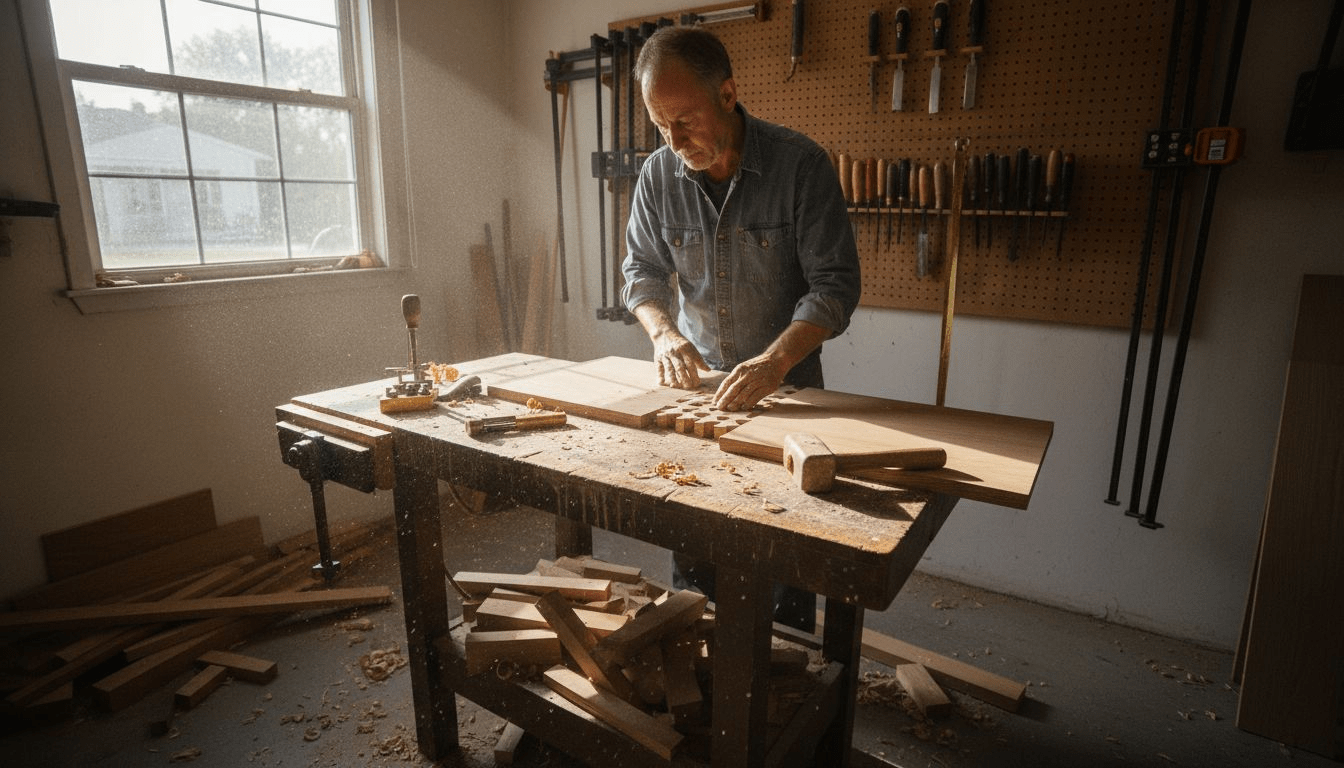
Most woodworkers believe nails and screws hold furniture together just fine. That assumption costs you strength, longevity, and craftsmanship quality. Traditional joinery techniques mechanically interlock wood pieces, creating bonds that outlast nailed furniture by 50% while adding visual appeal. This article explains how joinery transforms hobbyist projects into heirloom-quality pieces through superior structural performance and aesthetic refinement.
Table of Contents
- Introduction To Joinery Techniques
- Structural Benefits Of Joinery
- Aesthetic Enhancement Through Joinery
- Common Misconceptions About Joinery
- Practical Joinery Methods For Hobbyists
- Furniture Longevity And Joinery
- Emotional And Craftsmanship Benefits
- Enhance Your Woodworking Projects With Real Woodwork Plans
- Frequently Asked Questions About Joinery Techniques
Key Takeaways
| Point | Details |
|——-|———||
| Strength Advantage | Joinery creates mechanically interlocked bonds that distribute stress better than fasteners alone. |
| Longevity Boost | Properly executed joints allow wood movement, preventing seasonal failures common in nailed assemblies. |
| Aesthetic Value | Visible joinery like dovetails signals craftsmanship and elevates perceived furniture quality. |
| Accessibility | Many joinery methods require minimal tools and suit beginner skill levels. |
| Emotional Reward | Mastering joinery builds confidence and pride in your woodworking abilities. |
Introduction to Joinery Techniques
Joinery refers to methods of connecting wood pieces through mechanical interlocking rather than relying solely on nails, screws, or adhesives. These techniques date back thousands of years, when craftsmen developed ingenious ways to create durable structures without modern fasteners. Today’s hobbyists benefit from this accumulated knowledge by applying time-tested joints to contemporary projects.
The fundamental principle behind joinery involves shaping wood surfaces to fit together like puzzle pieces. This interlocking creates resistance against multiple force directions. When you apply glue to these precisely fitted surfaces, you multiply the bond strength exponentially compared to simple butt joints held by nails.
Common joinery types include mortise and tenon, dovetail, lap joints, and pocket-hole connections. Each serves specific structural needs and aesthetic goals. Understanding furniture making terminology helps you choose appropriate joints for your projects.
Several factors determine which joint works best:
- Load direction and magnitude the joint must withstand
- Wood species and grain orientation at the connection point
- Visibility of the joint in the finished piece
- Your current skill level and available tools
- Time investment you’re willing to make per joint
Beginners often start with simpler joints like lap or pocket-hole connections before progressing to complex dovetails. This graduated approach builds foundational skills while producing functional furniture. Following proven woodworking tips for beginners accelerates your learning curve significantly.
The beauty of joinery lies in its dual purpose. Beyond structural performance, well-executed joints become design features that showcase your craftsmanship. This combination of function and aesthetics separates handcrafted furniture from mass-produced alternatives.
Structural Benefits of Joinery
Mechanical interlocking fundamentally changes how wood connections resist forces. When you drive a nail through two boards, you create a single point of stress concentration. The nail bends under lateral loads, and the wood fibers around it compress and eventually fail. Joinery distributes these forces across much larger surface areas.
Consider a mortise and tenon joint. The tenon fits snugly into the mortise cavity, creating contact along all four sides plus the shoulder surfaces. Loads applied to this connection spread across dozens of square inches rather than concentrating at a single fastener point. This distribution prevents the catastrophic failures common in nailed assemblies.
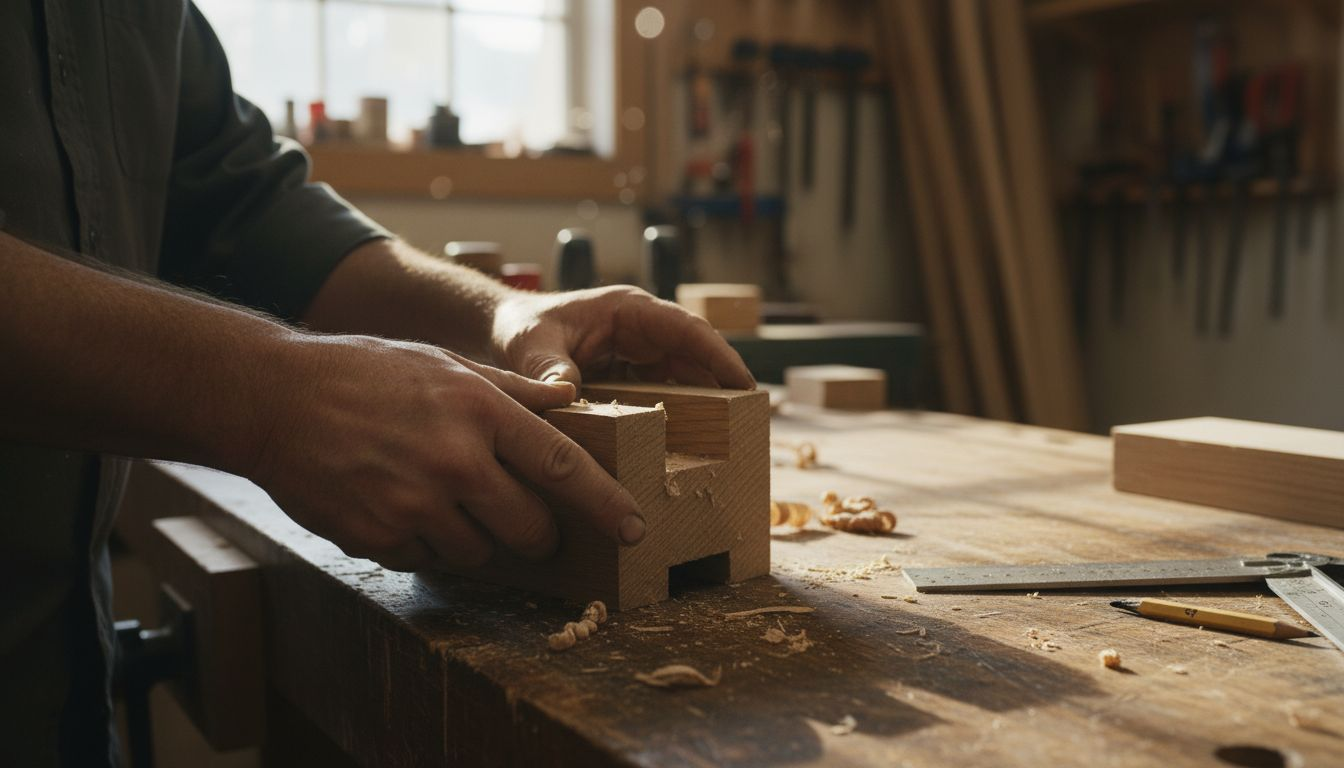
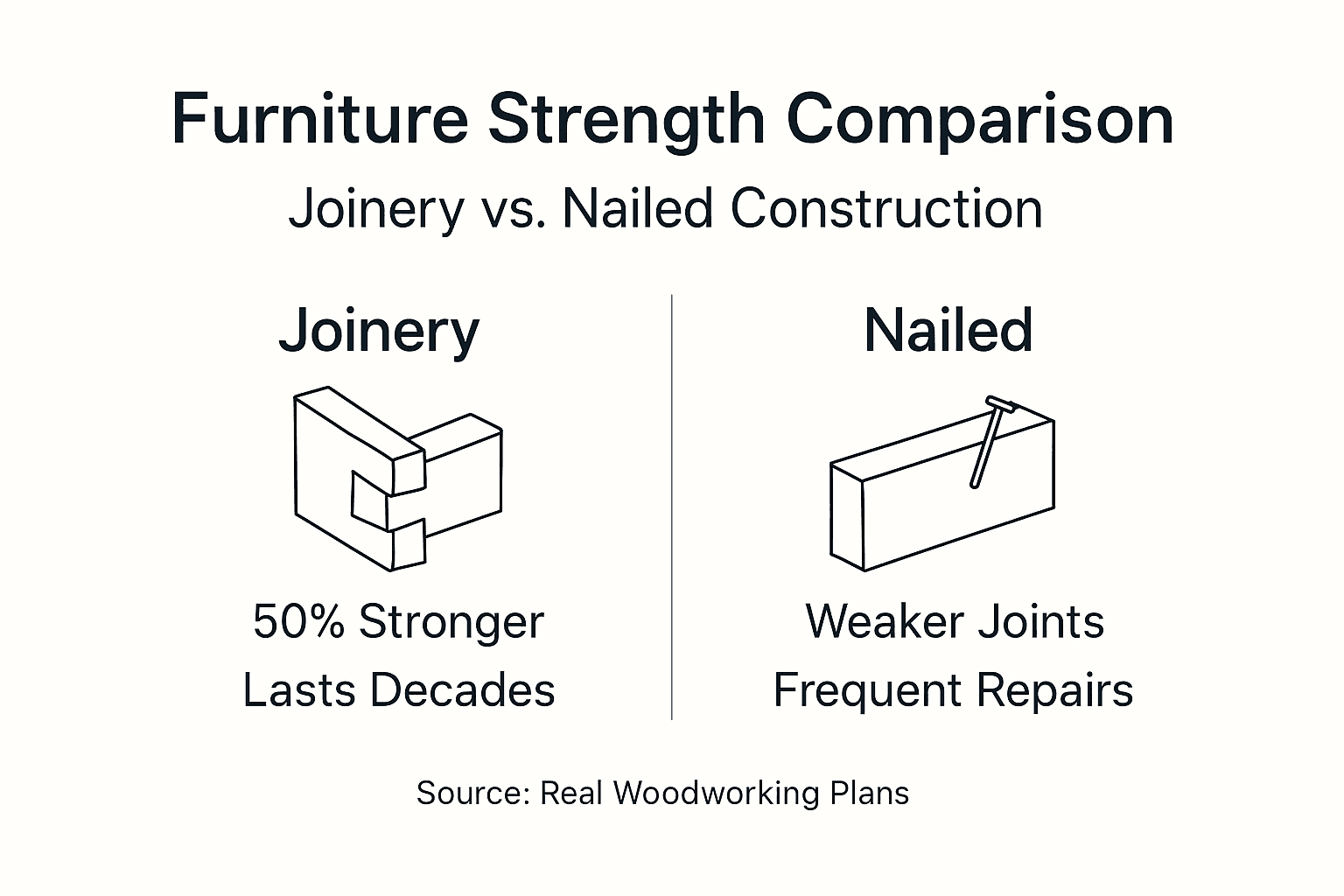
Furniture built with traditional joinery lasts 50% longer than equivalent pieces assembled with nails or screws. This longevity stems from how joints handle cyclical stresses. Repeated loading and unloading causes nails to loosen as wood compresses around the shank. Joinery maintains constant contact because the wood itself forms the connection.
Load distribution advantages:
- Compression forces spread across glue surfaces instead of crushing wood fibers at fastener points
- Tension loads engage mechanical shoulders and cheeks rather than relying on fastener pull-out resistance
- Shear forces transfer through wood-to-wood contact instead of bending metal fasteners
- Racking resistance comes from interlocking geometry rather than fastener friction
Pro Tip: Achieving maximum strength requires precise fitting. Gaps larger than 0.005 inches significantly reduce joint performance. Use sharp tools and make test cuts to dial in your setup before cutting final pieces.
One critical misconception holds that modern adhesives eliminate the need for joinery. While glue provides excellent tensile strength, it offers minimal resistance to peel forces. Mechanical interlocking prevents the separation that initiates peel failures. Combining glue with joinery creates bonds stronger than the surrounding wood.
Hobbyists implementing proper joinery techniques see immediate improvements in furniture stability. Chairs no longer wobble after months of use. Table legs stay firmly attached despite years of movement. These practical benefits justify the extra time invested in cutting joints. Exploring additional beginner woodworking tips reinforces these structural advantages.
Aesthetic Enhancement through Joinery
Visible joinery communicates craftsmanship in ways that concealed fasteners cannot match. When someone examines your furniture and discovers hand-cut dovetails or through-tenons, they immediately recognize the skill and effort involved. This visual evidence of quality elevates your work beyond ordinary DIY projects.
Dovetail joints exemplify decorative joinery perfectly. The interlocking pins and tails create distinctive patterns that furniture makers have showcased for centuries. Whether you cut them by hand or with a jig, dovetails signal dedication to traditional techniques. They transform simple drawer boxes into conversation pieces.
Finger joints offer similar aesthetic appeal with less complexity. The repeating rectangular profile adds visual interest to box corners and edge joints. Many woodworkers contrast wood species at finger joints, creating eye-catching color patterns that highlight the joinery.
Decorative joinery benefits:
- Creates focal points that draw attention to craftsmanship details
- Allows strategic wood species contrast for enhanced visual impact
- Demonstrates technical skill without requiring verbal explanation
- Increases perceived value far beyond actual material costs
- Provides personal satisfaction from mastering challenging techniques
Through-tenons exemplify another aesthetic joinery application. Extending the tenon completely through the mortised piece and wedging it creates both strength and visual appeal. The exposed end grain and wedges become design features rather than hidden structural elements.
Incorporating aesthetic joinery requires planning during the design phase. You must consider sight lines and which surfaces will be visible in the finished piece. Following structured wood project design tips ensures your joinery enhances rather than clutters the overall appearance.
Many hobbyists initially pursue joinery for structural reasons but discover the aesthetic rewards surpass their expectations. The pride of pointing out your hand-cut joints to visitors becomes a powerful motivator. This emotional connection transforms woodworking from a hobby into a passion.
Common Misconceptions about Joinery
Several persistent myths discourage woodworkers from learning joinery techniques. Addressing these misconceptions reveals how accessible and beneficial joinery truly is for hobbyists at all skill levels.
-
Nails and screws provide equal strength to joinery. This belief crumbles under examination. Fasteners create point loads that concentrate stress, while joinery distributes forces across large surface areas. Nails loosen as wood compresses around them. Screws split wood fibers during installation and withdrawal cycles. Properly fitted joints maintain their integrity indefinitely.
-
Glue alone suffices for strong furniture connections. Modern adhesives do offer impressive tensile strength, but they fail under peel forces. Without mechanical interlocking, joints separate when lateral loads overcome the glue bond. Joinery prevents the initial separation that causes peel failure.
-
Joinery requires expensive specialized tools. While dedicated equipment helps, you can cut many joints with basic hand tools. A sharp chisel, hand saw, and marking gauge enable mortise and tenon construction. Pocket-hole jigs cost less than premium power tool accessories yet produce strong connections.
-
Learning joinery demands years of practice. Simple joints like lap connections and pocket-holes require minimal experience. You can master basic techniques in weeks, not years. Progressive skill building lets you tackle increasingly complex joints as confidence grows.
-
Joinery takes too long for practical projects. Initial joints do require extra time as you develop muscle memory and setup procedures. With practice, many joints become nearly as fast as drilling pilot holes and driving screws. The longevity benefit more than justifies the time investment.
-
Hand-cut joints cannot match machine precision. While power tools offer consistency, skilled hand work produces equally tight-fitting joints. Many craftsmen prefer the control and quiet satisfaction of hand cutting. Both approaches yield excellent results when executed properly.
These misconceptions often stem from limited exposure to actual joinery practice. Once you cut your first tight-fitting mortise and tenon, the superiority becomes obvious. The wood clicks together with satisfying precision. Adding glue transforms the joint into a permanent bond that will outlast you.
Practical Joinery Methods for Hobbyists
Starting your joinery journey requires selecting appropriate techniques that match your current skills and available tools. Several beginner-friendly methods deliver professional results without demanding extensive experience or specialized equipment.
Pocket-hole joinery provides the easiest entry point. A simple jig guides your drill bit at the correct angle, creating holes that accept specialized screws. These concealed fasteners draw boards together while the mechanical connection resists separation. Pocket-holes work excellently for face frames, cabinet construction, and furniture assembly.
Lap joints offer another accessible option. Cutting away half the thickness from each mating piece creates overlapping surfaces perfect for corner and cross connections. You can cut lap joints with a hand saw and chisel or use a table saw for speed. The resulting joint handles significant loads while remaining visually clean.
Essential joinery tools:
- Sharp chisels in several widths for mortising and cleanup
- Hand saw or back saw for precision crosscuts and tenon cheeks
- Marking knife and square for accurate layout
- Drill bits matching your chosen joinery hardware
- Clamps in various sizes for glue-up pressure
Building skills progressively keeps frustration low while expanding your capabilities. Start with pocket-hole projects to understand joint mechanics and clamping requirements. Graduate to simple lap joints on scrap wood before committing to project pieces. Finally, attempt basic mortise and tenon connections on smaller components.
Pro Tip: Always dry-fit joints before applying glue. This practice reveals tight spots needing adjustment and confirms your assembly sequence works. Making corrections after glue application leads to permanent mistakes.
Sample beginner projects:
- Coffee table with lap-jointed aprons demonstrating basic corner connections
- Wall-mounted shelf using through-tenons for visible joinery practice
- Small cabinet with pocket-hole face frame construction
- Step stool combining multiple joint types in a functional piece
Exploring comprehensive woodworking tips for beginners complements hands-on practice. Theoretical knowledge combined with practical experience accelerates skill development. Browsing woodworking project ideas sparks inspiration for applying new joinery techniques.
Following a logical woodworking project workflow prevents common mistakes that discourage beginners. Proper planning, material selection, and execution sequencing ensure your joinery investment produces successful outcomes.
Furniture Longevity and Joinery
Wood movement presents the greatest challenge to furniture longevity. Seasonal humidity changes cause wood to expand and contract across its width. Nailed and screwed connections resist this natural movement, creating internal stresses that eventually cause joint failures. Joinery accommodates movement while maintaining structural integrity.
Traditional joints incorporate design features that allow seasonal expansion. Mortise and tenon connections leave slight gaps at the tenon ends, permitting the tenon to expand without splitting the mortise walls. Breadboard ends use elongated mortises that let the main panel slide during width changes while remaining visually tight.
The combination of glue and mechanical interlocking prevents humidity-related failures. Glue bonds the long-grain surfaces that experience minimal seasonal movement. The mechanical interlock handles forces in directions where glue performs poorly. This complementary relationship creates connections more durable than either method alone.
Furniture assembled with joinery lasts 50% longer than nailed equivalents. This advantage compounds over decades. A properly built table serves multiple generations, while nailed furniture loosens and fails within years.
| Assembly Method | Average Lifespan | Maintenance Requirements | Failure Mode |
|---|---|---|---|
| Nails Only | 8-12 years | Frequent re-tightening | Fastener loosening, wood splitting |
| Screws Only | 12-18 years | Periodic tightening | Thread stripping, wood compression |
| Glue Only | 10-15 years | Joint re-gluing | Peel failure, seasonal cracking |
| Traditional Joinery | 25-50+ years | Minimal | Rare structural issues |
These longevity benchmarks reflect typical household furniture subjected to normal use. Climate-controlled environments extend lifespans, while extreme humidity swings accelerate deterioration. The joinery advantage persists across all conditions because the fundamental mechanical principles remain constant.
For hobbyists building furniture as gifts or family heirlooms, longevity matters enormously. Investing extra hours in proper joinery ensures your work survives to tell your story. Recipients appreciate furniture that remains stable and beautiful decades after construction. Research on joinery longevity confirms these durable construction methods.
Emotional and Craftsmanship Benefits
Beyond structural and aesthetic advantages, joinery delivers profound emotional rewards that sustain your woodworking passion. Successfully cutting your first tight-fitting dovetail joint creates satisfaction that lasts far longer than the actual construction time. This feeling hooks many hobbyists into pursuing increasingly challenging techniques.
Mastering joinery represents a tangible skill milestone. Unlike abstract knowledge, you can see and touch your improved craftsmanship. Each successful joint proves your growing abilities. This visible progress motivates continued learning and experimentation.
Craftsmanship quality separates your work from mass-produced furniture. When you invest hours hand-cutting joints, you create pieces infused with your personal effort and attention. Recipients recognize this dedication intuitively, even if they lack woodworking knowledge. Your furniture becomes meaningful beyond its functional purpose.
Emotional and skill development benefits:
- Pride in pointing out hand-cut joinery to visitors and family members
- Confidence boost from mastering techniques that initially seemed impossible
- Deeper connection to historical woodworking traditions and master craftsmen
- Motivation to attempt more ambitious projects leveraging new skills
- Community recognition within woodworking circles for advanced techniques
- Personal satisfaction from creating heirloom-quality pieces for loved ones
Surveys of hobbyist woodworkers consistently rank joinery among the most satisfying techniques to learn. The progression from beginner frustration through competence to mastery provides ongoing challenges that prevent boredom. Each joint type presents unique puzzles requiring problem-solving and fine motor control.
Joinery also connects you to woodworking’s rich history. Using the same techniques craftsmen employed centuries ago creates a tangible link to the past. This historical continuity adds meaning to your work that purely modern methods cannot match.
The artistic dimension of joinery appeals to creative impulses beyond engineering requirements. Choosing joint styles, spacing dovetail pins, or deciding where to showcase through-tenons exercises aesthetic judgment. These design decisions transform functional necessity into artistic expression.
Enhance Your Woodworking Projects with Real Woodwork Plans
Ready to apply joinery techniques to your next build? Real Woodwork Plans offers detailed blueprints specifically designed for hobbyists incorporating traditional joinery methods. Each plan includes step-by-step instructions, cut lists, and joinery details that demystify the construction process.
Our free woodworking plans feature projects ranging from simple beginner builds to advanced furniture pieces. Coffee tables, bookcases, and dining tables showcase practical joinery applications you can replicate in your shop. Clear diagrams illustrate joint locations and dimensions, eliminating guesswork.
Explore our curated 2026 woodworking project ideas for inspiration matching your current skill level. Each project listing identifies required joinery techniques, helping you select builds that challenge without overwhelming. Progressive difficulty ratings guide your skill development journey.
Comprehensive woodworking tips for beginners complement our plans, addressing common questions about tool selection, wood preparation, and finishing techniques. This combined resource approach supports your complete woodworking education from initial cuts through final assembly.
Frequently Asked Questions About Joinery Techniques
What joinery method is best for beginners?
Pocket-hole joinery offers the easiest starting point, requiring only a simple jig and drill. Lap joints provide another beginner-friendly option needing just basic hand tools. Both methods produce strong connections while teaching fundamental joint-fitting concepts.
How do joinery techniques affect furniture maintenance?
Properly executed joinery significantly reduces maintenance requirements compared to nailed or screwed furniture. Joints remain tight through seasonal wood movement, eliminating the periodic re-tightening that fastener-based assemblies demand. Most joinery-built furniture requires only occasional dusting and refinishing.
Is glue necessary when using joinery?
Yes, glue multiplies joint strength by bonding the precisely fitted surfaces joinery creates. While mechanical interlocking provides structural integrity, adhesive prevents the microscopic movement that leads to loosening over time. The combination delivers strength exceeding either method alone.
Can joinery be done without expensive tools?
Many traditional joints require only hand tools like chisels, saws, and marking gauges. These basic implements cost less than a single premium power tool yet enable mortise and tenon, dovetail, and lap joint construction. Power tools add speed and consistency but aren’t mandatory for quality results.
How does joinery improve furniture resale value?
Visible joinery signals craftsmanship quality that buyers recognize and appreciate. Hand-cut dovetails or through-tenons immediately distinguish your work from mass-produced alternatives. This perceived quality justifies premium pricing, with well-executed joinery often doubling resale values compared to similar fastener-assembled pieces.
Recommended
- Furniture Making Terminology: Key Concepts for DIY Success
- Woodworking Trends 2026: Innovations Shaping DIY
- Role of Wood Selection in DIY Woodworking Projects
- Wood Types Explained: Choosing for DIY Projects

“DIY woodworking enthusiast who started with zero experience and a YouTube tutorial.
I build simple, practical projects for my home and share free plans
so other beginners can skip the guesswork.If I can build it, you can too.”