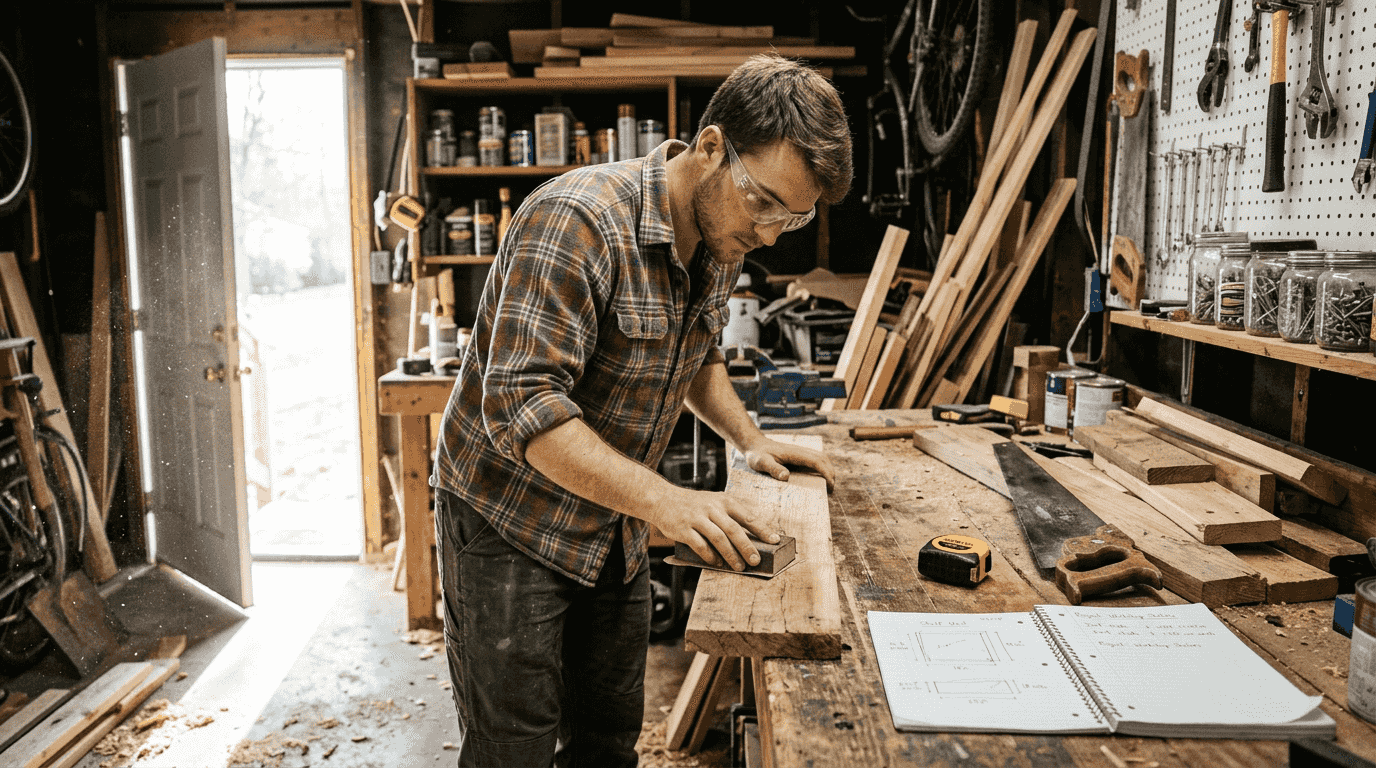
Many beginners think woodworking success depends on expensive tools and fancy equipment. The truth is simpler: mastering basic techniques and understanding wood properties matter far more than owning the latest machinery. This guide will clarify woodworking fundamentals, introduce essential tools and skills, and provide practical steps to start your woodworking journey with confidence and realistic expectations.
Table of Contents
- What Is Woodworking? Defining The Craft
- Understanding Wood Types And Their Impact
- Essential Woodworking Tools And Their Uses
- Basic Woodworking Techniques For Beginners
- Common Misconceptions About Woodworking
- Safety Guidelines For Beginner Woodworkers
- A Framework For Skill Development And Project Selection
- Applying Woodworking Knowledge To Diy Projects
- Explore Beginner Woodworking Plans And Tips
Key takeaways
| Point | Details |
|---|---|
| Woodworking transforms raw wood | Combines cutting, shaping, joining, and finishing to create functional or decorative items. |
| Wood type selection matters | Choosing appropriate hardwoods or softwoods directly affects project difficulty and final results. |
| Essential skills build progressively | Master measuring, cutting, joining, and finishing in sequence for best outcomes. |
| Safety prevents injuries | Proper tool handling, protective equipment, and workspace organization reduce accident risk. |
| Simple projects develop confidence | Starting small and increasing complexity maintains motivation while building competence. |
What is woodworking? Defining the craft
Woodworking is fundamentally about transforming raw lumber into useful objects. The craft of making items from wood involves processes such as carving, joinery, and finishing to produce functional or decorative products. This definition encompasses everything from building furniture to creating artistic sculptures.
The scope of woodworking extends far beyond simple carpentry. You might build a bookshelf, carve decorative patterns, or construct outdoor furniture. Each project type requires different skills but shares common foundations.
Understanding this broad scope helps beginners set practical goals. You don’t need to master everything at once. Start with basic projects that teach fundamental skills, then gradually expand your capabilities.
Common woodworking processes include:
- Measuring and marking wood accurately for cuts
- Cutting pieces to size using saws
- Shaping wood with planes, chisels, or sanders
- Joining pieces together with fasteners or adhesives
- Applying finishes to protect and beautify the wood
Woodworking blends art and science in unique ways. The artistic side involves design choices and aesthetic decisions. The scientific aspect requires understanding wood properties, tool mechanics, and structural integrity. Success comes from balancing both elements through consistent practice and patient learning.
Understanding wood types and their impact
Wood selection significantly influences your project outcomes. The two primary categories are hardwoods and softwoods, distinguished by the tree type they come from rather than actual hardness.
Hardwoods like oak, maple, and walnut come from deciduous trees. They typically offer greater density, durability, and visual appeal. However, their toughness requires sharper tools and more physical effort to work. Softwoods like pine, cedar, and fir come from coniferous trees. They’re generally easier to cut and shape, making them ideal for beginners.
Moisture content and grain direction dramatically affect workability. Wet wood is harder to cut cleanly and may warp as it dries. Grain direction determines how the wood splits, sands, and accepts finishes. Working with the grain produces smoother results than cutting against it.
| Wood Type | Best Uses | Beginner Friendliness | Cost |
|---|---|---|---|
| Pine | Indoor furniture, practice projects | High | Low |
| Cedar | Outdoor furniture, storage boxes | High | Medium |
| Oak | Durable furniture, flooring | Medium | High |
| Maple | Cutting boards, cabinets | Low | High |
Choosing the right wood types for DIY projects affects both difficulty and final appearance. Beginners should start with forgiving softwoods that hide minor mistakes. As skills improve, transition to hardwoods that showcase refined techniques.
Key considerations when selecting wood:
- Project requirements for strength and durability
- Your current skill level and tool sharpness
- Budget constraints and material availability
- Desired finish appearance and grain pattern
- Indoor versus outdoor use requirements
Being mindful of wood properties reduces costly errors. A simple understanding of how different species behave under tools saves frustration and wasted materials.
Essential woodworking tools and their uses
Building a basic toolkit doesn’t require massive investment. The beginner’s essential woodworking toolkit includes a saw, hammer, measuring tools, chisels, and clamps, each serving a unique purpose in executing projects accurately and safely.
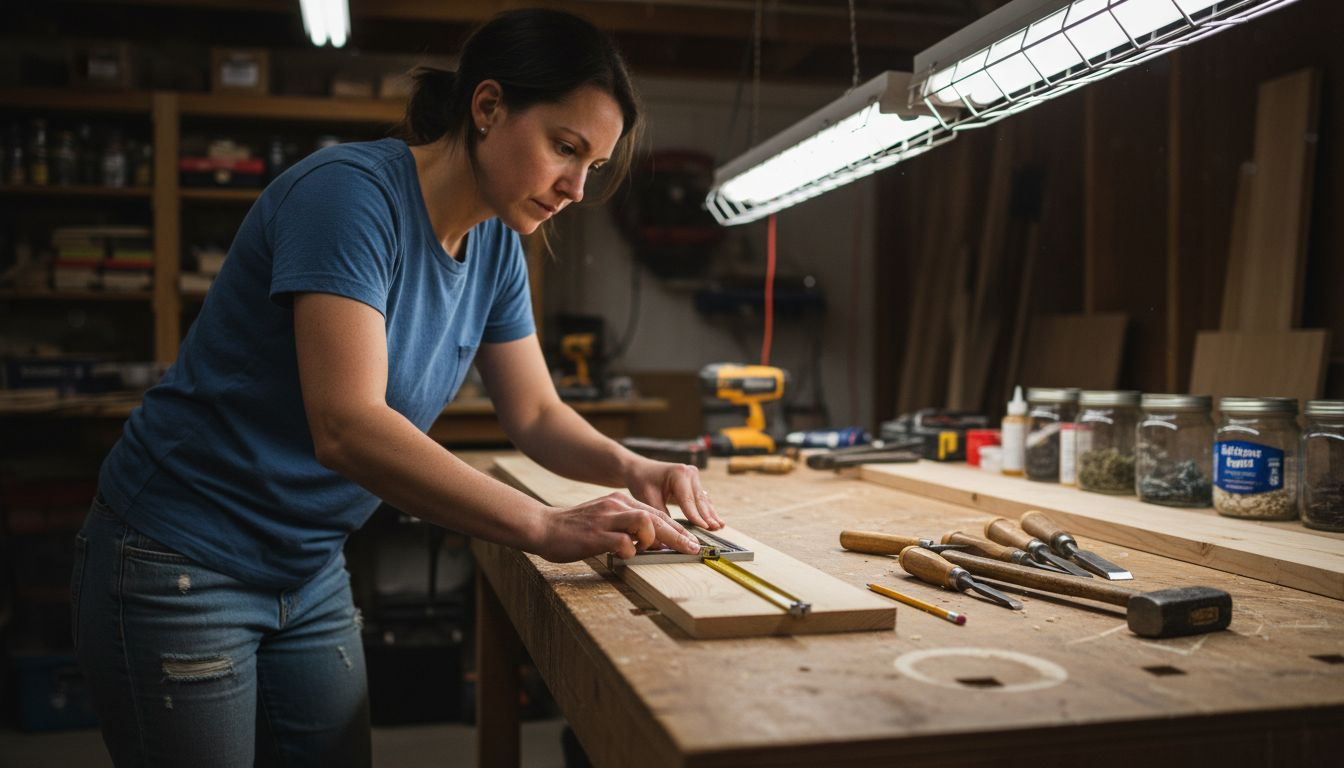
Saws cut wood to size. A handsaw works for basic cuts, while a coping saw handles curves. Hammers drive nails and tap joints together. Choose a 16 ounce hammer for versatility across most tasks.
Measuring tools ensure accuracy. A tape measure, combination square, and pencil form the measurement trinity. Precision at this stage prevents cumulative errors later.
Chisels shape wood and clean joints. Start with a basic set covering quarter inch to one inch widths. Sharp chisels require less force and produce cleaner cuts than dull ones.
Clamps hold pieces steady during gluing or assembly. Bar clamps and C clamps cover most beginner needs. You can never have too many clamps when assembling complex projects.
Essential tool functions:
- Saws make straight or curved cuts through lumber
- Hammers join pieces with mechanical fasteners
- Measuring tools ensure accurate dimensions
- Chisels remove material for joints and details
- Clamps apply pressure during assembly
- Sanders smooth surfaces before finishing
Quality beginner friendly tools increase safety and precision without breaking budgets. Avoid ultra cheap options that frustrate more than help. Mid range hand tools serve beginners well before investing in power equipment.
Exploring hand tool woodworking essentials builds foundational skills that translate to power tools later. Understanding the history of woodworking tools provides context for why certain designs persist.
Pro Tip: Keep tools sharp and well maintained for better results and safety. Dull tools require excessive force, increasing injury risk and producing rough cuts.
Basic woodworking techniques for beginners
Mastering fundamental skills creates the foundation for all woodworking projects. Learning techniques sequentially enhances both safety and project success.
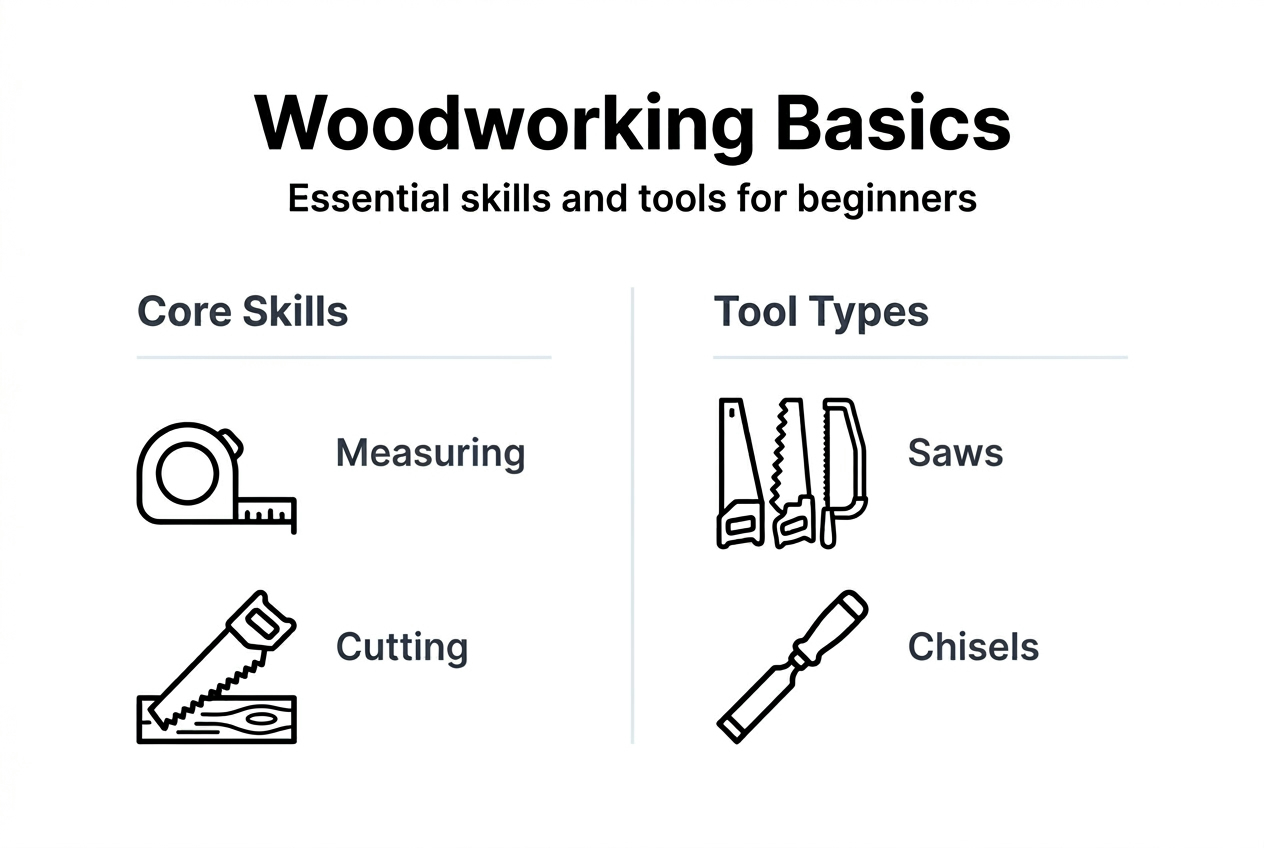
Core skills to develop:
- Measuring accurately using tape measures and squares
- Marking cut lines clearly with sharp pencils
- Cutting along marked lines with appropriate saws
- Shaping edges and surfaces with planes or sanders
- Joining pieces using screws, nails, or glue
- Finishing surfaces with stains or protective coatings
Measuring and marking form the critical first step. Double check all measurements before cutting. A simple error compounds throughout assembly, ruining otherwise good work.
Cutting requires patience and proper technique. Let the saw do the work rather than forcing it. Smooth, steady strokes produce cleaner cuts than aggressive sawing.
Shaping refines rough cuts into smooth surfaces. Hand planes remove thin layers of wood to achieve flat surfaces. Sanders smooth wood before finishing but shouldn’t fix major cutting mistakes.
Joinery connects pieces into complete projects. Simple butt joints work for basic projects. More advanced joints like dados or mortise and tenon create stronger connections.
Finishing protects wood and enhances appearance. Sanding progresses through increasingly fine grits. Apply stains to change color, then seal with polyurethane or oil.
Practice remains essential for mastery. Start with simple projects that reinforce basic skills. Each completed piece builds confidence and muscle memory.
Following woodworking tips step guide resources helps structure your learning. Selecting appropriate beginner woodworking projects ensures skills match project complexity.
Pro Tip: Measure twice, cut once to minimize costly errors. This old adage saves materials and frustration across all experience levels.
Common misconceptions about woodworking
Several myths discourage beginners from starting woodworking. Addressing these false beliefs creates realistic expectations and encourages persistence.
The biggest misconception centers on equipment. Many assume expensive power tools are necessary for quality work. Reality proves otherwise. Skilled woodworkers create beautiful pieces with basic hand tools. Technique and wood knowledge matter far more than tool price tags.
Another myth suggests woodworking mastery happens quickly. Learning is genuinely incremental. Each project teaches new lessons about wood behavior and tool control. Patience and regular practice build competence over months and years, not days.
Some believe perfect results come immediately. Mistakes are completely normal, especially early on. Progressing through errors builds problem solving skills and teaches wood properties better than flawless execution.
Common false beliefs:
- Only expensive tools produce quality work
- Mastery happens quickly with enough dedication
- Professional results require professional grade equipment
- Complex projects are more rewarding than simple ones
- Mistakes indicate lack of woodworking aptitude
Beginners often rush into complex projects beyond their skill level. This approach leads to frustration and abandoned projects. Starting simple and gradually increasing difficulty maintains motivation while building actual competence.
The focus on latest equipment distracts from fundamental skill development. Understanding how wood responds to different cuts teaches more than owning every available tool. Knowledge accumulation creates better woodworkers than tool accumulation.
Safety guidelines for beginner woodworkers
Safety practices prevent injuries and promote responsible woodworking habits. Most accidents stem from inattention and improper technique rather than tool defects.
Proper tool handling reduces injury risk dramatically. Hold tools correctly with full attention on the task. Never rush cuts or force tools through resistant wood. Let sharp blades do the work.
Personal protective equipment isn’t optional. Safety glasses protect eyes from flying debris. Dust masks prevent inhaling fine particles. Work gloves shield hands during rough material handling.
Workspace organization prevents many accidents:
- Keep the work area clean and well lit
- Store tools properly when not in use
- Secure workpieces with clamps before cutting
- Maintain clear paths around the work area
- Remove tripping hazards immediately
Sharp tools are paradoxically safer than dull ones. They require less force and stay on course better. Dull tools slip and bind, causing unpredictable results.
Most injuries occur when woodworkers become complacent or distracted. Maintain focus during every cut. Stop working when tired or frustrated. Fresh attention prevents accidents that injured fingers never undo.
Safety awareness should become a daily habit, not an occasional concern. Every project deserves the same careful attention to protective measures regardless of familiarity.
Develop safe habits early. They become automatic with practice, protecting you throughout your woodworking journey.
A framework for skill development and project selection
Structured progression builds woodworking abilities efficiently. Choosing projects aligned with current skills prevents frustration while maintaining motivation.
Skill development stages:
- Simple boxes and shelves using softwoods and basic joinery
- Small furniture pieces incorporating multiple joint types
- Larger furniture with design elements and hardwoods
- Complex pieces featuring advanced joinery and finishing
Start with forgiving projects using pine or cedar. Basic boxes teach fundamental measuring, cutting, and assembly without overwhelming complexity. Success at this level builds confidence for harder challenges.
Gradually increase complexity as skills solidify. Add new joint types one at a time. Experiment with different wood species. Try simple curves before attempting intricate patterns.
Matching projects to abilities prevents discouragement. Attempting advanced work prematurely leads to poor results and wasted materials. Respecting your current skill level isn’t limiting but strategic.
| Skill Level | Appropriate Projects | Key Learning Goals |
|---|---|---|
| Beginner | Cutting boards, simple boxes | Accurate measuring and cutting |
| Intermediate | Bookshelves, small tables | Multiple joint types, assembly |
| Advanced | Cabinets, chairs | Complex joinery, design integration |
Project outcomes reinforce learning about wood behavior and tool control. Analyze what worked and what needs improvement. Each completed piece provides lessons for the next.
Understanding wood selection role in projects helps match materials to skill level. Following a woodworking project workflow organizes tasks efficiently.
Tracking progress builds confidence over time. Photograph completed projects. Note skills practiced and lessons learned. This record demonstrates growth and motivates continued learning.
Applying woodworking knowledge to DIY projects
Integrating wood understanding with tool proficiency produces better DIY results. Even beginners achieve satisfying outcomes by applying learned basics systematically.
Combining material knowledge with technique creates durable, attractive items. Selecting appropriate wood for the project context matters as much as cutting accuracy. Indoor furniture uses different species than outdoor pieces exposed to weather.
Proper preparation reduces waste and effort significantly. Planning cuts minimizes leftover scraps. Organizing tools before starting saves time hunting for equipment. Smooth workflow prevents mistakes caused by rushing.
Knowing current limitations helps select achievable projects:
- Match project complexity to available skills
- Choose wood species within tool capabilities
- Allocate realistic time for completion
- Budget appropriately for materials and supplies
Continuous learning deepens abilities over time. Each project teaches something new about wood behavior or tool control. Reading about techniques complements hands on practice.
Even simple projects benefit from thoughtful execution. A basic shelf built with care and attention outlasts a complex piece rushed through assembly. Quality comes from methodical work, not just ambition.
Applying foundational knowledge consistently produces better results than sporadic bursts of effort. Regular practice, even on small projects, builds muscle memory and intuitive understanding of woodworking principles.
Explore beginner woodworking plans and tips
Taking your first steps in woodworking becomes easier with structured guidance and proven plans. Building skills progressively while working on real projects creates momentum and visible results.

Access free woodworking plans designed specifically for beginners. These plans include detailed instructions, material lists, and step by step processes that remove guesswork. Following proven designs lets you focus on technique rather than project planning.
Benefit from expert woodworking tips for beginners that build skills progressively. Learn which techniques matter most at each stage. Discover shortcuts that save time without sacrificing quality.
Using woodworking project workflow guides keeps you organized and efficient. Proper planning prevents costly mistakes. Systematic approaches ensure nothing gets overlooked during assembly.
These resources support your learning journey and boost confidence. Start with simple plans that teach fundamental skills, then gradually tackle more challenging projects as abilities grow.
FAQ
What is woodworking used for?
Woodworking creates both functional items like furniture and decorative crafts for display. It combines utility with artistic expression, allowing makers to produce useful objects that also reflect personal style and creativity.
Which wood is best for beginner woodworking projects?
Softwoods like pine and cedar work best for beginners due to easier cutting and shaping properties. These materials forgive minor mistakes and require less force to work, reducing frustration while learning fundamental techniques.
What are the safest tools for beginners?
Basic hand tools including saws, hammers, and clamps offer the safest starting point for new woodworkers. Proper handling techniques and wearing protective gear remain essential regardless of which tools you choose.
How can I avoid common beginner mistakes in woodworking?
Follow structured skill progression by starting with simple projects matched to your current abilities. Measure carefully, work slowly without rushing, and treat mistakes as learning opportunities that improve your understanding of wood and tools.