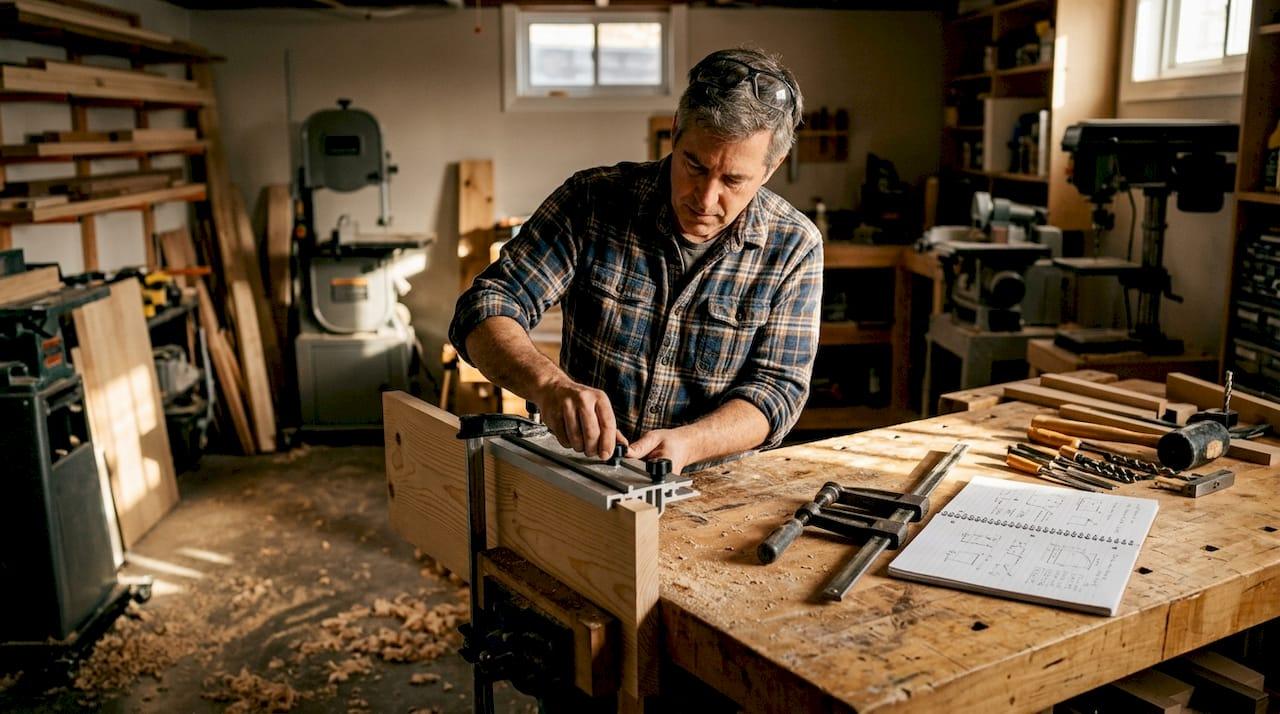
Many DIY woodworkers assume jigs are only for professionals or advanced craftspeople, but this misconception costs them precision, time, and material. Jigs are simple devices that guide your tools to achieve repeatable, accurate cuts and joints, regardless of skill level. Whether you’re drilling uniform holes, routing perfect edges, or cutting flawless dovetails, woodworking jigs are custom or shop-made devices that guide tools like saws, routers, and drills to achieve precision, repeatability, and safety in cuts, holes, and joints for DIY projects. This guide clarifies the types, usage, and tangible benefits of jigs, showing you how to elevate your craftsmanship and work smarter in your shop.
Table of Contents
- Understanding Woodworking Jigs: Types And Functions
- How To Use Jigs Effectively: Setup, Safety, And Expert Tips
- Precision And Craftsmanship: The Real Impact Of Jigs In Woodworking
- Choosing And Customizing Jigs: Buy Vs. Build Considerations
- Discover Detailed Woodworking Plans For Your Next Jig Project
Key takeaways
| Point | Details |
|---|---|
| Jigs guide tools for precision | They control saws, routers, and drills to produce consistent, accurate cuts and joints every time. |
| Multiple jig types serve different tasks | Drill jigs, router jigs, crosscut sleds, dovetail jigs, and tenoning jigs each address specific woodworking needs. |
| Jigs reduce waste and improve safety | They minimize errors, prevent kickback, and secure workpieces, cutting material waste by up to 30%. |
| Building vs. buying depends on goals | Custom jigs offer flexibility and learning, while commercial jigs save time and deliver tested precision. |
| Practice on scrap wood first | Testing jig setups on scrap prevents costly mistakes and builds confidence for final cuts. |
Understanding woodworking jigs: types and functions
A jig is essentially a template or guide that holds your workpiece and directs your tool along a predetermined path. This eliminates guesswork and human error, making even complex tasks accessible to hobbyists. Jigs are fundamental to achieving professional results without years of experience.
The most common jigs in DIY woodworking include drill jigs, router jigs, crosscut sleds, dovetail jigs, and tenoning jigs. Drill jigs position your drill bit at exact locations and angles, ensuring uniform hole spacing for shelf pins or dowel joints. Router jigs control the path of your router to create dadoes, mortises, or decorative edges with perfect repeatability. Crosscut sleds attach to your table saw, allowing you to make square, safe crosscuts on wide panels or small pieces that would be dangerous to cut freehand. Dovetail jigs are specialized templates that guide your router to cut interlocking dovetail joints, a hallmark of fine furniture. Tenoning jigs hold boards vertically against your table saw blade to cut precise tenons for mortise and tenon joinery.
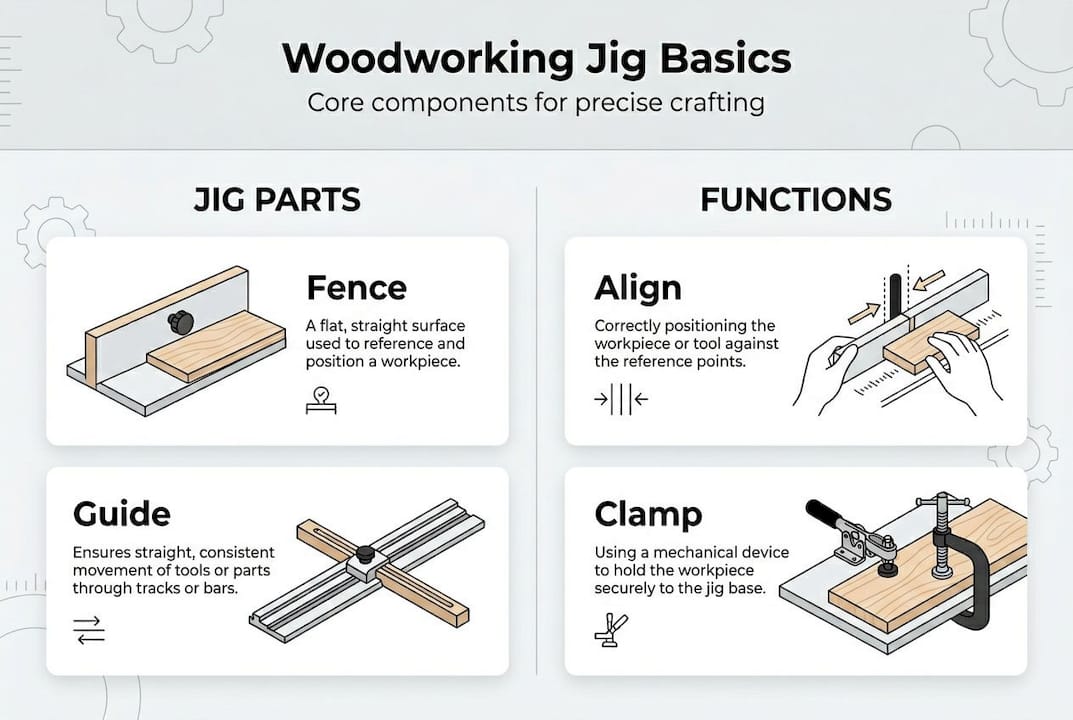
Each jig relies on core components like fences, guides, and clamps. Fences provide a reference edge to align your workpiece, guides control the tool’s movement, and clamps secure everything in place during the cut. Understanding these mechanics helps you use jigs effectively and even design your own for custom tasks.
| Jig Type | Primary Use | Typical Tools |
|---|---|---|
| Drill Jig | Uniform hole placement | Drill, drill press |
| Router Jig | Dadoes, mortises, edge profiles | Router |
| Crosscut Sled | Safe, square crosscuts | Table saw |
| Dovetail Jig | Interlocking dovetail joints | Router |
| Tenoning Jig | Vertical tenon cuts | Table saw |
Jigs deliver several key benefits that transform your woodworking:
- Precision: Jigs eliminate measuring errors and ensure cuts land exactly where intended.
- Repeatability: Once set up, a jig produces identical results across multiple pieces, critical for joinery techniques like drawer boxes or cabinet doors.
- Safety: By securing workpieces and controlling tool movement, jigs reduce the risk of kickback and hand injuries.
- Material efficiency: Accurate cuts mean less waste from mistakes, saving both wood and money.
For DIYers building their woodworking tools checklist, jigs should be a priority investment or early build project. They multiply the capability of your existing tools without requiring advanced hand skills.
How to use jigs effectively: setup, safety, and expert tips
Proper jig setup is the foundation of successful results. Start by adjusting guides and stops to match your desired measurement, then secure both the jig and your workpiece firmly. Clamps should hold everything without flexing, and fences must align square to your tool’s motion. Always test your setup on scrap wood that matches the thickness and grain of your final material. This reveals any alignment issues or tearout problems before you commit to your good stock.
Follow this sequence for safe and accurate jig use:
- Measure and mark your workpiece clearly, even though the jig will guide the cut.
- Set up the jig with all adjustments locked and double-check measurements with calipers or a ruler.
- Clamp the workpiece securely, ensuring it sits flat against the jig’s reference surfaces.
- Run a test cut on scrap wood to verify the setup produces the intended result.
- Make your final cut with steady, controlled pressure, letting the tool do the work without forcing it.
- Inspect the result and adjust the jig if needed before moving to the next piece.
Pro Tip: Always use sharp router bits and saw blades when working with jigs. Dull cutters increase friction, produce rough surfaces, and make it harder to control the tool, defeating the precision advantage that jigs provide.
Jigs control tool motion and location via fences, guides, and clamps, and methodologies involve setup, testing on scrap, precise measurement, and sharp bits. This systematic approach minimizes common issues like tearout, where wood fibers splinter at the exit point of a cut. Backing boards clamped behind your workpiece support fibers and prevent tearout, especially when routing across end grain. Jigs also help manage wood movement by holding pieces firmly during cuts, preventing shifts that cause inaccurate results.
Safety extends beyond setup. Always wear eye protection and hearing protection when using power tools with jigs. Keep your hands clear of the cutting path by using push sticks or the jig’s built-in handles. Route dust collection hoses to your router or saw to maintain visibility and reduce airborne particles. Clean sawdust from the jig’s surfaces between cuts to prevent slipping and maintain accuracy.
Maintaining your jigs ensures longevity and consistent performance. Wipe down surfaces after each use to remove resin buildup. Check that screws and clamps remain tight, and replace worn guide bushings or fences promptly. Store jigs flat or hanging to prevent warping, especially if they’re made from plywood or MDF. For more foundational skills, explore woodworking tips for beginners and integrate jigs into your woodworking project workflow from day one.
Precision and craftsmanship: the real impact of jigs in woodworking
The measurable benefits of jigs go beyond convenience. They directly improve the quality and efficiency of your work. Consider the difference between routing a dado freehand versus using a router jig. Freehand routing relies on steady hands and visual estimation, often resulting in wavy edges and inconsistent depth. A router jig locks in the path and depth, producing a clean, uniform channel every time.
| Factor | Without Jigs | With Jigs |
|---|---|---|
| Precision | ±1/16 inch variation | ±1/64 inch or better |
| Material Waste | 20-30% from errors | Under 10% |
| Setup Time | Minimal | 10-15 minutes |
| Repeatability | Low, each cut varies | High, identical results |
| Skill Required | Advanced hand control | Intermediate with practice |
Dovetail jigs achieve 0.008 inch gap tolerances, and router jigs enhance accuracy by 85%, while jigs reduce waste and improve repeatability. These numbers translate to tighter joints, less sanding, and furniture that looks professionally made. For hobbyists, this precision means you can tackle projects like jewelry boxes or fine cabinets that demand exacting standards.
Good jig makers are good woodworkers. Investing time in jigs pays dividends in quality and reduces costly errors across every project.
This industry adage reflects a truth recognized by craftspeople at all levels. Jigs don’t replace skill, they amplify it. A beginner using a well-made dovetail jig can produce joints that rival those cut by hand after years of practice. Empirical tests confirm jigs enable professional results for DIYers and reduce material waste, making them essential for anyone serious about woodworking.
Pro Tip: Practice your jig setups on scrap wood until you can run through the process smoothly. This builds muscle memory and confidence, so when you work on your final pieces, the process feels automatic and stress-free.
Repeatability is where jigs truly shine. If you’re building a set of dining chairs, each leg, rail, and stretcher must be identical for the chairs to look and function properly. A tenoning jig ensures every tenon is cut to the same width and shoulder position, so assembly is straightforward and joints fit snugly. Without jigs, you’d spend hours measuring, cutting, and adjusting each piece individually, with inconsistent results.
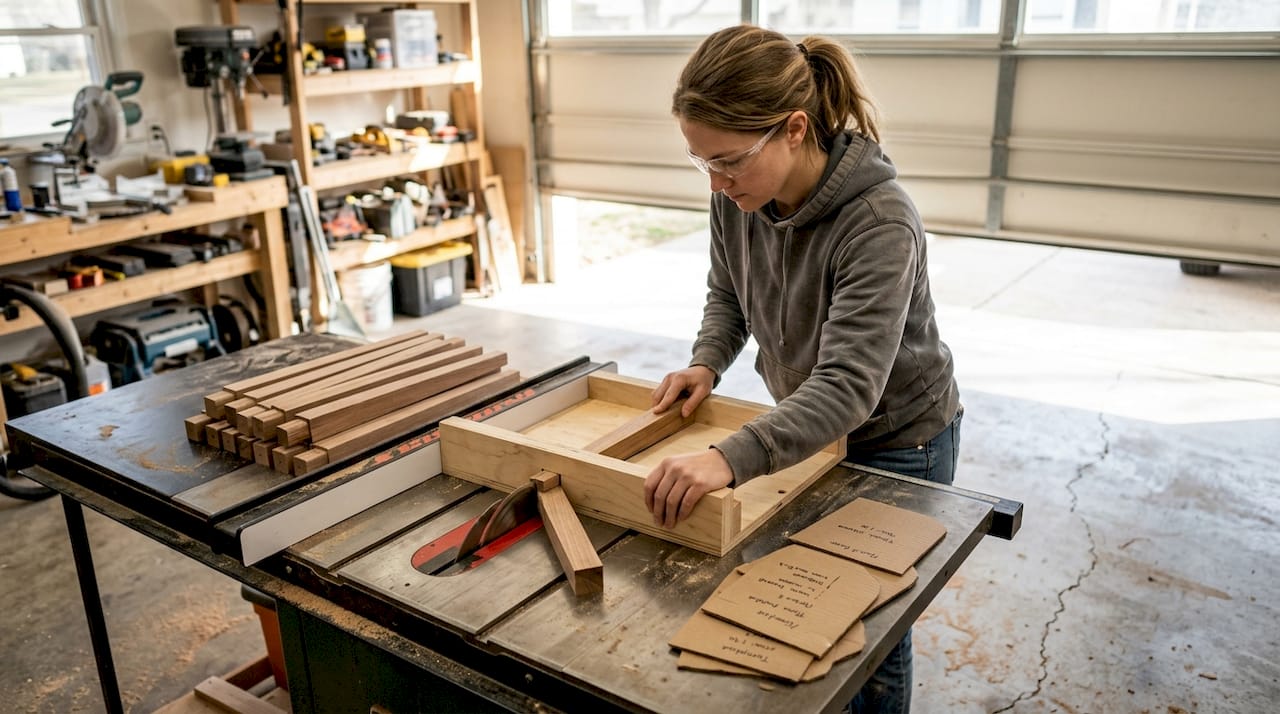
Jigs also enable craftsmanship techniques that would be impractical otherwise. Stopped dadoes, angled mortises, and compound miters all become manageable with the right jig. This expands your design possibilities and allows you to execute beginner woodworking projects with features typically reserved for advanced work. As you explore wood joinery methods, jigs will be your most reliable partner in achieving clean, strong connections.
Choosing and customizing jigs: buy vs. build considerations
Deciding whether to build your own jigs or purchase commercial ones depends on your goals, budget, and the complexity of the task. Building jigs offers several advantages. You can customize dimensions and features to fit your specific projects and shop layout. The process teaches you about tool mechanics and problem solving, deepening your understanding of woodworking principles. Homemade jigs are also cost effective, often requiring only scrap plywood, hardwood, and basic hardware.
Buying jigs makes sense when precision and time are priorities. Commercial dovetail jigs, for example, come with precision-machined templates and guide bushings that ensure perfect results out of the box. These jigs are tested and refined, eliminating the trial and error involved in designing your own. For complex joints or high-volume production, the time saved justifies the investment.
Here’s how to weigh your options:
- Cost: Building jigs uses inexpensive materials, while commercial jigs range from $50 to $300 or more.
- Skill Level: Beginners benefit from commercial jigs with clear instructions, while experienced woodworkers enjoy the challenge of custom builds.
- Precision: Commercial jigs offer factory precision, ideal for tight tolerances; homemade jigs work well for general tasks.
- Project Complexity: Simple jigs like crosscut sleds are easy to build, but specialized jigs like dovetail or mortising jigs are better purchased.
Some woodworkers prefer building all jigs for learning and customization, while others buy specialized jigs for precision and time savings. The adage about good jig makers being good woodworkers holds true because both approaches develop your skills and understanding.
Evaluate your personal woodworking style and goals. If you enjoy tinkering and have time to experiment, building jigs is rewarding and educational. If you’re focused on completing projects efficiently, buying proven jigs lets you concentrate on the creative aspects of woodworking. Many hobbyists adopt a hybrid approach, building simple jigs and purchasing specialized ones.
As you refine your woodworking project workflow, jigs become central to planning and execution. Whether built or bought, they’re tools that grow with you, adapting to new projects and techniques. For those just starting, reviewing woodworking tips for beginners alongside jig fundamentals creates a strong foundation for long-term success.
Discover detailed woodworking plans for your next jig project
Now that you understand the role of jigs in achieving precision and efficiency, it’s time to put that knowledge into action. Real Woodwork Plans offers a comprehensive library of free and premium woodworking plans, including projects specifically designed to help you build and use jigs effectively. Whether you’re constructing a custom crosscut sled, a router table with integrated jigs, or furniture that showcases tight joinery, these plans provide step-by-step instructions, cut lists, and diagrams to guide you through every stage.

Using detailed plans minimizes errors, saves material, and accelerates your learning curve. Instead of guessing dimensions or struggling with vague tutorials, you’ll have a clear roadmap tailored to your skill level. Explore plans that boost your DIY project success and discover beginner woodworking projects that integrate jigs from the start, setting you up for consistent, professional results in your shop.
FAQ
What types of jigs are best for beginner woodworkers?
Beginners should start with easily adjustable jigs like crosscut sleds and drill jigs. These jigs are simple to build or buy, require minimal setup, and deliver immediate improvements in accuracy and safety. Once comfortable, progress to specialized jigs like dovetail or tenoning jigs.
How do jigs improve safety in woodworking?
Jigs securely hold workpieces and guide tools along controlled paths, preventing slips and kickback. By keeping your hands away from blades and bits, jigs reduce the risk of injury. They also stabilize small or awkwardly shaped pieces that would be dangerous to cut freehand.
Can I build my own jigs, or should I buy them?
Both options are valid depending on your experience, precision needs, and available time. Building jigs is cost effective and educational, helping you understand tool mechanics. Buying jigs saves time and provides factory precision, especially for complex joints. Review your woodworking project workflow to decide which approach fits your goals.
What are common mistakes when using jigs?
The most frequent mistakes include not testing on scrap wood before final cuts, using dull bits that produce rough results, and failing to secure the jig and workpiece firmly. Inconsistent wood thickness also causes problems, as jigs rely on uniform material to maintain accuracy. Check out woodworking tips for beginners to avoid these pitfalls and build good habits early.
Recommended
- How to make wooden joints: beginner’s guide in 2026
- Why select specific wood types: A 2026 beginner’s guide
- Woodworking tools checklist for DIY projects in 2026
- Joinery techniques explained: 7 essential methods for DIY

“DIY woodworking enthusiast who started with zero experience and a YouTube tutorial.
I build simple, practical projects for my home and share free plans
so other beginners can skip the guesswork.If I can build it, you can too.”