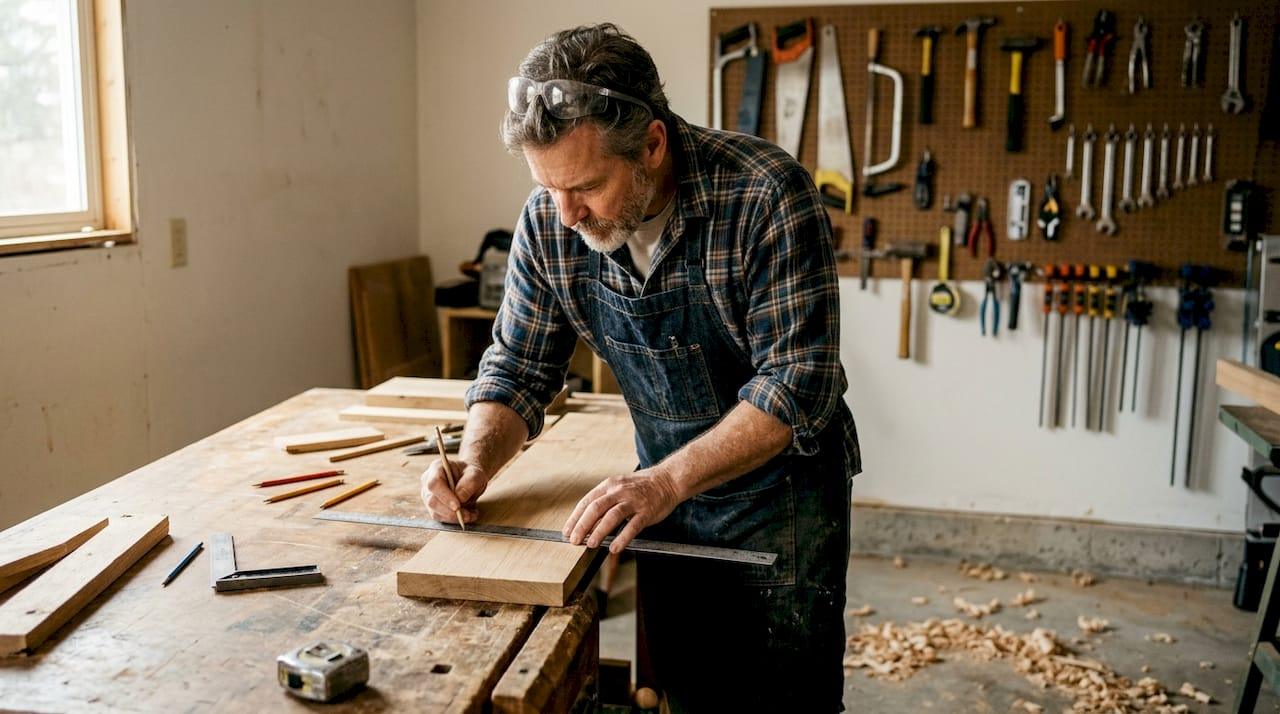
TL;DR:
- Handcrafted furniture offers superior strength, durability, and long-term value compared to mass-produced pieces.
- It can be fully customized, repaired, and built to fit personal style and functional needs.
- Creating furniture yourself fosters skill development, mental well-being, and a lasting personal connection to your pieces.
When you walk into a furniture store, the choice between a $200 flat-pack shelf and a $800 handcrafted oak cabinet feels obvious on the surface. But for DIY enthusiasts and hobbyist woodworkers, that decision runs much deeper. Handcrafted furniture offers structural advantages, longer lifespans, and a level of personal satisfaction that mass-produced pieces simply cannot match. This article breaks down the real, evidence-backed reasons why handcrafted furniture is worth your time and effort, from the joinery holding it together to the skills you build along the way.
Table of Contents
- Strength and durability: The foundation of handcrafted furniture
- Longevity and value: Heirloom quality over the years
- Skill-building and creative satisfaction for DIYers
- Customization, repairability, and environmental impact
- What most people miss about handcrafted furniture
- Ready to build or buy? Start your handcrafted journey
- Frequently asked questions
Key Takeaways
| Point | Details |
|---|---|
| Built to last | Handcrafted furniture can last 50 to 100+ years thanks to strong joinery and high-quality hardwoods. |
| More value over time | Buying or making handcrafted pieces is usually cheaper in the long run compared to replacing mass-produced items repeatedly. |
| DIY skills boost | Making furniture by hand improves woodworking skills and brings personal satisfaction. |
| Sustainable and customizable | Handcrafted pieces can be uniquely styled to your home and are better for the environment because they are repairable and long-lasting. |
Strength and durability: The foundation of handcrafted furniture
With the decision set, let’s examine what makes handcrafted furniture structurally superior. The difference starts at the joints. Mass-produced furniture typically relies on staples, cam locks, and wood screws to hold pieces together. These fasteners work fine for a few years, but they loosen over time, especially when furniture is moved or used daily. Handcrafted furniture takes a completely different approach.
Joinery strength benefits like mortise-and-tenon and dovetail joints are mechanical connections cut directly into the wood. They interlock, creating a bond that actually gets tighter as the wood settles. As the Furniture Structural Integrity Guide confirms, superior joinery methods provide greater structural strength and durability compared to mass-produced furniture’s staples or cam locks.
The wood itself matters just as much as the joinery. Handcrafted pieces are typically built from solid hardwoods like white oak, maple, or walnut. These species score Janka hardness above 1,200 lbf, which is the threshold recommended for furniture longevity. Softwoods and engineered wood composites used in budget furniture compress, dent, and delaminate far sooner.
Here’s a quick comparison of common joinery methods and their relative strength:
| Joinery method | Strength rating | Typical use |
|---|---|---|
| Mortise-and-tenon | Very high | Chair legs, table frames |
| Dovetail | Very high | Drawer boxes, case corners |
| Pocket screw | Moderate | Cabinet face frames |
| Cam lock (flat-pack) | Low | Flat-pack assembly |
| Staple/brad nail | Very low | Back panels, light trim |
Another often-overlooked advantage is how handcrafted construction handles humidity. Wood expands and contracts with seasonal moisture changes. Rigid mass-produced furniture resists this movement, which causes splitting and warping. Handcrafted pieces, built with dovetail and mortise-and-tenon joints and proper wood grain orientation, are designed to move naturally without losing structural integrity. Understanding joinery’s role in furniture is one of the most practical skills any woodworker can develop.
“The joint is the signature of the craftsman. A well-cut mortise-and-tenon tells you everything about the care that went into a piece.”
- Mortise-and-tenon: Strongest option for load-bearing frames
- Dovetail: Ideal for drawer boxes and corners under tension
- Pocket screws: Acceptable for lighter, non-structural work
- Cam locks: Convenient but not built for long-term stress
Pro Tip: When building a table or chair, always choose mortise-and-tenon or drawbored joints at the legs. This single decision can add decades to the life of your piece.
Longevity and value: Heirloom quality over the years
Beyond the build quality, let’s see how handcrafted furniture performs over time and cost. The numbers tell a compelling story. Handcrafted pieces from hardwoods last 50 to over 100 years, often becoming heirlooms, while mass-produced furniture typically lasts just 5 to 20 years. That gap is not just about quality. It’s about the total cost you pay over a lifetime.
If you replace a mass-produced dining table every 10 to 15 years, you could spend the same amount four or five times over 50 years. A single handcrafted table built for $600 to $1,200 in materials could outlast every replacement cycle entirely. The DIY furniture long-term value calculation almost always favors handcrafted when you run it out over decades.

| Feature | Handcrafted furniture | Mass-produced furniture |
|---|---|---|
| Average lifespan | 50 to 100+ years | 5 to 20 years |
| Refinishing possible | Yes | Rarely |
| Repair friendly | Yes | Often not |
| Estimated 50-year cost | Low (one purchase) | High (multiple replacements) |
| Heirloom potential | High | Very low |
Beyond the financial math, handcrafted pieces carry intangible value that mass-produced furniture never can:
- Personal history: Every scratch and patina tells a story unique to your family
- Sentimental worth: A table built by a grandparent becomes irreplaceable
- Adaptability: Pieces can be refinished to match new décor without replacement
- Pride of ownership: You know exactly what went into it and why it was built
- Generational transfer: Handcrafted furniture is something worth passing down
The repairability factor is especially important. When a leg joint loosens on a handcrafted chair, you can re-glue it in an afternoon. When the same thing happens on a flat-pack piece, the cam lock has stripped and the whole chair is headed for the trash. Handcrafted furniture rewards the owner who takes care of it, and that relationship compounds over time.
Skill-building and creative satisfaction for DIYers
Handcrafted furniture isn’t just about what you own. It’s also about what you gain as a maker or DIYer. Every project you complete teaches you something new, and those lessons stack up faster than most beginners expect.
For woodworkers, handcrafting develops skills, offers therapeutic stress relief, builds a sense of accomplishment, and produces customizable, repairable pieces. The physical act of working with your hands engages both hemispheres of the brain, reduces cortisol levels, and builds fine motor control over time. These are real, measurable benefits that go beyond the finished product.
The essential woodworking skills you develop with each project build on each other in a logical progression:
- Wood selection: Learning grain direction, species properties, and moisture content
- Layout and measurement: Precision habits that transfer to every future project
- Joinery cutting: Hand tools or power tools, the skill is in the fit
- Surface preparation: Planing, sanding, and understanding how finish absorbs
- Finishing: Stains, oils, and topcoats that protect and beautify your work
- Problem-solving: Adapting when wood moves, measurements shift, or plans change
- Design thinking: Understanding proportion, function, and how a piece lives in a room
The DIY woodworking health benefits extend beyond the workshop too. Many woodworkers report that an evening in the shop does more to reset their mental state than an hour of screen time ever could. There’s something about the focus required to cut a clean joint that pushes everything else out of your head.
Pro Tip: If you’re just starting out, practice your first dovetail joint on scrap pine before moving to hardwood. The muscle memory you build on cheap material transfers directly to your real project, and you’ll waste far less wood.
Customization, repairability, and environmental impact
Skill-building leads naturally to the next major benefit: complete control over design and responsible ownership. When you build or commission a handcrafted piece, you are not choosing from a catalog of three sizes and two finishes. You are making something that fits your exact space, your exact style, and your exact life.
Handcrafted pieces are fully customizable, indefinitely repairable, and far less likely to end up as landfill. That last point matters more than most people realize. The furniture industry generates enormous waste every year as cheap pieces are discarded after short lifespans. A handcrafted piece that lasts 80 years represents 80 years of landfill avoided.
Here’s what full customization actually looks like in practice:
- Exact dimensions: Build a bookshelf that fits a specific alcove, not a standard size that almost fits
- Wood species choice: Match existing furniture, or choose a species for specific hardness or grain character
- Finish options: Oil, wax, lacquer, or paint, each creates a completely different look and feel
- Built-in features: Hidden compartments, adjustable shelves, or integrated cable management
- Sentimental details: Carved initials, a family date, or a unique design element that makes the piece yours
- Style flexibility: Match any aesthetic from mid-century modern to farmhouse to Shaker
For crafting custom furniture that truly fits your home, the ability to repair and refinish is just as important as the initial build. Handcrafted solid wood can be sanded back and refinished multiple times over its life. A scratched surface becomes a fresh start, not a reason to replace the whole piece.
“Repairability is not just a practical advantage. It’s an ethical one. A piece you can fix is a piece you never have to throw away.”
This philosophy aligns with a broader shift toward intentional ownership, buying or making fewer things, but choosing them to last.
What most people miss about handcrafted furniture
Having explored the main benefits, it’s worth considering what traditional advice often overlooks. Most comparisons between handcrafted and mass-produced furniture focus on durability and cost. Those matter, but they miss something deeper.
When you build a piece yourself, you develop a relationship with it that changes how you treat it. You know which joint took three attempts to fit correctly. You remember the afternoon you spent hand-planing the top surface. That knowledge makes you more likely to repair it, more likely to refinish it, and more likely to keep it when you move or redecorate. The connection between maker and piece is not just sentimental. It’s functional.
We’ve seen this play out repeatedly at woodworking project ideas where hobbyists share pieces they built years ago. The ones they built themselves are still in their homes. The ones they bought cheap are long gone.
That said, there are times when mass-produced furniture makes sense. A temporary rental, a child’s first desk, or a piece you need immediately with no budget flexibility. Handcrafted is not always the right answer. But when you have the time, the skills, or the willingness to learn, building it yourself is almost always the more satisfying and lasting choice. The projects you invest real care and time into give back every single year in ways you genuinely do not expect.
Ready to build or buy? Start your handcrafted journey
If these benefits have you motivated to take the next step, here’s how you can put handcrafted principles into practice. Real Woodwork Plans gives you the tools to move from inspiration to finished piece without guesswork.
Whether you want to explore the DIY woodworking benefits in your own shop or need step-by-step guidance to achieve woodworking project success, the site has plans for every skill level. From beginner-friendly joints to full furniture builds, you’ll find detailed blueprints that take the uncertainty out of every cut. Ready to craft custom furniture that fits your home perfectly? Browse the full plan library and start building something that lasts.
Frequently asked questions
How long does handcrafted furniture typically last?
Handcrafted pieces from hardwoods last 50 to over 100 years, often becoming family heirlooms passed down through generations.
Why is joinery important in handcrafted furniture?
Traditional joinery like mortise-and-tenon and dovetail joints create mechanical bonds that grow tighter over time, unlike the fasteners in mass-produced furniture that loosen with use.
Can handcrafted furniture be easily repaired?
Yes. Handcrafted pieces are indefinitely repairable, allowing you to re-glue joints, replace worn parts, or refinish surfaces instead of discarding the whole piece.
Is making your own furniture good for your health?
DIY woodworking reduces cortisol and improves dexterity while also delivering a strong sense of accomplishment that supports overall mental well-being.
Recommended
- Top benefits of DIY furniture: save 20-50% and create
- Role of joinery in furniture: strength and craftsmanship
- Home decor woodworking guide: craft custom furniture
- Benefits of DIY woodworking: Save money, boost health

“DIY woodworking enthusiast who started with zero experience and a YouTube tutorial.
I build simple, practical projects for my home and share free plans
so other beginners can skip the guesswork.If I can build it, you can too.”