TL;DR:
- DIY furniture offers customizable, durable solutions tailored to a child’s age and room size.
- Building toy storage, tables, and beds helps teach children skills and fosters creativity.
- Using safe materials and involving kids in the process results in meaningful, long-lasting furniture.
Finding furniture that fits your child’s personality, survives daily chaos, and doesn’t drain your bank account feels nearly impossible at times. Store shelves are packed with flimsy particle board pieces that wobble after a month of use. Building your own kids furniture changes that equation completely. You control the materials, the size, the safety features, and the fun details that make a child’s room feel truly theirs. Whether you’re picking up a saw for the first time or you’ve already built a few projects, this guide walks you through proven DIY kids furniture ideas that balance creativity, durability, and real skill-building.
Table of Contents
- Choosing the right DIY kids furniture project
- Simple DIY toy storage solutions
- DIY kids tables and chairs: Building for play and learning
- Creative beds, reading nooks, and functional play furniture
- Our perspective: Why DIY kids furniture truly matters
- Next steps: Build your dream kids furniture with real plans
- Frequently asked questions
Key Takeaways
| Point | Details |
|---|---|
| Choose age-appropriate projects | Matching furniture to your child’s age and room size ensures safety and functionality. |
| Start simple for skill-building | Toy storage solutions and simple tables are perfect for beginners and teach valuable woodworking skills. |
| Use creative finishes | Personalized paint, stenciling, and decals make each project unique and fun for kids. |
| Prioritize safety | Smooth edges, sturdy joinery, and safe finishes protect children during use. |
| Build together, bond together | DIY projects create lasting memories and strengthen family connections beyond furniture itself. |
Choosing the right DIY kids furniture project
Not every project suits every family, and jumping into the wrong build wastes both time and materials. Before you buy a single board, think through a few key criteria that will set your project up for success.
Key factors to evaluate before you start:
- Age and size of your child: A toddler needs lower surfaces and rounded corners. A school-age child needs a sturdier desk and more storage space.
- Room dimensions: Measure twice before designing. A loft bed that fits perfectly in a 10×12 room might overwhelm a smaller space.
- Your skill level: Be honest about where you are. Beginner builders should start with simple boxes and shelves before attempting mortise-and-tenon joinery.
- Time available: A weekend project is very different from a two-week build. Match the project scope to your schedule.
- Material health and safety: Look for low-VOC (volatile organic compound) plywood, solid hardwoods, and water-based finishes to protect indoor air quality in a child’s room.
- Budget: DIY furniture projects can save families up to 50% compared to store-bought options, but only when you plan material costs upfront.
Solid wood like pine or poplar is forgiving for beginners and takes paint well. Plywood is excellent for panels and shelving because it resists warping. Avoid MDF in high-humidity areas or anywhere it might get wet, since it swells and breaks down quickly.
Pro Tip: If you’re new to woodworking, review beginner woodworking tips before finalizing your design. Understanding basic joinery and tool safety will save you from costly mistakes on your first kids furniture build.
Matching the project to your family’s actual lifestyle matters more than picking the most impressive design you find online. A simple, well-built toy bin beats an elaborate unfinished bookcase every time.
Simple DIY toy storage solutions
Toy storage is the perfect entry point for families new to DIY furniture. The builds are straightforward, the materials are affordable, and the payoff is immediate. A cluttered room transforms fast when you have the right bins and cubbies in place.
Toy bins and storage cubes are among the top-rated beginner DIY projects for families, and it’s easy to see why. They require only basic cuts, simple assembly, and minimal finishing work.
Step-by-step overview for a basic toy cubby unit:
- Plan your layout. Decide how many cubbies you need and what size bins will fit inside. Standard cube openings of 12×12 inches work with most fabric bins.
- Cut your panels. Use 3/4-inch plywood for the sides, top, bottom, and dividers. A circular saw with a straight-edge guide gives clean, accurate cuts.
- Sand all edges. Run 120-grit sandpaper along every edge and corner before assembly. Kids will touch every surface, so smooth edges are non-negotiable.
- Assemble with wood glue and screws. Glue adds strength; screws add speed. Pre-drill holes to prevent splitting.
- Apply your finish. Water-based paint in bright colors works great. Use wood finishing tips to get a smooth, durable coat that holds up to sticky hands.
- Attach to the wall. Always anchor freestanding storage to a wall stud using a furniture strap. This is a safety essential, not optional.
“The best toy storage is the kind kids actually use. Build cubbies at their eye level, label each section with pictures or words, and watch the cleanup habits improve almost immediately.”
For creative finishes, try stenciling animals or letters onto the cubby faces. Chalkboard paint on one panel turns storage into a drawing surface. Upcycled wood from old pallets or reclaimed lumber adds character and cuts material costs even further. Small rooms benefit from vertical cubby towers rather than wide horizontal units, which frees up floor space for play.
DIY kids tables and chairs: Building for play and learning
A well-built kids table becomes the center of everything: art projects, snacks, homework, board games, and imaginary worlds. Building one yourself means you can size it perfectly for your child right now, and even design it to grow with them.
Custom-made kids tables and chairs can be adapted for growing children and multiple purposes, which is something store-bought sets almost never offer.
What makes a great DIY kids table and chair set:
- Correct height: For toddlers, aim for a table surface around 18 to 20 inches from the floor. For school-age kids, 22 to 26 inches works better.
- Sturdy leg joinery: Use pocket screws or mortise-and-tenon joints at the leg connections. Wobbly legs are the number one failure point in kids furniture.
- Rounded corners: Use a router or sander to ease every corner and edge. Sharp 90-degree corners and active children are a bad combination.
- Child-safe finish: Water-based polyurethane or a natural oil finish like tung oil protects the wood without releasing harmful fumes. Always let pieces cure fully before use.
- Adjustable design option: Building legs with bolt-on connections allows you to swap in longer legs as your child grows, extending the furniture’s useful life by years.
Pro Tip: When designing wood projects for kids, add 10% extra material to your cut list. Mistakes happen, and having a spare board on hand prevents a mid-project hardware store run.
For the chairs, a simple four-legged stool with a back rail is faster to build than a full chair and just as functional for young children. Paint the chairs in different colors so each child has their own designated seat. That small detail matters a lot to kids.
Creative beds, reading nooks, and functional play furniture
Once you’ve built a few smaller pieces, larger projects start to feel achievable. Beds with hidden storage, cozy reading nooks, and built-in play sets are the projects that kids remember for years. These are the pieces that make a room feel magical.
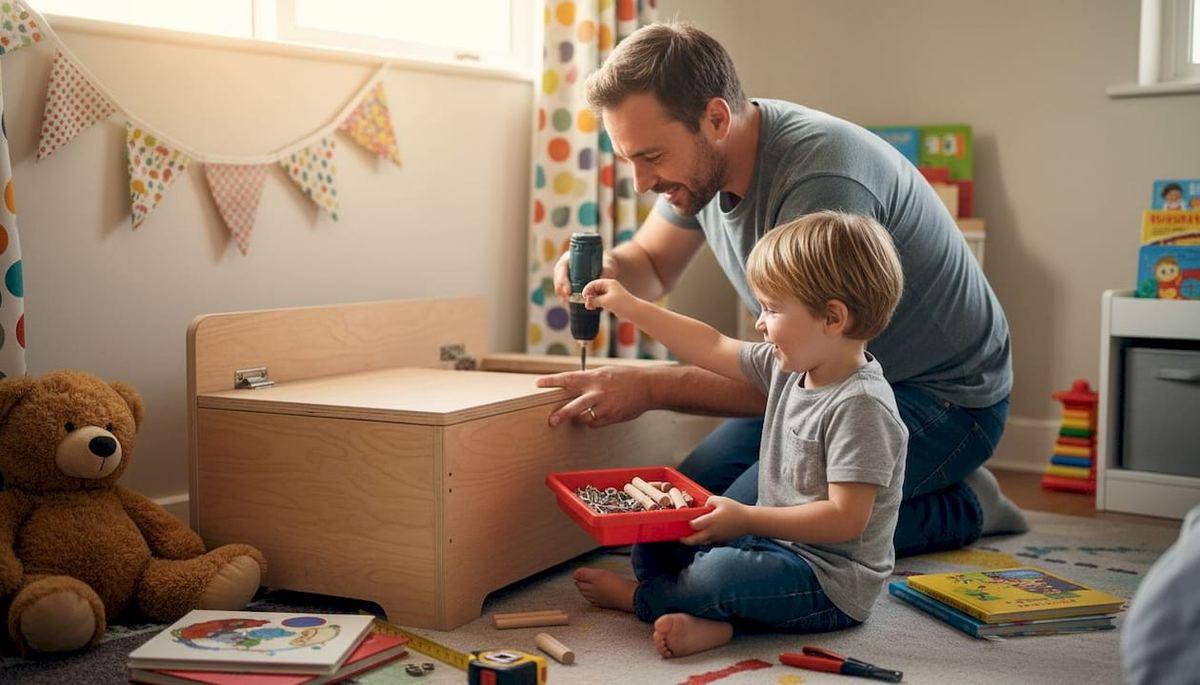
Loft beds and reading nooks are among the most requested DIY kids furniture projects in 2026, and the demand makes sense. A loft bed with a desk underneath doubles the function of a small room instantly.
Material comparison for large-scale kids furniture:
| Material | Strength | Weight | Cost | Best use |
|---|---|---|---|---|
| Pine | Moderate | Light | Low | Beds, frames, shelves |
| Oak | High | Heavy | High | Structural components |
| Plywood | High | Moderate | Moderate | Panels, floors, walls |
| MDF | Low | Heavy | Low | Painted flat surfaces only |
For beds, pine is the go-to choice for most DIY builders. It’s affordable, widely available, and easy to work with. Use oak or hard maple for the structural posts and rails where strength really matters. Plywood works perfectly for the platform base and any built-in drawer boxes.
Safety and structural must-haves for large projects:
- Use lag bolts, not just screws, for bed frame connections
- Install guardrails on any elevated sleeping surface above 30 inches
- Test load capacity before your child sleeps in it
- Proper sanding tips ensure no splinters on sleeping surfaces
- Check all connections monthly for the first year
For reading nooks, a simple built-in bench with a hinged lid for storage underneath is a weekend project that delivers enormous impact. Add a curtain rod above for a canopy effect, a small shelf for books, and soft lighting. Kids will live in that corner. For long-term care, knowing how to handle repairing wooden furniture keeps these beloved pieces looking great for years.
Our perspective: Why DIY kids furniture truly matters
Here’s something most articles skip over: the furniture itself is almost secondary. What actually matters is what happens during the build.
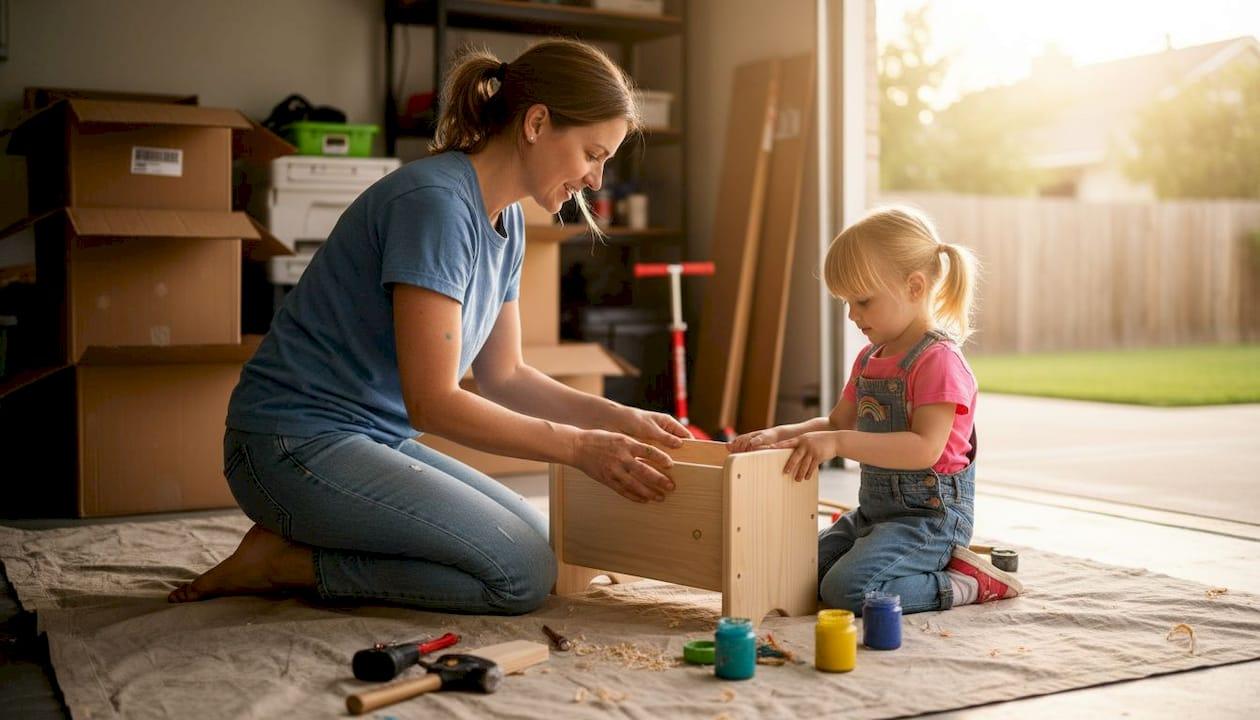
When you involve your child in even small parts of the process, something shifts. They watch you measure, make decisions, fix mistakes, and finish something real. That’s not a small thing. Kids who see a parent work through a problem with their hands absorb a lesson that no classroom delivers. They learn that hard things are worth doing.
We’ve seen parents dismiss this angle because they think their kids are too young or too impatient to participate. But a five-year-old can sand a board. A seven-year-old can help paint. A ten-year-old can hold a measuring tape and read a number. Every small task builds confidence.
The furniture will eventually get outgrown, scratched, or replaced. The memory of building it together won’t. That’s the real return on your investment. Building skill with woodworking is a gift that compounds over time, for you and for your child.
Next steps: Build your dream kids furniture with real plans
Ready to get started on your next DIY kids furniture project? Here’s where to go for proven support.
Having a clear, tested plan makes the difference between a project that stalls in the garage and one that gets finished and loved. At Real Woodwork Plans, you’ll find free and premium woodworking plans built specifically for families and beginners, covering everything from toy storage to full loft beds.
Explore the DIY woodworking benefits that go beyond just saving money, and check out beginner furniture tips to start your first project with confidence. Every plan includes a cut list, material guide, and step-by-step instructions so you spend less time guessing and more time building.
Frequently asked questions
What are the safest materials for DIY kids furniture?
Solid wood, low-VOC plywood, and water-based finishes are recommended for safe, durable kids furniture. These materials minimize harmful off-gassing and are easy to clean and maintain.
How difficult are DIY toy storage projects for beginners?
Toy storage projects are ideal starter builds, requiring only basic tools like a circular saw, drill, and sander. Most first-time builders can complete a basic cubby unit in a single weekend.
Can children help with building DIY furniture?
With adult supervision, kids can safely assist with sanding, painting, and light assembly tasks. Involving them in hands-on skill-building also builds their confidence and makes the finished piece more meaningful to them.
What finish should I use for kids furniture?
Water-based polyurethane or natural oil finishes are the best choices because they cure safely and resist daily wear. These safe finish options also improve indoor air quality compared to solvent-based alternatives.
How can I extend the life of homemade kids furniture?
Regular tightening of joints, light sanding of worn surfaces, and prompt attention to damage keeps DIY furniture solid for years. A solid furniture repair routine prevents small issues from becoming costly replacements.
Recommended
- 7 Inspiring Woodworking Project Ideas 2026 for DIY Skill-Building
- Top benefits of DIY furniture: save 20-50% and create
- Home Decor Woodworking: 4 Best Projects + 10-Hour Guide
- 5 custom woodworking ideas for garden – Real Woodwork Plans
Want 16,000+ step-by-step woodworking plans?
Ted’s Woodworking has plans for every skill level — from simple shelves to full bedroom sets. Each plan includes a cut list, material list, and detailed diagrams. Browse Ted’s plans →

“DIY woodworking enthusiast who started with zero experience and a YouTube tutorial.
I build simple, practical projects for my home and share free plans
so other beginners can skip the guesswork.If I can build it, you can too.”