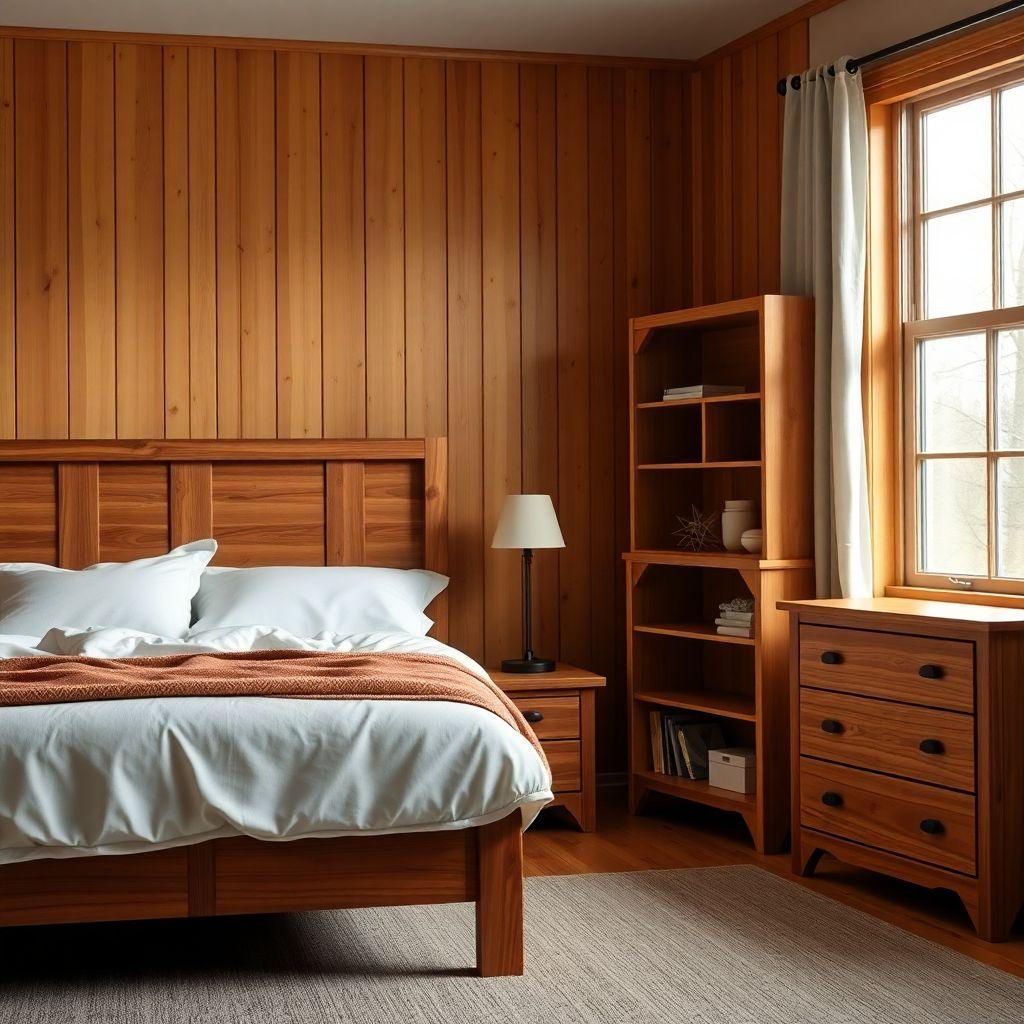
Bedroom furniture plans are where most DIYers find their footing, because the pieces span a wide skill range. You can start with a half-day bookcase build and work all the way up to a multi-weekend dresser without ever leaving the same room. That progression is exactly what makes the bedroom the best training ground in the house. This guide is part of our complete woodworking furniture plans library.
This page is the hub. Instead of scattering you across a dozen disconnected plan pages, it helps you choose which of six pieces to build first based on your skill level, budget, tools, and how much time you have. We rank them easiest to hardest: bookcase nightstand, standard nightstand, toddler floor bed, platform bed frame, wardrobe or closet organizer, and the 9-drawer dresser.
Build in that order and you get a roadmap no competitor lays out. Start small, master a skill, then reuse it on the next piece up. Every section below gives you the skill level, 2026 material cost, build time, minimum tools, and key joinery so you can self-select before you buy a single board.
Skill Selector: Which Piece Should You Build First?
Match your current skill to the right starting project. The whole point of this lineup is that skills stack. Pocket holes, drawer boxes, and squaring learned on a small piece carry directly to the big ones, so nothing you learn early goes to waste.
An absolute beginner should start with the bookcase nightstand. It is straight cuts only, no drawer hardware, and it is done in an afternoon. Once you want to learn drawers, the standard nightstand introduces slides at a cheap, forgiving scale. From there the toddler floor bed and platform bed frame scale your framing skills up to room size, the wardrobe teaches sheet-goods work, and the 9-drawer dresser waits at the end as your capstone.
| If you are… | Build this | Why |
|---|---|---|
| Building your first piece ever | Bookcase Nightstand | Straight cuts, no drawer hardware, done in an afternoon |
| Ready to learn drawer slides | Standard Nightstand | Drawer practice at cheap, small scale |
| A parent wanting a safe kid’s bed | Toddler Floor Bed | Low profile, simple joinery, full guide available |
| Comfortable with pocket holes | Platform Bed Frame | Scales your framing skills to room size |
| Wanting closet storage | Wardrobe / Closet Organizer | Modular plywood work, less fussy than drawers |
| Chasing a capstone project | 9-Drawer Dresser | Combines carcass, drawers, and slides in one build |
Size Your Space First
Measure the room and its clearances before you cut anything. The most common beginner mistake is building a piece that technically works but crowds the walkway or blocks a door swing.
Leave at least 24 inches of walking space around the bed, and 30 to 36 inches on the main access side for comfort. A nightstand should sit within about 2 inches of the mattress top, which usually means 24 to 28 inches tall. Keep bedside pieces shallow, around 10 to 12 inches deep for a bookcase nightstand, so they do not intrude on the walkway.
For dressers and wardrobes, confirm the piece fits against its wall with drawers or doors fully open plus room to stand. And plan your bed opening around standard mattress footprints before you buy lumber: a queen is 60 by 80 inches, a king is 76 by 80, and a twin is 38 by 75.
Type 1: Bookcase as Nightstand
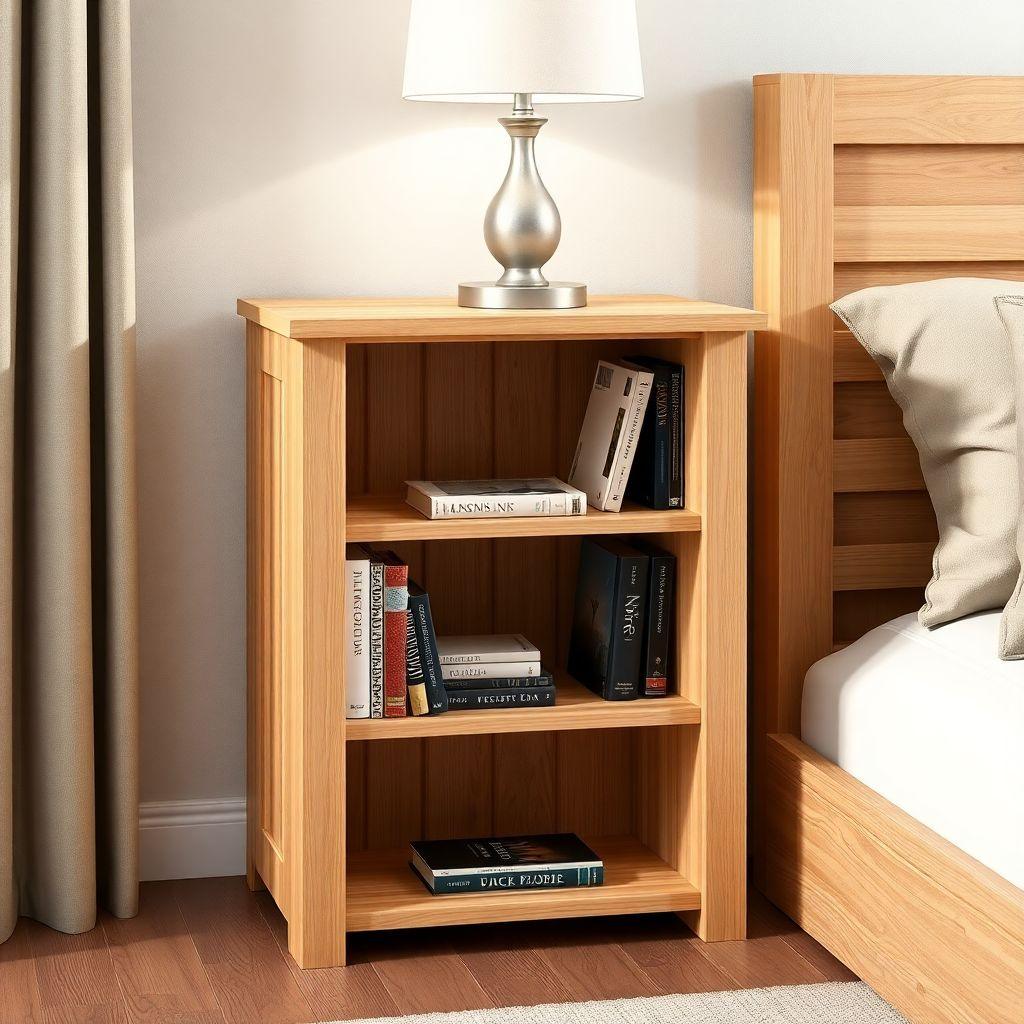
Skill: Beginner | Cost: $30–$85 | Time: Half a day
Using a bookcase as nightstand is the easiest bedroom furniture build there is, even simpler than a drawer nightstand. What sets it apart is what it leaves out: no drawer slides, no drawer boxes, and zero hardware cost. A shallow open-shelf carcass with two or three shelves gives you more visible storage than a single-drawer nightstand for books, a phone charger, a water glass, and a lamp.
The one design rule that matters is depth. Keep it at 12 inches maximum so it fits beside the bed like a traditional nightstand without eating floor space. A standard footprint runs 10 to 12 inches deep, 14 to 18 inches wide, and 24 to 28 inches tall, which lines up with the top of most mattresses. Build it from pine 1×12 boards or 3/4-inch plywood, and let the finish decide whether it reads as a nightstand or a bookshelf. Joinery is pocket holes or dados for the shelves, plus glue and brad nails for the back panel.
The beginner payoff is real. Every cut is straight, so you learn measuring, squaring, and finishing before any hardware enters the picture. A full cut list and free plans for the bookcase nightstand are on the way in their own guide.
Type 2: Nightstand
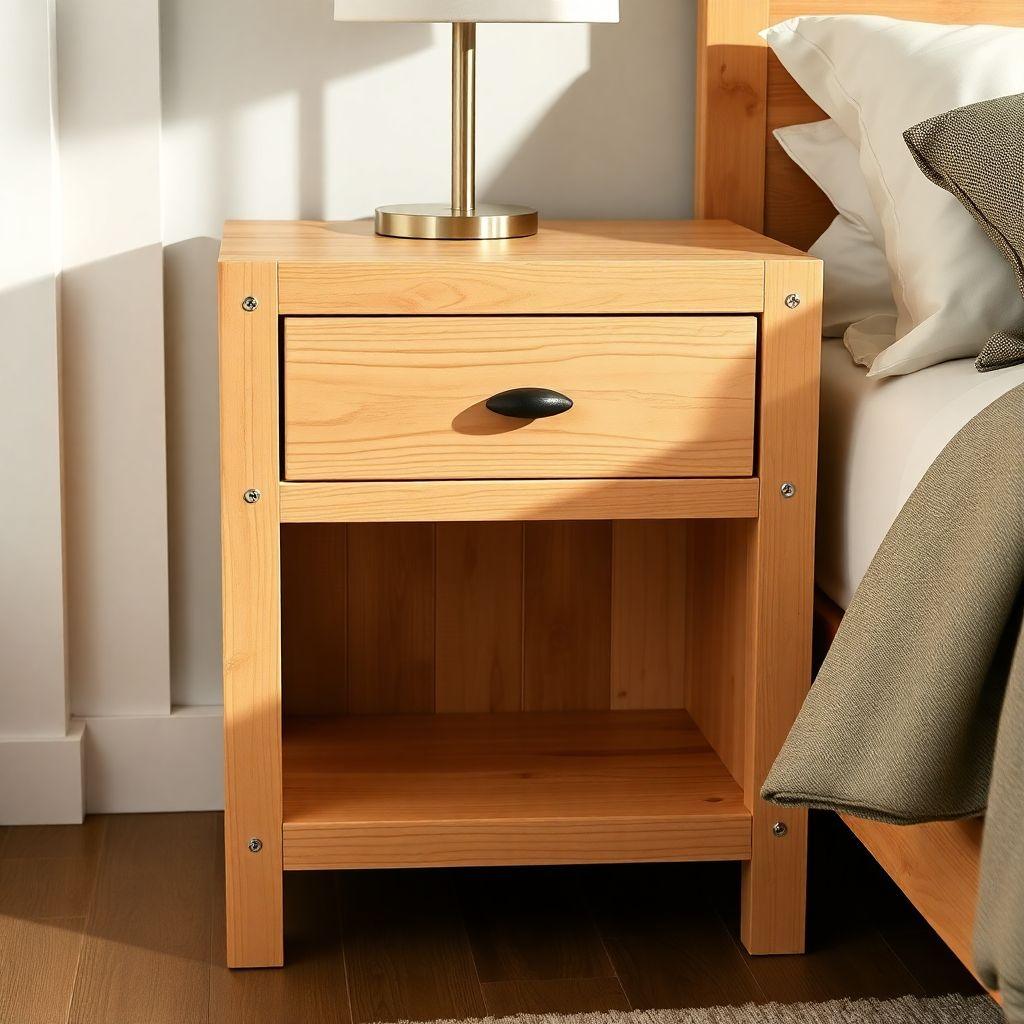
Skill: Beginner | Cost: $40–$110 | Time: 1 weekend
If the bookcase is the easiest bedroom piece, the standard nightstand is the best first furniture project, and the piece that unlocks every larger build. It is the natural entry point into nightstand woodworking because it adds one or two drawers, which introduces drawer boxes, slides, and hardware mounting at a small, forgiving scale where mistakes are cheap to fix.
The build is mostly box construction plus a face frame, joined with pocket-hole screws throughout, wood glue at the joints, and brad nails on the back panel. Pocket holes dominate every popular nightstand tutorial for a reason: they are fast and forgiving. Common variants are an open shelf only, one drawer plus a shelf, or two drawers for maximum storage. A typical footprint is 17 to 24 inches wide, 16 to 19 inches deep, and 24 to 28 inches tall. The trick that separates a clean build from a sticky one is getting the drawer slides mounted dead level.
Here is the skill-transfer payoff. The drawer-making you learn here scales directly to the 9-drawer dresser later, where one nightstand drawer becomes the same technique repeated nine times. Cost-wise you are looking at $40 to $110 to build versus $150 to $500 at retail. The full nightstand cut list and free plans are coming to their own guide.
Type 3: Toddler Floor Bed
Skill: Beginner | Cost: $60–$140 | Time: 1 day
A toddler floor bed follows the Montessori idea of a frame low enough for a child to climb in and out of on their own, with no fall risk from height. These beds are popular from around 18 months into the early school years, and they make an excellent first or second project.
What makes it distinctive among bedroom pieces is the total lack of structural complexity. It is a low-profile frame, typically a 2×4 pine base with a plywood or slat deck sitting just 3 to 6 inches off the floor, sized to a twin or toddler mattress at 40 inches wide by 75 inches long. Corners are joined with pocket-hole screws. The one step you cannot rush is sanding: round every edge and corner thoroughly, because this piece is built for a small child. Cost runs $60 to $140 to build against $250 to $600 retail for Montessori floor beds.
This is the one type in the lineup with a complete build guide live right now. For the complete cut list, dimensions, and step-by-step assembly, follow the full toddler floor bed plans.
Ready to build the rest of the lineup without designing every piece from scratch? Get 16,000+ woodworking plans → with cut lists and diagrams for every project ahead.
Type 4: Platform Bed Frame
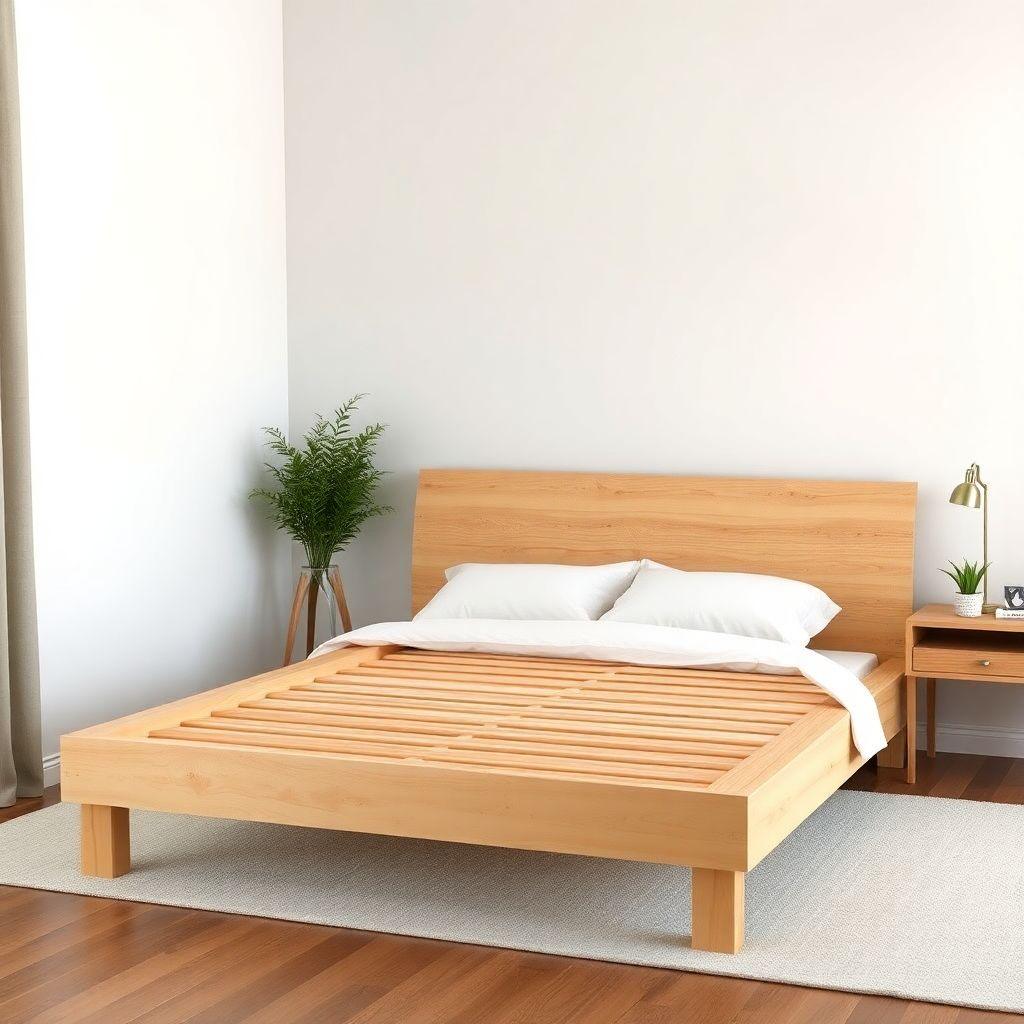
Skill: Intermediate | Cost: $120–$350 | Time: 1–2 weekends
The platform bed frame is your first room-scale build and the natural step up after a nightstand. It looks more intimidating than it is: pocket-hole joinery on 2×4 and 2×6 lumber keeps it beginner-accessible even though we label it intermediate.
This is also where bed drawings come into play. Good bed frame plans include measured drawings, a cut list, and assembly diagrams, and in woodworking the words “drawings” and “plans” mean the same thing. Let the drawings do the hard planning so you are not guessing at rail lengths and slat spacing. A queen platform frames out to roughly 64.5 inches wide by 84.5 inches long by 12 to 14 inches tall, with a mattress opening of 60.5 by 80.5 inches. Space the plywood slats close, and the deck will support a mattress without sag.
What makes this build distinctive is squaring a large assembly and carrying real structural load, which is why carriage bolts show up at the rail joints instead of screws alone. Common variants are platform only, platform with a simple headboard, or platform with under-bed storage drawers. Cost runs $120 to $350 to build versus $700 to $2,000 retail, a 60 to 85 percent saving. If you have not built a nightstand yet, do that first to practice measuring and pocket holes at small scale. Complete bed drawings, a full cut list, and free plans are coming to their own guide.
Type 5: Wardrobe / Closet Organizer
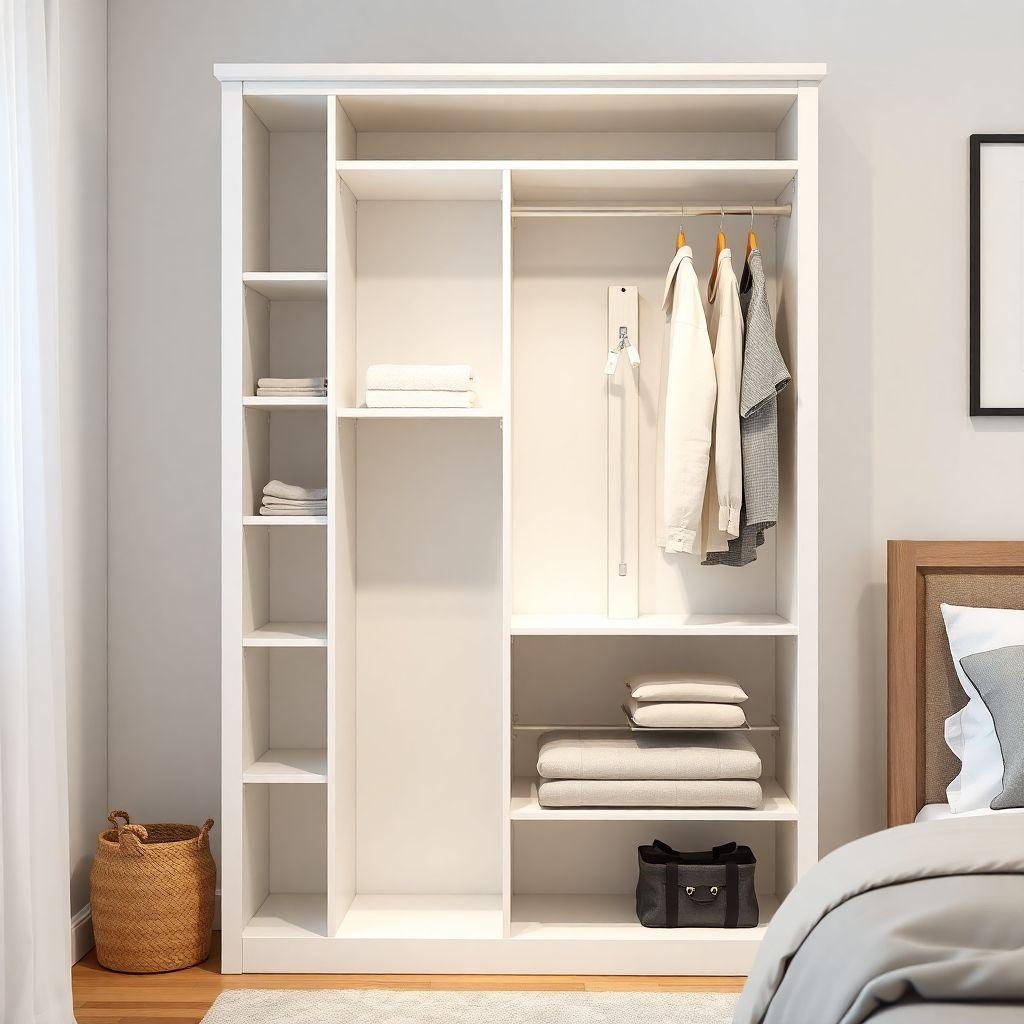
Skill: Beginner-to-Intermediate | Cost: $80–$350 | Time: 1–2 weekends
The wardrobe comes in two versions that differ sharply in difficulty. A modular plywood organizer built into an existing closet opening is closer to flat-pack assembly and is genuinely beginner-friendly. A freestanding wardrobe with doors is more involved and lands squarely in intermediate territory.
Either way, this project teaches you to break down full sheets of plywood and plan modularly, and it is far less fussy than drawer work, which makes it a solid third or fourth build. The dimensions that matter are practical: 24 inches deep for garment clearance, a hanging rod at 66 to 72 inches for full-length clothes or 40 to 42 inches for folded items, and shelves 12 to 16 inches deep. Adjustable shelves ride on shelf pins, and the interior works well in melamine or paint-grade birch ply. Free-standing units get screwed together; built-in systems anchor to wall studs. Joinery is dados or pocket holes for shelf supports.
Budget $80 to $150 for a built-in shelving system and up to $350 for a freestanding unit with doors. A full parts list and free plans for the closet organizer are on the way.
Type 6: 9-Drawer Dresser
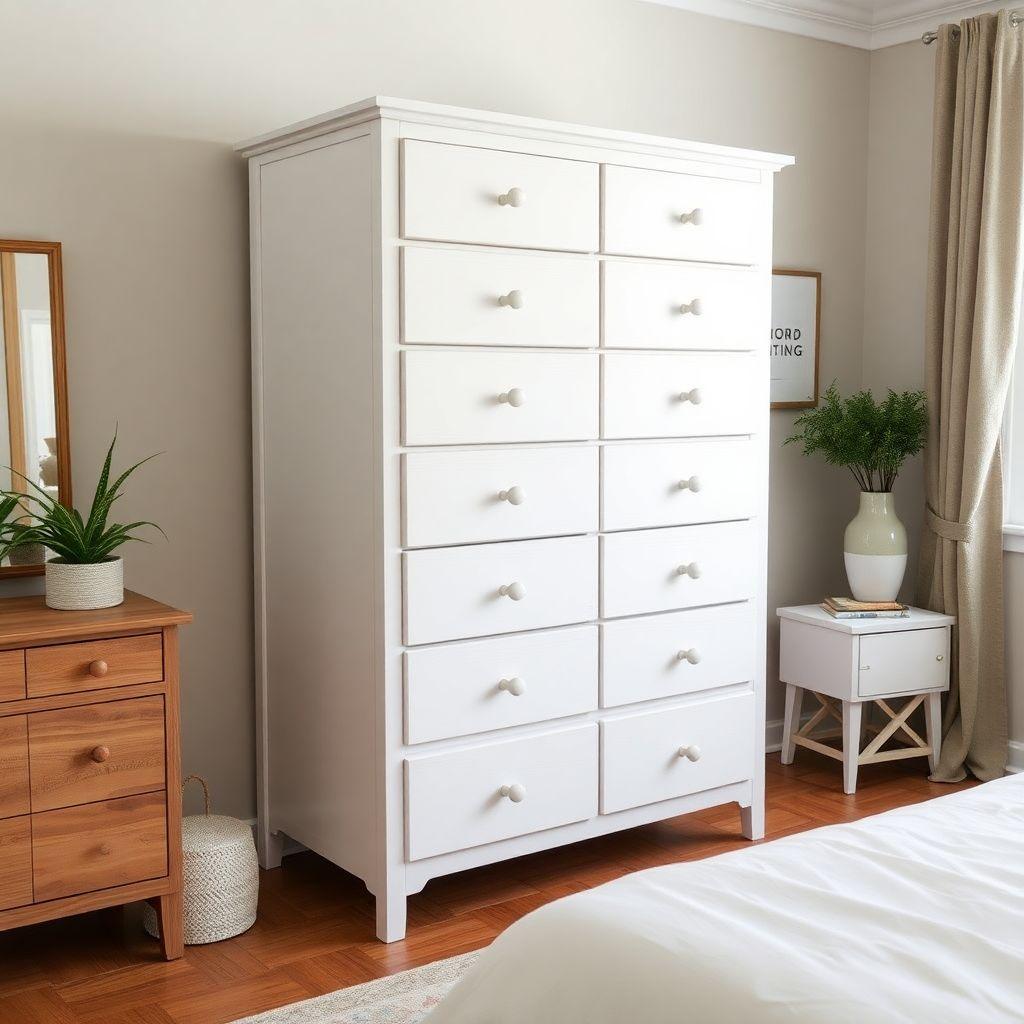
Skill: Intermediate-to-Advanced | Cost: $280–$550 | Time: 3–4 weekends
The 9-drawer dresser, also searched as nine drawer dressers, is the capstone of bedroom furniture builds. It is the hardest piece in the lineup, and it earns that spot by combining every earlier skill into one project.
What makes it hard is precision at scale. A plywood carcass demands accurate dado or rabbet cuts, and nine drawers mean nine chances for slide misalignment. Build the carcass from 3/4-inch birch plywood specifically because it will not expand and contract seasonally, which is critical when you are fitting nine drawer openings to tight slide clearances. A wide solid-wood panel could move enough with humidity to bind a drawer; plywood stays put. Typical dimensions run 60 to 72 inches wide, 18 to 20 inches deep, and 32 to 36 inches tall, with the common layout of six small drawers over three large ones. Drawer bottoms sit in a dado groove, and the face frame attaches with pocket holes.
Budget for the hardware, because it adds up: nine pairs of soft-close slides run roughly $80 to $120 on their own. All in, expect $280 to $550 to build against $800 to $2,500 retail for solid-wood units. Master drawers on a one- or two-drawer nightstand first; the technique transfers directly, just repeated nine times. The full 9-drawer dresser cut list and free plans are coming to their own guide.
Material Quick-Reference: Pine vs. Poplar vs. Plywood
The right wood depends on the piece and whether you plan to paint or stain it. Pine is your cheap, strong choice for structural frames. Poplar is the pick for anything painted, because it is harder than white pine and shows no grain through the finish. Birch plywood belongs in carcasses, because it stays dimensionally stable and will not move with the seasons.
That last point is why plywood wins for dressers. A wide solid-wood panel can move a quarter inch or more with humidity, which is enough to bind a drawer, while plywood is immune.
| Material | Best For | Pros | Watch Out For |
|---|---|---|---|
| Solid pine | Bed frames, legs, paint-grade nightstands | Cheap, everywhere, easy to cut | Soft and dents, knots bleed through paint, moves in wide boards |
| Solid poplar | Drawer boxes, face frames, painted pieces | Harder than white pine, paints beautifully, stable | Greenish tint looks poor under clear stain |
| Birch plywood | Dresser and bookcase carcasses | No seasonal movement, strong, consistent thickness | Costs more, edges need banding, heavy |
2026 Cost Context: What You Will Actually Pay
Lumber is elevated in 2026, and it helps to know why before you sticker-shock at the checkout. A combined 35.9 percent tariff burden on Canadian softwood imports has pushed prices up roughly 4.35 percent month over month and 1.86 percent year over year as of July 2026. The ranges in this guide reflect that.
Across the lineup, bedroom pieces run from about $30 for a budget bookcase nightstand to around $900 for a premium hardwood dresser. A few current reference points: a 4×8 sheet of 3/4-inch birch plywood runs $55 to $80, a 2x4x8 pine board runs $5 to $9, and 18-inch soft-close slides run $8 to $18 per pair. Even at these prices, building still beats retail by 60 to 85 percent on every piece, because you are supplying the labor.
Frequently Asked Questions
What bedroom furniture should I build first?
Start with a bookcase nightstand or a simple drawer nightstand. Both take one weekend, cost under $100, and teach measuring, cutting, pocket holes, and finishing. Those are the foundation for every larger piece, so nothing you learn is wasted.
How much does it cost to build a nightstand?
A DIY nightstand runs about $40 to $110 all in, depending on wood and hardware. That covers a pine or poplar box, one or two drawers, slides, and a pull. Retail equivalents run $150 to $500, so you save real money on your very first build.
What wood is best for bedroom furniture?
It depends on the piece. Use 2×4 or 2×6 pine for bed frames and structure, 1x pine or poplar for nightstands, and 3/4-inch birch plywood for dresser carcasses because it does not move with humidity. Poplar paints cleaner than pine, while select pine, alder, or oak look better under stain.
Do I need a table saw?
No, not for the first three types. A circular saw, drill, pocket-hole jig, and sander handle the bookcase nightstand, standard nightstand, and toddler floor bed. A table saw helps once you reach the platform bed, wardrobe, and dresser, mainly for breaking down plywood, though many lumber yards will make rip cuts for a small fee.
What are bed drawings in woodworking?
Bed drawings are PDF plans that show a bed’s dimensions, cut list, and assembly diagrams. In woodworking the terms “drawings” and “plans” are used interchangeably. They are for builders, not artists, and they do the measuring and planning work for you.
How long does it take to build a 9-drawer dresser?
Three to four weekends for most intermediate builders. Roughly: carcass first, then drawer boxes, then slides and drawer fitting, then final finish and hardware. Rushing produces drawers that bind, so take each stage in turn.
Can I build a bookcase as a nightstand?
Yes, and it is one of the smartest cheap builds you can make. A shallow open-shelf unit 10 to 12 inches deep sits beside the bed like a nightstand and gives you two or three shelves with no drawer hardware to buy. It is the easiest and cheapest bedroom piece, ideal as a first project.
What joinery is used in a nine drawer dresser?
The carcass uses dado or rabbet joints, the face frame attaches with pocket holes, and each drawer bottom sits in a dado groove. Higher-end builds use dovetail or box joints for the drawer boxes. The dresser combines these methods, which is why it lands last in the progression.

“DIY woodworking enthusiast who started with zero experience and a YouTube tutorial.
I build simple, practical projects for my home and share free plans
so other beginners can skip the guesswork.If I can build it, you can too.”