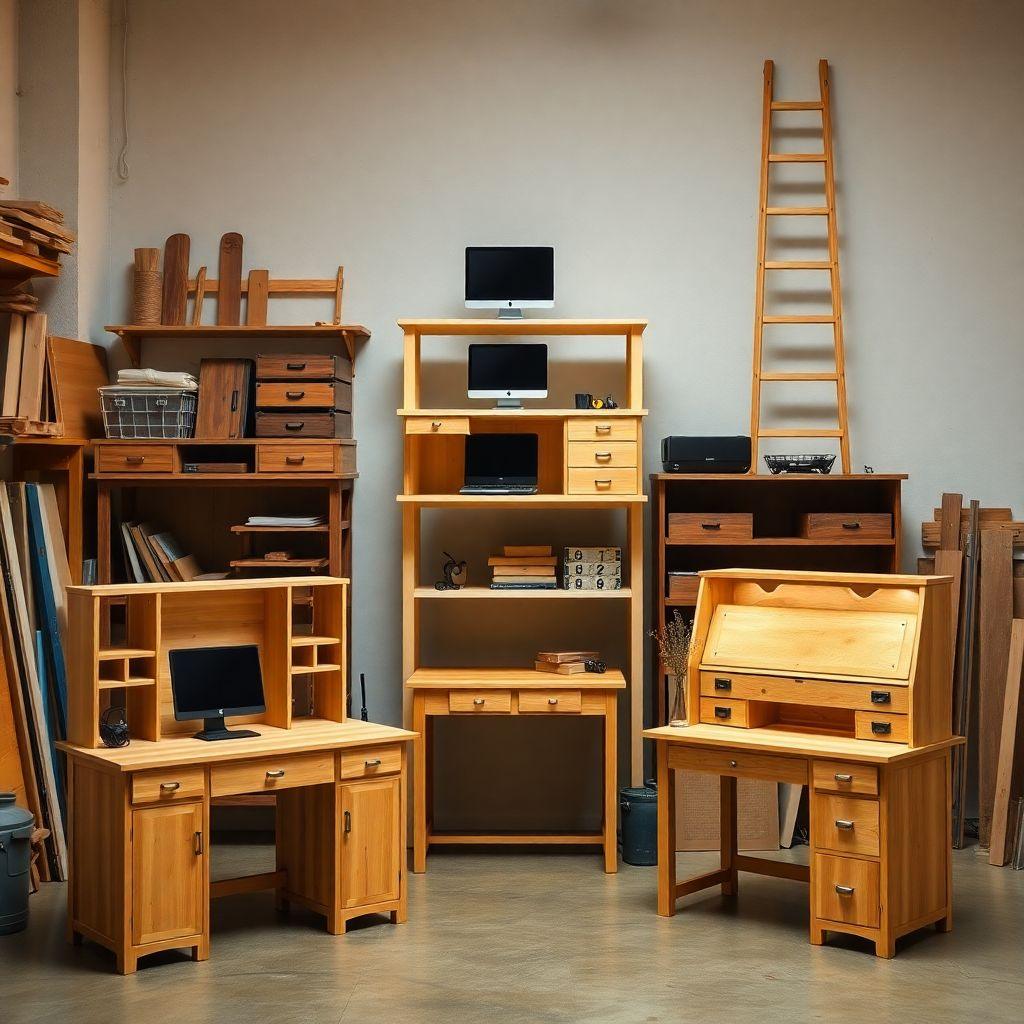
Building a desk is one of the most useful projects a woodworker can take on. You end up with something you use every day, and unlike a lot of furniture, a desk forgives small mistakes as long as the top is flat and the base is solid. The hard part is not the joinery. It is deciding which desk to build in the first place. This guide is part of our complete woodworking furniture plans library.
This hub covers six DIY desk types, from a one-day writing desk to a multi-weekend secretary desk. For each one you get the skill level, a realistic cost range, the build time, and who it suits. There are no step-by-step instructions here. This is a decision-helper, so you can pick the right project before you buy a single board.
To choose, weigh three things: your skill honestly, the space you have, and how much of your budget goes to hardware versus lumber. A beginner with a corner to fill has different desk diy ideas open to them than an advanced builder chasing a showpiece. Work through the sections below and the “Which Should You Build?” verdict at the end will point you to a starting project.
Simple Writing Desk
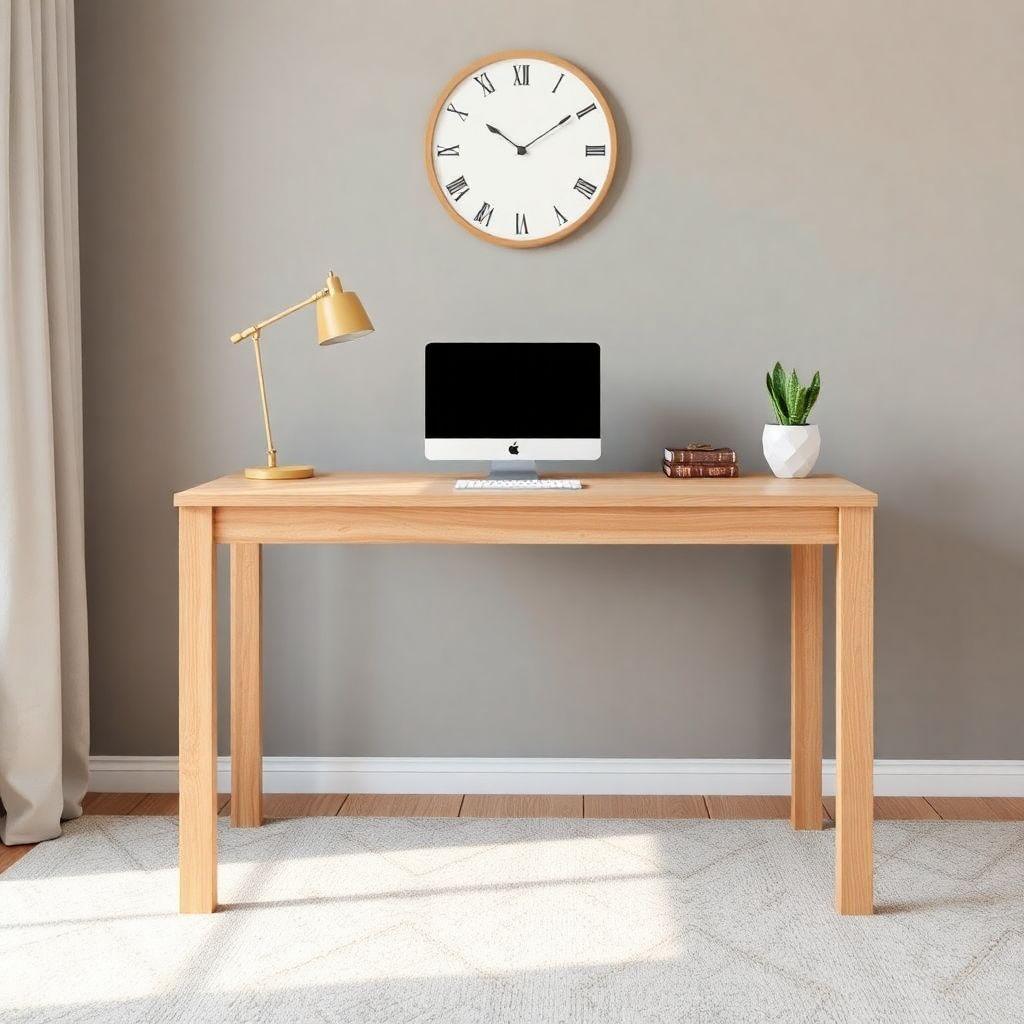
A flat top on four legs with no drawers. This is the classic beginner desk and the fastest path from lumber pile to finished furniture.
- Skill level: Beginner
- Cost estimate: $50 to $120
- Build time: 1 day
- Best for: First-time desk builders, small rooms, anyone who works from a laptop
The writing desk earns its place because it strips the project down to the essentials: a stable top and four square legs. There are no drawer slides to fit, no fold-down mechanisms, no corner joints to square. You can build it with basic butt joints and pocket screws and still get a desk that lasts for years. Because the parts list is short, it is also the cheapest way to learn how a desk goes together before you attempt something more involved. If you have never built one, start here.
Computer/Gaming Desk
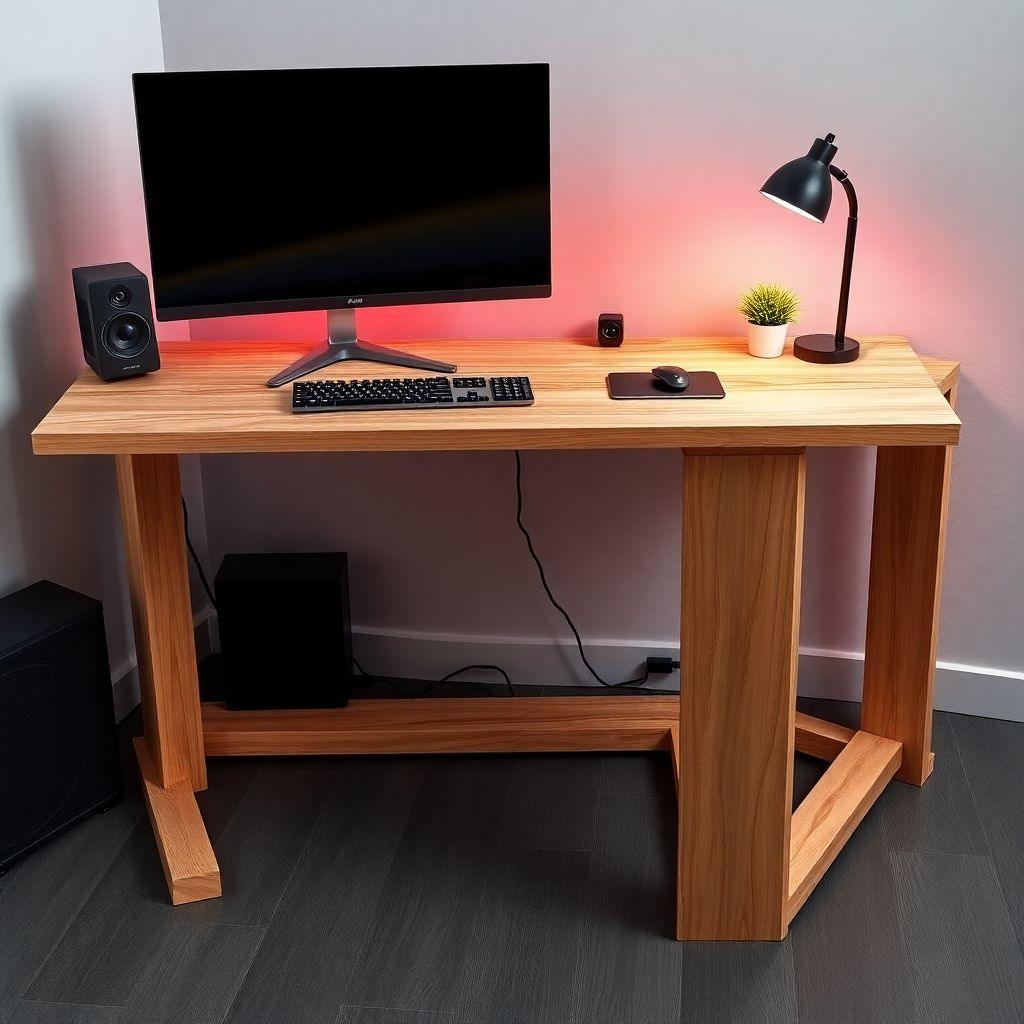
A wide work surface, usually 60 inches or more, built to hold monitors, a keyboard, and everything that plugs into them. The upgrade over a writing desk is cable management and the option to add a monitor riser.
- Skill level: Beginner to Intermediate
- Cost estimate: $80 to $200
- Build time: 1 weekend
- Best for: Multi-monitor setups, gamers, anyone with a lot of gear to hide
A woodworking computer desk is really a writing desk that grew up. The build stays simple, but the wider top needs a center support or an apron to keep it from sagging under the weight of monitors, and you will want to plan a cable tray or a grommet hole before you assemble anything. Adding a monitor riser is an easy afternoon extension that clears desk space and lifts screens to eye level. If you want a full walkthrough of a build like this, see our woodworking desk guide at /woodworking-desk/. This is the sweet spot for most people: more capable than a writing desk, still well within a beginner’s reach.
Ladder Desk
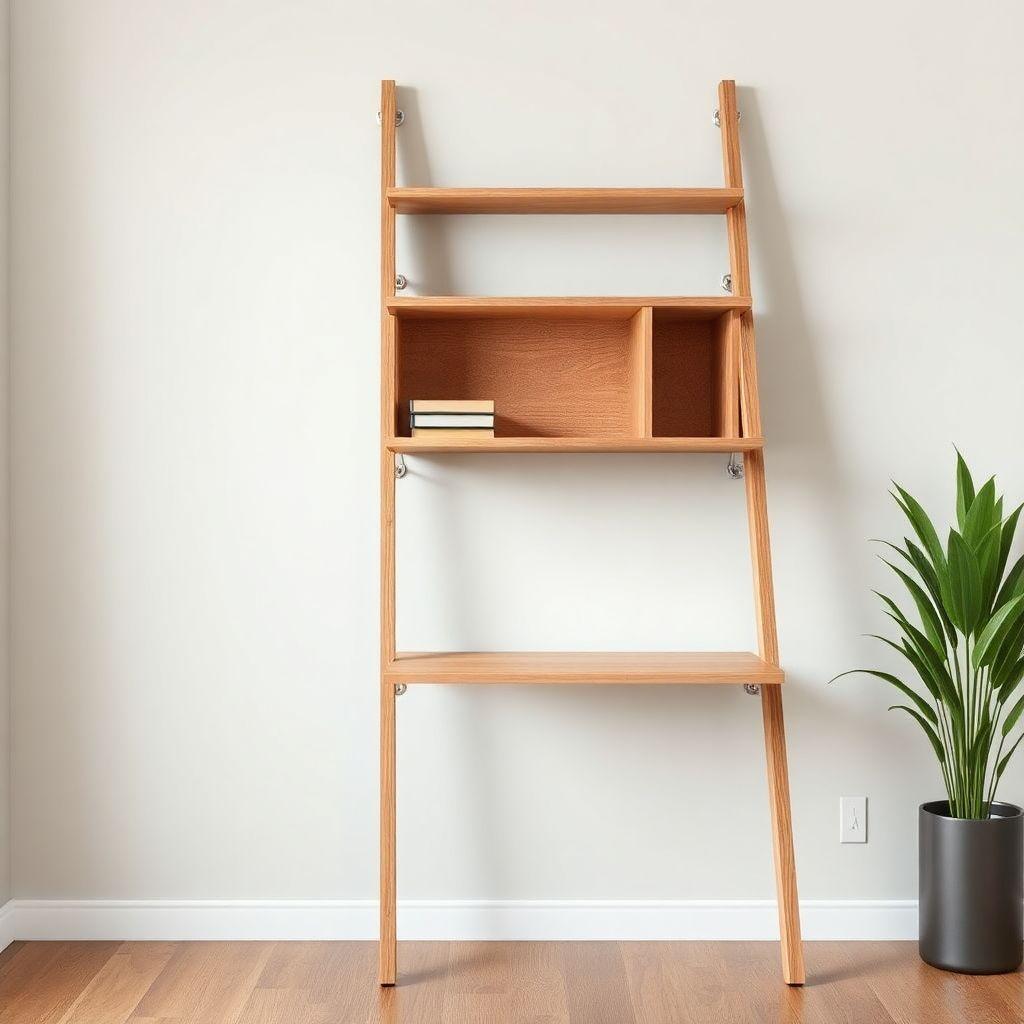
A leaning, bookshelf-style desk that rests against the wall at an angle. Shelves climb the frame and one of them forms the desktop. Ladder desks take up almost no floor space and need no wall attachment if the base is weighted.
- Skill level: Beginner
- Cost estimate: $40 to $100
- Build time: 1 day
- Best for: Apartments, tight corners, renters who cannot drill into walls
The ladder desk is the small-space champion. Because it leans, the footprint is tiny and the vertical shelves give you storage a flat desk cannot. The one thing to get right is stability: a leaning frame wants to slide, so the feet need enough weight or grip that it stays put when you lean on the writing surface. Keep the shelf depths shallow near the top and heavier near the bottom and it will stand on its own without a single screw in the wall. It is a fast, cheap build that punches above its size.
Standing Desk
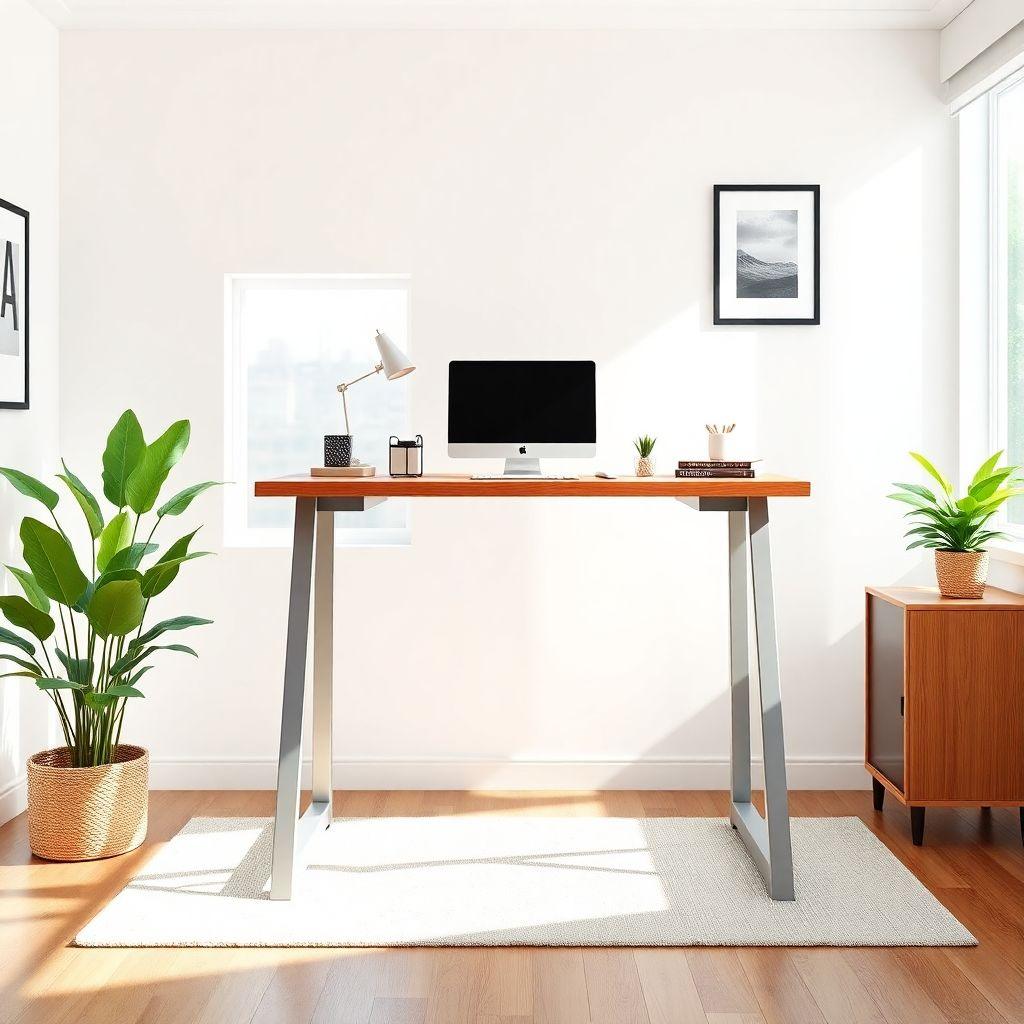
A fixed-height desk built tall, usually 40 to 42 inches, so you work on your feet. This is the non-motorized version, which means no electronics, no lift columns, and no failure points. A hardwood top is worth the upgrade here because a standing desk takes more knocks.
- Skill level: Intermediate
- Cost estimate: $100 to $250
- Build time: 1 weekend
- Best for: People who want to stand while they work, and want it to last
The jump to intermediate comes from the height, not the joinery. A taller base has more leverage working against it, so the legs and stretchers have to be genuinely rigid or the whole desk racks and wobbles when you type. That is why a hardwood top and solid mortise-and-tenon or bolted stretchers pay off. Get the bracing right and a fixed-height standing desk is more durable than any motorized unit, because there is nothing to break. The tradeoff is that the height is set once, so measure your standing posture before you cut.
L-Shaped Desk
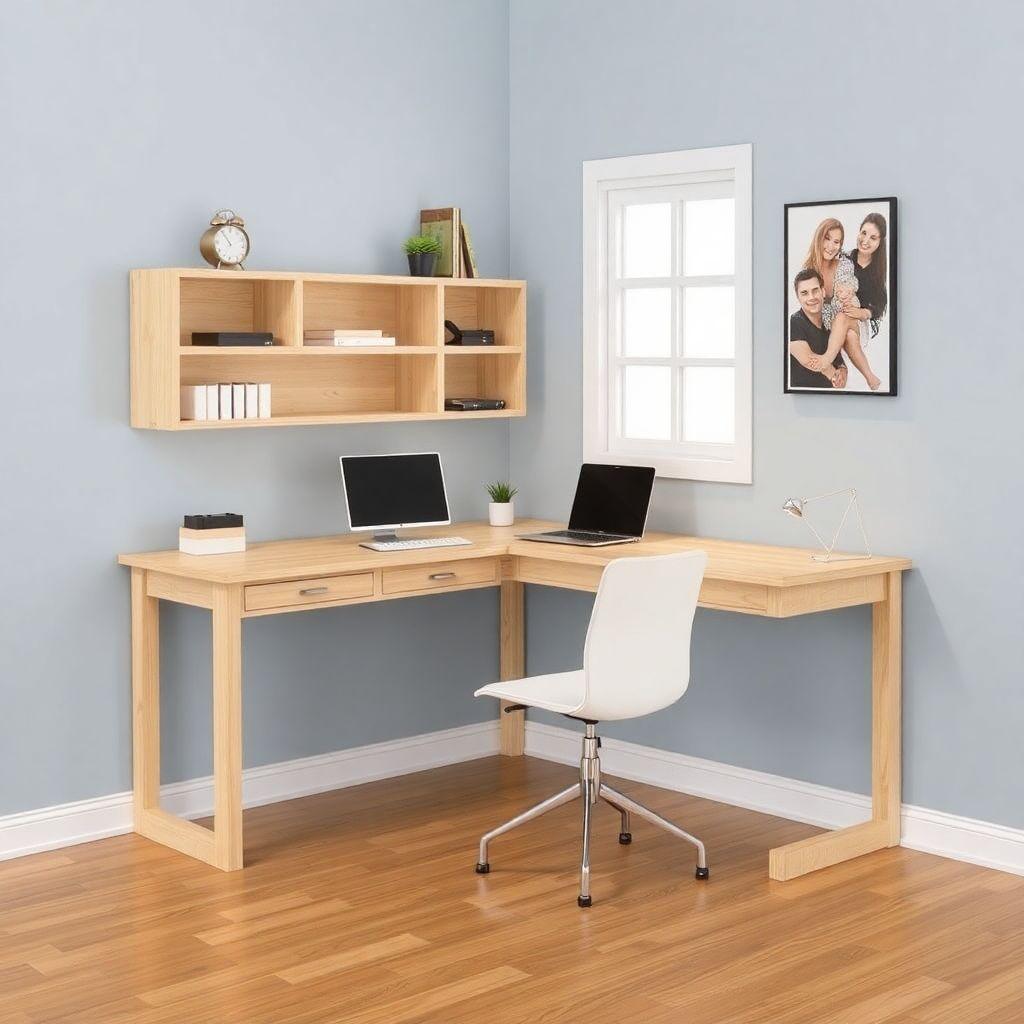
Two work surfaces joined at a corner so the desk wraps around you. It fills a room corner and gives you a lot of usable space, but the corner join has to be square or both surfaces end up misaligned.
- Skill level: Intermediate
- Cost estimate: $120 to $300
- Build time: 1 to 2 weekends
- Best for: Corner setups, dual workflows, anyone who needs a lot of surface
The L-shaped desk is essentially two desks that have to agree with each other. The challenge is precise squaring: if the corner is off by even a couple of degrees, the two tops will not sit flush and the seam will show. You also carry more weight and more legs, so the base needs planning to avoid a wobble at the join. Done right, it is the most space-efficient desk you can build, turning a dead corner into the most productive spot in the room. Budget the extra weekend for careful fitting rather than fast assembly.
Secretary Desk / Drop-Front Desk
The most complex desk on this list. A fold-down writing surface hides storage behind it, with more storage above and below. When closed it looks like a cabinet. When open it is a full workstation.
- Skill level: Advanced
- Cost estimate: $200 to $500
- Build time: 3 to 4 weekends
- Best for: Experienced builders who want a showpiece with hidden storage
The secretary desk combines cabinetry, a working hinge mechanism, and fitted interior storage into one piece, which is why it sits at the top of the difficulty scale. The drop-front has to swing down flat and support weight without sagging, the interior cubbies and small drawers demand precise fitting, and the whole cabinet has to stay square through all of it. This is a build for someone who has already made simpler desks and casework and wants a challenge. The reward is a piece of furniture that closes up clean and holds everything out of sight. Do not make this your first desk.
Which Should You Build?
If you have never built a desk, start with the Simple Writing Desk. It teaches you the fundamentals in a single day and costs almost nothing to get wrong.
If you want the best all-round desk for real work, build the Computer/Gaming Desk. It is only a small step up in effort and gives you the space and cable management most people actually need.
Tight on space? The Ladder Desk is the answer, and it is just as beginner-friendly as the writing desk.
Ready to level up? A Standing Desk or L-Shaped Desk are the natural next projects once you are comfortable with a basic build and want to solve a specific problem: ergonomics or corner space.
Save the Secretary Desk for when you have a few builds behind you and want a project that shows off. Among all these desk diy ideas, it is the one that rewards patience the most.
The short version: match the project to your skill and your space, not to the most impressive photo. A finished writing desk beats an abandoned secretary desk every time.
FAQ
What is the easiest desk to build for a beginner?
The simple writing desk. It is a flat top on four legs with no drawers or moving parts, so you can finish it in a day with basic tools and butt joints or pocket screws.
What wood should I use for a DIY desk?
Pine or plywood are cheap and forgiving for beginner desks. For a standing desk or anything that takes daily wear, a hardwood top like oak, maple, or birch holds up far better and resists dents.
How much does it cost to build a desk yourself?
Anywhere from about $40 for a basic ladder desk to $500 for a secretary desk. Most everyday desks land in the $80 to $200 range once you factor in lumber, fasteners, and finish.
Do I need a lot of tools to build a desk?
No. A saw, a drill, a pocket-hole jig, clamps, and sandpaper cover most beginner desks. L-shaped and standing desks benefit from a square and a level to keep everything true, and a secretary desk needs more cabinetry tools.
How do I keep a desk from wobbling?
Wobble comes from the base, not the top. Use rigid stretchers or an apron between the legs, make sure every joint is square, and check that all four feet touch the floor evenly. Taller desks need more bracing than short ones.

“DIY woodworking enthusiast who started with zero experience and a YouTube tutorial.
I build simple, practical projects for my home and share free plans
so other beginners can skip the guesswork.If I can build it, you can too.”