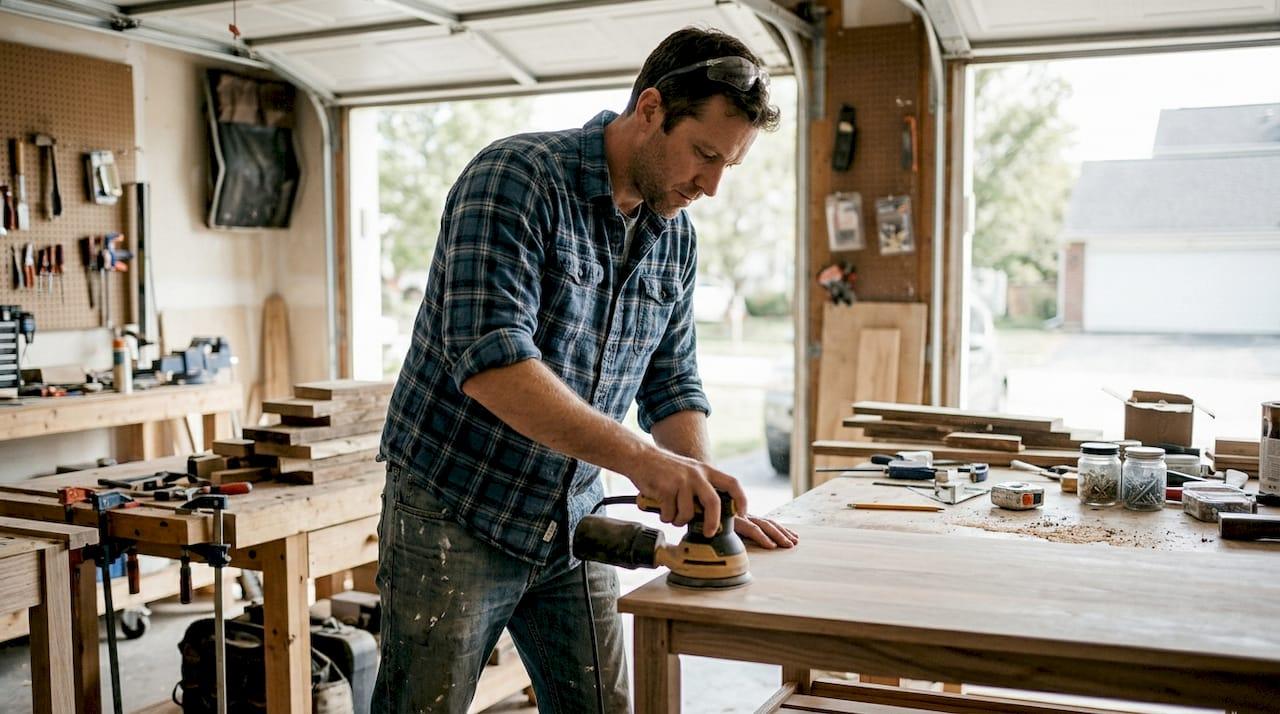
Buying furniture from a store sounds simple until you see the price tags and realize nothing quite fits your space or style. A solid wood dining table can run $800 or more, and flat-pack alternatives often fall apart within a few years. DIY furniture offers significant cost savings compared to store-bought options, but the benefits go far beyond the wallet. When you build your own pieces, you control every detail, develop real skills, and create something that actually lasts. This guide walks through the biggest advantages of DIY furniture, with honest tradeoffs and practical tips for every skill level.
Table of Contents
- Cost savings: Real numbers behind DIY furniture
- Full customization: Your space, your style
- Skill-building and personal growth: More than just furniture
- Sustainability: Greener homes with upcycled furniture
- Is DIY always better? Honest tradeoffs and expert tips
- Take your DIY skills further with expert plans
- Frequently asked questions
Key Takeaways
| Point | Details |
|---|---|
| Save money | DIY furniture projects can cost 20-50 percent less than store-bought pieces. |
| Customize fully | You control the style, size, and features to match your home perfectly. |
| Grow your skills | Each project strengthens hands-on woodworking and problem-solving abilities. |
| Reduce waste | Using reclaimed materials and repairing furniture can dramatically lessen your environmental impact. |
| Know the tradeoffs | DIY means more effort and learning, but thoughtful planning leads to satisfying, lasting results. |
Cost savings: Real numbers behind DIY furniture
Let’s talk numbers first, because this is usually what gets people interested. DIY furniture can save 20-50% compared to store prices, and for solid wood pieces, the gap is even wider. A store-bought bed frame in solid oak might cost $600 to $900. Build it yourself with lumber from a local yard, and you might spend $150 to $250 on materials.
Here’s a quick side-by-side look at typical costs:
| Furniture piece | Store-bought price | DIY material cost |
|---|---|---|
| Coffee table | $300 to $600 | $60 to $120 |
| Bed frame | $600 to $900 | $150 to $250 |
| Floating shelves | $80 to $200 | $20 to $50 |
| Dining table | $700 to $1,400 | $180 to $350 |
That said, hidden costs exist. Tools, sandpaper, wood finish, screws, and clamps add up fast for first-timers. Material waste from measuring errors also eats into savings. These are real considerations, not reasons to quit before you start.
- Tools: A basic starter kit (drill, saw, clamps) runs $150 to $300 but pays off across many projects
- Time: Expect 8 to 20 hours for a first table build
- Waste: Budget 10 to 15% extra material for beginner cuts
- Learning curve: First builds cost more; second builds cost less
Pro Tip: Source reclaimed wood from salvage yards, Facebook Marketplace, or Craigslist. You can often get beautiful hardwood for free or near-free, which makes the savings even more dramatic. Pair that with cost-effective home refresh tips to stretch your budget across multiple rooms.
For those just getting started, check out these beginner woodworking tips to avoid the most common and costly mistakes. Building your essential beginner skills early means your second and third projects will cost significantly less than your first.
DIY isn’t always cheaper for everyone. If you lack tools, space, or time, the math can flip. But for most hobbyists who build more than one or two pieces, the investment pays off quickly.
Now that the potential for savings is clear, it’s time to explore how DIY furniture goes beyond the price tag.
Full customization: Your space, your style
Store shelves offer maybe a dozen versions of a coffee table. Your living room has specific dimensions, a specific color palette, and specific storage needs. That mismatch is exactly why so many people turn to DIY. DIY allows full customization of size, style, materials, and features, which means you’re not compromising on anything.

Want a dining table that seats exactly eight but fits a narrow room? Done. Need a bed frame with built-in storage drawers underneath? Totally possible. Prefer a matte black finish with walnut accents to match your existing decor? You choose every detail.
Here’s what you can fully control when building your own furniture:
- Dimensions: Cut pieces to fit your exact room measurements
- Wood species: Choose pine for budget builds or oak and walnut for premium results
- Hardware: Mix metals, use vintage pulls, or go completely minimalist
- Finish: Stain, paint, oil, or leave it natural
- Features: Add hidden compartments, cable management holes, or fold-down surfaces
“When you build your own furniture, you’re not just filling a space. You’re designing a piece that reflects how you actually live in that space.” This creative control is what separates a handmade home from a catalog home.
The wood durability science behind species selection matters too. Harder woods like maple and oak resist dents and scratches far better than softer options, so matching wood type to function is part of smart design. When you’re crafting custom furniture, understanding your material choices upfront saves headaches later. A solid furniture grade wood guide can help you pick the right lumber for each project.
With your design vision unlocked, let’s look at another major advantage: the skills you gain along the way.
Skill-building and personal growth: More than just furniture
Every piece you build teaches you something. The first time you cut a board square, drive a pocket screw, or sand a surface smooth, you’re adding a real skill to your toolkit. DIY builds transferable skills and a deep sense of satisfaction that store-bought furniture simply cannot offer.
Here are the core skills you develop as a furniture builder:
- Measuring and marking: Precision here prevents wasted wood and crooked joints
- Cutting: Learning to use a circular saw or miter saw safely and accurately
- Sanding: Understanding grit progression from rough to smooth for a professional finish
- Joinery: Connecting pieces with pocket screws, dowels, or mortise and tenon joints
- Finishing: Applying stain, sealer, or paint evenly without drips or blotches
The learning curve is real but manageable. Most beginners start with a simple shelf or small side table, then move to larger builds as confidence grows. Each project reveals a new challenge, and solving that challenge is genuinely satisfying. The wood décor craftsmanship involved in even basic builds teaches patience and attention to detail that carries into other areas of life.
There’s also something powerful about handing down these skills. Teaching a child or friend to measure, cut, and assemble a piece of furniture creates a shared experience that lasts longer than the furniture itself. Check out this beginner’s woodworking guide if you want a clear starting point, and use these step-by-step woodworking tips to build your confidence project by project.
Pro Tip: Start with a simple floating shelf or small stool before tackling a table or bed frame. Mastering basic cuts and building essential woodworking skills on a low-stakes project means your bigger builds will go much smoother.
Personal growth aside, there’s also a compelling reason for eco-conscious makers to choose DIY: sustainability.
Sustainability: Greener homes with upcycled furniture
Most mass-produced furniture travels thousands of miles before it reaches your home, and a large portion ends up in landfills within a decade. DIY changes that equation significantly. Reclaimed wood uses up to 13x less energy than newly milled lumber, and building your own pieces means you can repair them instead of replacing them.
Here’s how DIY furniture supports a greener home:
- Reclaimed wood: Old barn boards, pallet wood, and salvaged beams give new life to materials that would otherwise be discarded
- Scrap lumber: Offcuts from one project become small shelves or decorative accents on the next
- Eco-friendly finishes: Water-based stains and natural oils replace solvent-heavy commercial products
- Repairability: A wobbly joint or scratched surface is fixable; cheap flat-pack furniture usually isn’t
- Local sourcing: Buying lumber from regional mills cuts transportation emissions significantly
When you build with intention, you also buy less. One well-made table replaces three mediocre ones over a decade. That’s less waste, less spending, and less environmental impact. Browse these DIY project ideas for inspiration on builds that use minimal materials while delivering maximum impact.
As with any approach, DIY isn’t without its tradeoffs. Next, a realistic look at the pros and cons.
Is DIY always better? Honest tradeoffs and expert tips
DIY furniture is genuinely rewarding, but it’s not the right choice for every situation. DIY trades time for savings and isn’t always the cheapest option if you’re unskilled or lack the right tools. Being honest about this upfront saves frustration.
| Factor | DIY furniture | Store-bought furniture |
|---|---|---|
| Cost | Lower material cost | Higher retail markup |
| Quality | As good as your skills | Varies widely |
| Time | 8 to 40+ hours per piece | Ready immediately |
| Customization | Total control | Limited options |
| Durability | Excellent with solid wood | Often poor with engineered wood |
| Skill required | Moderate to high | None |
There are situations where buying makes more sense:
- Complex upholstery: Sofas and cushioned chairs require specialized skills and equipment
- Safety-critical pieces: Cribs and high chairs have strict safety standards that are hard to meet without experience
- Time pressure: If you need furniture this week, building isn’t realistic
- Highly technical joinery: Some antique reproduction styles require years of practice to execute properly
Pro Tip: Focus on strong joints from the very first build. Pocket screws are fast and beginner-friendly. Pilot holes prevent wood splitting. As you advance, explore DIY joinery techniques like biscuit joints and mortise and tenon for furniture that lasts generations. Understanding the role of joinery in overall furniture strength will change how you approach every build.
Solid wood always outlasts engineered products like MDF or particleboard. If you’re going to invest time in a build, use real lumber. The difference in longevity is dramatic.
Understanding these tradeoffs lets you make smarter choices. Review the benefits at a glance and pick projects that suit your lifestyle.
Take your DIY skills further with expert plans
You now have a clear picture of what DIY furniture can do for your home, your budget, and your skill set. The next step is putting that knowledge into action with plans that are actually designed for real people building real furniture.
At realwoodworkplans.com, you’ll find free woodworking plans and detailed project guides built specifically for home furniture makers at every level. Whether you want to understand the full DIY woodworking benefits before committing to a project or you’re ready to grab a saw and start cutting, the resources are there. Use the beginner woodworking guidance to avoid the mistakes most first-timers make, and work your way up to advanced joinery and custom furniture builds with confidence. Every plan includes material lists, cut diagrams, and step-by-step instructions so you spend more time building and less time guessing.
Frequently asked questions
How much money can I really save with DIY furniture?
Depending on the project, you can typically save 20-50% compared to buying new, and the savings grow even larger for solid wood pieces where retail markups are highest.
What skills do I need to start building my own furniture?
You only need basic knowledge of measuring, cutting, and assembly to get started; beginner woodworking projects build essential skills naturally as you work through each step.
Is DIY furniture good for the environment?
Yes, especially when using reclaimed wood or upcycled materials, since reclaimed wood uses far less energy and building your own pieces means you can repair them instead of sending them to a landfill.
What are the biggest challenges with DIY furniture?
Time commitment, required tools, and mastering joinery are the main hurdles, but DIY trades time for savings in a way that becomes more efficient with every project you complete.
Recommended
- Benefits of DIY woodworking: Save money, boost health
- Home decor woodworking guide: craft custom furniture
- Why Use Joinery Techniques? 50% Stronger Furniture
- Building Beginner Woodworking Projects: 60% Avoid Mistakes
- Wooden Home Decor: Buy Custom Decor of the Highest Quality Crawoo.c…

“DIY woodworking enthusiast who started with zero experience and a YouTube tutorial.
I build simple, practical projects for my home and share free plans
so other beginners can skip the guesswork.If I can build it, you can too.”